
Florida, a state synonymous with sunshine and sweltering temperatures, relies heavily on air conditioning to provide respite from its subtropical climate. For decades, conventional HVAC systems have been the go-to solution for cooling homes and businesses. However, growing concerns about energy consumption, environmental impact, and rising utility costs are prompting a search for more sustainable and efficient alternatives. Among these, geothermal cooling has emerged as a promising, albeit complex, contender. The question on many minds, from homeowners in Miami to developers in Orlando, is whether this innovative technology can truly be a viable option for the Sunshine State.
Understanding Geothermal Cooling
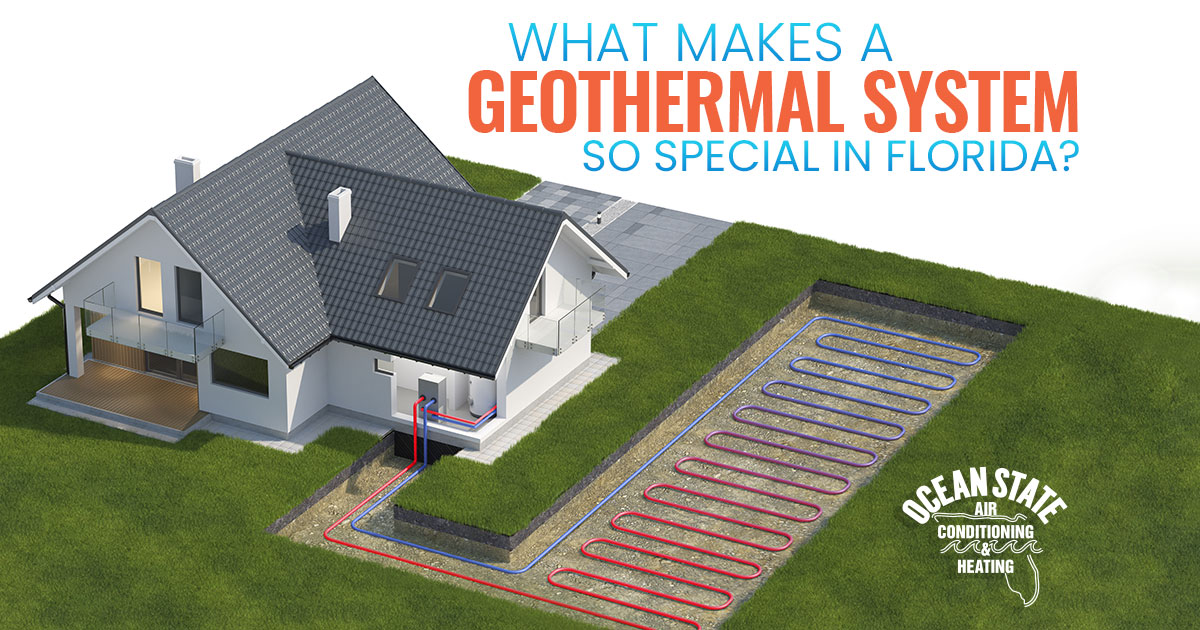
Geothermal cooling, often referred to as geothermal heat exchange or ground-source heat pumps (GSHPs), operates on a fundamentally different principle than traditional air conditioners. Instead of expelling heat into the already warm outdoor air, geothermal systems leverage the stable temperature of the Earth’s crust as a heat sink.
The basic mechanism involves a network of underground pipes, called a ground loop, circulating a fluid (typically water mixed with antifreeze). This fluid absorbs heat from the building during the cooling cycle. As the warm fluid travels through the loop, it transfers its heat to the earth, which remains at a relatively constant temperature year-round, generally between 50°F and 60°F (10°C to 16°C) at depths of just a few feet. The cooled fluid then circulates back into the building to absorb more heat, effectively providing air conditioning. In heating mode, the process is reversed, drawing warmth from the earth to heat the building.
Types of Geothermal Systems
The feasibility and implementation of geothermal cooling in Florida are intrinsically linked to the various types of ground loop configurations available:
- Horizontal Loops: These systems require significant land area and involve burying pipes horizontally in trenches, typically 4-6 feet deep. This makes them less practical for densely populated urban areas or properties with limited yard space.
- Vertical Loops: Vertical loops involve drilling deep boreholes (100-400 feet or more) into the ground, into which the piping is inserted. While requiring less surface area than horizontal loops, the drilling process can be more complex and costly. This is often a more viable option for smaller lots or in areas where excavation is difficult.
- Pond/Lake Loops: If a property has access to a sufficiently deep body of water, pipes can be submerged in the water. This method is less common in Florida due to the state’s predominantly shallow water bodies, often with fluctuating temperatures.
- Open-Loop Systems: These systems draw water directly from a well, pass it through the heat pump, and then discharge it back into another well, a surface water body, or through a dispersal system. The availability of a suitable and sustainable water source is critical for this type of system.
The choice of system type has direct implications for installation costs, land requirements, and ultimately, its feasibility in diverse Florida settings.
The Florida Factor: Challenges and Considerations
Florida’s unique geological and climatic conditions present both opportunities and hurdles for geothermal cooling adoption.
Groundwater Abundance and Quality
Florida is renowned for its abundant groundwater resources, which can be a significant advantage, particularly for open-loop systems. Many areas of the state boast high water tables, making well drilling more accessible and less expensive. However, the quality of this groundwater is a crucial consideration. High mineral content or acidity can lead to scaling, corrosion, and reduced efficiency of the heat pump and piping over time. Regular water testing and appropriate filtration or treatment systems are often necessary, adding to the overall cost and complexity.
Soil Conditions and Thermal Conductivity
The sandy soils prevalent in much of Florida have lower thermal conductivity compared to denser soils or rock found in other regions. This means that heat transfer to and from the ground is less efficient. To compensate for this, geothermal systems in Florida may require larger ground loops (more piping) or deeper boreholes to achieve adequate heat exchange. This directly impacts installation costs and the amount of land required for horizontal systems. Engineers must carefully analyze the soil composition and thermal properties of a specific site to design an appropriately sized and efficient system.
Shallow Water Table and Drainage
While a high water table can facilitate open-loop systems, it can also complicate the installation of horizontal loops. Saturated soil conditions can make trenching more challenging and may impact the long-term stability of buried pipes. Furthermore, effective drainage around the loop field is essential to prevent waterlogging, which can reduce thermal performance.
High Ambient Air Temperatures
During the cooling season, Florida’s consistently high ambient air temperatures mean that conventional AC units are constantly working against a significant thermal gradient. Geothermal systems, by contrast, draw on the Earth’s stable, cooler temperatures. While this is a fundamental advantage for efficiency, the sheer volume of heat that needs to be extracted from buildings in Florida during peak summer months places a substantial demand on the geothermal loop. This necessitates robust system design and potentially larger loops to handle the load effectively.
Cost of Installation
The initial investment for a geothermal cooling system is typically higher than for traditional air conditioning. This is primarily due to the cost of drilling boreholes or excavating for horizontal loops, as well as the specialized equipment required. In Florida, where sandy soils might necessitate deeper drilling or larger loops, these upfront costs can be even more pronounced. However, it’s crucial to view this as an investment rather than just an expense.
The Promise of Geothermal: Efficiency and Long-Term Savings
Despite the challenges, the potential benefits of geothermal cooling in Florida are substantial and align well with the state’s growing emphasis on sustainability and energy independence.

Unmatched Energy Efficiency
Geothermal systems are renowned for their exceptional energy efficiency. By utilizing the Earth’s stable temperature, they can achieve Coefficients of Performance (COP) of 3 to 5 or higher, meaning they deliver 3 to 5 units of cooling or heating for every unit of electricity consumed. This is significantly more efficient than conventional air conditioners, which typically have SEER ratings (Seasonal Energy Efficiency Ratio) in the range of 14-20. For a state like Florida, where cooling accounts for a large portion of residential and commercial energy bills, this efficiency translates into significant operational savings.
Reduced Operating Costs
The higher efficiency directly translates to lower utility bills. While the upfront cost is higher, homeowners and businesses in Florida can expect to see substantial reductions in their monthly energy expenses. Over the lifespan of a geothermal system, which can exceed 25 years for the indoor components and 50+ years for the ground loop, these savings can far outweigh the initial investment.
Environmental Benefits
Geothermal cooling is an environmentally friendly choice. By reducing electricity consumption, it lowers the demand on power plants, many of which rely on fossil fuels, thereby decreasing greenhouse gas emissions. Furthermore, geothermal systems do not require outdoor condenser units that release refrigerants into the atmosphere, contributing to a smaller overall environmental footprint.
Comfort and Quiet Operation
Geothermal systems often provide more consistent and comfortable indoor temperatures compared to conventional HVAC. The steady temperature from the earth eliminates the temperature fluctuations associated with traditional systems. Additionally, with no noisy outdoor condenser unit, geothermal systems operate very quietly, enhancing the overall comfort and ambiance of a property.
Increased Property Value
Installing a geothermal system can be a significant selling point, potentially increasing property value. Buyers are increasingly looking for energy-efficient and environmentally responsible homes, and a well-installed geothermal system can be a major draw.
Making Geothermal a Reality in Florida: Strategies and Innovations
Successfully implementing geothermal cooling in Florida requires careful planning, expert design, and an understanding of the state’s specific conditions.
Site-Specific Analysis and Professional Design
The cornerstone of a successful geothermal installation in Florida is a thorough site-specific analysis. This involves evaluating the property’s geology, soil type, groundwater availability and quality, available space, and the building’s heating and cooling load requirements. Engaging experienced geothermal engineers and installers who understand Florida’s unique challenges is paramount. They will determine the most appropriate system type and size, ensuring optimal performance and longevity. For instance, an open-loop system might be ideal for a property with ample access to clean groundwater, while a vertical loop might be necessary for a smaller urban lot.
Advances in Drilling Technology
Innovations in drilling technology are making vertical geothermal systems more accessible and cost-effective, even in challenging soil conditions. Advanced drilling techniques can minimize surface disruption and improve the efficiency of borehole construction. This is particularly relevant for densely populated areas of Florida where land is at a premium, such as Tampa or parts of South Florida.
Incentives and Financing
While upfront costs remain a barrier, various incentives can help mitigate them. Federal tax credits for renewable energy installations, as well as potential state and local rebates, can significantly reduce the initial investment. Exploring financing options specifically designed for energy-efficient upgrades can also make geothermal systems more affordable for homeowners and businesses across Florida, from Jacksonville to the Florida Keys.
Public Perception and Awareness
Increasing public awareness about the benefits of geothermal cooling is crucial. Educating Floridians about the long-term savings, environmental advantages, and comfort improvements can drive demand and encourage adoption. Showcasing successful geothermal installations in various settings across the state can serve as powerful testimonials. Developers of new communities and luxury resorts, like those found along the Gulf Coast, are increasingly exploring such sustainable technologies to enhance their appeal.

Conclusion: A Cool Future for Florida?
The feasibility of geothermal cooling in Florida is not a simple yes or no answer. It is a nuanced proposition that depends heavily on individual site conditions, careful engineering, and economic considerations. While the sandy soils and high humidity present unique challenges that can increase initial costs, the promise of substantial long-term energy savings, reduced environmental impact, and enhanced comfort makes geothermal a compelling option for the Sunshine State.
As technology advances, drilling becomes more efficient, and awareness grows, geothermal cooling is poised to play an increasingly significant role in Florida’s quest for sustainable and cost-effective climate control. For those seeking a truly green and economical way to beat the Florida heat, a well-designed and professionally installed geothermal system is certainly worth exploring. The future of cooling in Florida may very well be rooted underground.
LifeOutOfTheBox is a participant in the Amazon Services LLC Associates Program, an affiliate advertising program designed to provide a means for sites to earn advertising fees by advertising and linking to Amazon.com. Amazon, the Amazon logo, AmazonSupply, and the AmazonSupply logo are trademarks of Amazon.com, Inc. or its affiliates. As an Amazon Associate we earn affiliate commissions from qualifying purchases.