
The question “Is Hawaii North America?” often sparks confusion, highlighting a common misunderstanding between geographical continents and political affiliations. As a premier travel destination, understanding Hawaii’s true place in the world is crucial for travelers planning their visit. While Hawaii is undeniably a state within the United States, a nation firmly situated in North America, its geographical placement tells a different story. This article will delve into the nuances of Hawaii’s location, clarify its continental status, and explore what makes this island paradise a distinct and captivating destination for global travelers, regardless of its continental classification.
Hawaii’s Geographical Position: A Pacific Anomaly
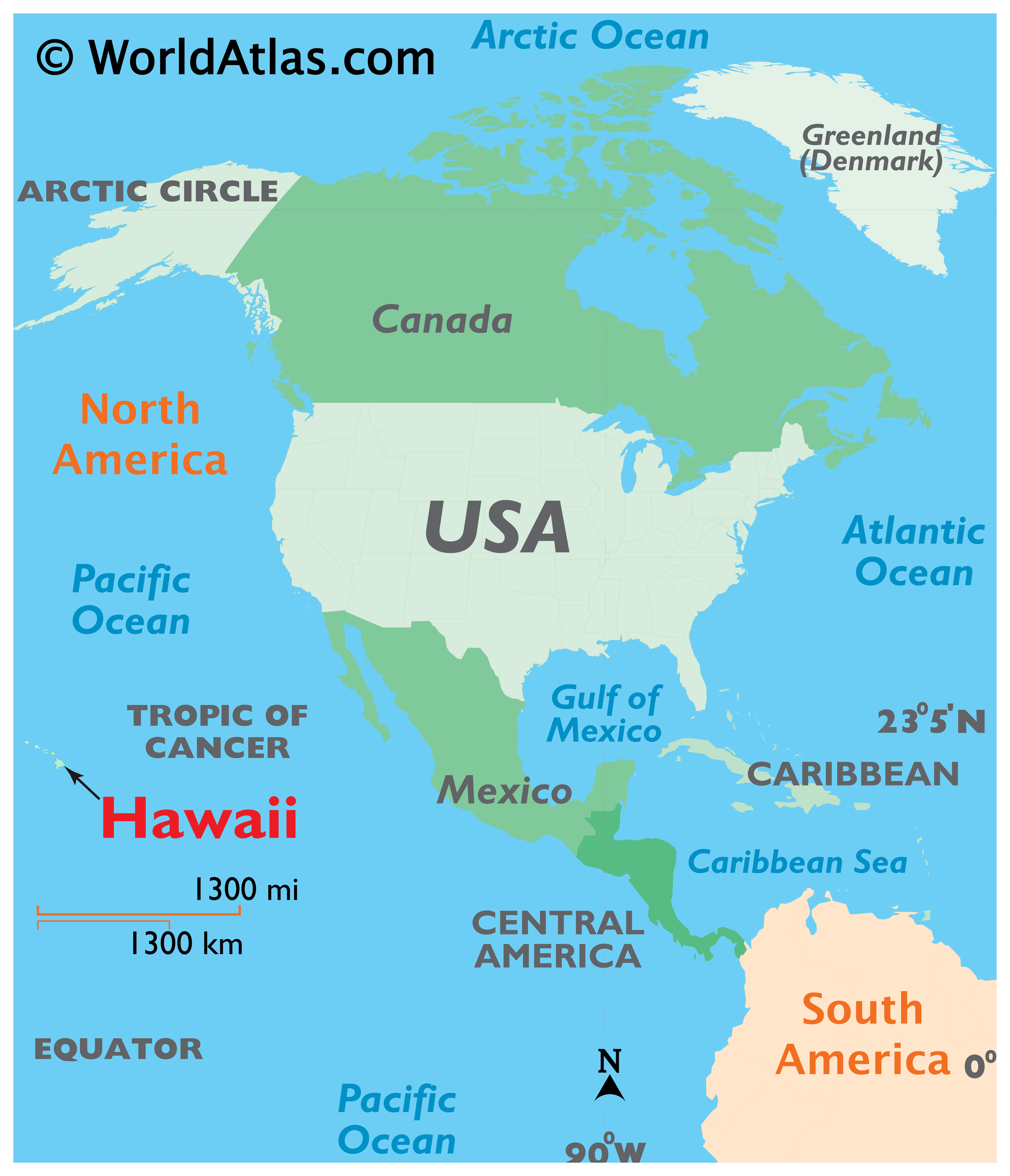
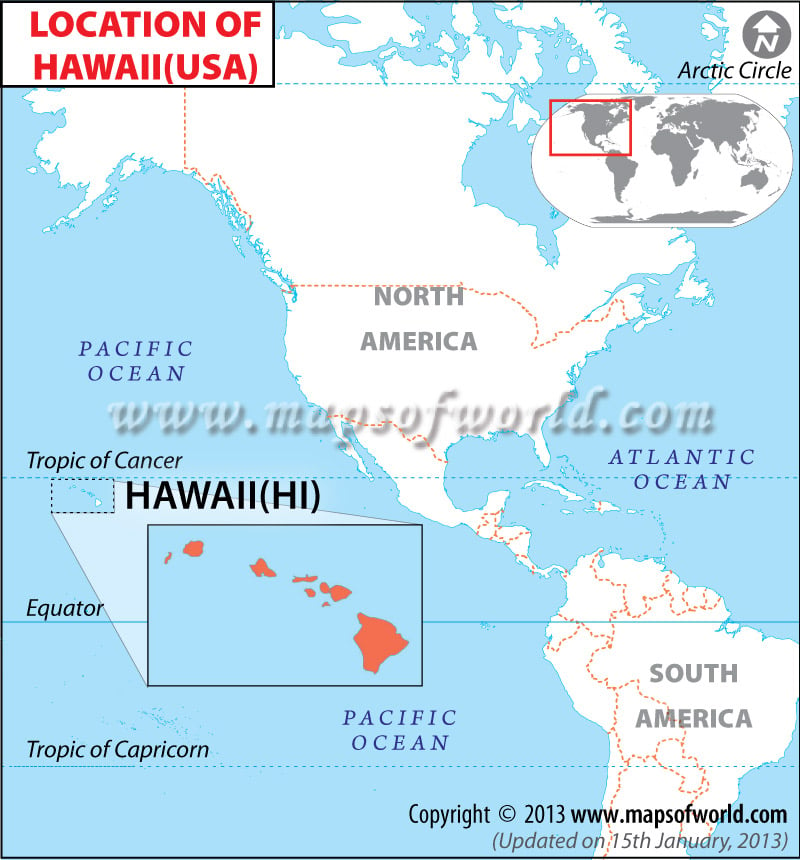
Geographically speaking, Hawaii is not part of the North American continent. It stands as an isolated archipelago in the central Pacific Ocean, thousands of miles southwest of the continental United States mainland. This distinction is vital when discussing continental geography. Continents are typically defined by large, continuous landmasses, often including their associated continental shelves. Hawaii, born from volcanic activity rising from the deep seafloor, lies far beyond the continental shelf of North America.
The Pacific Ocean’s Isolated Gem
The Hawaiian Islands are the exposed peaks of an enormous underwater mountain range, formed by volcanic hot spots over millions of years. This geological origin places them squarely in the heart of the Pacific Ocean, rendering them distinctly separate from any continental landmass. The nearest continental landmass to Hawaii is, in fact, North America, approximately 2,400 miles (3,862 kilometers) to the east. However, this vast expanse of ocean clearly separates it from the continental plate. This isolation has profoundly shaped Hawaii’s unique flora, fauna, and indigenous culture, making it a destination unlike any other within the United States or the broader North American region. Travelers are drawn to Hawaii precisely because of this distinct insular environment, offering landscapes, ecosystems, and experiences that are far removed from those found on the mainland.
Continental Definitions and Hawaii’s Placement
When geographers classify continents, they primarily consider geological formations and tectonic plates. Hawaii is situated on the Pacific Plate, an entirely different tectonic plate from the North American Plate. Consequently, geographers generally categorize Hawaii as part of Oceania, a geographical region that encompasses numerous islands in the central and western Pacific Ocean, including Polynesia, Melanesia, and Micronesia. Oceania is often considered one of the world’s seven continents, albeit a continental grouping that is largely maritime rather than terrestrial. This classification aligns Hawaii with other iconic island destinations like Fiji, Tahiti, and New Zealand, underscoring its deep Pacific roots and character. For travelers, understanding this distinction helps to set expectations for the unique natural beauty and cultural experiences that await, emphasizing that a trip to Hawaii is an exploration of a truly oceanic world.
Hawaii’s Political Status: A State of the United States
While geographically distinct, Hawaii’s political status firmly links it to North America through its integral role as the 50th state of the United States. This political affiliation is what primarily connects Hawaii to the North American nation, even though it is physically separated by thousands of miles of ocean. The statehood, granted in 1959, means that Hawaii operates under U.S. federal laws and governance, uses the U.S. dollar, and its citizens are U.S. citizens.
Integration within the United States Federal System
As a state, Hawaii sends representatives to the U.S. Congress, participates in presidential elections, and is subject to the same federal regulations as any other state, from California to New York. This political integration ensures a stable and familiar framework for travelers from the U.S. mainland and beyond. For international visitors, Hawaii falls under the same visa requirements and customs procedures as entering the continental United States. This seamless connection to the U.S. system makes travel planning straightforward, reducing the complexities often associated with international trips to isolated island nations. The presence of English as the primary language, familiar infrastructure, and common legal framework all contribute to an accessible travel experience within a distinctly exotic setting.
Implications for Travel and Governance
The political status of Hawaii has significant implications for travel. For U.S. citizens, a trip to Hawaii is considered domestic travel, requiring no passport and simplifying logistics considerably. This ease of access contributes significantly to Hawaii’s popularity as a tourist destination for Americans. From a governance perspective, federal agencies like the National Park Service manage iconic sites such as Hawaii Volcanoes National Park and Haleakalā National Park, ensuring their preservation and accessibility. The political connection to the United States also means a robust tourism infrastructure, with reliable transportation, modern accommodations, and high standards of safety and service that travelers often associate with a developed Western nation, even as they enjoy the distinct cultural and natural beauty of the Pacific.
Understanding the Geographical vs. Political Classification
The debate over whether Hawaii is North America ultimately boils down to a fundamental distinction between geographical and political classifications. These two ways of categorizing places serve different purposes and are based on different sets of criteria. For travelers, understanding this dichotomy helps appreciate Hawaii’s dual identity and its unique appeal.
Geological vs. Political Classifications
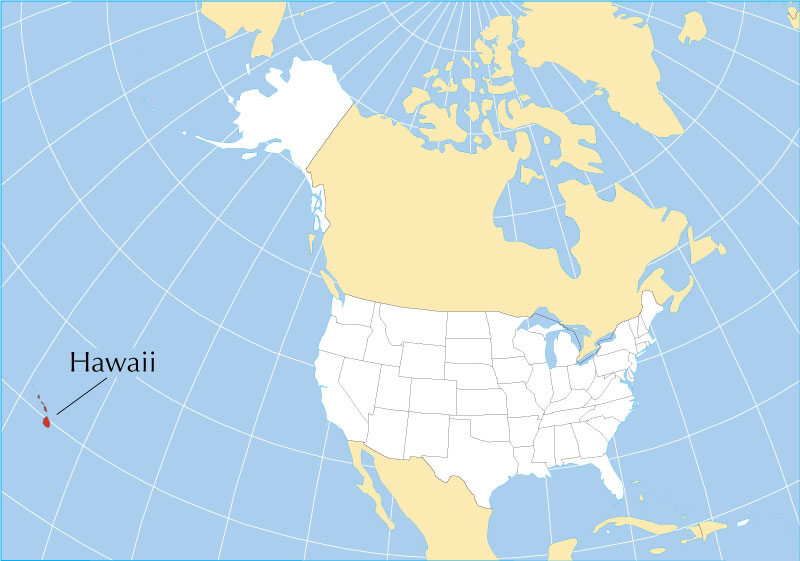
Geological classifications, like continents, are based on the Earth’s physical structure—its tectonic plates, large landmasses, and natural boundaries. Under this lens, Hawaii is unequivocally part of Oceania due to its formation and location on the Pacific Plate. Political classifications, on the other hand, are human constructs based on national sovereignty, borders, and administrative divisions. From this perspective, Hawaii is part of the United States and, by extension, shares political ties with a nation primarily located in North America. When travelers consider a destination, both aspects can be relevant. The geological reality informs the unique natural beauty, climate, and ecosystems one will encounter, while the political reality influences entry requirements, currency, language, and the overall societal framework.
The Broader Pacific Islands Context
To further contextualize Hawaii’s place, it’s beneficial to view it within the broader context of the Pacific Islands. Hawaii shares many cultural and environmental characteristics with its Polynesian neighbors to the south, such as traditional wayfinding, reverence for nature, hula traditions, and a deep connection to the ocean. These cultural elements, while influenced by Americanization, retain a strong Pacific identity. For adventurous travelers interested in cultural immersion, exploring the nuances of Hawaiian culture offers a glimpse into the rich tapestry of the Pacific. Its volcanic landscapes, from the active lava flows on the Big Island to the towering cliffs of the Na Pali Coast on Kauai, are geological wonders that connect it more closely to other volcanic Pacific rim nations than to the continental formations of North America.
Hawaii’s Unique Identity as a Travel Destination
Ultimately, what truly defines Hawaii for travelers is not just its continental classification or political status, but its unparalleled identity as a vibrant, diverse, and breathtaking travel destination. It is a place where East meets West, where ancient Polynesian traditions blend with modern American influences, and where natural wonders abound.
Beyond Continental Classification
Travelers to Hawaii are seeking an experience that transcends mere geography. They come for the year-round warm weather, world-class beaches like Waikiki Beach on Oahu, the lush rainforests, and the dramatic volcanic landscapes. The islands offer an incredible range of activities, from surfing and snorkeling in pristine waters to hiking up dormant volcanoes such as Diamond Head or stargazing from the summit of Mauna Kea on the Big Island. Each island—Oahu, Maui, Kauai, and the Big Island (also known as Hawaii Island)—offers its own unique character and attractions, inviting repeat visits to explore their distinct charms. This rich tapestry of experiences is the essence of Hawaii’s appeal, far more significant than its continental tag.
Cultural Heritage and Natural Wonders
Hawaii’s cultural heritage is as captivating as its natural beauty. The “Aloha Spirit,” a philosophy of kindness, respect, and compassion, permeates daily life and interactions, offering visitors a genuinely warm welcome. Beyond the beaches, travelers can immerse themselves in history at sites like Pearl Harbor, explore ancient temples (heiau), or enjoy a traditional luau. The islands are also a biodiversity hotspot, home to numerous endemic species found nowhere else on Earth. From humpback whales migrating to the warm waters off Maui to vibrant coral reefs teeming with marine life, Hawaii offers unparalleled opportunities for nature lovers and adventurers alike. These cultural and natural treasures position Hawaii as a truly global destination, distinct from any mainland American experience.
Planning Your Trip to the Aloha State
For prospective travelers, the answer to “Is Hawaii North America?” clarifies more about its unique identity than its strict geographical location. It is a destination that combines the conveniences of U.S. travel with the exotic allure of the Pacific.
Access and Logistics for North American Travelers
For travelers from North America, particularly the continental United States, reaching Hawaii is relatively straightforward. Numerous direct flights depart from major U.S. cities, making the journey seamless. While the flight duration is considerable (typically 5-6 hours from the West Coast and longer from the East Coast), the convenience of domestic travel for U.S. citizens—no passport required, same currency, and common language—makes it an appealing choice for a significant escape without the typical hassles of international travel. Rental cars are widely available for exploring the islands, and inter-island flights are frequent, connecting the main tourist islands efficiently.
Experiences Distinct from the Mainland
A visit to Hawaii promises experiences that are vastly different from anything found on the North American mainland. Beyond the obvious differences in climate and landscape, the islands offer a unique fusion of cuisines, blending traditional Hawaiian dishes with Asian, Portuguese, and American influences. The slower pace of life, the emphasis on family (ohana) and community, and the ever-present connection to the ocean create an atmosphere of relaxation and rejuvenation. Whether you’re seeking adventurous outdoor pursuits, cultural immersion, or simply a tranquil escape on a sun-drenched beach, Hawaii stands out as a destination that offers the best of both worlds: the familiar comfort of the United States combined with the exotic and captivating allure of the central Pacific.
In conclusion, while Hawaii is politically an integral part of the United States (a North American nation), it is geographically located in Oceania, an island world in the Pacific Ocean. This dual identity is precisely what makes it such a fascinating and sought-after travel destination, offering travelers a unique blend of American familiarity and unparalleled Pacific beauty and culture.
LifeOutOfTheBox is a participant in the Amazon Services LLC Associates Program, an affiliate advertising program designed to provide a means for sites to earn advertising fees by advertising and linking to Amazon.com. Amazon, the Amazon logo, AmazonSupply, and the AmazonSupply logo are trademarks of Amazon.com, Inc. or its affiliates. As an Amazon Associate we earn affiliate commissions from qualifying purchases.