
The question, “Is Hawaii the 50th state?” might seem straightforward, but for those captivated by the allure of these Pacific islands, it often sparks curiosity. Beyond the idyllic beaches, lush rainforests, and vibrant culture, lies a rich history and a unique political journey that led to its eventual statehood. This article delves into the fascinating story of Hawaii’s path to becoming the 50th state, exploring its pre-statehood era, the pivotal moments, and what its status means for travelers and residents alike.
Hawaii’s existence as a sovereign nation predates its incorporation into the United States by centuries. For generations, the islands were ruled by monarchs, with a distinct Polynesian culture, language, and societal structure. The arrival of Western explorers in the late 18th century marked the beginning of a profound transformation, introducing new technologies, diseases, and foreign interests.
The Kingdom of Hawaii and the Seeds of Change
Before its annexation, Hawaii was a thriving independent kingdom. The unification of the Hawaiian Islands under King Kamehameha I in the late 18th century created a powerful and centralized monarchy. For decades, the kingdom maintained its sovereignty, engaging in trade with various nations and developing its own unique identity.
The Shifting Political Landscape
However, the growing economic and strategic importance of Hawaii did not go unnoticed by foreign powers, particularly the United States. American missionaries, businessmen, and whalers established a significant presence on the islands, leading to increased influence over the Hawaiian government and economy. This period saw a gradual shift in power, with foreign nationals increasingly holding key positions and advocating for closer ties with the United States.
The Hawaiian monarchy, while initially resilient, faced mounting pressure. Treaties were signed, land ownership laws were altered, and the economic reliance on foreign trade grew. By the late 19th century, a powerful group of American and European businessmen, often referred to as the “Annexation Club,” actively campaigned for the overthrow of the monarchy and annexation by the United States. This desire was fueled by economic interests, particularly in the lucrative sugar plantations that dominated the Hawaiian economy.
The pivotal event that forever altered Hawaii’s destiny occurred in 1893. A group of American and European businessmen, with the support of the U.S. military, orchestrated the overthrow of Queen Liliʻuokalani, the last reigning monarch of the Kingdom of Hawaii. This act was controversial and met with considerable opposition from native Hawaiians who sought to preserve their sovereignty. Despite widespread protests and petitions, the provisional government, established after the overthrow, pushed for annexation by the United States.
The Road to Statehood: Annexation and Territory Status
The initial attempt to annex Hawaii in 1893 failed due to opposition in the U.S. Senate. However, the strategic importance of Hawaii became even more apparent during the Spanish-American War. The United States recognized Hawaii’s crucial position as a coaling station and naval base in the Pacific. This led to the passage of the Newlands Resolution in 1898, which effectively annexed Hawaii as a territory of the United States.
As a U.S. territory, Hawaii experienced significant development. Infrastructure improved, and the economy continued to be dominated by agriculture, particularly sugar and pineapple production. However, the dream of full statehood remained a persistent aspiration for many. Native Hawaiians, in particular, continued to advocate for self-determination and equal rights within the United States framework.

The path to statehood was a long and arduous one, marked by decades of lobbying, political debate, and evolving sentiments within both Hawaii and the mainland United States. Throughout the mid-20th century, proponents of statehood emphasized Hawaii’s readiness for full integration, highlighting its democratic institutions, diverse population, and economic contributions. Opponents often cited concerns about distance, racial composition, and potential political shifts.
The Long-Awaited Moment: Hawaii Becomes the 50th State
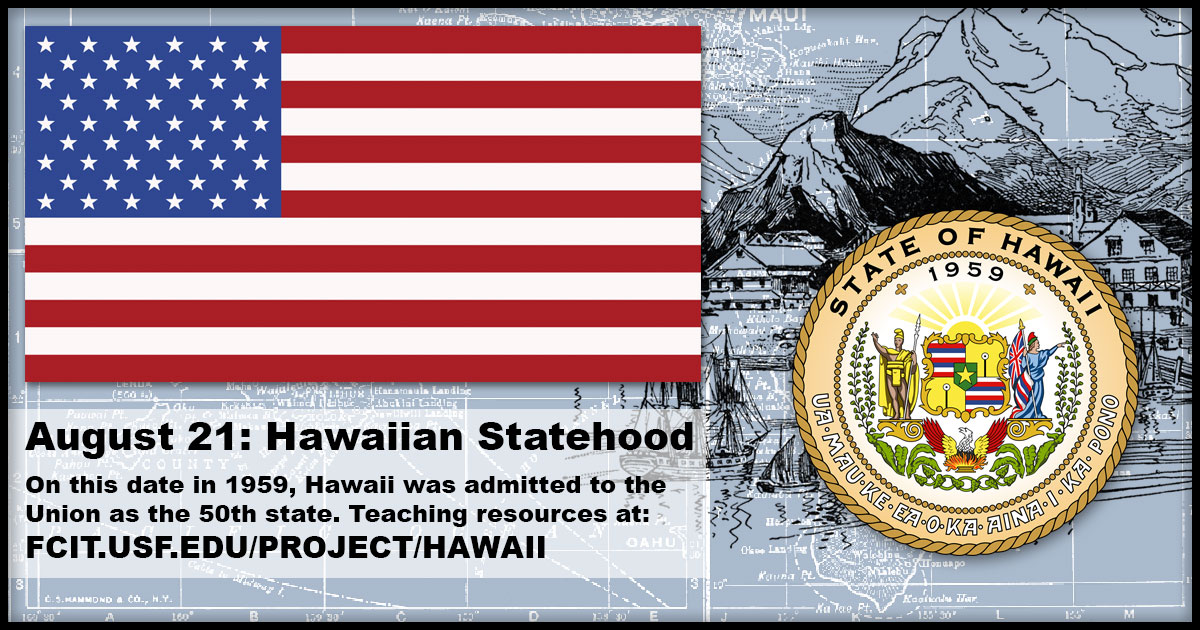
Finally, after over six decades as a territory, the persistent efforts of Hawaiian leaders and advocates bore fruit. On August 21, 1959, following a referendum in which an overwhelming majority of Hawaiian voters chose statehood, President Dwight D. Eisenhower signed the Hawaii Admission Act. This landmark legislation officially admitted Hawaii into the Union as the 50th state.
The admission of Hawaii as the 50th state was a momentous occasion, not just for the islands but for the entire United States. It represented a significant expansion of American territory and a recognition of Hawaii’s unique cultural heritage and its people’s desire for full political representation. The event was celebrated with immense pride and a sense of finally achieving equality within the nation.
What Statehood Means for Travelers and Residents
Hawaii’s status as the 50th state has profound implications for both its residents and the millions of tourists who flock to its shores each year. For travelers, it means easy access and integration into the U.S. travel network. No passports are required for U.S. citizens traveling from the mainland, and the currency, laws, and communication systems are familiar. This seamlessness contributes significantly to Hawaii’s popularity as a domestic vacation destination.
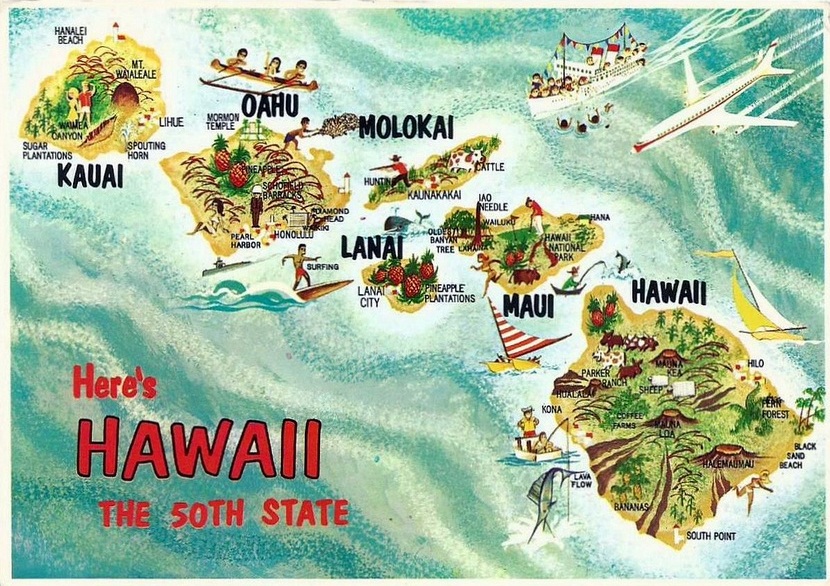
From a travel perspective, Hawaii offers an unparalleled blend of natural beauty and cultural richness. Visitors can explore the dramatic volcanic landscapes of Hawaii Volcanoes National Park on the island of Hawaii, relax on the iconic shores of Waikiki Beach on Oahu, hike through the verdant valleys of Kauai, or witness the breathtaking beauty of the Road to Hana on Maui. Each island boasts its own unique character and attractions, catering to a wide range of interests, from adventure seekers to those seeking relaxation and cultural immersion.
Accommodation options in Hawaii are as diverse as its landscapes. Travelers can choose from luxurious oceanfront resorts like the Grand Wailea, A Waldorf Astoria Resort, intimate boutique hotels, private villas, or budget-friendly apartments. The vibrant tourism industry supports a wide array of experiences, from surfing lessons on the North Shore of Oahu to snorkeling tours in the clear waters of Maui‘s Molokini crater, and exploring historical sites like Pearl Harbor.
For residents, statehood brought the full rights and responsibilities of American citizenship. This includes representation in Congress, the right to vote in presidential elections, and access to federal programs and services. While Hawaii retains its distinct cultural identity and traditions, it is now an integral part of the United States, sharing in its governance and national discourse.
Legacy and Identity: A Blend of Cultures
The journey from an independent kingdom to the 50th state is a testament to Hawaii’s resilience and adaptability. Its history is a complex tapestry woven with threads of indigenous Polynesian culture, Western influence, and the ongoing narrative of American expansion. This rich historical background shapes Hawaii’s present identity, creating a unique blend of traditions and modernity that is palpable across all the islands.
The concept of “Aloha Spirit” is deeply ingrained in Hawaiian culture and continues to be a guiding principle for its people and a welcoming embrace for visitors. This spirit encompasses love, peace, compassion, and mutual respect, reflecting the harmonious coexistence that many strive for in this paradise.
In conclusion, the answer to “Is Hawaii the 50th state?” is a resounding yes. The journey was long and complex, marked by political intrigue, cultural preservation efforts, and a persistent desire for self-determination. Today, Hawaii stands as a testament to its enduring spirit, a place where the legacy of its past informs its vibrant present, offering an extraordinary experience for all who visit its shores. Whether you’re drawn by the call of the ocean, the allure of ancient traditions, or simply the desire for a tropical escape, Hawaii, the 50th state, welcomes you with open arms and the unforgettable Aloha Spirit.
LifeOutOfTheBox is a participant in the Amazon Services LLC Associates Program, an affiliate advertising program designed to provide a means for sites to earn advertising fees by advertising and linking to Amazon.com. Amazon, the Amazon logo, AmazonSupply, and the AmazonSupply logo are trademarks of Amazon.com, Inc. or its affiliates. As an Amazon Associate we earn affiliate commissions from qualifying purchases.