
The question of whether Houston belongs to South Texas is more nuanced than a simple yes or no. Geographically, culturally, and economically, Houston occupies a unique position within the Lone Star State, straddling regional definitions and forging its own distinct identity. While it shares some characteristics with the traditional perception of South Texas, its sheer size, cosmopolitan nature, and specific regional influences set it apart. Understanding this distinction requires exploring the historical, geographical, and cultural threads that weave together the tapestry of Texas.
Geographical and Political Definitions
South Texas is generally understood to encompass the southernmost parts of the state, stretching from the Gulf Coast inland towards the Rio Grande Valley. This region is characterized by its subtropical climate, brush country, and proximity to the Mexican border, influencing its demographics and cultural makeup. Key cities typically associated with South Texas include San Antonio, Corpus Christi, Laredo, and Brownsville.
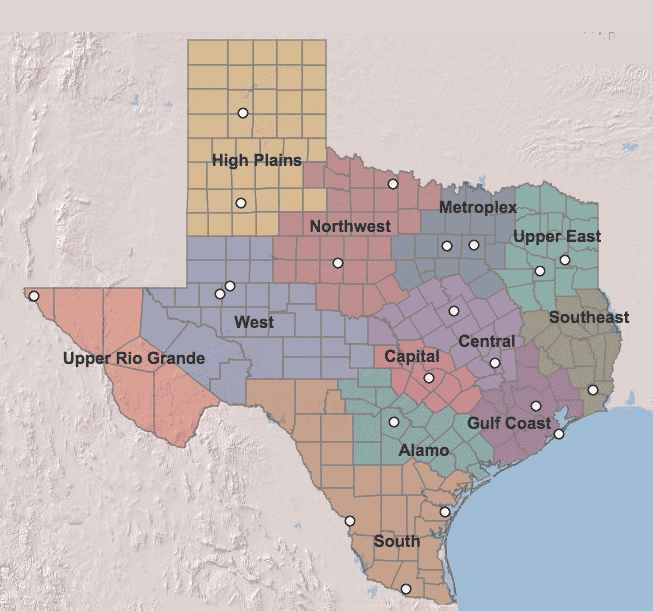
Houston, on the other hand, is located in Southeast Texas, situated in Harris County. It lies further east and slightly north of the core South Texas region. While it shares the humid subtropical climate with much of coastal Texas, its immediate geographical setting is defined by the Piney Woods to the north and east, and the coastal plains leading to the Gulf of Mexico to the south. Politically and administratively, Houston is the anchor of its own metropolitan statistical area, distinct from the South Texas planning regions.
Regional Overlap and Perception
Despite the distinct geographical boundaries, there’s a degree of regional overlap and perception that can lead to the question. Houston’s southern latitude and its position on the Gulf Coast certainly place it in the general southern portion of Texas. For individuals less familiar with the intricate regional divisions of Texas, the sheer vastness of the state can lead to a simplified understanding, where anything south of the Panhandle might be broadly categorized as “South Texas.” This broad-stroke approach, however, overlooks the distinct cultural and historical narratives that shape different parts of the state.
Cultural and Demographic Influences
The cultural landscape of Texas is a rich mosaic, heavily influenced by its history, geography, and proximity to Mexico. South Texas, in particular, is known for its strong Tejano culture, a blend of Hispanic and American traditions. This influence is evident in its music, cuisine, language, and social customs. The region’s history as a frontier territory and its close ties to Mexico have fostered a unique cultural identity.
Houston, while having a significant Hispanic population, is renowned for its extreme diversity. It is one of the most multicultural cities in the United States, with large populations from Asia, Africa, and numerous other regions of the world. This global influence shapes its food scene, festivals, and overall urban character, creating a cosmopolitan atmosphere that is distinct from the more uniformly Tejano influenced areas of South Texas. While Houston shares a passion for barbecue and Tex-Mex cuisine, its culinary landscape extends far beyond these staples, offering authentic flavors from around the globe, from Vietnamese pho in Chinatown to Ethiopian injera in its various enclaves.
A Global Hub
The sheer scale of Houston as a major international port and a center for the energy industry has attracted people from all over the world. This influx of diverse populations has created a dynamic and ever-evolving cultural environment. While this diversity is a hallmark of contemporary Texas, it’s a different kind of melting pot than the historically rooted blend found in South Texas. The urban dynamism, coupled with its sprawling nature and modern infrastructure, further distinguishes it from the more traditional feel often associated with South Texas.
Economic and Industrial Landscape
The economic engines of Texas are varied, and they play a crucial role in defining its regional identities. South Texas, historically, has had a strong connection to agriculture, ranching, and more recently, to industries related to the Mexico border trade and oil and gas extraction. The Rio Grande Valley has also seen growth in tourism and healthcare.
Houston’s economy is dominated by the energy sector, particularly oil and gas, but it is also a leading hub for aerospace, healthcare (with the world-renowned Texas Medical Center), and international trade. Its port, the Port of Houston, is one of the busiest in the United States, handling a vast amount of cargo and contributing significantly to the national and global economy. This industrial and economic profile paints Houston as a major metropolitan powerhouse, a global city with far-reaching economic influence, which differs from the more localized and historically rooted economic activities of much of South Texas.
A Nexus of Commerce
The sheer scale of Houston’s economic activity makes it a nexus of commerce and opportunity. Its robust infrastructure, including a major international airport and extensive highway networks, facilitates its role as a gateway for goods and people. This outward-facing, global economic posture is a defining characteristic of Houston and sets it apart from the more regionally focused economic development seen in many South Texas communities.

Conclusion: A Distinct Identity
In conclusion, while Houston shares some broad geographical and climatic similarities with South Texas, its identity is decidedly its own. It is a global metropolis with a uniquely diverse population, a powerhouse economy driven by international trade and advanced industries, and a dynamic cultural scene that reflects its cosmopolitan nature. To classify Houston simply as “South Texas” would be to overlook the rich complexities and distinct historical, cultural, and economic forces that have shaped it into the vibrant and influential city it is today. It is a vital part of the broader Texas landscape, but it carves out its own space, a testament to its expansive spirit and its position as a gateway to the world.
LifeOutOfTheBox is a participant in the Amazon Services LLC Associates Program, an affiliate advertising program designed to provide a means for sites to earn advertising fees by advertising and linking to Amazon.com. Amazon, the Amazon logo, AmazonSupply, and the AmazonSupply logo are trademarks of Amazon.com, Inc. or its affiliates. As an Amazon Associate we earn affiliate commissions from qualifying purchases.