
Understanding Law Enforcement’s Authority in the Gem State
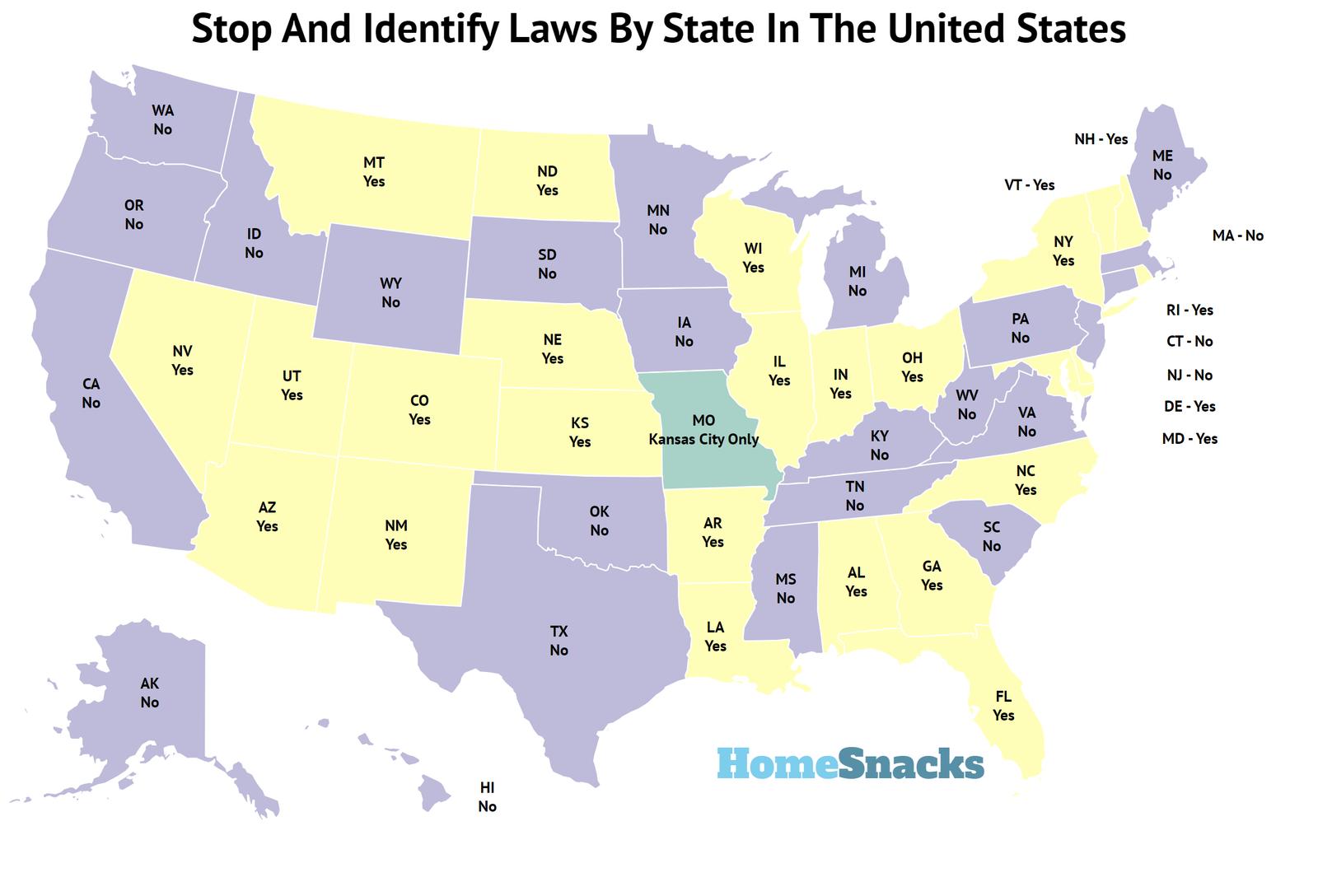
The question of whether Idaho is a “stop and identify” state is a complex one, touching upon the delicate balance between individual liberties and the state’s interest in public safety. While not explicitly codified as a blanket “stop and identify” law in the same vein as some other jurisdictions, [Idaho]’s legal framework, particularly as interpreted through court rulings, grants law enforcement officers significant authority to request identification under specific circumstances. Understanding this authority requires a nuanced look at constitutional principles, statutory provisions, and judicial precedent that shapes interactions between citizens and police in the Gem State.

At its core, the concept of “stop and identify” refers to the power of law enforcement officers to detain an individual temporarily and require them to provide identification. This power is typically not unfettered; it is generally grounded in the doctrine of “reasonable suspicion.” Reasonable suspicion is a standard that is lower than probable cause but higher than a mere hunch. It means that an officer must have specific, articulable facts that, taken together with rational inferences from those facts, reasonably warrant an intrusion upon the individual’s liberty. This intrusion can include a brief stop for questioning and, in some cases, a request for identification.
Constitutional Foundations and Limitations
The Fourth Amendment to the United States Constitution protects individuals from unreasonable searches and seizures. This protection is paramount and forms the bedrock upon which any law enforcement authority, including stop and identify powers, is built. The landmark Supreme Court case of Terry v. Ohio (1968) established the legality of “stop and frisk” encounters. In Terry, the Court held that if a police officer observes unusual conduct which leads him reasonably to conclude in light of his experience that criminal activity may be afoot, he may investigate further by asking the individual’s identity. If the person’s answers are not satisfactory, or if the information is not immediately available, and the officer has reason to believe that the person is armed and presently dangerous, the officer may conduct a pat-down for weapons.
Crucially, Terry v. Ohio did not grant a carte blanche right to demand identification from anyone. The standard remains “reasonable suspicion” that the person has committed, is committing, or is about to commit a crime. This means an officer cannot simply stop someone on the street and demand their name without any basis for suspicion. The suspicion must be particularized to the individual being stopped, not based on generalized fears or stereotypes.
Idaho Statutes and Case Law
In [Idaho], like many states, specific statutes address the duties of individuals when interacting with law enforcement. While Idaho Code § 18-3110 deals with resisting or obstructing officers, it does not explicitly create a “stop and identify” law that mandates citizens to provide identification upon demand in all circumstances. Instead, the authority for officers to request identification is largely derived from their investigatory powers, rooted in the principles established by Terry v. Ohio and subsequent interpretations.
Courts in [Idaho] have consistently applied the reasonable suspicion standard. This means that if an officer has a reasonable, articulable suspicion that a person is involved in criminal activity, they can stop that person and ask for identification. This suspicion might arise from observing behavior that is out of the ordinary, seeing individuals in a location where a crime has recently occurred, or receiving a credible tip from a reliable source.
What Constitutes Reasonable Suspicion in Idaho?
Determining what constitutes “reasonable suspicion” is often fact-specific and can be a point of contention. However, general principles guide these determinations:

- Behavioral Indicators: Actions that are furtive, evasive, or indicative of nervousness beyond that which is normally expected in an encounter with law enforcement can contribute to reasonable suspicion. For instance, loitering in a high-crime area late at night, attempting to conceal one’s presence, or fleeing from an officer without apparent reason can all be factors.
- Information from Others: A tip from a citizen, particularly if the citizen is identified and appears credible, can provide the basis for reasonable suspicion. The reliability and detail of the tip are crucial.
- Context of the Location: The nature of the area where the stop occurs can be relevant. For example, suspicion might be heightened in an area known for specific types of criminal activity.
- Association with Known Criminal Activity: If an individual is observed in the company of someone known to be involved in criminal activity, or in a location where such activity is prevalent, this could contribute to reasonable suspicion.
It is important to note that mere presence in a particular neighborhood, or fitting a general description, is generally not enough to establish reasonable suspicion on its own. Officers must be able to articulate specific observations that link the individual to potential criminal behavior.
Distinguishing Between Stopping and Identifying
The legal framework in [Idaho] differentiates between the power to stop someone based on reasonable suspicion and the subsequent requirement to identify oneself. If an officer has lawfully detained an individual based on reasonable suspicion, the officer can ask for identification. However, the legal ramifications of refusing to identify oneself can vary. In many jurisdictions, including implicitly within [Idaho]’s legal structure, refusing to provide identification when lawfully detained may be considered obstruction of justice or resisting an officer, provided the initial stop was lawful and the request for identification was reasonable and related to the investigation.
However, it’s crucial for individuals to understand their rights. If an officer does not have reasonable suspicion to stop you, you are generally not legally obligated to stop, speak to the officer, or provide identification. The encounter may be considered a “consensual encounter” at that point, and you are free to leave. The line between a consensual encounter and a lawful detention can be blurry and is often determined by the specific facts of the situation and how a reasonable person would perceive the interaction.
Rights and Responsibilities During an Encounter
For residents and visitors in [Idaho], understanding these dynamics is key to navigating interactions with law enforcement.
- If Stopped: If an officer approaches you and you believe they have reasonable suspicion to stop you, you are generally expected to cooperate by providing identification if asked. You have the right to ask the officer why you are being stopped and what suspicion they have. However, you should do so respectfully.
- If Not Stopped: If you are simply approached by an officer and there is no indication of reasonable suspicion, you are generally not obligated to engage. You can politely decline to answer questions or provide identification and continue on your way.
- Know Your Rights: Familiarize yourself with the principles of reasonable suspicion and the limitations on law enforcement’s authority. Organizations like the American Civil Liberties Union (ACLU) often provide resources on citizens’ rights during police encounters.
- Respectful Conduct: Regardless of the circumstances, maintaining a calm and respectful demeanor is always advisable. Escalating a situation through aggressive or defiant behavior can complicate matters.
Practical Implications for Travelers and Residents
For tourists visiting [Idaho], particularly those venturing into less populated areas or exploring the state’s natural beauty like Sawtooth National Recreation Area or the vicinity of Boise, understanding these legal nuances can be beneficial. While unlikely to be a common issue for most travelers, being aware of your rights and responsibilities in potential law enforcement encounters is always prudent.
In essence, [Idaho] operates under a framework where law enforcement officers can request identification when they have a legally sufficient basis – reasonable suspicion – that a crime is afoot and that the individual being stopped is involved. It is not a state where officers can randomly demand identification from anyone, at any time, for any reason. The “stop and identify” power, where it exists, is intrinsically linked to the lawful detention of an individual based on objective, articulable facts suggestive of criminal activity.
Conclusion: A Spectrum of Authority
Ultimately, [Idaho] is not a state with an explicit, broad “stop and identify” statute that compels identification from any person on demand. Instead, the authority for law enforcement to request identification stems from the investigatory powers granted by the Fourth Amendment and interpreted through court decisions like Terry v. Ohio. This means officers must possess reasonable suspicion of criminal activity to lawfully detain and question an individual, which can include asking for their identity. The legal obligation to provide identification often arises as a consequence of being lawfully detained, rather than as a primary standalone mandate. Understanding this distinction is crucial for both law enforcement and the public to ensure that constitutional rights are protected while maintaining public safety across the vast and varied landscapes of the Gem State.
LifeOutOfTheBox is a participant in the Amazon Services LLC Associates Program, an affiliate advertising program designed to provide a means for sites to earn advertising fees by advertising and linking to Amazon.com. Amazon, the Amazon logo, AmazonSupply, and the AmazonSupply logo are trademarks of Amazon.com, Inc. or its affiliates. As an Amazon Associate we earn affiliate commissions from qualifying purchases.