
For many motorcycle enthusiasts, the open road represents the ultimate freedom, a chance to explore vast landscapes and connect with destinations on a deeper level. Texas, with its immense size and diverse terrain, offers an unparalleled playground for riders. From the winding roads of the Texas Hill Country to the rugged beauty of Big Bend National Park, and the historic charm of cities like San Antonio and Austin, the Lone Star State beckons adventurers on two wheels. However, while the allure of the open road is undeniable, understanding the specific traffic laws in Texas is paramount for a safe and enjoyable journey. One question that frequently arises among motorcyclists, especially those traveling from states with different regulations, pertains to the legality of lane splitting. Is it permissible to navigate between lanes of traffic in Texas? The short answer, for the vast majority of situations, is a resounding no. This article delves into the specifics of lane splitting laws in Texas, explores the safety implications, and offers essential advice for motorcyclists looking to safely and legally experience all that this incredible state has to offer.
Understanding Lane Splitting: The Basics
Before we delve into the legalities specific to Texas, it’s crucial to understand what lane splitting entails and why it’s a topic of such frequent discussion among the motorcycling community. The concept, while seemingly straightforward, carries a lot of nuance and has significant implications for rider safety and traffic flow.
What Exactly is Lane Splitting?
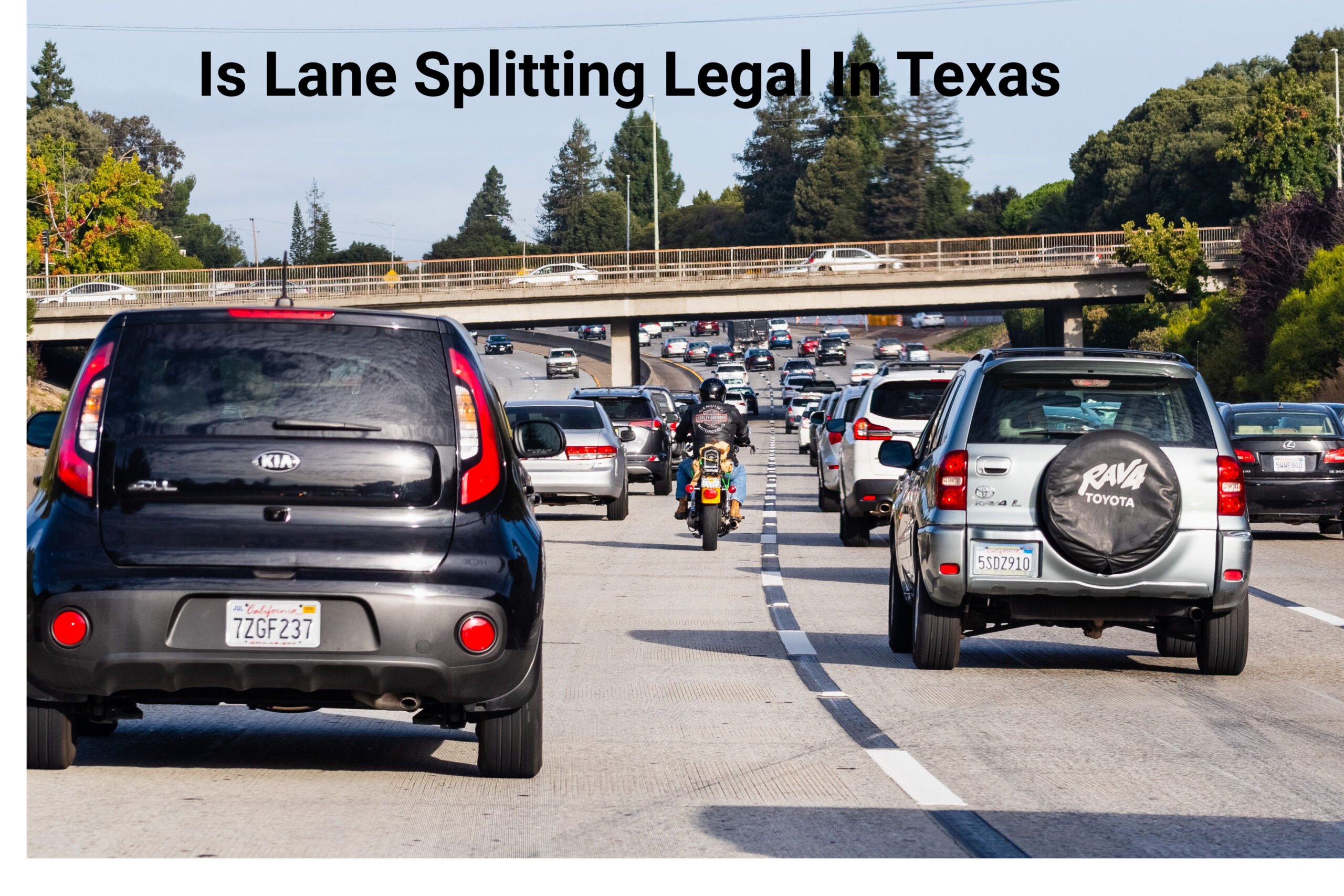
Lane splitting, also known as lane filtering or white-lining, refers to the practice of a motorcyclist riding between lanes of stopped or slow-moving traffic. This can occur on multilane highways or arterial roads where traffic has come to a standstill, or is moving at a significantly reduced speed. Typically, the rider navigates the space between the leftmost lane and the lane immediately to its right, or between any two adjacent lanes, moving past cars that are either stationary or moving slowly. The intent is often to bypass congestion, reduce travel time, and, as some proponents argue, enhance rider safety by allowing them to escape potential rear-end collisions. While often used interchangeably, “lane splitting” generally refers to riding between lanes when traffic is moving, whereas “lane filtering” is more commonly associated with moving through stationary traffic (e.g., up to the front of a traffic light). For the purposes of Texas law, both practices fall under the same prohibitive umbrella.
Why Do Riders Lane Split?
There are several reasons often cited by motorcyclists who advocate for or practice lane splitting. One of the primary motivations is to alleviate congestion. By moving through stopped traffic, riders can save time, especially during peak commute hours. Another common argument centers on rider comfort and machine performance, particularly in hot climates. When a motorcycle is stationary in traffic, its engine can overheat, and the rider can become uncomfortably hot due to exhaust heat and lack of airflow. Moving through traffic allows for continuous airflow, helping to cool both the engine and the rider.
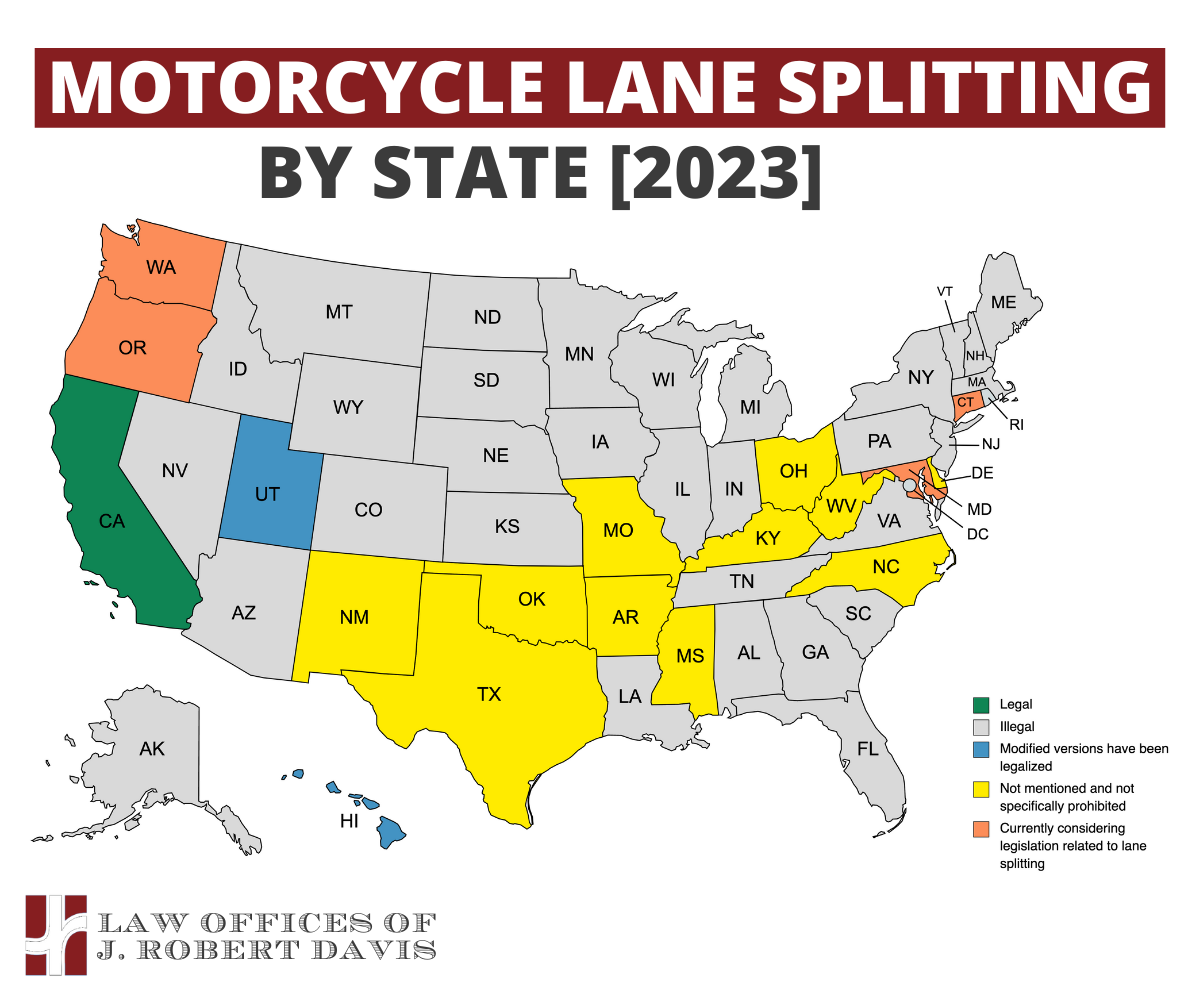
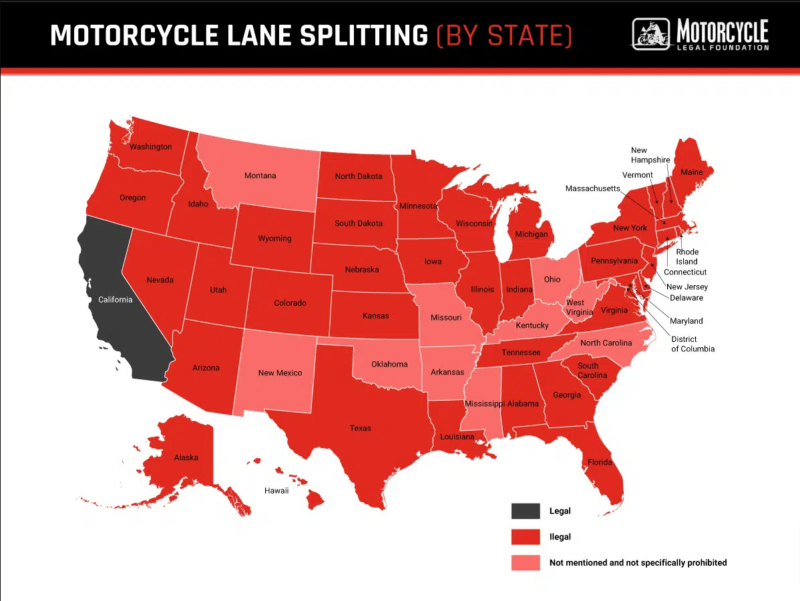
Furthermore, a significant safety argument is made by some. Proponents suggest that lane splitting reduces the risk of rear-end collisions. A motorcycle stopped at the end of a queue of traffic is vulnerable to being struck from behind by an inattentive driver. By filtering to the front, riders remove themselves from this vulnerable position. In addition, some studies, particularly from California (the only state in the United States where lane splitting is explicitly legal), have suggested that lane splitting, when done safely and under specific conditions, can reduce injury severity in collisions. However, these benefits are hotly debated and rely heavily on specific conditions, rider skill, and driver awareness, all of which vary wildly.
The Law in Texas: A Clear Answer
When it comes to motorcycling regulations, laws can vary significantly from one state to another across the United States. This variation is precisely why riders must always be informed about the specific rules of the road in any state they plan to visit or ride through. For those exploring the vast expanses of Texas, the stance on lane splitting is unambiguous.
The Legal Stance: Generally Prohibited
Under the Texas Transportation Code, lane splitting, in almost all its forms, is prohibited. The relevant statutes emphasize that a motor vehicle, including a motorcycle, must be operated entirely within a single lane and not intentionally driven between lanes of traffic. Specifically, Section 545.059, “Driving on Roadway Divided into Lanes,” generally dictates how vehicles must be operated on roadways with marked lanes. While it doesn’t explicitly use the term “lane splitting,” the interpretation by law enforcement and the courts is that the practice violates the spirit and letter of the law regarding maintaining a single lane of travel.
This means that a motorcyclist riding between two lanes of moving traffic, or even slowly filtering to the front of a line of stopped cars at a traffic light, would be in violation of Texas law. The legislature in Texas has considered bills to legalize lane splitting in the past, but none have successfully passed into law. Therefore, as of now, the legal landscape remains firm: lane splitting is not permitted on Texas roads. Riders who are accustomed to legal lane splitting in other jurisdictions, like California, must adjust their riding practices when they enter Texas to avoid legal repercussions.
Exceptions and Nuances
While the general rule is clear, it’s worth briefly examining if there are any exceptions or nuances to this prohibition in Texas. Unfortunately for lane-splitting advocates, there are virtually no exceptions that would allow a motorcyclist to legally operate between lanes of traffic. The law is applied broadly, covering situations whether traffic is moving or stationary.
Some may confuse lane splitting with legal maneuvers such as changing lanes, which is permissible when done safely and with proper signaling. However, riding within the space between two marked lanes is a distinct action that the Texas Transportation Code does not permit. Even in scenarios of heavy traffic congestion, where the perceived benefits of lane splitting might seem most attractive, the law in Texas still requires motorcyclists to remain within their designated lane, just like any other vehicle. This consistency across all vehicle types is a hallmark of Texas traffic law, prioritizing predictable traffic flow and minimizing potential conflicts.
Penalties for Violations
Ignoring the law regarding lane splitting in Texas can lead to several undesirable consequences. A motorcyclist caught lane splitting can face a citation for an unsafe lane change or for failing to maintain a single lane. The penalties typically include fines, which can vary depending on the specific county or municipality, but generally range from several hundred dollars. In addition to monetary fines, such a violation could result in points being added to a rider’s driving record. Accumulating too many points can lead to increased insurance premiums, or in severe cases, even the suspension of a driver’s license.
Beyond the legal and financial penalties, there’s an inherent risk involved. An officer witnessing lane splitting might interpret it as reckless driving, especially if performed at high speed or in a dangerous manner, potentially escalating the charges and consequences. Furthermore, being involved in an accident while illegally lane splitting could significantly complicate insurance claims, potentially leading to a determination of fault against the motorcyclist, even if another driver contributed to the incident. Therefore, understanding and adhering to Texas’s stance on lane splitting is not just about avoiding a ticket, but about ensuring personal safety and maintaining a clean driving record.
Safety and Practical Considerations for Motorcyclists in Texas
Navigating the roads of Texas on a motorcycle is an exhilarating experience, but it demands a heightened awareness of safety. Adhering to traffic laws, especially those concerning lane usage, is a critical component of safe riding. Understanding the inherent risks of lane splitting, even if it were legal, and adopting best practices for the diverse Texas road conditions are paramount for any rider.
The Risks of Lane Splitting
Regardless of legality, lane splitting presents several significant safety risks that all motorcyclists should be aware of. The primary danger stems from the unpredictable behavior of other drivers. Car and truck drivers often do not anticipate a motorcycle appearing suddenly between lanes, and may make sudden lane changes without checking their blind spots. This can lead to collisions that are often catastrophic for the motorcyclist, who lacks the protective cage of a car.
Reduced visibility is another major concern. While a rider might have a clear view ahead, their motorcycle is often obscured from the side mirrors of larger vehicles, especially trucks and SUVs. This makes them virtually invisible to drivers who might be looking to change lanes. Road debris, which might be minor for a car, can become a serious hazard for a motorcycle attempting to navigate a narrow gap between vehicles. Potholes, loose gravel, or even discarded items can cause a rider to lose control. Lastly, the confined space between vehicles offers little to no escape route if an emergency arises, leaving the rider trapped between two potential collision points. These risks are why many jurisdictions, including Texas, err on the side of caution by prohibiting the practice.
Best Practices for Texas Roads
For motorcyclists traveling through Texas, prioritizing safety and legality ensures a stress-free and enjoyable trip. The vast network of highways, rural roads, and urban thoroughfares requires a versatile approach to riding.
- Maintain Safe Following Distances: Always leave ample space between your motorcycle and the vehicle ahead. This provides crucial reaction time and a buffer zone in case of sudden stops.
- Stay Visible: Wear bright, reflective gear, use your headlights (even during the day), and strategically position yourself in the lane to be seen by other drivers. Avoiding blind spots of cars and trucks is essential.
- Use Proper Signaling: Clearly signal all turns and lane changes well in advance. This communicates your intentions to other drivers and reduces confusion.
- Scan Your Surroundings Constantly: Be aware of what’s happening in front, behind, and to the sides. Anticipate potential hazards, such as distracted drivers, aggressive maneuvers, or unexpected obstacles on the road.
- Adhere to Speed Limits: Texas roads often have high-speed limits, especially on interstates. While tempting to push the limits, sticking to posted speeds reduces the risk of accidents and provides more control.
- Lane Positioning: Instead of hugging one side, position yourself in the lane to maximize your visibility and provide an escape route. The left or right third of the lane often offers the best vantage point and margin for error.
- Ride Sober and Focused: Never ride under the influence of alcohol or drugs. Ensure you are well-rested and focused on the road, free from distractions.
By adhering to these best practices, motorcyclists can significantly mitigate risks and enjoy the beauty of Texas responsibly.
Exploring Texas on Two Wheels (Legally and Safely)
Texas offers an incredible array of scenic routes and destinations perfectly suited for motorcycle travel. Embracing these journeys legally and safely ensures a memorable experience. The Texas Hill Country is a prime example, renowned for its winding roads, rolling hills, and charming small towns like Fredericksburg and Bandera. Routes such as “The Three Sisters” (Ranch Roads 335, 336, and 337) are legendary among riders for their challenging curves and breathtaking vistas. Further west, the vast, open roads leading to Big Bend National Park offer a stark contrast, with epic desert landscapes and unparalleled solitude. Even a segment of the historic Route 66 cuts through the Texas Panhandle, providing a nostalgic ride through classic Americana.
When planning these trips, riders should focus on route planning that considers travel time, fuel stops, and potential weather changes. Texas weather can be unpredictable, with extreme heat in summer and sudden storms possible. Carrying essential gear, including rainwear, hydration packs, and a basic tool kit, is always advisable. For longer trips, consider reserving accommodation in advance, especially in popular tourist areas or during major events. Many hotels and motels cater to motorcyclists, offering amenities like covered parking or designated motorcycle spaces, making the journey more convenient.
Beyond Lane Splitting: A Broader Look at Motorcycle Travel in Texas
While the legality of lane splitting is an important consideration for any motorcyclist, it represents just one facet of planning an epic two-wheeled adventure through Texas. The true joy of exploring the Lone Star State on a motorcycle lies in its diverse geography, rich culture, and the warm hospitality you’ll encounter along the way. Texas is not just a destination; it’s an experience, especially for those who prefer the open air and direct engagement with the road.
Motorcycle-Friendly Destinations and Events
Texas proudly hosts a vibrant motorcycle culture, evident in its numerous rider-friendly towns, scenic routes, and annual events. Cities like Austin, the “Live Music Capital of the World,” offer an eclectic mix of entertainment, dining, and vibrant nightlife, all accessible via motorcycle. Riders can cruise down Congress Avenue, admire the Texas State Capitol, and enjoy the city’s unique vibe. San Antonio, rich in history, invites exploration of the Alamo, the River Walk, and its stunning missions, providing a cultural immersion that perfectly complements a road trip. Dallas and Houston, while bustling metropolitan centers, also serve as excellent hubs for exploring surrounding areas, with numerous motorcycle shops, dealerships, and rider groups.
Beyond the cities, the state plays host to major motorcycle rallies that draw thousands of enthusiasts annually. The Republic of Texas Biker Rally, held in Austin each June, is one of the largest in the United States, transforming the city into a celebration of motorcycle culture with live music, vendors, and impressive custom bikes. Smaller, regional rallies and charity rides occur throughout the year, offering ample opportunities for riders to connect with the local community and experience different parts of the state. These events are not just about riding; they’re about camaraderie, sharing stories, and soaking in the unique Texas spirit.
Accommodation and Amenities for Riders
When planning a multi-day motorcycle tour through Texas, finding the right accommodation is key to a comfortable and worry-free experience. Many establishments, particularly in popular touring areas, are accustomed to hosting motorcyclists and offer specific amenities. Look for hotels, motels, and even boutique inns that advertise “motorcycle-friendly” facilities. These might include:
- Covered or Secure Parking: Essential for protecting your bike from the elements and potential theft. Some places offer designated motorcycle parking spots or even garages.
- Wash-Down Stations: A convenient amenity for cleaning off road grime after a long day’s ride.
- Ground Floor Rooms: Easier access for loading and unloading gear, especially if you have heavy saddlebags.
- Proximity to Restaurants and Services: After a day in the saddle, having dining options and stores within walking distance or a short ride is a major plus.
- Local Riding Information: Some hotel staff are riders themselves and can offer valuable tips on local routes, road conditions, and attractions.
Utilizing online booking platforms and filtering for “motorcycle-friendly” options, or checking reviews from other riders, can greatly assist in finding the ideal place to rest and recharge. From budget-friendly motels along Route 66 to luxury resorts in the Texas Hill Country, there’s an accommodation option for every style of rider and every budget, ensuring your trip is as comfortable off the bike as it is on it.
Planning Your Texas Motorcycle Trip
Effective planning is the cornerstone of any successful motorcycle adventure, especially in a state as vast and varied as Texas. Consider these tips to ensure a seamless and unforgettable journey:
- Route Mapping: Utilize GPS devices and paper maps to plan your routes. Factor in potential road closures, construction, and scenic detours. Services like Butler Maps (hypothetical common map name for riders) often highlight desirable motorcycle roads.
- Weather Preparedness: Texas weather can shift dramatically. Check forecasts frequently and pack layers. Summers are intensely hot, demanding hydration and ventilated gear, while winters in the northern parts can be surprisingly cold.
- Bike Maintenance: Before setting off, ensure your motorcycle is in top condition. Check tires, brakes, fluids, and lights. Carry a basic repair kit for minor issues.
- Packing Smart: Pack light but comprehensively. Include essentials like rain gear, first-aid kit, water, snacks, and appropriate riding apparel for varying temperatures.
- Emergency Plan: Share your itinerary with someone back home. Have a fully charged phone, a portable charger, and consider carrying a satellite communication device for remote areas like Big Bend National Park.
- Budgeting: Account for fuel, food, accommodation, and potential entrance fees for parks or attractions. Texas can be surprisingly affordable, but expenses add up on a long trip.
- Embrace the Lifestyle: Beyond the practicalities, a Texas motorcycle trip is about embracing the freedom, the culture, and the open road. Be open to spontaneous stops, engaging with locals, and discovering hidden gems.
By meticulously planning and keeping safety at the forefront, motorcyclists can truly unlock the incredible potential for adventure that Texas offers.
In conclusion, while the allure of filtering through traffic might be strong for some riders, it’s essential to remember that lane splitting is not legal in Texas. Adhering to the state’s traffic laws, prioritizing safety, and adopting responsible riding practices will not only prevent unnecessary penalties but also ensure a more enjoyable and secure exploration of this magnificent state. Texas welcomes motorcyclists with open arms, offering countless miles of breathtaking scenery and unforgettable experiences, all best enjoyed when ridden legally and safely.
LifeOutOfTheBox is a participant in the Amazon Services LLC Associates Program, an affiliate advertising program designed to provide a means for sites to earn advertising fees by advertising and linking to Amazon.com. Amazon, the Amazon logo, AmazonSupply, and the AmazonSupply logo are trademarks of Amazon.com, Inc. or its affiliates. As an Amazon Associate we earn affiliate commissions from qualifying purchases.