
The Sunshine State, famed for its year-round warmth and tropical allure, typically conjures images of sun-drenched beaches, vibrant theme parks, and lush, green landscapes. The very notion of snow falling in Florida seems counterintuitive, almost an oxymoron. Yet, the question of whether snow graces the sandy shores and citrus groves of this southern peninsula is not as straightforward as it might appear. While a full-blown blizzard is exceptionally rare, occurrences of winter precipitation, including sleet and even light snowfall, have been documented, albeit with infrequent and localized impact. Understanding these events requires a dive into Florida’s unique climate patterns, the atmospheric conditions necessary for winter precipitation, and historical instances that have surprised residents and visitors alike.

Florida’s Temperate Climate and Winter Weather Anomalies
Florida’s climate is predominantly subtropical to tropical. This means that winters are generally mild, characterized by cool but rarely freezing temperatures, especially in the southern half of the state. The vast expanse of the Atlantic Ocean and the Gulf of Mexico significantly moderates temperatures, preventing the extreme cold that grips more northern latitudes. However, this moderating influence doesn’t entirely preclude the possibility of winter weather events.
The key ingredient for any form of frozen precipitation is a combination of sufficiently cold air aloft and at the surface, coupled with moisture. In Florida, the typical winter pattern involves cold fronts sweeping down from the north. When these fronts are particularly potent and bring Arctic air masses into contact with moisture, usually from the Gulf of Mexico or lingering Gulf Stream energy, the conditions become conducive to winter weather.
The Role of Cold Fronts and Moisture
The passage of a strong cold front is crucial. These fronts are boundaries between different air masses, and when a polar or Arctic air mass pushes south, it can significantly drop temperatures across the state. If this influx of cold air coincides with a period of atmospheric instability and available moisture, precipitation can occur. The altitude at which this precipitation forms and the temperature profile of the atmosphere as it falls determine whether it becomes rain, sleet, freezing rain, or snow.
For snow to reach the ground in Florida, the air temperature from the cloud base all the way to the surface must be at or below freezing (32 degrees Fahrenheit or 0 degrees Celsius). Even a thin layer of warmer air near the surface can cause snowflakes to melt before they land, resulting in a wintry mix or just cold rain. Sleet, which is frozen raindrops, requires a temperature inversion—a layer of warm air above a layer of freezing air—causing snowflakes to melt into rain and then refreeze as they fall through the colder air near the ground. Freezing rain occurs when rain falls as liquid but freezes upon contact with sub-freezing surfaces, creating hazardous ice accumulation.
Historical Snowfall Events in Florida
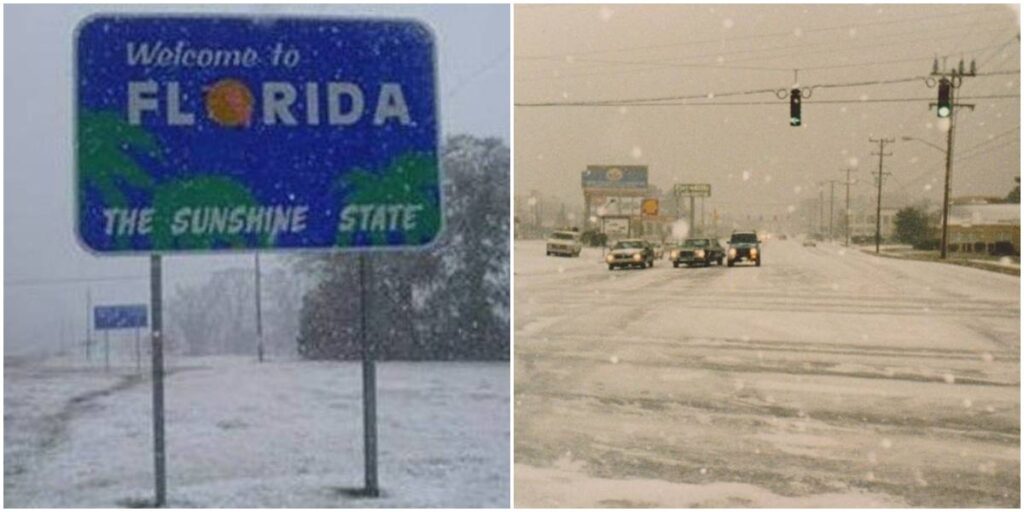
While snow is not a regular occurrence, Florida has experienced snow on several occasions throughout its history. These events are often marked by surprise and fascination, turning into memorable, albeit fleeting, moments for those who witness them.
The “Great Blizzard” of 1899
One of the most significant and widely documented winter weather events in Florida occurred in February 1899. Dubbed the “Great Blizzard” by some accounts, this severe cold snap brought freezing temperatures and snow to much of the state, reaching as far south as Tampa and Miami. Snowfall accumulated inches deep in some areas, causing considerable disruption. The event was particularly noteworthy for its southward reach and duration, impacting citrus crops and daily life. The image of snow dusting palm trees became an iconic, albeit rare, visual from this period.
Sporadic Snowfall in the 20th and 21st Centuries
Beyond the 1899 event, other instances of winter precipitation have occurred. In January 1977, a cold snap brought sleet and a light dusting of snow to parts of North and Central Florida. Residents of cities like Orlando and even Jacksonville reported seeing snow flurries. While accumulation was minimal, the visual of snow against the backdrop of familiar Floridian scenery was a novelty.
More recently, in January 2018, a cold surge brought a mix of sleet and snow flurries to parts of North Florida, including the Panhandle and extending slightly inland. Again, accumulation was slight and short-lived, but the event garnered significant media attention and social media buzz, highlighting the unusual nature of snow in the region. These more recent events, while less impactful than the 1899 blizzard, underscore that the possibility of winter precipitation, even in light forms, persists in Florida.
Factors Influencing Snowfall Possibility
Several meteorological factors converge to create the rare conditions necessary for snow in Florida. Understanding these elements provides insight into why these events are exceptional rather than routine.
Atmospheric Temperature Profile
The most critical factor is the temperature profile of the atmosphere. For snow to form and reach the ground as snow, the entire atmospheric column from the cloud to the surface must be at or below freezing. Even a few degrees above freezing for a significant portion of the descent will melt snowflakes. In Florida, the air near the surface is often too warm, even when the temperature aloft is conducive to snow formation. This is why sleet or freezing rain are more common outcomes than true snowfall in the infrequent winter weather events that affect the state.
Moisture Availability
Sufficient moisture is also essential. Cold air masses moving into Florida are often dry. For precipitation to form, there needs to be an active weather system that can draw moisture from sources like the Gulf of Mexico or the Atlantic Ocean. This moisture can then condense and form clouds, and if the temperatures are right, precipitation. The combination of a strong cold front, available moisture, and temperatures at or below freezing through the atmospheric column is a rare confluence of events for the Sunshine State.
Geographic Location within Florida
The likelihood of experiencing snow or significant winter precipitation varies considerably within Florida. Northern Florida, particularly the Panhandle and areas near the Georgia border, experiences colder temperatures and is more susceptible to winter weather systems. Cities like Tallahassee and Pensacola have a higher probability of seeing snow, though it remains an infrequent event. Central and South Florida, including major tourist hubs like Orlando and Miami, are far less likely to witness snowfall due to their consistently warmer winter temperatures.
Experiencing Winter in Florida: Beyond the Snow
While the possibility of snow in Florida is an intriguing anomaly, the state offers a rich tapestry of winter experiences that don’t involve frozen precipitation. The mild winter months are, in fact, an ideal time to visit and explore, often avoiding the intense heat and humidity of summer and the peak tourist season crowds.
A Pleasant Escape for Travelers
For many, Florida’s winter offers a welcome escape from colder climates. Temperatures typically range from the 60s to 70s Fahrenheit (15-25 Celsius) in many areas, making it perfect for outdoor activities. The beaches, while perhaps too cool for swimming for some, are ideal for leisurely strolls, sunbathing, and enjoying the coastal scenery without the oppressive heat. The theme parks, such as those in Orlando, are often less crowded and more comfortable to navigate during the winter months.
Outdoor Activities and Cultural Events
Winter is prime time for exploring Florida’s natural beauty. The Everglades National Park offers cooler, drier conditions for airboat tours and wildlife viewing. Kayaking and paddleboarding are enjoyable on the numerous waterways, and hiking trails are more accessible. Many cities host festivals and outdoor events during this period, taking advantage of the pleasant weather. Tampa and St. Petersburg on the Gulf Coast, and Miami on the Atlantic, often feature art walks, music festivals, and culinary events that showcase the diverse culture of the state.
Agricultural Delights and Nature’s Bounty
The cooler months are also a significant time for Florida’s agricultural sector. Citrus groves are ripening, and farmers’ markets are abundant with fresh produce. This is the season for experiencing the state’s renowned oranges, grapefruits, and other tropical fruits. Visiting an orange grove or attending a local harvest festival can be a delightful way to engage with the local flavor of Florida during its milder season.
In conclusion, while the question “Is it snow in Florida?” might elicit a surprised laugh, the answer is a qualified “rarely.” True snowfall is an exceptional meteorological event, confined to specific atmospheric conditions and more likely in the northern parts of the state. However, the allure of Florida as a winter destination lies not in its capacity for snow, but in its consistently mild and pleasant climate, offering a multitude of engaging experiences for travelers seeking warmth and sunshine. The occasional whisper of winter weather only adds to the unique charm and diverse climate narrative of the Sunshine State.
LifeOutOfTheBox is a participant in the Amazon Services LLC Associates Program, an affiliate advertising program designed to provide a means for sites to earn advertising fees by advertising and linking to Amazon.com. Amazon, the Amazon logo, AmazonSupply, and the AmazonSupply logo are trademarks of Amazon.com, Inc. or its affiliates. As an Amazon Associate we earn affiliate commissions from qualifying purchases.