
The allure of traversing roadways, particularly for motorcyclists, often brings with it questions about traffic laws and their permissibility. One such practice, known as lane splitting, involves a motorcyclist riding between lanes of traffic. This maneuver, while potentially offering advantages in congested areas, is subject to varying legal interpretations and statutes across different states. For those contemplating a journey through Oklahoma, or for residents seeking clarity on the matter, understanding the legal standing of lane splitting is paramount to ensuring a safe and lawful experience. This article delves into the specific regulations governing lane splitting in Oklahoma, examining the nuances of the law, its potential implications, and providing guidance for motorcyclists operating within the state.
Understanding Lane Splitting and Its Legal Landscape
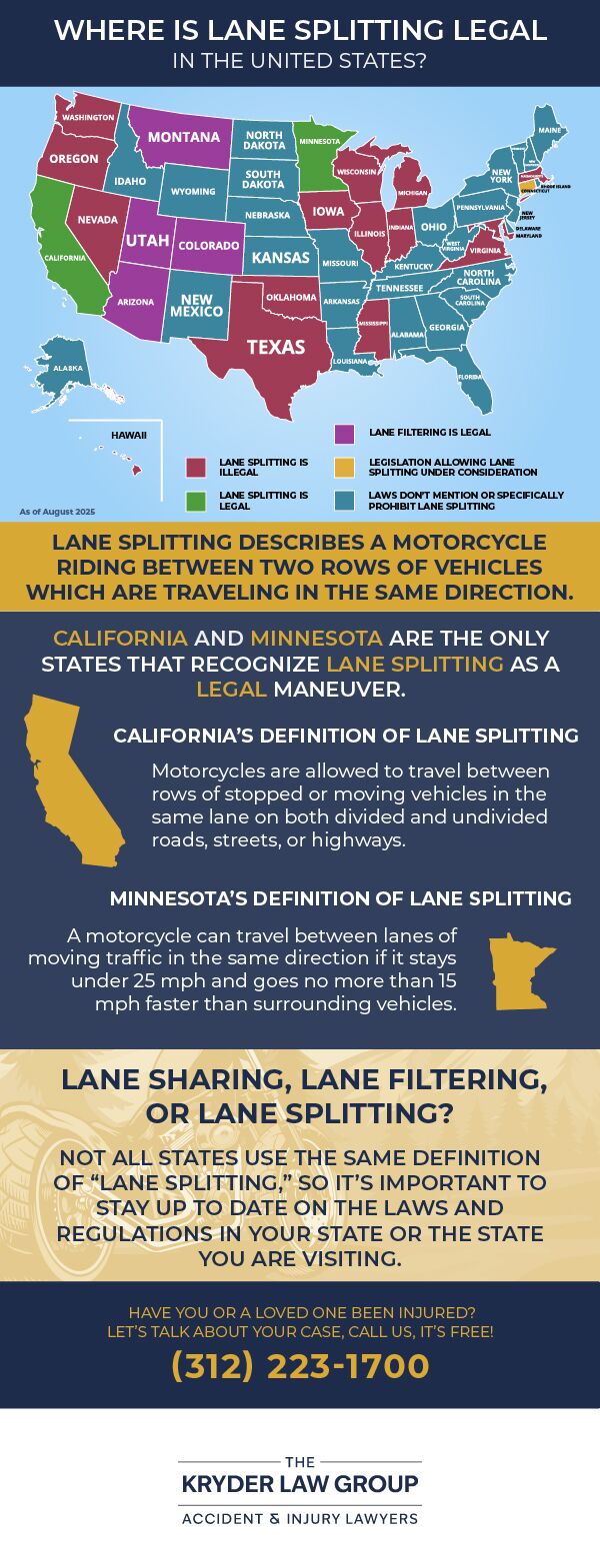
Lane splitting, also referred to as filtering or lane sharing, is a practice wherein a motorcyclist maneuvers their vehicle between two adjacent lanes of moving or stationary motor vehicles. The primary motivations behind this practice often include reducing travel time in heavy traffic, circumventing traffic jams, and potentially finding cooler air on a hot day. However, the legality of lane splitting is not universally accepted and varies significantly from state to state within the United States. Some states have explicitly legalized lane splitting under specific conditions, while others have outright prohibited it. A significant number of states fall into a gray area, where the practice is neither explicitly permitted nor forbidden, leaving its legality to interpretation by law enforcement and judicial bodies. This ambiguity can lead to confusion and potential citations for motorcyclists unaware of the local statutes.
The Rationale Behind Lane Splitting Laws
The debate surrounding lane splitting often centers on safety and traffic flow. Proponents argue that lane splitting can actually enhance safety by allowing motorcyclists to position themselves where they are more visible to other drivers, thereby reducing the likelihood of rear-end collisions. They also contend that it can improve traffic efficiency by allowing motorcycles to move through gridlock, thus freeing up road space. Critics, on the other hand, express concerns about the inherent risks involved. They point to the potential for collisions if other drivers make sudden maneuvers, open car doors, or if the motorcyclist misjudges clearances. The speed differential between motorcycles and other vehicles, especially in congested traffic, is also a significant concern for those opposed to the practice. These differing perspectives form the bedrock of why legislation and enforcement regarding lane splitting vary so widely.
The Absence of Specific Legislation in Oklahoma
In the state of Oklahoma, the legal framework surrounding lane splitting is characterized by a notable absence of explicit statutes either permitting or prohibiting the practice. This means that Oklahoma does not have a codified law that directly addresses whether motorcyclists are allowed to split lanes. This legal vacuum creates an environment where interpretation and enforcement can be inconsistent. Without clear guidelines, motorcyclists operating in Oklahoma must navigate this ambiguous territory with caution, understanding that their actions could be subject to the discretion of law enforcement officers. The lack of specific legislation does not necessarily equate to implicit permission; rather, it signifies a lack of a definitive legal stance.
Navigating Oklahoma’s Traffic Laws for Motorcyclists
While Oklahoma may not have specific laws against lane splitting, it is crucial for motorcyclists to adhere to all other existing traffic regulations. This includes, but is not limited to, maintaining a safe speed, operating within marked lanes, and yielding to other vehicles when necessary. The general principles of safe driving and reasonable conduct are always applicable, regardless of whether a specific maneuver like lane splitting is explicitly addressed in the statutes. Understanding these broader legal obligations is key to ensuring a lawful and safe riding experience in Oklahoma.

General Traffic Laws Applicable to Motorcycles
All vehicles, including motorcycles, are expected to operate in a manner that does not endanger themselves or others. This fundamental principle underlies traffic law in Oklahoma. Motorcyclists are required to obey posted speed limits, signal their intentions when changing lanes or turning, and operate their vehicles in a single file within a lane. The concept of “reckless driving” or “unsafe operation” can be broadly applied to maneuvers deemed dangerous, even if not specifically prohibited. Therefore, any attempt at lane splitting in Oklahoma would need to be executed with an extreme degree of caution and awareness of surrounding traffic conditions, as it could potentially be construed as an unsafe operation under general traffic statutes.
The Role of Law Enforcement and Judicial Interpretation
In the absence of explicit legislation, the enforcement of traffic laws related to lane splitting in Oklahoma largely falls to the discretion of law enforcement officers. An officer observing a motorcyclist engaging in what they deem to be unsafe lane splitting might issue a citation under broader statutes related to reckless driving, improper lane usage, or impeding traffic. Subsequent legal challenges or interpretations would then be subject to the judgment of the courts. This reliance on discretion means that the legality of lane splitting can, in practice, depend heavily on the specific circumstances of the encounter and the interpretation of the observing officer and any presiding judge. This creates an environment of uncertainty for motorcyclists.
Safety Considerations for Motorcyclists in Oklahoma
Regardless of the legal status of lane splitting, safety should always be the paramount concern for any motorcyclist. The inherent vulnerability of motorcyclists on the road necessitates a heightened awareness of their surroundings and a commitment to defensive riding practices. In states where lane splitting is permitted, it is typically accompanied by strict guidelines designed to mitigate risks. While Oklahoma does not have these specific guidelines, the general principles of safe motorcycle operation remain universally applicable and are even more critical in the absence of clear legal directives on potentially hazardous maneuvers.
Defensive Riding and Situational Awareness
Defensive riding is a proactive approach to motorcycle safety that emphasizes anticipating potential hazards and making conscious decisions to avoid them. This involves constantly scanning the road, checking mirrors, and being aware of blind spots in other vehicles. For motorcyclists in Oklahoma, especially those considering maneuvers that push the boundaries of standard traffic law, a heightened sense of situational awareness is crucial. This includes assessing the speed and direction of surrounding vehicles, the condition of the road surface, and the overall traffic density. It is about being prepared for the unexpected and having a plan to react safely to potential threats.
Best Practices for Motorcyclists in the Absence of Clear Laws
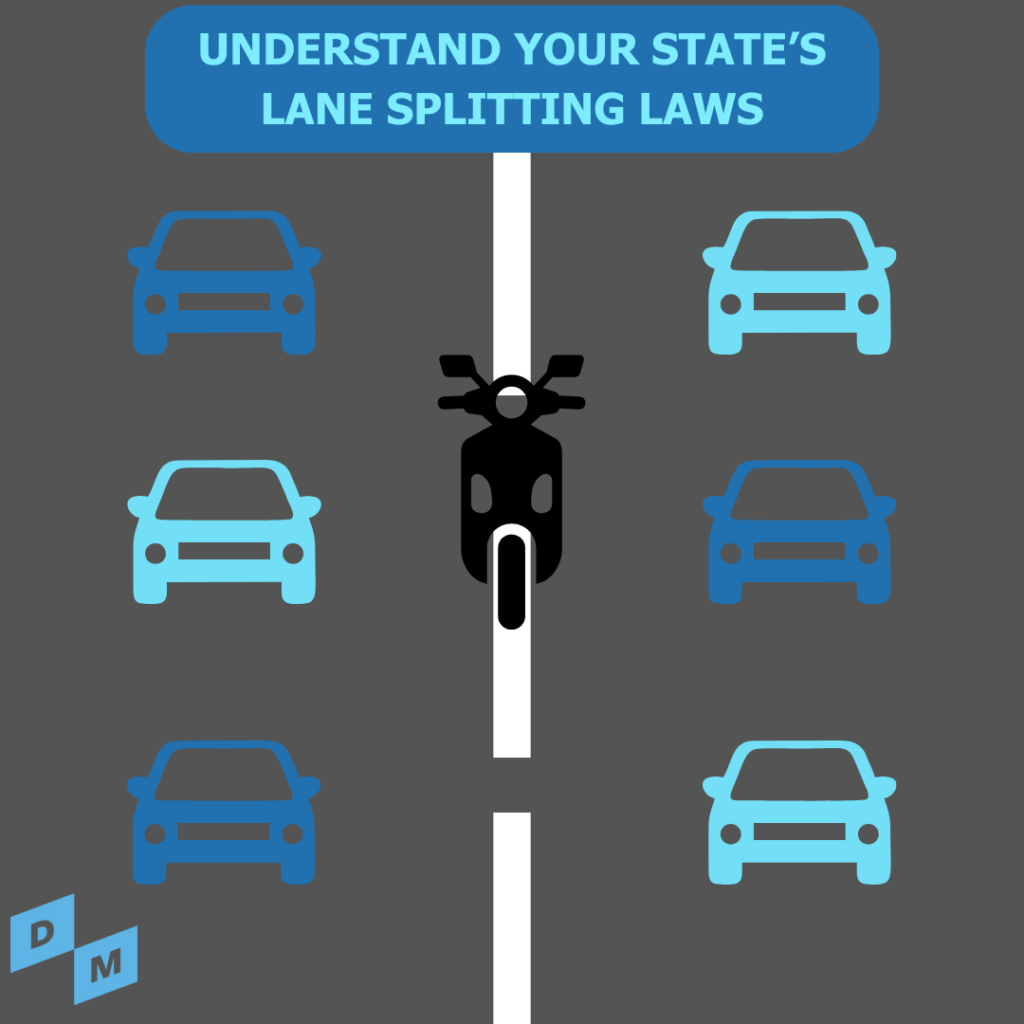
In situations where the legality of a specific maneuver is unclear, as with lane splitting in Oklahoma, the safest course of action is often to err on the side of caution. This means refraining from practices that could be interpreted as unsafe or that might create a hazard for other road users. Motorcyclists in Oklahoma should prioritize riding within their lane, maintaining a safe following distance, and always ensuring they are visible to other drivers. Focusing on these fundamental aspects of motorcycle operation will contribute significantly to a safer riding experience and help avoid potential legal entanglements. The ultimate goal for any rider should be to reach their destination safely, and understanding the legal landscape, or lack thereof, is a critical part of that equation.
LifeOutOfTheBox is a participant in the Amazon Services LLC Associates Program, an affiliate advertising program designed to provide a means for sites to earn advertising fees by advertising and linking to Amazon.com. Amazon, the Amazon logo, AmazonSupply, and the AmazonSupply logo are trademarks of Amazon.com, Inc. or its affiliates. As an Amazon Associate we earn affiliate commissions from qualifying purchases.