
The question of which metropolis reigns supreme in size, vibrancy, and global influence often ignites passionate debate. When pitting two titans of urban life against each other, namely London and New York City, the answer to “Is London bigger than New York City?” is not a simple yes or no. It depends entirely on the metrics you choose to employ. Are we talking about geographical footprint, population density, economic power, or cultural impact? Each facet offers a different perspective on these sprawling, captivating cities. This exploration will delve into various aspects of their scale, from their physical dimensions to the sheer volume of experiences they offer, all through the lens of travel, tourism, accommodation, and lifestyle.
Defining “Bigger”: A Multifaceted Comparison
To definitively answer whether London is bigger than New York City, we must break down the concept of “bigness” into quantifiable and qualitative components. This allows for a more nuanced understanding of each city’s unique characteristics and their standing on the global stage.
Geographical Size and Urban Sprawl
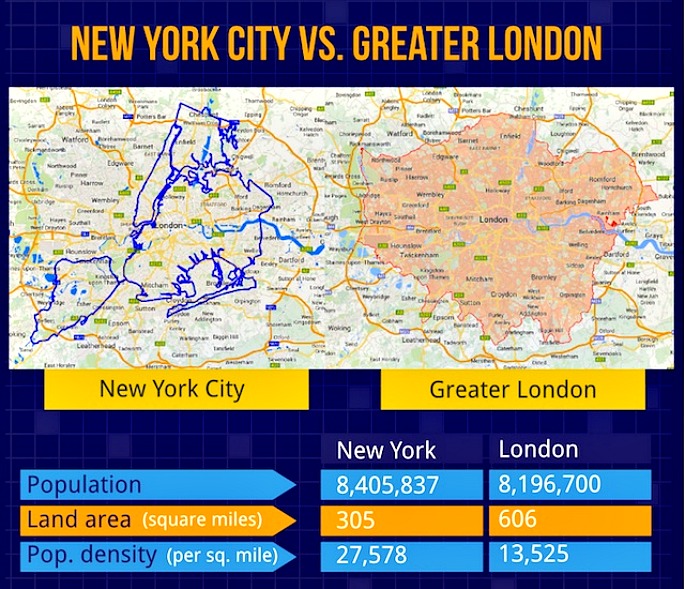
When considering sheer landmass, the definitions of what constitutes each city become crucial. New York City is officially comprised of five boroughs: Manhattan, Brooklyn, Queens, the Bronx, and Staten Island. The total land area of these boroughs is approximately 302.6 square miles (783.8 square kilometers).
London, on the other hand, is often defined by the administrative region of Greater London, which encompasses 32 boroughs and the City of London. Greater London covers an area of roughly 607 square miles (1,572 square kilometers). By this measure, Greater London is considerably larger than New York City in terms of geographical footprint.
However, urban sprawl and metropolitan areas present a different picture. The New York City metropolitan area, which includes surrounding counties in New York, New Jersey, and Connecticut, is vast, extending far beyond the city limits. Similarly, the London metropolitan area also encompasses a wide swathe of the South East of England. When considering these broader definitions, the comparison becomes more complex and often depends on the specific boundaries used for calculation. While Greater London has a larger administrative area, the interconnectedness and expansive nature of the New York City metropolitan region make it a formidable contender in terms of sheer developed land and commuter influence.
Population and Density: A Measure of Human Scale
Population is another critical metric when assessing the “bigness” of a city. New York City has a population of over 8.8 million people within its official boundaries, making it the most populous city in the United States. This density of people creates an unparalleled urban energy, a constant hum of activity that defines the city’s character.
London, with a population of around 9 million people within Greater London, is slightly more populous. However, the population density can differ. Manhattan, in particular, is renowned for its incredibly high population density, leading to its iconic towering skyscrapers and a constant sense of bustling activity. While London has more people overall within its administrative area, the concentrated population in the core of New York City creates a palpable sense of intensity.
Looking at metropolitan populations, both cities are colossal. The New York City metropolitan area is home to over 20 million people, while the London metropolitan area is also home to a similar, vast number of residents. These figures highlight that in terms of the sheer number of people inhabiting and interacting within their spheres of influence, both cities are on a similar, immense scale.
The Lived Experience: Travel, Tourism, and Culture
Beyond the raw statistics of land area and population, the “bigness” of a city can also be measured by the breadth and depth of experiences it offers to visitors and residents alike. This is where the realms of travel, tourism, hotels, accommodation, and lifestyle truly come into play.
Exploring Iconic Landmarks and Attractions
Both London and New York City are global hubs for tourism, boasting an almost overwhelming array of world-famous landmarks and attractions.

In London, visitors flock to iconic sites such as the Tower of London, Buckingham Palace, the Houses of Parliament and Big Ben, the British Museum, and the London Eye. The city’s rich history is palpable, from ancient Roman walls to grand Victorian architecture. The sheer variety of historical sites, coupled with its vibrant theatre scene in the West End, offers an endless exploration for any traveler.
New York City counters with its own legendary attractions. The Statue of Liberty and Ellis Island are symbols of hope and immigration, while Times Square pulsates with an electric energy. Central Park offers a verdant escape, and the city’s world-class museums, including the Metropolitan Museum of Art and the Museum of Modern Art, house unparalleled collections. The architectural marvels of its skyline, from the Empire State Building to the newer One World Trade Center, are testaments to its ambition and innovation.
When comparing the “bigness” of their attractions, both cities excel in offering a vast number and diversity of experiences. London might have a slight edge in the sheer density of historical landmarks and royal heritage sites, while New York City shines with its iconic modern architecture and its status as a global epicenter for arts, fashion, and finance.
Accommodation and Lifestyle Options
The availability and variety of accommodation options in both cities are a testament to their global appeal. From ultra-luxury suites in five-star hotels to budget-friendly hostels and charming boutique apartments, both London and New York City cater to every conceivable traveler and lifestyle.
In London, you can find opulent hotels such as The Ritz London or The Savoy, alongside serviced apartments in areas like Kensington and Mayfair. The city also offers unique experiences like canal boat stays or historic townhouses for rent, catering to a range of budgets and preferences for long-term stays or short breaks.
New York City boasts iconic establishments like The Plaza Hotel, the St. Regis New York, and countless other world-renowned hotels and resorts. Its vast array of boutique hotels, trendy Airbnb apartments in neighborhoods like Greenwich Village or SoHo, and extended-stay options further solidify its position as a city with immense accommodation diversity. Whether you’re seeking a luxurious villa, a modern apartment, or a budget-conscious option, both cities provide a comprehensive spectrum.
The lifestyle offered by each city also contributes to their perceived “bigness.” London offers a blend of tradition and modernity, with its royal heritage, historic pubs, and a thriving contemporary arts and music scene. New York City, on the other hand, is often associated with a fast-paced, dynamic lifestyle, its iconic status in the worlds of finance, fashion, and entertainment creating a unique, energetic ambiance. From luxury travel experiences to budget-friendly explorations, both cities offer a vast canvas for experiencing diverse lifestyles.
Culinary Delights and Local Culture
The culinary landscapes of London and New York City are as vast and varied as the cities themselves, contributing significantly to their global appeal.
London has transformed into a global gastronomic powerhouse. While it still cherishes its traditional pubs serving fish and chips and Sunday roasts, it also boasts an unprecedented diversity of international cuisine. From Michelin-starred restaurants in Mayfair to vibrant street food markets like Borough Market, the city offers an endless exploration of flavors. Its multicultural fabric is reflected in its food, with authentic cuisines from every corner of the globe readily available.
New York City is equally renowned for its culinary prowess. Its street food scene is legendary, from hot dog stands on every corner to diverse food trucks offering everything from Korean tacos to artisanal grilled cheese. The city is a melting pot of cultures, and this is vividly expressed through its food. You can find authentic Italian in Little Italy, dim sum in Chinatown, and innovative fusion cuisine across its boroughs. The sheer number of restaurants, cafes, and eateries in New York City is staggering, making it a paradise for food lovers.
In terms of local culture, both cities offer deep dives into unique traditions. London presents a rich tapestry of history, from its royal ceremonies and parliamentary traditions to its vibrant arts scene in areas like the South Bank. New York City is a global stage for contemporary culture, from Broadway shows and independent film festivals to the cutting-edge art galleries of Chelsea.

Conclusion: A Matter of Perspective
So, is London bigger than New York City? The answer remains a nuanced one, dependent on your chosen yardstick.
If we’re measuring by administrative geographical area, Greater London holds the larger expanse. If we consider population, London has a slightly higher number within its official boundaries, though New York City boasts unparalleled population density in its core.
However, when assessing the overall scale of influence, the depth of cultural offerings, the sheer variety of travel experiences, the range of accommodation, and the vibrant lifestyles they foster, both London and New York City stand as colossal, world-defining metropolises, each with its own unique brand of “bigness” that continues to captivate and inspire millions across the globe. Ultimately, they are two of the most significant and dynamic cities on Earth, each offering an unforgettable journey into the heart of urban life.