
The eternal debate of which global metropolis reigns supreme, London or New York, often begins with a seemingly simple question: “Is London bigger than New York?” While size can be measured in myriad ways – geographical area, population, economic output, or even cultural impact – the answer is rarely a straightforward yes or no. These two iconic cities, often considered sibling titans of the Western world, are both sprawling centers of finance, culture, and tourism, each offering a distinct yet equally compelling experience for travelers and residents alike. Delving into their comparative ‘bigness’ provides a fascinating lens through which to explore their unique characteristics, from their vast networks of public transport and array of landmarks to their diverse accommodation options and vibrant lifestyles.
This article will embark on a comprehensive journey, comparing these two global powerhouses across various metrics that truly define their scale and allure. Whether you’re planning a trip focused on historical attractions, seeking the most luxurious hotels, or simply curious about the urban fabric of these two colossal destinations, understanding their comparative sizes will offer invaluable insight into what makes each city uniquely grand. We’ll explore not just their physical dimensions, but also the ‘bigness’ of their influence on global travel, tourism, and the very definition of a cosmopolitan existence.
Defining “Bigger”: A Tale of Two Megacities
To truly answer whether London is ‘bigger’ than New York, we must first clarify our metrics. Both cities are immense urban agglomerations, but their administrative boundaries, population densities, and economic footprints tell different stories. Understanding these distinctions is crucial for anyone looking to compare the scale of these two unparalleled destinations.
Geographical Footprint: Sprawl vs. Density
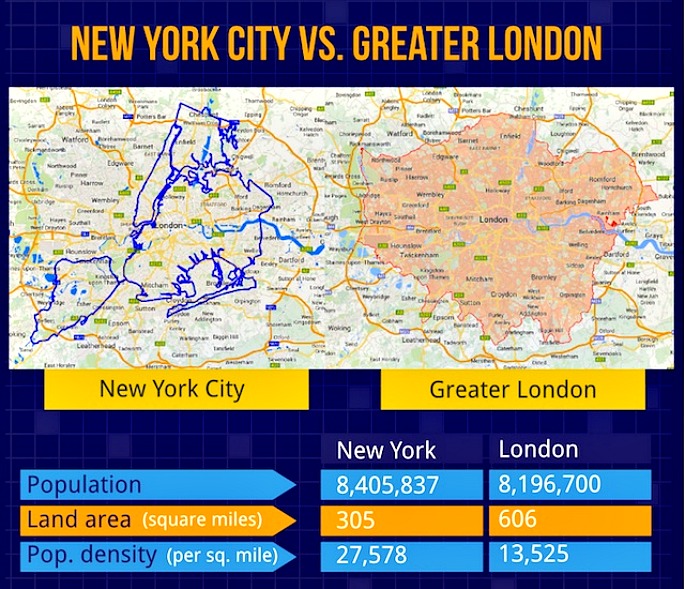
When it comes to sheer land area, London generally takes the lead. The administrative area of Greater London covers approximately 1,572 square kilometers (607 square miles). This vast expanse incorporates not just the bustling city center but also numerous boroughs, residential areas, and green spaces, extending significantly outwards. This wider geographical spread gives London a sense of sprawling diversity, where vibrant neighborhoods transition into more suburban landscapes.
In contrast, New York City, comprising its five boroughs – Manhattan, Brooklyn, Queens, The Bronx, and Staten Island – covers a total land area of about 789 square kilometers (305 square miles). While significantly smaller in landmass than London, New York is renowned for its incredible density, particularly in Manhattan. This concentration of skyscrapers, businesses, and residences creates a uniquely vertical urban environment, making every square inch feel intensely vibrant and utilized. So, while London has more ground to cover, New York packs more into a smaller, albeit intensely developed, space. This difference directly impacts how visitors experience each city – London often feels like a collection of distinct villages connected by history, while New York is a pulsating, high-energy core.
Population Dynamics: The Human Element
Population figures further complicate the ‘bigness’ question. Greater London’s population hovers around 9 million people, making it one of the largest cities in Europe. This diverse populace contributes to the city’s rich tapestry of cultures, languages, and cuisines, reflecting its status as a truly global melting pot.
New York City, despite its smaller land area, boasts a similar, sometimes slightly higher, population, typically around 8.5 to 8.8 million residents. This means New York has a significantly higher population density, particularly in its central boroughs. Imagine squeezing almost the same number of people into half the space – this is what gives New York its characteristic hustle, energy, and relentless pace. For a tourist, this density translates into a more immediate and concentrated experience of urban life, with everything seemingly within closer reach, especially in pedestrian-friendly areas like Manhattan. Both cities are incredibly diverse, with large immigrant populations shaping their cultural landscapes and culinary scenes, offering an incredible array of authentic food and local culture.
Economic Powerhouses: Global Impact
Economically, both London and New York are undeniable titans, consistently ranking among the world’s leading financial centers. London’s economy is vast, encompassing finance, professional services, media, technology, and tourism. It serves as a gateway to Europe and a hub for international trade, making its influence felt globally. The city’s Gross Metropolitan Product (GMP) is among the highest in the world, attracting major corporations and offering myriad opportunities for business stays.
New York City, particularly Wall Street in Manhattan, is often considered the financial capital of the world. Its economy is equally diverse, driven by finance, media, fashion, technology, and tourism. The sheer volume of transactions, innovations, and cultural productions originating from New York gives it an unparalleled global footprint. From the stock exchange to Broadway theaters, New York’s economic engines are constantly churning, creating a dynamic and competitive environment. In terms of economic output, both cities are colossal, but New York often edges out London in certain financial metrics, solidifying its reputation as a global economic behemoth.
Navigating the Urban Jungle: Transportation and Accessibility
Understanding how to move around these vast cities is integral to appreciating their ‘bigness’. Both London and New York boast extensive and historic public transportation systems that are, for many, the lifeblood of urban mobility.
Public Transit: Tube vs. Subway
London’s Underground, affectionately known as the “Tube,” is the world’s oldest subway system, with an extensive network of 11 lines serving 272 stations. Its iconic map is instantly recognizable, and its reach covers most of Greater London, making it incredibly efficient for traversing long distances. The Tube also connects seamlessly with the Overground, DLR, and National Rail services, offering comprehensive coverage. For tourists, navigating the Tube is an experience in itself, a journey through history beneath the bustling streets.
New York’s Subway system, operated by the MTA, is one of the most extensive in the world, boasting 24 lines, over 472 active stations, and operating 24/7. It is the primary mode of transport for millions of New Yorkers and tourists alike, connecting all five boroughs, though Manhattan is arguably its most intensively served area. While it might lack the quaint charm of the Tube, the Subway’s sheer scope and constant operation make it an unmatched urban artery. Both systems are vital for getting around their respective vast urban landscapes, allowing visitors to explore diverse attractions without needing a car.
Getting Around: Taxis, Buses, and Ride-Shares
Beyond their subterranean networks, both cities offer a variety of surface transportation options. London’s iconic black cabs are world-renowned for their knowledgeable “Knowledge” drivers and comfortable, spacious interiors. Alongside, a vast network of red double-decker buses provides a scenic and affordable way to see the city. Ride-sharing services are also prevalent, offering convenient on-demand travel. For river crossings, the River Thames also offers a unique mode of transport with river bus services.
New York’s yellow cabs are equally legendary, synonymous with the city’s fast-paced energy. Thousands of these distinctive vehicles crisscross the city daily. New York City also has an extensive bus system, particularly useful for navigating neighborhoods and shorter distances. Ride-sharing services are ubiquitous, complementing the traditional taxi fleet. The difference in density means that while both cities face traffic challenges, New York’s compact core often leads to more walking, whereas London’s spread sometimes necessitates longer journeys by public transport or car.
Unveiling the Charms: Attractions, Culture, and Lifestyle
The true ‘bigness’ of a city often lies in its capacity to captivate and inspire, offering an endless array of attractions, cultural experiences, and distinct lifestyles. Both London and New York excel in this regard, each crafting a unique identity that draws millions of tourism annually.
Iconic Landmarks and Historical Riches
London is steeped in centuries of history, evident in its majestic landmarks. From the regal Buckingham Palace and the imposing Tower of London to the architectural grandeur of Westminster Abbey and the iconic chimes of Big Ben, the city is a living museum. Modern marvels like The Shard and the London Eye offer contemporary perspectives on this historic city. Its vast green spaces, such as Hyde Park and Regent’s Park, provide serene escapes from the urban bustle, offering a blend of natural beauty and historical significance.
New York, while younger, boasts its own set of instantly recognizable landmarks that symbolize aspiration and innovation. The towering Statue of Liberty, the panoramic views from the Empire State Building and Top of the Rock, and the vibrant chaos of Times Square are indelible images of the city. Central Park, a masterpiece of landscape architecture, serves as the city’s sprawling green heart, a recreational haven for millions. Each city tells a different story through its architecture: London showcasing layers of history, New York celebrating ambition and modernity.
Arts, Entertainment, and Nightlife
Both cities are global epicenters for arts and entertainment. London’s West End is synonymous with world-class theatre, rivaling Broadway in its quality and variety of productions. The city is home to renowned institutions like the British Museum, the National Gallery, and the Tate Modern, offering an unparalleled cultural feast. Its nightlife, from historic pubs in Soho to upscale clubs in Mayfair, caters to every taste.

New York’s Broadway is the pinnacle of live theatre, drawing millions to its glittering marquees. The city’s museum scene is equally impressive, with institutions like the Metropolitan Museum of Art, the Museum of Modern Art (MoMA), and the American Museum of Natural History housing vast collections. New York’s nightlife is legendary, with an eclectic mix of jazz clubs in Greenwich Village, rooftop bars in Manhattan, and trendy spots in Brooklyn. Both cities offer an immense range of activities and experiences, ensuring there’s never a dull moment for any visitor.
Culinary Journeys: Foodie Paradise
The culinary scenes in both London and New York are incredibly diverse, reflecting their multicultural populations. London has transformed into a global gastronomic hub, offering everything from Michelin-starred restaurants in Mayfair and Knightsbridge to vibrant street food markets in Borough Market and Camden Town. Traditional British fare, world cuisines, and innovative dining experiences are all readily available.
New York is often lauded as the world’s greatest food city, a melting pot of global flavors. From iconic New York-style pizza and bagels to high-end dining and diverse ethnic eateries in neighborhoods like Flushing and Jackson Heights, the city offers an unparalleled culinary adventure. The sheer number of dining establishments and the constant innovation in its food scene make it a dream destination for food lovers. Whether you’re seeking luxury travel dining or budget travel eats, both cities deliver.
Shopping Experiences: From High Street to Luxury Boutiques
For those seeking retail therapy, London and New York are unparalleled. London’s Oxford Street and Regent Street are home to flagship stores and department stores like Selfridges and Liberty. For luxury, Bond Street and Knightsbridge (home to Harrods) offer exclusive boutiques. Unique markets like Portobello Road Market provide a different kind of shopping experience.
New York’s Fifth Avenue is globally recognized for its luxury brands and iconic department stores such as Saks Fifth Avenue and Bergdorf Goodman. Trendy boutiques line the streets of SoHo and Greenwich Village, while Macy’s Herald Square is a legendary shopping destination. Both cities offer diverse shopping landscapes, catering to every budget and style, reinforcing their positions as global fashion and retail capitals.
Where to Stay: Accommodation and Hospitality
The sheer volume and variety of accommodation options in London and New York reflect their status as premier global destinations. From opulent resorts to cozy apartments, choosing where to stay is a key part of the travel experience.
Hotel Options: From Boutique to Luxury Resorts
In London, the range of hotels is vast. You can find historic luxury establishments like The Ritz London and The Savoy, offering unparalleled service and amenities. Boutique hotels in areas like Covent Garden and Notting Hill provide unique charm, while major international chains like Hilton and Marriott have a strong presence, offering reliable standards. Many of these properties boast impressive suites and on-site amenities such as spas and fine dining restaurants.
New York also excels in hospitality, with iconic hotels like The Plaza Hotel and the Waldorf Astoria defining luxury. Modern, design-forward boutique hotels are plentiful in SoHo and Meatpacking District, catering to a trendy clientele. Large chain hotels are concentrated around Times Square and Midtown, providing convenience for tourism and business stays. When comparing, New York often features more towering hotel structures, while London blends its grand establishments with historic architecture.
Alternative Stays: Apartments and Villas
Beyond traditional hotels, both cities offer a robust market for alternative accommodation. In London, serviced apartments and villas are popular choices, especially for long-term stays or family trips. Websites specializing in booking platforms provide numerous options, allowing visitors to experience local neighborhoods more authentically.
New York also has a thriving market for vacation rentals, though regulations can vary by borough. Renting an apartment can offer a more spacious and home-like environment, particularly appealing for longer visits or group travel. The availability of these alternative stays adds another dimension to the ‘bigness’ of both cities’ hospitality sectors, offering flexibility and diverse experiences beyond the conventional hotel room. Reviews and comparison tools are essential for finding the perfect fit.
Budget-Friendly Choices and Long-term Stays
While both cities are known for being expensive, they also offer plenty of options for budget travel. Hostels, guesthouses, and smaller independent hotels are available in both London and New York, often in less central but well-connected neighborhoods. For those on extended stays, the rental markets in both cities are vast, though finding affordable options requires careful planning and research. The sheer scale of both cities means there’s always a hidden gem or a great deal to be found, reinforcing their capacity to cater to a wide spectrum of travelers and lifestyles.
The Visitor Experience: Tourism and Practical Tips
Ultimately, the ‘bigness’ of London and New York translates into an incredibly rich and diverse visitor experience. Planning a trip to either city requires strategic thinking to make the most of their vast offerings.
Planning Your Trip: Guides and Experiences
Given the immense number of attractions and activities in both London and New York, comprehensive travel guides are indispensable. For London, guides often highlight itineraries combining historical sites, royal residences, and world-class museums. Booking tours that offer unique experiences, such as a Thames River cruise or a visit to the Warner Bros. Studio Tour London – The Making of Harry Potter, can enhance the visit. The city is well-served by major airports like Heathrow Airport and Gatwick Airport, making international access straightforward.
For New York, guides might focus on neighborhood exploration, from the trendy streets of Brooklyn to the cultural institutions of Upper East Side. Experiences like catching a Broadway show, exploring the diverse culinary scene, or visiting Ellis Island are often top priorities. New York is served by major hubs like JFK Airport, LaGuardia Airport, and Newark Liberty International Airport. In both cities, pre-booking popular attractions and using public transport tips can significantly improve the tourism experience.
Local Culture and Etiquette
Experiencing the local culture is a significant part of travel. London’s charm lies in its blend of tradition and modernity, its polite yet reserved demeanor, and its quintessential pub culture. Understanding queues, appreciating history, and engaging in respectful dialogue are key tips for navigating London.
New York’s culture is defined by its fast pace, directness, and melting pot of global influences. New Yorkers are often seen as assertive but are also known for their resilience and underlying friendliness. Embracing the energy, trying diverse food, and being open to spontaneous experiences are great ways to engage with the city. Both cities, despite their ‘bigness’, offer intimate moments and authentic local interactions for those willing to seek them out.

Family Fun vs. Business Ventures
The versatility of both cities means they cater to a wide range of travelers. London offers abundant family fun with attractions like the Science Museum, Natural History Museum, and numerous parks, while also being a prime location for business ventures and conferences in its financial districts.
New York similarly balances family trips (think FAO Schwarz, Central Park Zoo, and Intrepid Sea, Air & Space Museum) with being an unparalleled hub for business stays, networking, and industry events. The extensive range of hotels, resorts, and dedicated event spaces underscores their capacity to host both leisure and professional visitors on a grand scale. The sheer ‘bigness’ of their offerings means that every type of traveler can find their niche and enjoy a fulfilling experience.
In conclusion, “Is London bigger than New York?” depends entirely on the metric. Geographically, London is larger in area. In terms of population density, New York is more compact. Economically and culturally, both are undeniable global giants, offering vast and rich experiences that truly define their ‘bigness’ in the world. Each city, in its own way, is a sprawling, pulsating metropolis that promises an unforgettable journey.
LifeOutOfTheBox is a participant in the Amazon Services LLC Associates Program, an affiliate advertising program designed to provide a means for sites to earn advertising fees by advertising and linking to Amazon.com. Amazon, the Amazon logo, AmazonSupply, and the AmazonSupply logo are trademarks of Amazon.com, Inc. or its affiliates. As an Amazon Associate we earn affiliate commissions from qualifying purchases.