
The question of whether Maine qualifies as a “sanctuary state” is multifaceted, touching upon legal definitions, policy implementations, and the broader perception of immigrant protection within the state. While Maine has not officially declared itself a “sanctuary state” in the way some other jurisdictions have, its policies and approach to immigration enforcement often align with principles that offer protections to undocumented immigrants, leading to confusion and debate. Understanding this nuanced position requires an exploration of the legal landscape, state and local initiatives, and the implications for both residents and visitors.
Defining “Sanctuary State”
The term “sanctuary state” is not a legally defined term under federal law. Instead, it has emerged from a complex interplay of state and local policies aimed at limiting cooperation with federal immigration enforcement. Generally, jurisdictions labeled as “sanctuary” are characterized by policies that restrict law enforcement agencies from inquiring about an individual’s immigration status, detaining individuals based solely on federal immigration warrants, or sharing personal information with federal immigration authorities.

The primary motivation behind such policies is often to foster trust between immigrant communities and local law enforcement. When residents fear that reporting crimes or interacting with police could lead to deportation, they are less likely to cooperate with investigations, potentially hindering public safety for everyone. Additionally, these policies are sometimes seen as a way to uphold civil liberties and prevent racial profiling.
However, the lack of a uniform legal definition means that the label “sanctuary” can be applied broadly, often leading to political polarization and mischaracterizations. Critics argue that these policies can obstruct federal efforts to enforce immigration laws and may create havens for individuals who have committed crimes.
Federal vs. State Authority in Immigration
Immigration law in the United States is primarily a federal matter, granting the federal government significant authority over border control, naturalization, and the deportation of non-citizens. Federal agencies, such as Immigration and Customs Enforcement (ICE) and Customs and Border Protection (CBP), are responsible for enforcing these laws.
Despite federal preeminence, states and localities have some latitude in how they interact with federal immigration enforcement. For instance, state and local law enforcement agencies can choose whether to honor ICE detainer requests – formal requests to hold an individual for up to 48 hours beyond their scheduled release date to allow federal agents to take them into custody. Policies that decline to honor these detainers are a hallmark of many “sanctuary” jurisdictions.
Furthermore, states can pass laws or implement policies that offer certain protections or benefits to undocumented immigrants, such as the ability to obtain driver’s licenses or access in-state tuition. These state-level actions, while not directly challenging federal authority, can create an environment that is more welcoming and supportive of immigrant communities.
Maine’s Policy Landscape
Maine presents a complex picture when examined through the lens of “sanctuary” policies. The state has not enacted statewide legislation explicitly designating itself as a sanctuary state. However, several key policies and legal interpretations have led to it being perceived by some as such, or at least as a state with significant immigrant protections.
State-Level Protections and Initiatives
One of the most significant indicators of Maine’s approach is its stance on driver’s licenses. In 2019, Maine enacted a law allowing undocumented immigrants to obtain a driver’s license. This policy, implemented by the Maine Bureau of Motor Vehicles, aims to improve road safety by ensuring all drivers are tested and licensed, regardless of immigration status. It also facilitates daily life for residents, enabling them to commute to work, transport families, and engage in commerce more easily.
Another area where Maine has diverged from stricter federal enforcement is in its approach to detainer requests. While not mandated by state law, many local law enforcement agencies in Maine, particularly in larger cities like Portland, have adopted policies that limit cooperation with ICE detainers unless accompanied by a judicial warrant. This stance is often rooted in the understanding that honoring ICE detainers without judicial oversight may infringe upon constitutional rights and strain community relations.
The state has also seen various initiatives aimed at supporting immigrant integration and providing resources to New Mainers, as immigrants in the state are often called. These include efforts by non-profit organizations and local government agencies to offer language assistance, job training, and legal aid services. These initiatives, while not directly related to immigration enforcement policies, contribute to an environment that is more supportive of immigrant populations.
Local Ordinances and Enforcement
The perception of Maine as a sanctuary state is also influenced by local ordinances. For instance, the city of Portland has a long-standing policy that prohibits city employees from inquiring into an individual’s immigration status or reporting them to federal immigration authorities solely based on that status. This policy is designed to encourage all residents, regardless of their immigration status, to report crimes and seek assistance from the police without fear of reprisal.
Similarly, other municipalities in Maine have adopted or considered similar policies. These local actions, when viewed collectively, contribute to a patchwork of protections that can be interpreted as sanctuary-like. The effectiveness of these local policies hinges on the discretion afforded to local law enforcement and the extent to which they are willing and able to resist pressure from federal agencies.
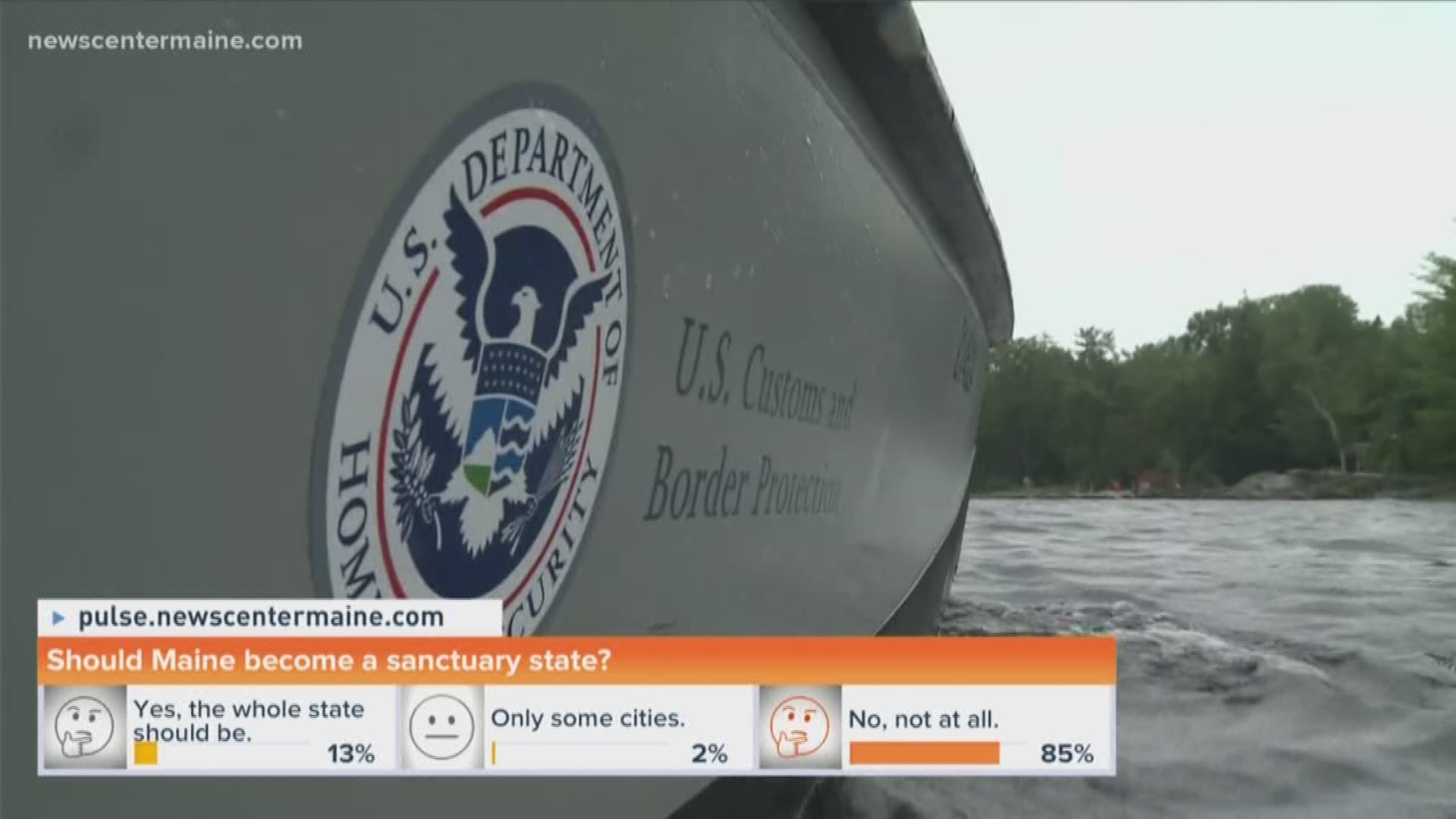
It is crucial to note that these local and state policies do not prevent federal immigration authorities from operating within Maine. ICE and CBP retain their authority to conduct investigations, make arrests, and deport individuals based on federal law. What these policies do is limit the extent to which state and local resources and personnel are used to assist in these federal enforcement efforts.
Implications for Visitors and Residents
The policies and perceptions surrounding “sanctuary” status in Maine have various implications for both visitors and residents. For tourists planning a trip to Maine, the understanding of these policies is generally minimal, as typical tourist activities are unlikely to intersect with immigration enforcement. However, for immigrants residing in Maine, or those considering relocation, these policies can significantly influence their sense of security and their ability to integrate into society.
Impact on Immigrant Communities
For undocumented immigrants, the policies in Maine that limit cooperation with federal immigration authorities can provide a degree of reassurance. The ability to obtain a driver’s license, for example, allows for greater mobility and economic opportunity, reducing reliance on potentially risky informal transportation networks. The knowledge that local law enforcement is less likely to act as an extension of federal immigration enforcement can also encourage reporting of crimes, thereby improving community safety.
This does not mean that undocumented immigrants in Maine are immune from federal enforcement actions. ICE operations can and do occur in the state. However, the local policies aim to create a buffer, ensuring that interactions with state and local authorities are not automatically channeled into deportation proceedings. This can foster a more positive relationship between immigrant communities and the institutions that serve them.
Legal Considerations and Public Perception
The debate over “sanctuary” policies often involves complex legal arguments and public perception. While Maine has not formally adopted a “sanctuary state” designation, its policies are often viewed through that prism by both proponents and opponents of such measures.
Proponents argue that these policies are essential for upholding civil rights, fostering trust, and promoting public safety by encouraging all residents to cooperate with law enforcement. They see Maine’s approach as a pragmatic recognition of the rights and contributions of immigrant populations.
Opponents, on the other hand, often view these policies as undermining federal law and potentially enabling individuals who are in the country illegally to evade deportation. They may argue that such jurisdictions are not acting in the best interests of national security or the rule of law.
It is important for individuals to understand that while Maine offers certain protections, it is not a state where federal immigration laws are disregarded. The state’s approach is more about the nature of cooperation between local and federal authorities, and the provision of certain state-level services, rather than a wholesale rejection of federal immigration enforcement.
Navigating the Nuances: Beyond the Label
Ultimately, the question of whether Maine is a “sanctuary state” is less about a definitive legal label and more about understanding the practical implications of its policies. Maine’s approach reflects a growing trend in some states and municipalities to implement policies that balance federal immigration enforcement with the need to protect the civil rights of all residents, foster community trust, and ensure public safety.
Federal Enforcement Realities
It is vital to reiterate that Maine, like all states, is subject to federal immigration laws. ICE has the authority to arrest and detain individuals based on federal immigration violations, and federal agents can operate within the state. State and local policies that limit cooperation do not grant immunity from federal law. Individuals with prior criminal convictions, regardless of immigration status, are often prioritized for federal enforcement actions.
The Spectrum of Sanctuary Policies
The concept of “sanctuary” exists on a spectrum. Some jurisdictions have very strict policies that prohibit almost any form of cooperation with federal immigration enforcement, while others have more limited restrictions. Maine’s policies tend to fall somewhere in the middle, offering significant protections without a complete severing of ties with federal authorities. This nuanced approach aims to mitigate potential harms to immigrant communities while still acknowledging the federal government’s role in immigration enforcement.

Conclusion: A State of Protections
While Maine may not explicitly call itself a “sanctuary state,” its legislative actions and the policies adopted by many of its municipalities create an environment that offers substantial protections to immigrants, including those who are undocumented. The ability to obtain driver’s licenses and the limitations on local law enforcement’s cooperation with federal detainer requests are key elements that shape this perception. For those seeking to understand Maine’s immigration policies, looking beyond simplistic labels and examining the specific laws and practices in place provides a clearer picture of a state striving to balance diverse interests within the complex framework of immigration in the United States.
LifeOutOfTheBox is a participant in the Amazon Services LLC Associates Program, an affiliate advertising program designed to provide a means for sites to earn advertising fees by advertising and linking to Amazon.com. Amazon, the Amazon logo, AmazonSupply, and the AmazonSupply logo are trademarks of Amazon.com, Inc. or its affiliates. As an Amazon Associate we earn affiliate commissions from qualifying purchases.