
For individuals considering a move to Montana for work, embarking on an extended business stay, or evaluating the long-term lifestyle implications of establishing roots in the Treasure State, understanding the nuances of local employment law is paramount. The concept of “at-will employment” is a cornerstone of labor relations in much of the United States, dictating the relationship between employers and employees. However, Montana stands out with a unique and often misunderstood approach that deviates significantly from this widespread standard. This distinction has profound implications for one’s professional life, job security, and overall lifestyle within the state.
This article delves into the specifics of Montana’s employment laws, examining how they differ from the traditional at-will model and what this means for your professional journey and lifestyle choices in the Big Sky Country. Whether you’re a seasoned professional weighing a relocation, an entrepreneur exploring business opportunities, or simply curious about the legal landscape, a clear grasp of these regulations is essential for informed decision-making.
Understanding At-Will Employment: A Key Lifestyle Consideration for New Residents
The doctrine of at-will employment is a fundamental principle governing the employer-employee relationship in most U.S. states. Before we explore Montana’s distinctive path, it’s crucial to first understand what at-will employment entails and why its absence or modification can significantly impact an individual’s professional lifestyle.
The Core Principles of At-Will Employment
In an at-will employment arrangement, an employer can terminate an employee for any reason, no reason at all, or even a bad reason, as long as that reason is not illegal (i.e., discriminatory based on protected characteristics like race, gender, religion, national origin, age, or disability, or in retaliation for protected activities). Conversely, an employee is also free to leave their job at any time, for any reason, without notice. This reciprocal flexibility is the hallmark of the at-will doctrine.
The underlying premise is that neither party is bound by an explicit contract for a definite term of employment. Instead, the relationship continues as long as both parties agree. This framework is often lauded by businesses for the flexibility it provides in managing their workforce, adapting to economic shifts, and responding to performance issues without extensive legal hurdles. From a lifestyle perspective, it means that while you have the freedom to pursue new opportunities, your job security is largely contingent on the employer’s discretion, absent any explicit contractual agreements or collective bargaining protections.
Why Understanding This Matters for Your Lifestyle Choices
For anyone considering a move to a new state or starting a business venture, the prevailing employment law profoundly impacts their quality of life. In an at-will state, the potential for sudden termination can introduce a degree of uncertainty into one’s professional and personal planning. This might influence decisions about purchasing a home, making long-term financial commitments, or even where one chooses to raise a family.
Understanding whether a state operates under an at-will system or has specific modifications helps individuals assess their level of job security, their rights as an employee, and the potential risks involved in accepting a new position. For those on business stays, especially longer assignments, familiarity with the local employment landscape can inform decisions about bringing family, housing options, and overall financial planning during their tenure. It’s about aligning your professional aspirations with a legal framework that supports your desired lifestyle and provides a predictable environment.
Montana’s Unique Stance: Beyond the Traditional At-Will Model
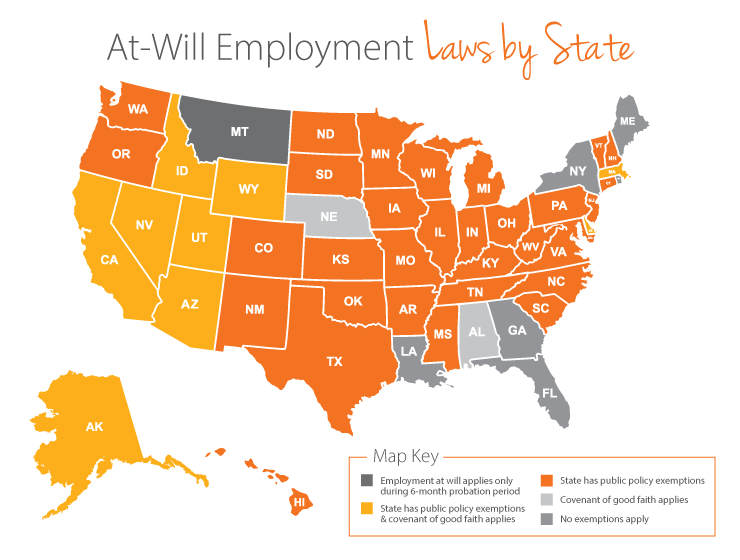
While the majority of the United States adheres to the at-will employment doctrine, Montana stands as a notable exception. In 1987, Montana enacted the Wrongful Discharge From Employment Act (WDEA), a landmark piece of legislation that significantly altered the traditional at-will landscape within the state. This act introduced statutory protections for employees, making Montana one of the most employee-protective states in the nation regarding termination.
The Wrongful Discharge From Employment Act (WDEA)
The WDEA fundamentally changed the presumption of at-will employment in Montana. Under this act, after an employee successfully completes an employer’s probationary period (or, if no probationary period is specified, after 12 months of employment), they can no longer be fired without “good cause.” This statutory protection is a significant departure from at-will principles, where no cause is generally required. The WDEA essentially creates a default “for-cause” employment standard for most employees after an initial probationary period.
The act also sets limits on the remedies available for wrongful discharge, typically capping them at four years of lost wages and benefits, and generally precluding punitive damages or damages for emotional distress. This provides a clear framework for both employees and employers regarding potential disputes and resolutions. For individuals relocating to Montana, this legislation offers a different level of job security, fostering a distinct professional lifestyle environment compared to states where at-will employment is the unchallenged norm.
Defining “Good Cause” in Montana
The concept of “good cause” is central to the WDEA. While the act provides a general definition, its application often depends on the specific facts and circumstances of each case. Generally, “good cause” for termination is defined as a legitimate business reason, such as:
- Failure to perform job duties satisfactorily: This includes issues like incompetence, negligence, or consistent underperformance despite opportunities for improvement.
- Misconduct: This could range from insubordination, harassment, theft, or violations of company policy.
- Operational changes: Legitimate business reductions in force, layoffs due to economic conditions, or restructuring of positions can also constitute good cause, provided they are applied fairly and consistently.
It’s important to note that the burden of proving good cause typically rests with the employer. This means that if an employee challenges their termination, the employer must demonstrate that they had a valid, non-pretextual reason for the action. This legal framework provides a greater sense of security for employees in Montana, impacting their long-term planning and professional peace of mind.
Implications for Employment Contracts and Handbooks

The WDEA also influences how employment contracts and employee handbooks are structured in Montana. While a written employment contract can still define the terms of employment, including the duration and conditions for termination, it generally cannot revert an employee to a pure at-will status once they have passed their probationary period. Any attempt to circumvent the WDEA’s protections through a general at-will clause in a contract or handbook is unlikely to be enforceable.
Employers in Montana must carefully draft their policies and procedures to align with the WDEA. This includes clearly defining probationary periods, outlining performance expectations, establishing disciplinary procedures, and detailing what constitutes misconduct. For employees, understanding these documents and the WDEA’s provisions is crucial. It empowers them to understand their rights and responsibilities, contributing to a more stable and predictable professional lifestyle within the state. When considering a job offer or a business stay, reviewing these employer documents through the lens of Montana’s specific laws is a vital step.
Navigating Employment in Montana: What It Means for Your Professional Lifestyle
Montana’s WDEA significantly shapes the professional landscape for both employees and employers. For those contemplating a move or a long-term business commitment, understanding these practical implications is vital for a smooth transition and a fulfilling lifestyle in the state.
Employee Protections and Employer Responsibilities
The primary benefit for employees in Montana is enhanced job security. Once past probation, an employee gains the right to not be terminated without good cause. This protection extends beyond federal anti-discrimination laws, offering a broader shield against arbitrary dismissal. This means employees can often feel more confident in expressing concerns, advocating for themselves, and pursuing professional growth without the constant fear of sudden, unprovoked termination. This stability can contribute significantly to an improved work-life balance and overall mental well-being, which are critical components of a desirable lifestyle.
For employers, the WDEA necessitates meticulous adherence to fair employment practices. They must develop clear job descriptions, provide regular performance evaluations, document disciplinary actions, and ensure consistent application of company policies. A failure to demonstrate good cause for termination can result in legal challenges and financial liabilities under the WDEA. This heightened responsibility encourages employers to invest more in employee development, fair dispute resolution, and robust internal communication, which can lead to a more engaged and stable workforce.
Dispute Resolution and Legal Recourse
Should a dispute arise regarding termination, the WDEA outlines a specific process for resolution. Before filing a lawsuit, the aggrieved employee must typically provide written notice to the employer, giving the employer an opportunity to respond. If the issue remains unresolved, the employee can then pursue a claim in court. As mentioned, remedies are generally limited to four years of lost wages and benefits, which provides a predictable framework for both sides.
Knowing that there is a structured legal recourse in place, and that arbitrary termination is not legally permissible, offers peace of mind for employees. This legal certainty is a valuable component of one’s professional lifestyle, assuring individuals that their rights are protected and that they have avenues for redress if disputes occur. For employers, understanding these mechanisms allows for proactive risk management and the development of internal processes to handle potential claims efficiently.
Impact on Business Stays and Relocation Decisions
For individuals considering an extended business stay in Montana, or making a permanent relocation, the state’s unique employment laws are a significant factor. The enhanced job security can make [Montana](https://lifeoutofthebox.com/montana] an attractive destination for professionals seeking stability in their careers. It might influence decisions on whether to accept a long-term contract, invest in local real estate, or bring family along.
Businesses, particularly those expanding into Montana or considering establishing new operations, must thoroughly understand the WDEA. It impacts human resources policies, hiring and firing practices, and overall operational costs. While it may require more stringent HR processes, it also contributes to a workforce that often experiences higher morale and lower turnover due to increased job security. For those on business trips evaluating the long-term viability of a market, these legal distinctions are as important as economic indicators or available talent pools.
Planning Your Move or Business Stay: Resources and Considerations for Montana’s Job Market
Deciding to move to or pursue extended professional opportunities in Montana involves more than just understanding employment law. It’s about integrating into a new community, adapting to a unique professional environment, and embracing the state’s distinct lifestyle. Equipped with knowledge of the WDEA, you can now approach the job market with greater insight.
Researching the Local Job Market
While Montana’s employment laws offer a layer of security, the overall health and specifics of its job market are equally important. Key industries in Montana include natural resources (mining, logging), agriculture, tourism, and increasingly, technology and healthcare in urban centers like Missoula, Bozeman, Billings, and Helena. Before making a move, research specific sectors, typical salary ranges, and the availability of positions relevant to your skills and experience. Online job boards, professional networking groups, and chambers of commerce in cities like Great Falls or Kalispell can be invaluable resources. Understanding the demand for your profession within Montana’s unique economic landscape will greatly inform your career and lifestyle planning.
Seeking Legal Counsel for Specific Situations
While this article provides a general overview, specific employment situations can be complex. If you are an employee facing a potential wrongful discharge, or an employer navigating the nuances of the WDEA, seeking advice from a qualified Montana employment law attorney is highly recommended. Legal professionals can offer tailored guidance based on the specifics of your case, ensuring compliance for employers and protecting the rights of employees. This proactive approach can prevent costly disputes and provide clarity on complex legal matters, reinforcing a stable professional lifestyle.
The Broader Lifestyle Appeal of Montana
Beyond its distinct employment laws, Montana offers an unparalleled quality of life that attracts many. The “Big Sky Country” is renowned for its breathtaking natural beauty, with vast open spaces, majestic mountains, and abundant opportunities for outdoor recreation, including hiking, fishing, skiing, and wildlife viewing. The state fosters a strong sense of community, often characterized by a friendly, independent spirit.
Whether you’re drawn by the promise of professional stability under the WDEA, the allure of small-town charm, or the adventure of the wilderness, Montana presents a unique blend of career opportunities and a rich, fulfilling lifestyle. Understanding the state’s employment laws is not just a legal formality; it’s a foundational element in successfully integrating into the Montana way of life and building a secure, prosperous future in this remarkable state.
LifeOutOfTheBox is a participant in the Amazon Services LLC Associates Program, an affiliate advertising program designed to provide a means for sites to earn advertising fees by advertising and linking to Amazon.com. Amazon, the Amazon logo, AmazonSupply, and the AmazonSupply logo are trademarks of Amazon.com, Inc. or its affiliates. As an Amazon Associate we earn affiliate commissions from qualifying purchases.