
The question of whether Monument Valley lies in Utah or Arizona is a common one, and for good reason: the answer is both. This iconic landscape, renowned for its towering sandstone buttes and mesas, straddles the border between the two Southwestern U.S. states, primarily falling within the vast expanse of the Navajo Nation reservation. While the most famous and frequently photographed sections, including the Monument Valley Navajo Tribal Park, are definitively located in northern Arizona near the town of Kayenta, parts of its broader geological and cultural reach extend north into southern Utah. This unique geographical positioning contributes significantly to its allure, making it a landmark that defies simple categorization and embodies the rugged beauty of the American Southwest.

A Geological Masterpiece Straddling State Lines
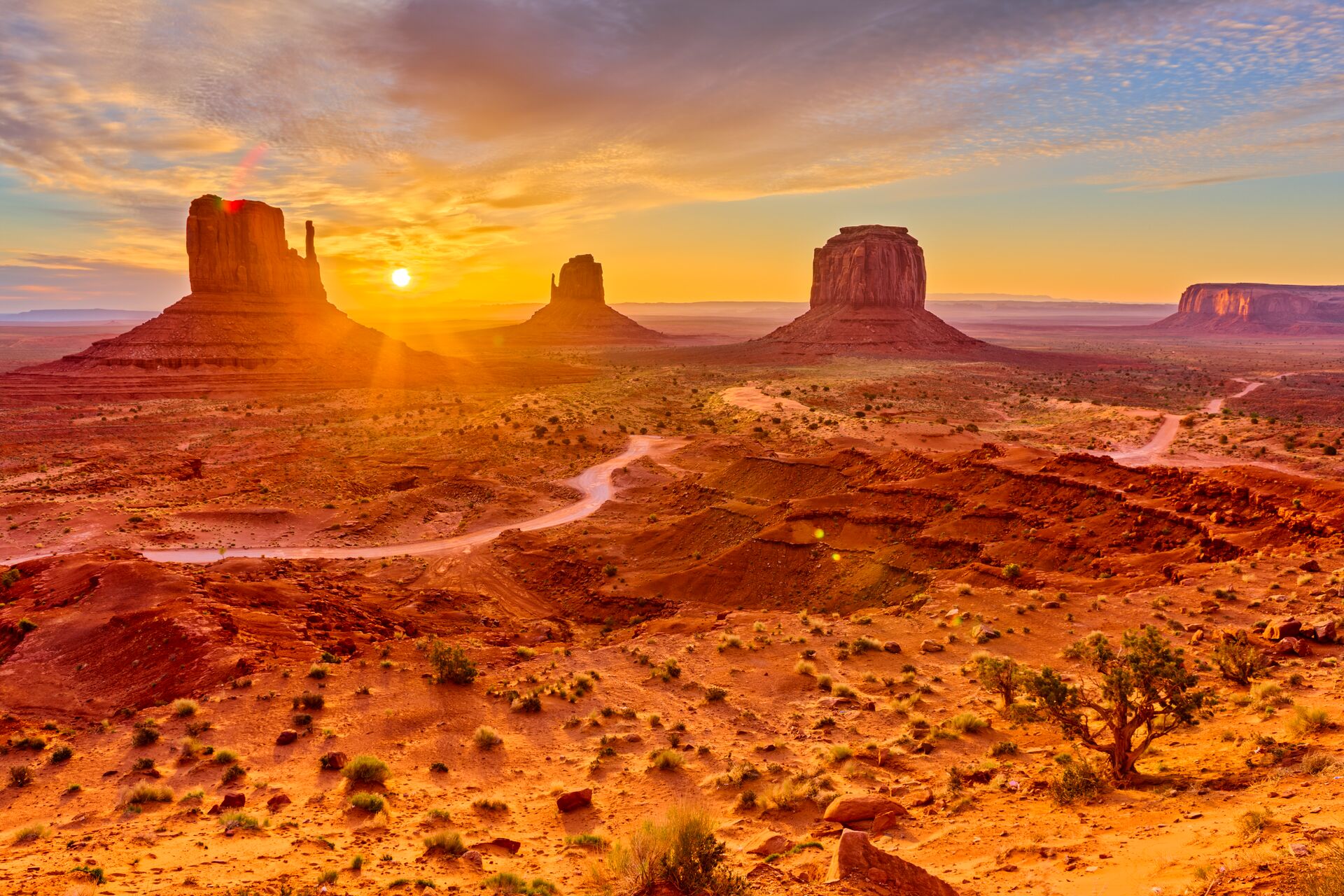
Monument Valley is not merely a collection of rocks; it is a monumental testament to millions of years of geological forces, sculpted by wind and water into forms that evoke awe and wonder. Its distinctive landscape is characterized by its towering, isolated red sandstone buttes, mesas, and spires, which rise dramatically from the flat, sandy floor of the valley. These formations are remnants of once-continuous layers of sedimentary rock that have been eroded away over eons.
Formation Through Time and Erosion
The story of Monument Valley’s geology begins roughly 250 million years ago, during the Permian period, when this region was part of a vast inland sea. Sediments accumulated over time, forming thick layers of sandstone, siltstone, and shale. As the sea receded and the Colorado Plateau uplifted, these layers were exposed to relentless forces of erosion. Rivers carved channels, and wind scoured away softer rock, leaving behind the more resistant formations we see today. The vibrant red and orange hues of the rock are due to iron oxides, which have stained the sandstone over time, oxidizing and creating a rust-like appearance.
Iconic Buttes and Mesas
The most recognizable features of Monument Valley are its buttes and mesas. A mesa is a flat-topped hill with steep sides, larger than a butte. Over time, mesas erode, becoming smaller and more isolated, eventually forming buttes. Notable formations include East and West Mitten Buttes, Totem Pole, and Three Sisters, each an individual landmark within the grander valley. These geological features are not just visually stunning; they serve as a living laboratory for geologists and a constant source of inspiration for photographers and artists. The scale of these formations is truly humbling, with some rising over 1,000 feet from the valley floor, creating a stark and unforgettable horizon.
The Heart of the Navajo Nation: Cultural Significance
Beyond its geological grandeur, Monument Valley holds profound cultural and spiritual significance for the Navajo people, or Diné, who have inhabited this land for centuries. The valley is not just a scenic landmark; it is an integral part of their heritage, traditions, and way of life. Administered by the Navajo Nation Parks and Recreation Department, it stands as a testament to their enduring connection to the land.
A Sacred Landscape
For the Navajo, the towering rock formations are not merely natural wonders but sacred entities, steeped in stories and spiritual meaning. Many of the buttes and mesas are associated with specific legends, representing figures or events from Navajo mythology. The land itself is seen as a living being, and the landscape of Monument Valley reflects their worldview, where harmony with nature is paramount. This deeply rooted connection is evident in the Navajo language, ceremonies, and daily practices.
Preserving Heritage and Sovereignty
The Navajo Nation exercises sovereign control over Monument Valley, distinguishing it from national parks or state parks. This means that rules and regulations are set by the Navajo tribal government, and the revenue generated from tourism directly benefits the Navajo community. This arrangement allows the Navajo people to maintain cultural integrity, protect their sacred sites, and manage the landmark in a way that aligns with their values and traditions. Visitors are encouraged to respect the land and its people, often learning about Navajo culture through guided tours led by local Navajo guides, which offer invaluable insights into the valley’s history and spiritual significance.
A Cinematic Icon: Hollywood’s Enduring Muse
The dramatic and utterly unique landscape of Monument Valley has long captivated the imagination of filmmakers, making it one of the most recognizable natural landmarks in the world. Its sweeping vistas and distinctive rock formations have served as the backdrop for countless films, advertisements, and television shows, solidifying its place in popular culture.
John Ford’s Enduring Legacy
The valley’s cinematic fame largely began with director John Ford, who famously used Monument Valley as the quintessential setting for his Westerns. Films like “Stagecoach” (1939), “My Darling Clementine” (1946), “Fort Apache” (1948), and “The Searchers” (1956), all starring John Wayne, etched the image of Monument Valley’s majestic landscape into the global consciousness. Ford’s masterful cinematography showcased the valley’s epic scale and stark beauty, turning it into a symbol of the American West—a wild, untamed frontier. His influence was so profound that a popular viewpoint within the park is now known as John Ford’s Point, offering a panorama that feels plucked directly from one of his films.
Beyond Westerns: A Versatile Backdrop
While John Ford established its cinematic credentials, Monument Valley’s appeal extends far beyond the Western genre. Its otherworldly appearance has made it a favorite for science fiction films, adventure movies, and even commercials. From “2001: A Space Odyssey” to “Back to the Future Part III,” and more recently, “The Lone Ranger” and “Transformers: Age of Extinction,” the valley continues to lend its dramatic presence to a wide array of productions. Its consistent appearance in media has made it an instantly recognizable landmark, drawing visitors from all over the world eager to experience its iconic vistas firsthand. The view of the Mittens and Merrick Butte from the visitor center, or the famous “Forrest Gump Point” on US-163 in Utah, are just a couple of examples of how popular culture has solidified specific spots within the valley as landmarks in their own right.
Exploring the Valley: Iconic Views and Experiences
Visiting Monument Valley offers a unique opportunity to immerse oneself in one of the world’s most breathtaking natural landmarks. While the landmark straddles state lines, the primary access point and the most concentrated area of iconic formations are within the Monument Valley Navajo Tribal Park, managed by the Navajo Nation.
The Scenic Drive: Valley Floor Loop
The most popular way to experience the heart of Monument Valley is by driving the 17-mile Valley Floor Loop. This unpaved, often bumpy road meanders through the iconic landscape, bringing visitors up close to some of its most famous formations. While personal vehicles are permitted, the condition of the road often leads visitors to opt for guided tours. Along the loop, designated stops provide incredible photo opportunities and allow for a deeper appreciation of the scale and majesty of the buttes and mesas. Key viewpoints include The Mittens and Merrick Butte, Elephant Butte, Three Sisters, and Totem Pole and Yei Bi Chei.
Guided Tours for Deeper Insights
For a more enriching experience, taking a guided tour with a Navajo guide is highly recommended. These tours, often conducted in open-air vehicles, venture beyond the public Valley Floor Loop into restricted areas of the tribal park. Navajo guides share invaluable knowledge about the geology, ecology, and, most importantly, the rich cultural history and spiritual significance of the valley. They can lead visitors to hidden arches, ancient petroglyphs, and provide unique perspectives on the land that only those who live there can offer. These tours also often include demonstrations of Navajo weaving or traditional music, creating a truly immersive cultural landmark experience.

Capturing the Iconic Landscape
Monument Valley is a photographer’s paradise. The ever-changing light, from the soft hues of sunrise to the dramatic shadows of sunset, transforms the landscape throughout the day. The vibrant red earth against the deep blue sky, often punctuated by dramatic clouds, provides endless opportunities for stunning imagery. Beyond the Valley Floor Loop, the view from the visitor center, particularly at sunrise or sunset, is iconic. Another widely recognized photographic landmark is the famous stretch of US-163 in Utah, often referred to as “Forrest Gump Point,” where the road stretches out towards the distant buttes, creating a classic leading line perspective. This view, technically outside the tribal park but still very much part of the broader Monument Valley region, perfectly encapsulates the vastness and grandeur of this remarkable landmark.
In conclusion, Monument Valley is unequivocally a shared treasure, primarily residing in Arizona but extending its influence and majestic beauty into Utah. It is a landmark not just for its geological splendor, but for its profound cultural significance to the Navajo Nation and its indelible mark on the landscape of global cinema.
LifeOutOfTheBox is a participant in the Amazon Services LLC Associates Program, an affiliate advertising program designed to provide a means for sites to earn advertising fees by advertising and linking to Amazon.com. Amazon, the Amazon logo, AmazonSupply, and the AmazonSupply logo are trademarks of Amazon.com, Inc. or its affiliates. As an Amazon Associate we earn affiliate commissions from qualifying purchases.