
The question of whether Nevada is a “compact state” is one that often arises in discussions surrounding interstate agreements, particularly concerning professional licensing and reciprocity. While the term “compact state” is most commonly associated with legal and regulatory frameworks like the Nurse Licensure Compact or the Interstate Compact for Adult Offender Supervision, its direct application to the state of Nevada requires a nuanced understanding of its participation in such agreements. This article will delve into Nevada’s involvement with various interstate compacts, exploring the implications for professionals, residents, and visitors alike.
Understanding Interstate Compacts
Interstate compacts are formal agreements between two or more states, authorized by the U.S. Congress, that address issues of mutual concern. These agreements allow states to collaborate on matters that transcend state borders, fostering greater efficiency, uniformity, and cooperation. For professionals, particularly those in licensed fields, interstate compacts can significantly ease the process of practicing in multiple states by establishing a standardized system for licensure. For residents, compacts can facilitate the transfer of certain rights and responsibilities, such as child support enforcement or the recognition of educational credentials.
The Significance of Compact Membership
Membership in an interstate compact can have profound implications. For individuals holding a professional license, it can mean the ability to practice in all member states under a single, multi-state license, eliminating the need for separate applications and fees in each state. This is particularly beneficial for professions like nursing, teaching, and social work, where mobility is often a requirement or a significant advantage. For states, joining compacts can streamline regulatory processes, improve public safety by ensuring consistent standards across borders, and enhance the efficient administration of public services.
Types of Interstate Compacts
Interstate compacts cover a wide array of subjects. Some of the most prominent include:
- Professional Licensure Compacts: These are designed to facilitate the licensure of professionals across state lines. The Nurse Licensure Compact (NLC) is perhaps the most widely known, allowing nurses to practice in any NLC member state with a single multi-state license. Similar compacts exist for other professions, such as physical therapy, psychology, and counseling.
- Criminal Justice Compacts: These agreements deal with the supervision of offenders, extradition, and the exchange of criminal history information. The Interstate Compact for Adult Offender Supervision (ICAOS) is a prime example, ensuring that probationers and parolees can be supervised in other states.
- Child Welfare Compacts: These facilitate the interstate placement of children and the enforcement of child support orders. The Interstate Compact on the Placement of Children (ICPC) is a critical framework for ensuring the safety and well-being of children who are moved across state lines.
- Environmental Compacts: States may enter into compacts to address shared environmental concerns, such as water rights or pollution control.
- Education Compacts: These can relate to the recognition of educational programs, the transfer of credits, or the establishment of multi-state educational institutions.
Nevada’s Participation in Key Interstate Compacts
When considering whether Nevada is a “compact state,” it is essential to examine its specific affiliations with various interstate compacts. The state’s participation is not uniform across all compact types, and its membership has evolved over time.
The Nurse Licensure Compact (NLC)
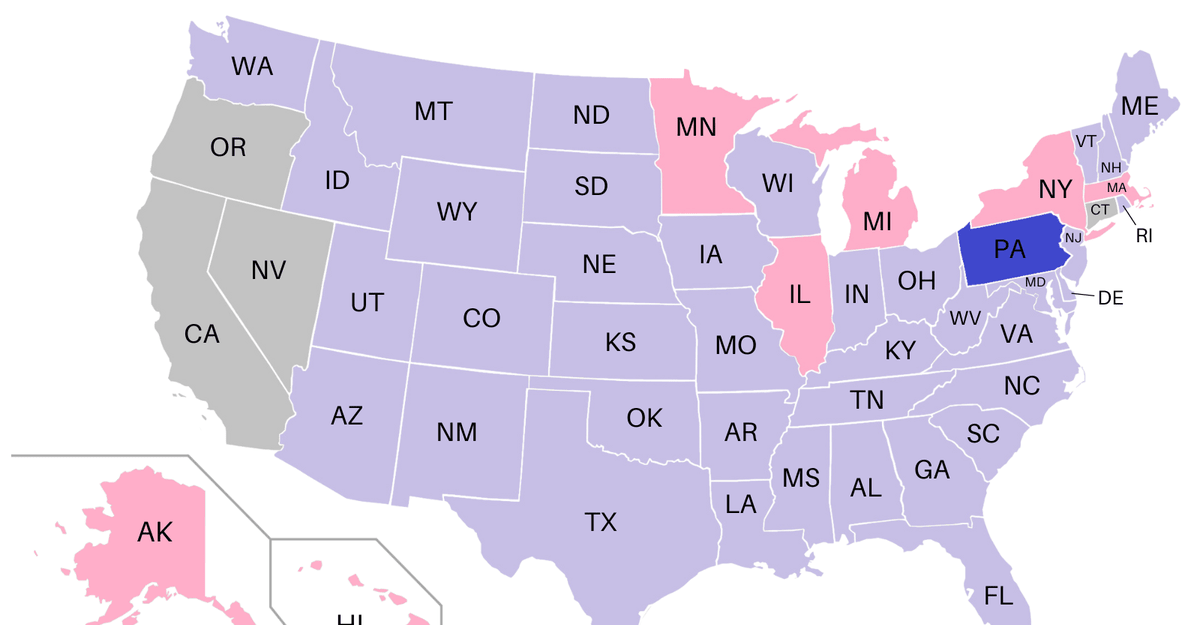
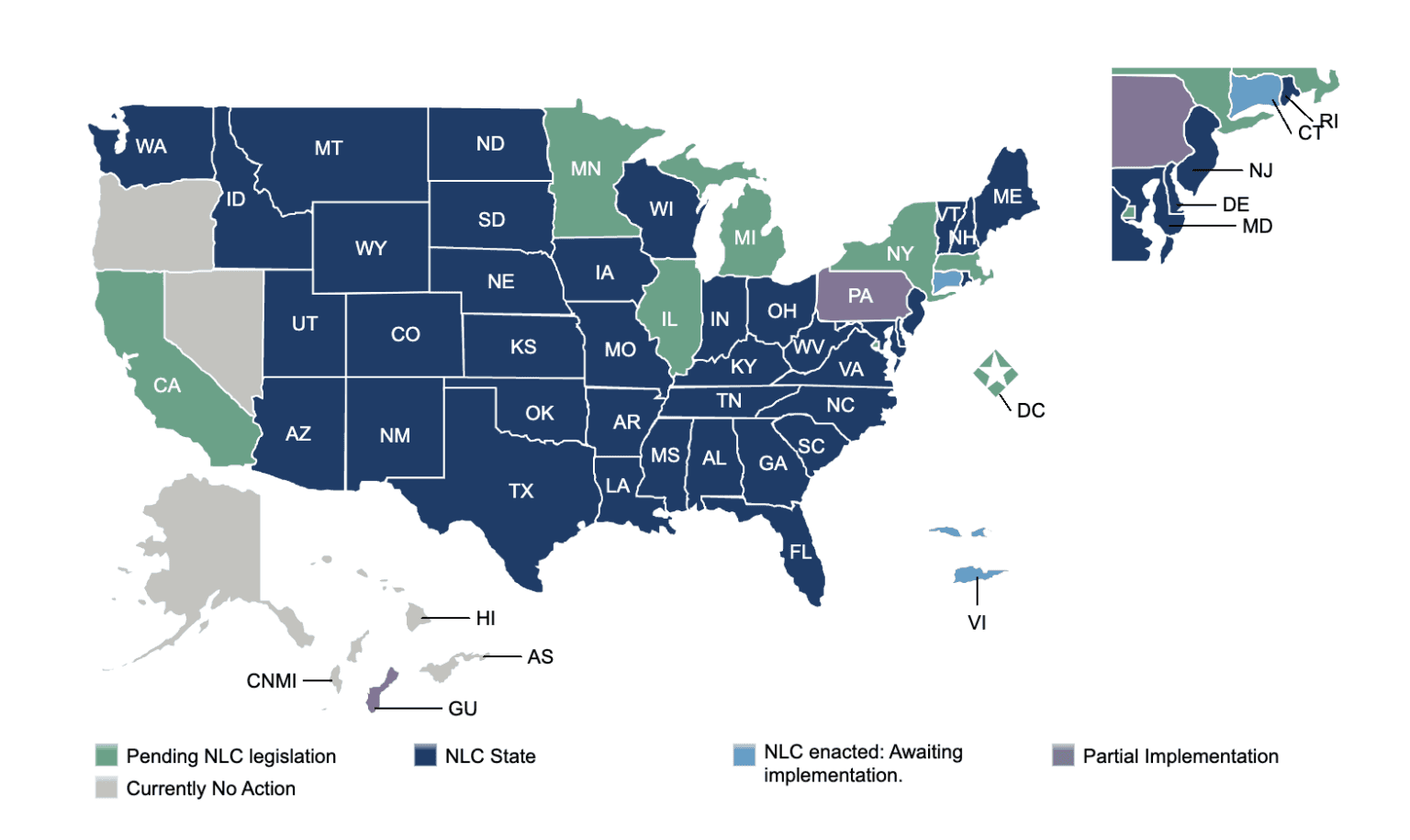
One of the most significant compacts impacting professionals is the Nurse Licensure Compact. For many years, Nevada was not a member of the NLC. This meant that nurses licensed in Nevada who wished to practice in another NLC state, or vice versa, had to obtain separate licenses in each jurisdiction. However, this landscape has changed. In recent years, Nevada has taken steps towards joining the NLC. As of the latest available information, Nevada has enacted legislation and is in the process of implementing the necessary procedures to become an active member of the Enhanced Nurse Licensure Compact (eNLC). The eNLC is an updated version of the original NLC, featuring more robust data sharing and streamlined processes. This move is poised to significantly benefit registered nurses and licensed practical nurses in Nevada, allowing them greater mobility and the ability to serve patients in other member states more readily. The implications for healthcare providers and patients in Nevada and neighboring states are substantial, potentially improving access to care and facilitating workforce flexibility.
Other Professional Licensure Compacts
Beyond nursing, Nevada‘s participation in other professional licensure compacts varies. For instance, while the state might not be a member of every existing professional compact, it may have specific reciprocity agreements in place for certain professions. It is always advisable for professionals to check the most current status of Nevada’s membership in any relevant compact. This includes exploring compacts for fields such as:
- Counseling: The Counseling Compact aims to facilitate the interstate practice of licensed professional counselors.
- Social Work: The Social Work Licensure Compact (SWLC) is designed to allow licensed social workers to practice in other member states.
- Physical Therapy: The Physical Therapy Compact (PTC) provides a streamlined pathway for physical therapists to obtain multi-state licenses.
- Occupational Therapy: The Occupational Therapy Licensure Compact (OTLC) offers similar benefits for occupational therapists.
The process of joining these compacts often involves legislative action and administrative rule-making, which can take time. Therefore, the exact status of Nevada’s membership in each of these compacts can fluctuate.
Criminal Justice and Child Welfare Compacts
Nevada is an active participant in crucial criminal justice and child welfare compacts. The state is a member of the Interstate Compact for Adult Offender Supervision (ICAOS), which ensures that individuals on probation or parole can transition to new states with proper supervision and accountability. This compact plays a vital role in public safety and offender rehabilitation by providing a consistent framework for inter-jurisdictional cooperation.
Similarly, Nevada is a party to the Interstate Compact on the Placement of Children (ICPC). This agreement is essential for protecting the welfare of children who are moved from one state to another for adoption, foster care, or other placement reasons. The ICPC establishes clear procedures for states to communicate and collaborate, ensuring that placements are made in the best interests of the child and that proper oversight is maintained. These compacts demonstrate Nevada’s commitment to inter-state cooperation in critical areas of public service and safety.
Implications for Professionals and Residents
Nevada’s evolving stance on interstate compacts has significant implications for various stakeholders. For professionals seeking to practice in Nevada or expand their reach beyond the state, understanding its compact memberships is crucial.
Mobility for Licensed Professionals
As Nevada moves towards full participation in the eNLC, nurses will find it much easier to practice across state lines. This increased mobility can be a boon for nurses seeking career advancement, personal growth, or the ability to respond to healthcare needs in other states. For employers in Nevada, this could mean access to a broader pool of qualified nursing talent. Conversely, nurses from other eNLC states will find it simpler to practice in Nevada, addressing potential staffing shortages.
For other professions where Nevada is or becomes a compact member, similar benefits of enhanced mobility and streamlined licensing processes will emerge. This can lead to a more dynamic and responsive professional workforce across the state.
Impact on Business and Economic Development
The ease with which professionals can move and practice across state lines can also impact business and economic development. Industries that rely on licensed professionals may find Nevada a more attractive location to operate or expand, knowing that their workforce can be more readily managed across regional or national operations. This can foster innovation and growth within the state.
Resident Services and Reciprocity
Beyond professional licensing, Nevada’s participation in compacts like ICAOS and ICPC directly impacts residents. These agreements ensure that essential services and legal frameworks extend beyond state borders, providing continuity for individuals and families navigating the justice system or child welfare services. For residents who may need to relocate or who have ties in multiple states, these compacts offer a degree of predictability and support.
Navigating Nevada’s Compact Status
Given the dynamic nature of interstate compacts, it is vital for individuals and organizations to stay informed about Nevada’s current and future participation.
Resources for Information
Official government websites are the most reliable sources for information regarding Nevada’s compact memberships. The relevant state licensing boards for professions, such as the Nevada State Board of Nursing or the Nevada Department of Health and Human Services, will typically provide details on their participation in interstate compacts. Additionally, national organizations that oversee specific compacts, like the Nurse Licensure Compact Administrators (NLCA) or the Council of State Governments (CSG), often maintain lists of member states and provide updates on new joiners.
Key Considerations for Professionals
Professionals considering practicing in Nevada, or those licensed in Nevada looking to practice elsewhere, should:
- Verify Current Membership: Always confirm the most up-to-date status of Nevada’s membership in any relevant compact through official channels.
- Understand the Specifics: Each compact has its own rules, fees, and procedures. Thoroughly review the requirements and benefits of any compact before applying for a multi-state license.
- Check for Reciprocity Agreements: Even if Nevada is not a member of a particular compact, it may have individual reciprocity agreements with other states for certain professions.

The Future of Compacts in Nevada
As Nevada continues to engage with its neighboring states and the broader national landscape, its participation in interstate compacts is likely to evolve. The trend towards greater interstate cooperation, particularly in areas like professional licensing and public safety, suggests that Nevada may become a member of additional compacts in the future. This ongoing development underscores the importance of staying informed and adapting to the changing regulatory environment. Therefore, while the direct answer to “Is Nevada a compact state?” might be complex and dependent on the specific compact in question, its increasing engagement with these agreements points towards a future where its participation will be more widespread and impactful.
LifeOutOfTheBox is a participant in the Amazon Services LLC Associates Program, an affiliate advertising program designed to provide a means for sites to earn advertising fees by advertising and linking to Amazon.com. Amazon, the Amazon logo, AmazonSupply, and the AmazonSupply logo are trademarks of Amazon.com, Inc. or its affiliates. As an Amazon Associate we earn affiliate commissions from qualifying purchases.