
The Granite State, known for its independent spirit and picturesque landscapes, often finds itself at a fascinating crossroads in the political spectrum. Understanding whether New Hampshire leans “blue” (Democratic) or “red” (Republican) requires a nuanced look beyond simple party affiliations, delving into its unique electoral history, demographic shifts, and the distinct political cultures that define its urban centers and rural communities. While often considered a swing state, its voting patterns reveal a complex tapestry of preferences that can shift from one election cycle to another.
A History of Political Independence
New Hampshire has a long-standing tradition of valuing individual liberty and, consequently, has often exhibited a degree of political independence. This is famously encapsulated in its state motto: “Live Free or Die.” This ethos has historically translated into voters who are less beholden to party lines and more inclined to consider candidates based on their platforms and perceived ability to uphold state autonomy.
The Early Republic and Shifting Allegiances
In its early history, New Hampshire was a stronghold for the Democratic-Republican Party. However, as the nation evolved, so did the state’s political leanings. The rise of the Republican Party in the mid-19th century saw New Hampshire align with the GOP, largely due to issues surrounding slavery and industrial development. For much of the late 19th and early 20th centuries, the state was reliably Republican in presidential and congressional elections.
The Mid-20th Century Pivot
The political landscape began to shift significantly in the mid-20th century. A growing urban population, coupled with evolving social and economic issues, started to tilt the scales. Democratic presidential candidates found increasing success, particularly during the era of Franklin D. Roosevelt’s New Deal and Lyndon B. Johnson’s Great Society. This period marked the beginning of New Hampshire’s emergence as a true battleground state.
The Modern Political Landscape: A Swing State’s Identity
In contemporary American politics, New Hampshire is most consistently characterized as a swing state. Its electoral outcomes in presidential elections, particularly since the late 20th century, have been closely contested, often decided by narrow margins. This label, however, belies the internal diversity of political thought within the state.
Presidential Election Trends
New Hampshire holds the distinction of hosting the first presidential primary in the nation, a role that significantly influences its political engagement and national attention. This early spotlight allows candidates to connect directly with voters, making the state a critical testing ground for campaign strategies.
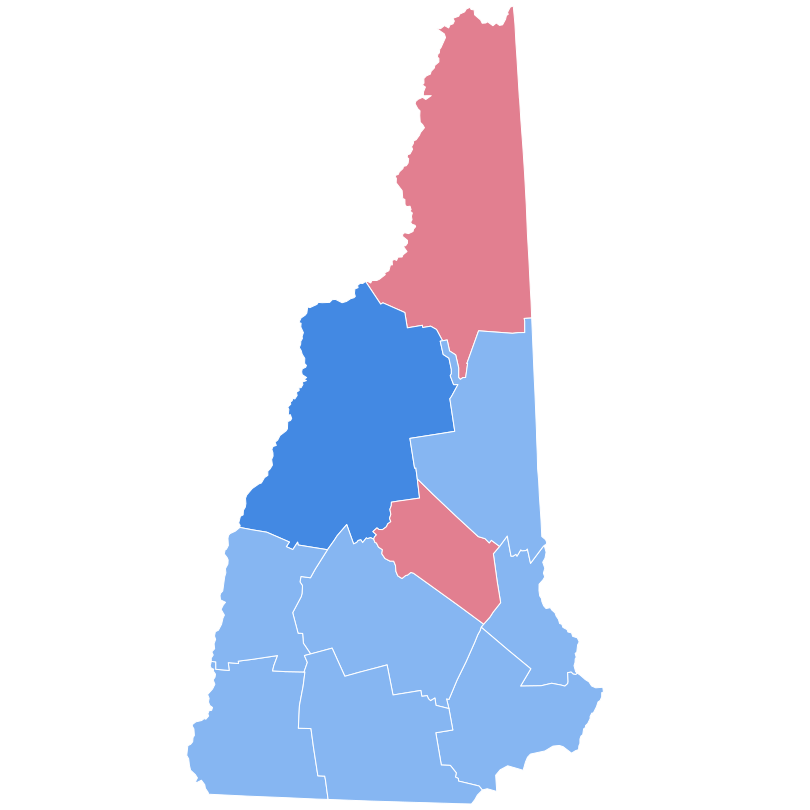
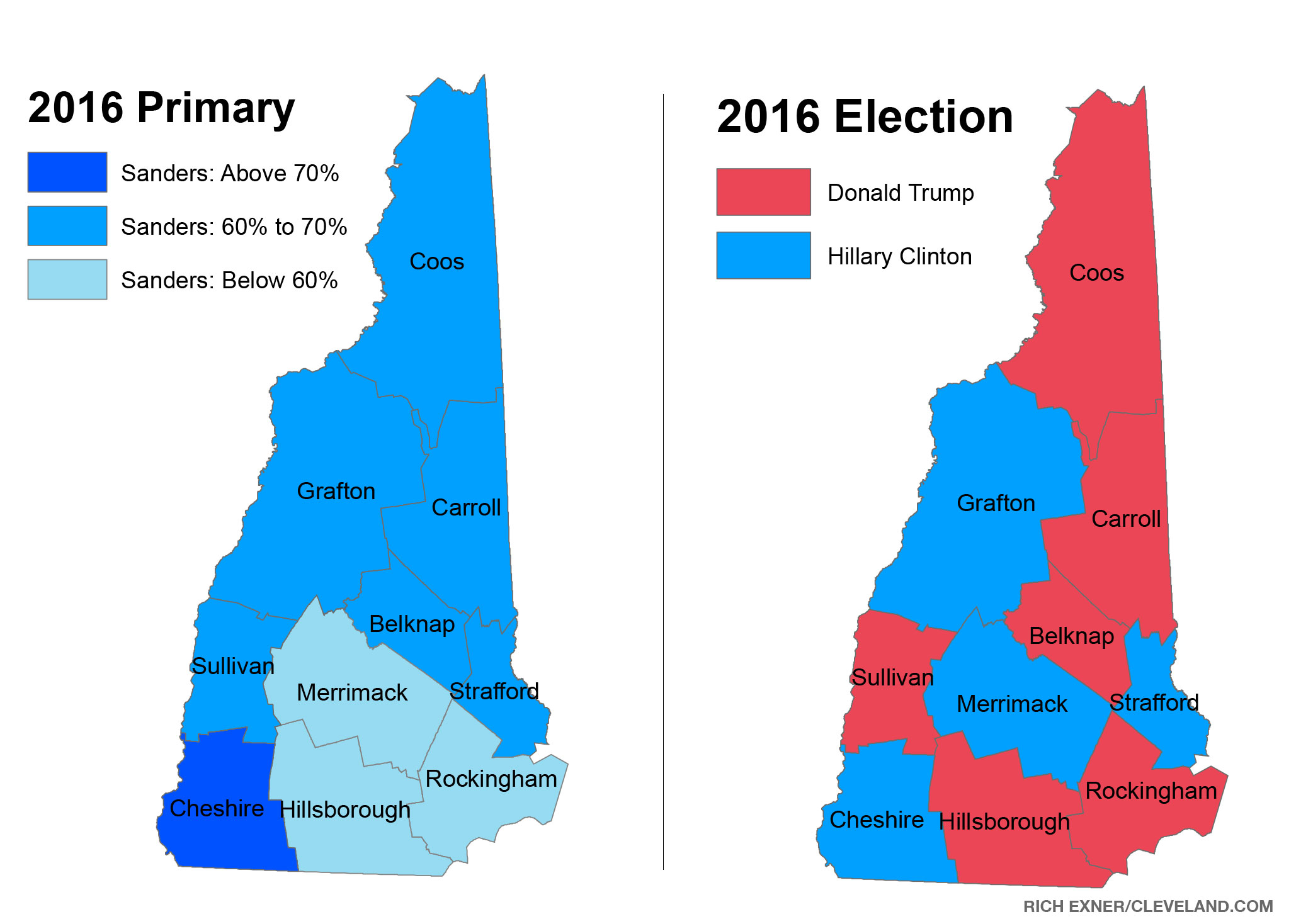
Historically, recent presidential elections have shown a mixed record. For instance, George W. Bush won in 2000, but John Kerry narrowly took the state in 2004. In 2008, Barack Obama secured a victory, and he repeated this success in 2012. However, in 2016, Donald Trump won the state by a slim margin, and in 2020, Joe Biden reclaimed it for the Democrats. This back-and-forth demonstrates its competitive nature and resistance to being firmly categorized as solely “blue” or “red.”
Congressional Races and State Legislature
The “blue or red” question also extends to its representation in the U.S. Congress and the composition of its state legislature. New Hampshire currently has two U.S. Senators, both Democrats (Jeanne Shaheen and Maggie Hassan), and two U.S. Representatives, one Democrat and one Republican. This split congressional delegation further illustrates the state’s political balance.
At the state level, the picture is often more fluid. The New Hampshire General Court (the state legislature) has seen control swing between Republicans and Democrats in recent decades. The State House in Concord has been a stage for significant policy debates, reflecting the state’s pragmatic approach to governance. The governorship has also alternated between parties, with prominent figures like Chris Sununu (Republican) and John Lynch (Democrat) serving multiple terms.
The Demographic and Geographic Divide
Understanding New Hampshire’s political leanings is incomplete without considering the interplay of its demographics and geography. The state’s population distribution influences voting patterns, creating distinct regional political cultures.
Urban Centers vs. Rural Areas
The more populous southern areas of New Hampshire, particularly those bordering Massachusetts, tend to be more Democratic. Cities like Manchester, Nashua, and Derry have seen growing diversity and a more liberal voting base, influenced by proximity to the Boston metropolitan area and a younger, more educated populace. These areas often favor social programs and government investment.
Conversely, the more rural, northern regions of the state, including the White Mountains and areas closer to Vermont and Maine, tend to lean more Republican. These areas often prioritize fiscal conservatism, lower taxes, and a less intrusive government. Traditional industries, such as tourism and some manufacturing, play a significant role in the economic identity of these regions.
The Independent Voter Factor
A significant portion of New Hampshire voters identify as independent. This bloc is crucial in determining election outcomes. These voters are often disinclined to align strictly with either party, evaluating candidates on a case-by-case basis. Their support can swing elections, making campaigns in New Hampshire particularly focused on appealing to a broader electorate rather than solely energizing their party base. This independent spirit is a defining characteristic of New Hampshire’s political identity.
Factors Influencing the “Blue” or “Red” Narrative
Several key factors contribute to the dynamic “blue or red” narrative in New Hampshire. These include economic conditions, social issues, and the influence of neighboring states.
Economic Considerations
The economic health of New Hampshire plays a vital role in its voting patterns. Debates around taxation, job creation, and the cost of living often resonate deeply with voters. Republicans typically advocate for lower taxes and reduced government spending, while Democrats often emphasize social safety nets, investments in education, and environmental regulations. The state’s unique tax structure, notably its lack of a broad-based sales or income tax, is a point of pride for many and a recurring theme in political discussions.
Social and Cultural Issues
Social issues, while perhaps less prominent than in some other states, also contribute to the political divide. Debates around education policy, healthcare access, and environmental protection can galvanize different segments of the electorate. The state’s generally moderate stance on many social issues allows for a broader appeal from candidates across the political spectrum, further contributing to its swing state status.
The Influence of Neighboring States
The political climate of neighboring states, particularly Massachusetts and Vermont, can have a subtle influence. Massachusetts is a solidly Democratic state, while Vermont is also strongly Democratic. This proximity can affect migration patterns and the diffusion of political ideas, particularly in the southern tier of New Hampshire. However, New Hampshire’s fierce independent streak means it rarely votes as a bloc with its neighbors.
Conclusion: A State of Nuance
Ultimately, the question of whether New Hampshire is blue or red is an oversimplification. It is a state that defies easy categorization, characterized by its independent spirit, fiercely competitive elections, and a population that values pragmatic governance. Its political identity is less about a fixed hue and more about a dynamic interplay of diverse viewpoints, regional differences, and a consistent dedication to the principle of living free. While specific election outcomes may favor one party over another in a given cycle, the underlying character of New Hampshire voters remains independent, informed, and always engaged.
LifeOutOfTheBox is a participant in the Amazon Services LLC Associates Program, an affiliate advertising program designed to provide a means for sites to earn advertising fees by advertising and linking to Amazon.com. Amazon, the Amazon logo, AmazonSupply, and the AmazonSupply logo are trademarks of Amazon.com, Inc. or its affiliates. As an Amazon Associate we earn affiliate commissions from qualifying purchases.