
When planning a high-level educational journey or an academic excursion to a major metropolitan hub like New York City, students and researchers often find themselves navigating a complex landscape of information. One common question that arises is whether a prominent publication like the New York Times qualifies as a scholarly source. Understanding the distinction between journalism and peer-reviewed academic literature is essential for anyone conducting research while traveling or documenting the cultural significance of global destinations.
The Nature of Scholarly vs. Journalistic Content
To categorize information correctly, one must first distinguish between the rigorous requirements of academia and the fast-paced environment of professional journalism. Scholarly sources, often referred to as academic or peer-reviewed journals, undergo a meticulous process where experts in the field evaluate the methodology, data, and conclusions before publication.

The Rigor of Peer Review
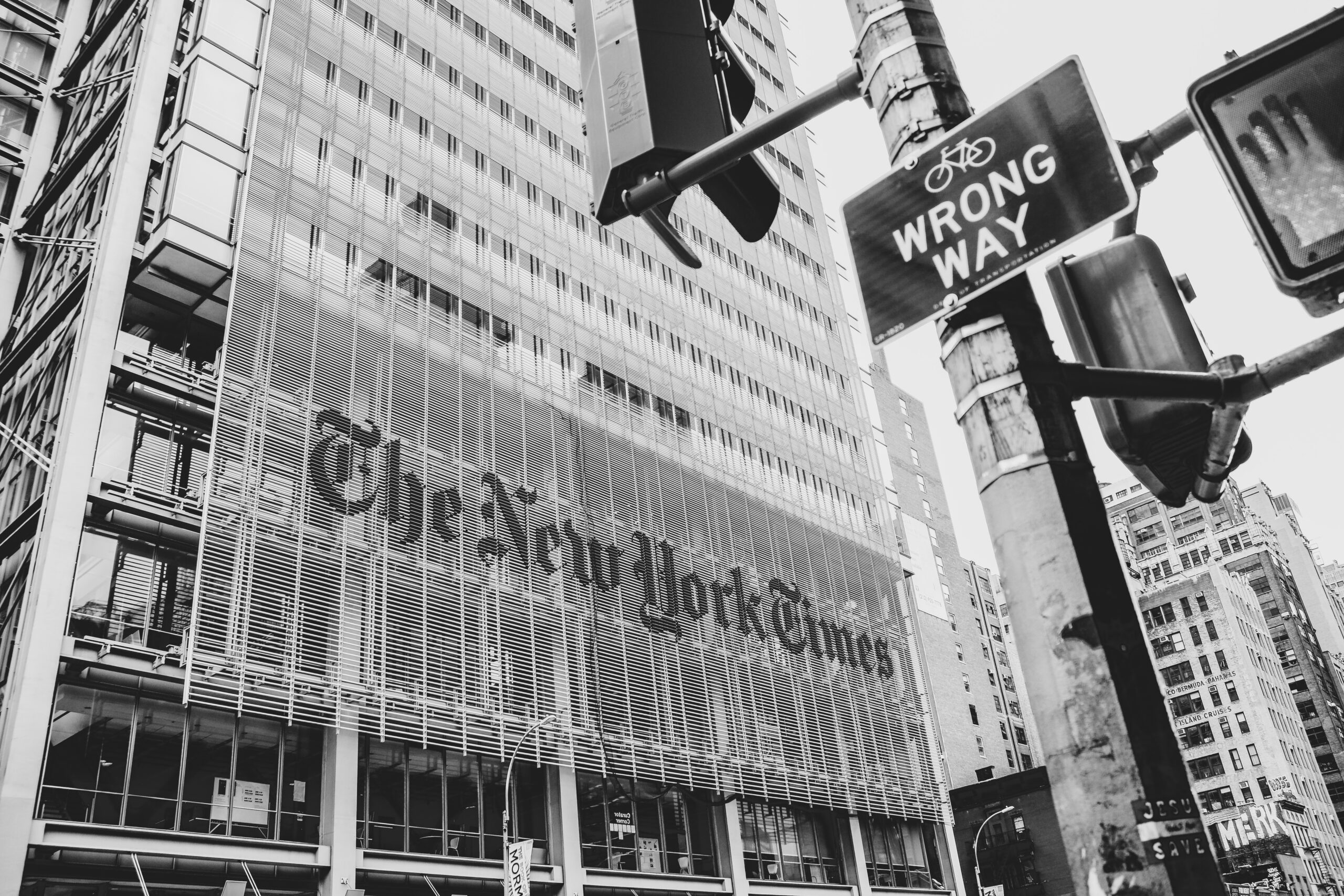
The New York Times operates as a newspaper of record. While it employs some of the world’s most talented investigative journalists, editors, and fact-checkers, it does not utilize the double-blind peer-review system characteristic of journals found in Harvard University or Oxford University libraries. The speed of a daily news cycle inherently prevents the deep, months-long vetting process required for scholarly articles.
Journalism as a Primary Source
While the publication may not be “scholarly” in the academic sense, it serves as a critical primary source. If you are conducting a study on the historical development of Manhattan or documenting the socio-economic changes near Central Park, the newspaper provides contemporaneous accounts that are invaluable for researchers. In this context, it is not used to confirm theories in a scientific sense, but rather to establish a timeline of events or public sentiment during a specific era.
Evaluating Sources for Cultural and Historical Research
When your travel itinerary includes stops at historical landmarks such as the British Museum or the Louvre Museum, your research needs will shift. You are often looking for the intersection of tourism, history, and cultural identity.
Secondary Analysis vs. Original Reporting
Academic research requires secondary analysis of primary data. If you are citing the newspaper, you are citing a journalistic interpretation of events. For a thesis on the architectural preservation of Paris, citing an architectural digest or a peer-reviewed urban planning journal is preferred over a daily news report. However, if your research focus is on the public perception of that preservation, the newspaper becomes an excellent source for understanding societal discourse.
Contextualizing Information on the Go
Modern researchers often conduct their work while on the move, perhaps while staying at the Ritz-Carlton in London or the Four Seasons Hotel in Tokyo. In these scenarios, digital accessibility is paramount. Using reputable news sources allows you to ground your observations in the current political and social climate of the region you are visiting. Even if the content isn’t “scholarly,” its reliability makes it a standard-bearer for professional journalism.
Determining When to Use Professional Journalism
Not every project requires a peer-reviewed paper. Understanding the “scholarly” debate helps researchers choose the right tool for the job. If your objective is to analyze travel trends in Italy or document the influence of the Eiffel Tower on the tourism economy, professional journalism offers depth that academic papers sometimes lack due to their narrow focus.
Depth of Subject Matter
- Investigative Journalism: Can provide “on-the-ground” details that academics might miss.
- Editorials and Op-Eds: Useful for understanding the cultural pulse of a city like Rome, though these are inherently subjective and should never be conflated with objective research.
- Cultural Features: Often written by specialists, these articles can serve as excellent entry points into complex topics, providing bibliographic references that lead to more rigorous scholarly works.
Best Practices for Citation
When writing reports that blend travel experiences with academic inquiry, follow these rules for citing non-scholarly sources:
- Acknowledge the Source Type: Explicitly state that you are utilizing a journalistic account to provide context to your primary research.
- Verify with Multiple Outlets: Cross-reference information found in the New York Times with other reputable publications like the Wall Street Journal or the Washington Post to ensure a balanced perspective.
- Identify the Author’s Expertise: If an article regarding the history of the Great Wall of China is written by a renowned historian, it holds more weight than a general staff-written report.
The Role of Information Literacy in Travel and Study
As we traverse the globe, from the Grand Canyon to the Taj Mahal, our ability to process and categorize information defines our intellectual journey. Whether you are a student, a professional researcher, or a curious traveler, recognizing that a source like the New York Times occupies a specific, high-quality, but non-scholarly tier is a hallmark of good research.
Cultivating Critical Thinking
The true value of any source lies in the reader’s ability to analyze it. By asking “Is this source peer-reviewed?” you are engaging in the critical thinking necessary to succeed in academic pursuits. If you find yourself in San Francisco for a conference or visiting the Statue of Liberty to better understand American history, maintain this level of scrutiny. Rely on peer-reviewed journals for your theoretical framework and use professional journalism to color that framework with the vibrancy of the contemporary world.

Integrating Knowledge Across Disciplines
Ultimately, the goal of research is to build a cohesive narrative. By combining the rigorous data found in scholarly journals with the nuanced reporting found in elite journalism, you create a more complete picture of your subject. Whether you are investigating the environmental impact of tourism in the Galapagos Islands or the political landscape of Berlin, a multi-faceted approach ensures that your work is both accurate and reflective of the complexities inherent in our global society.
Always remember that the classification of a source—whether scholarly, popular, or trade—is not a measure of its quality, but a measure of its intent. The New York Times excels at its stated intent: reporting the news with authority. That intent is distinct from, but equally important to, the goal of academic research. Use both appropriately, and your academic travel experience will be richer for it.
LifeOutOfTheBox is a participant in the Amazon Services LLC Associates Program, an affiliate advertising program designed to provide a means for sites to earn advertising fees by advertising and linking to Amazon.com. Amazon, the Amazon logo, AmazonSupply, and the AmazonSupply logo are trademarks of Amazon.com, Inc. or its affiliates. As an Amazon Associate we earn affiliate commissions from qualifying purchases.