
Navigating the legal landscape of employment in any state can be complex, particularly for individuals considering relocating for work or for businesses establishing operations. When the question arises, “Is Oregon an at-will employment state?”, it delves into the fundamental nature of the employer-employee relationship within the Beaver State. Understanding this concept is crucial for both parties involved, influencing everything from hiring practices to termination procedures. This article aims to clarify the status of employment in Oregon concerning at-will doctrine, explore its implications, and outline the exceptions that safeguard employee rights.
Understanding At-Will Employment
At-will employment is a legal doctrine that dictates the terms under which an employer can terminate an employee, and vice versa. In its purest form, it means that either the employer or the employee can end the employment relationship at any time, for any reason, or for no reason at all, as long as the reason is not illegal. This doctrine originated in the late 19th century and has been adopted by most U.S. states, though its application and scope can vary significantly.
The Core Principle
The cornerstone of at-will employment is the absence of a contract specifying a definite term of employment. If an employee is hired without a written contract that outlines a fixed duration for their job, they are generally presumed to be an at-will employee. This presumption allows for flexibility in the workforce, enabling employers to adapt to changing business needs and employees to pursue new opportunities without lengthy notice periods or contractual obligations.
Implications for Employers
For employers, the at-will doctrine offers a degree of operational freedom. They can dismiss an employee whose performance is unsatisfactory, whose role is being eliminated due to restructuring, or simply because the employee is not a good fit for the company culture, without the burden of proving “just cause” for termination. However, this freedom is not absolute and is subject to various legal limitations.
Implications for Employees
For employees, the at-will status means that their job security is not guaranteed by a contract. They can resign their position at any time to accept a better offer, relocate, or pursue personal interests. This also means that they can be terminated without advance notice or severance pay, unless specific contractual agreements or company policies dictate otherwise.
Oregon’s Stance on At-Will Employment
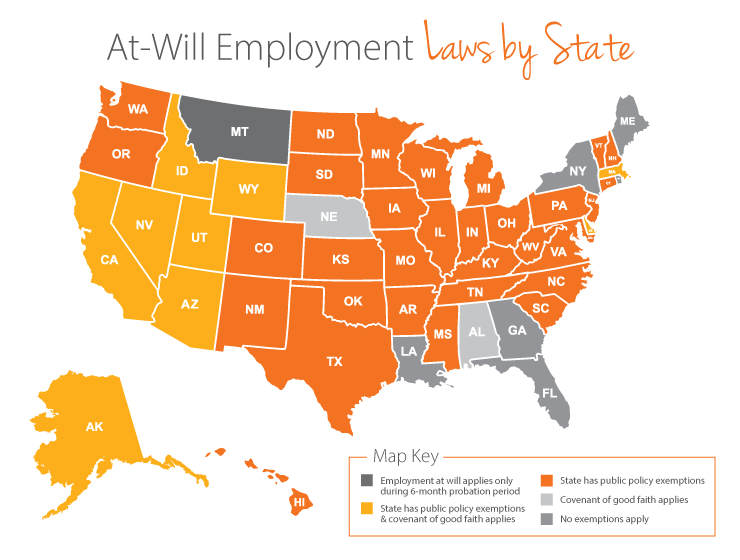
Oregon is generally considered an at-will employment state. This means that, by default, employment relationships in Oregon are governed by the at-will doctrine. An employer can terminate an employee for any reason, or no reason at all, provided that the reason is not unlawful. Similarly, an employee can leave their job at any time without penalty.
Statutory and Case Law Foundation
The at-will presumption in Oregon is supported by common law and has been consistently upheld by Oregon courts. While there isn’t a single statute that explicitly states “Oregon is an at-will state,” the legal framework surrounding employment has evolved to embrace this principle. The absence of a statute mandating employment for a fixed term or requiring “just cause” for dismissal reinforces the at-will nature of most employment relationships.
The “Default” Setting
It’s important to emphasize that at-will employment in Oregon is the “default” setting. This means that unless specific exceptions apply or are created through agreement, the at-will doctrine governs the employment relationship. This principle is fundamental to understanding employment law in Oregon and impacts the rights and responsibilities of both employers and employees.
Exceptions to the At-Will Doctrine in Oregon
While Oregon adheres to the at-will employment principle, it is not an unfettered rule. Oregon law, like that of many states, recognizes several significant exceptions that protect employees from wrongful termination. These exceptions are critical for ensuring fair treatment and preventing discriminatory or retaliatory practices.
Public Policy Exception
One of the most significant exceptions to the at-will doctrine is the public policy exception. This exception prevents employers from terminating an employee for reasons that violate a clear mandate of public policy. This can arise in various scenarios, such as when an employee is fired for:

- Refusing to commit an illegal act: If an employer asks an employee to break the law, and the employee refuses, they cannot be terminated for that refusal.
- Reporting illegal activities: Employees who report illegal or unethical conduct by their employer to the proper authorities (whistleblowers) are protected from retaliation. Oregon has specific whistleblower protection laws that enhance this safeguard.
- Exercising a legal right: This includes activities like filing a workers’ compensation claim, serving on a jury, or voting. An employer cannot fire an employee for engaging in these legally protected activities.
- Performing a public duty: If an employee is required by law to perform a public duty, such as jury service, they cannot be terminated for fulfilling that obligation.
The public policy exception is rooted in the idea that employees should not be forced to choose between their job and upholding the law or fulfilling their civic duties.
Implied Contract Exception
Another crucial exception is the implied contract exception. While there might not be an explicit written contract guaranteeing employment for a specific duration, an implied contract can be created through the words and actions of the employer. This can occur through:
- Oral promises: If an employer makes verbal assurances of job security or promises not to terminate an employee except for specific reasons (e.g., poor performance, misconduct), these promises can form an implied contract.
- Employee handbooks and policies: Company handbooks, policy manuals, or other written materials can sometimes create an implied contract. If a handbook outlines a progressive disciplinary process and states that termination will only occur after these steps are followed, an employee may argue that they have an implied contract for continued employment as long as they adhere to company policies. However, many handbooks include disclaimers stating they do not create contractual rights.
- Custom and practice: A long-standing company practice of only terminating employees for cause can also lead to an implied contract.
Courts will examine the totality of the circumstances to determine if an implied contract exists, looking at the employer’s conduct, statements, and written materials.
Implied Covenant of Good Faith and Fair Dealing Exception
While less frequently recognized in all states, Oregon has, in certain contexts, recognized an implied covenant of good faith and fair dealing. This exception suggests that employers cannot act in bad faith or deal unfairly with employees, even in an at-will relationship. Examples of bad faith actions that might violate this covenant include:
- Terminating an employee to avoid paying earned wages or commissions: If an employer fires an employee shortly before a large commission or bonus is due, solely to prevent payment, this could be seen as a breach of good faith.
- Deceiving an employee about job security to prevent them from leaving: If an employer makes false representations about job stability to induce an employee to remain with the company, and then terminates them shortly thereafter without cause, this might be actionable.
- Manipulating performance evaluations to create a pretext for termination: Falsifying or unfairly manipulating performance reviews to build a case for dismissal could also be considered a breach of good faith.
The scope of this exception can be narrow, and its application often depends on the specific facts of the case and prior judicial interpretations.
Discrimination and Retaliation
Beyond the broader exceptions, specific laws prohibit termination based on discriminatory reasons or in retaliation for protected activities. These are not necessarily exceptions to at-will employment itself, but rather make certain reasons for termination illegal. Employers in Oregon cannot terminate an employee based on:
- Protected characteristics: This includes race, color, religion, sex (including pregnancy, sexual orientation, and gender identity), national origin, age, disability, marital status, or veteran status. Oregon’s anti-discrimination laws are robust and enforced by agencies like the Oregon Bureau of Labor and Industries.
- Retaliation for engaging in protected activities: As mentioned under the public policy exception, retaliating against employees for filing complaints (e.g., discrimination, wage and hour violations), participating in investigations, or opposing unlawful practices is illegal.
Practical Considerations for Employers and Employees in Oregon
Given that Oregon operates under the at-will doctrine with significant exceptions, both employers and employees should be aware of their rights and responsibilities.
For Employers
- Clear Policies: Develop and maintain clear, well-communicated policies regarding employment terms, disciplinary procedures, and grounds for termination. Ensure that employee handbooks contain explicit disclaimers that they do not create a contract of employment.
- Documentation: Thoroughly document all performance issues, disciplinary actions, and reasons for termination. This documentation is vital if an employee challenges a termination.
- Consistency: Apply company policies and disciplinary procedures consistently across all employees to avoid claims of discrimination or unfair treatment.
- Legal Counsel: Consult with legal counsel specializing in employment law in Oregon to ensure compliance with all federal, state, and local regulations. This is especially important when considering terminations or developing employment policies.
For Employees
- Understand Your Rights: Be aware of your rights regarding protected classes, public policy, and potential implied contracts.
- Read Agreements Carefully: Pay close attention to any employment agreements, offer letters, or employee handbooks provided by your employer.
- Document Everything: Keep records of significant conversations, promises made by employers, performance reviews, and any instances of perceived mistreatment or policy violations.
- Seek Advice: If you believe you have been wrongfully terminated, consult with an employment attorney in Oregon to understand your legal options.

Conclusion: Navigating Employment in Oregon
In summary, Oregon operates as an at-will employment state, meaning that either an employer or an employee can typically end the employment relationship at any time, for any lawful reason, or no reason at all. However, this doctrine is not absolute. Oregon law provides crucial protections through exceptions based on public policy, implied contracts, and the implied covenant of good faith and fair dealing. Furthermore, terminations based on illegal discrimination or retaliation for protected activities are strictly prohibited. Both employers and employees must remain informed about these legal nuances to foster a fair and compliant employment environment within the state. Understanding the framework of at-will employment and its exceptions is paramount for anyone working in or doing business in Oregon.
LifeOutOfTheBox is a participant in the Amazon Services LLC Associates Program, an affiliate advertising program designed to provide a means for sites to earn advertising fees by advertising and linking to Amazon.com. Amazon, the Amazon logo, AmazonSupply, and the AmazonSupply logo are trademarks of Amazon.com, Inc. or its affiliates. As an Amazon Associate we earn affiliate commissions from qualifying purchases.