
Understanding your obligations and protections as a renter in the Sunshine State is crucial for peace of mind and financial security. While not universally mandated by state law, the question of whether renters insurance is required in Florida is nuanced and depends on several key factors. This guide delves into the legal landscape, landlord requirements, and the compelling reasons why every renter should consider this vital protection, regardless of its mandatory status.
Florida’s Legal Stance on Renters Insurance
In Florida, there is no state law that compels landlords to require their tenants to carry renters insurance, nor is there a state law that mandates tenants purchase it. This means that unlike some other states or specific lease agreements, landlords are not legally obligated to enforce renters insurance for their tenants. However, this lack of a universal legal requirement does not diminish its importance.
The absence of a state mandate does not equate to a lack of importance or prevalence. In fact, many landlords, particularly those who are more invested in protecting their property and mitigating their own risks, will include a renters insurance clause in their lease agreements. This is a contractual obligation between the landlord and the tenant, rather than a statutory one.
Understanding Lease Agreements
The lease agreement is the primary document that will dictate whether you are required to have renters insurance. Landlords in Florida have the right to set terms and conditions for their properties, and this often includes stipulating that tenants must obtain and maintain renters insurance.
When reviewing your lease, pay close attention to any clauses related to insurance. These clauses typically specify:
- Requirement for Renters Insurance: A clear statement that renters insurance is mandatory.
- Minimum Coverage Limits: The landlord may specify the minimum amount of liability coverage and personal property coverage you need to carry. For instance, they might require at least $100,000 in liability protection and $20,000 in personal property coverage.
- Proof of Insurance: You will likely be required to provide a copy of your insurance policy declaration page to the landlord as proof of coverage before you move in and potentially on an annual basis.
- Listing Landlord as “Additional Insured” or “Interested Party”: Some leases may require the landlord to be named as an additional insured or an interested party on your policy. This is more common for liability coverage, ensuring the landlord has some recourse if a tenant’s negligence leads to an incident on the property.
Failure to comply with these lease terms can result in a breach of contract, which could lead to late fees, eviction proceedings, or other penalties outlined in the lease. It is imperative to read your lease thoroughly and understand all its provisions before signing. If you are unsure about any part of the lease, it is advisable to seek legal counsel or consult with a tenant advocacy group.
Landlord’s Perspective and Risk Mitigation
Landlords often require renters insurance for several strategic reasons, primarily centered around risk mitigation. While a landlord’s insurance policy covers the building structure and their own property, it does not cover the personal belongings of tenants, nor does it typically cover liability arising from a tenant’s actions.
- Protection Against Tenant Negligence: If a tenant accidentally starts a fire that damages their unit and adjacent units, or if a guest is injured on the rental property due to the tenant’s negligence, renters insurance can help cover the costs. Without it, the tenant could be personally liable for extensive damages and medical bills, which they may be unable to pay. This could, in turn, lead to legal action against the landlord if the landlord is somehow implicated.
- Reduces Landlord’s Liability: By requiring tenants to have renters insurance, landlords can transfer some of the financial risk associated with tenant-related incidents. This can protect the landlord from potential lawsuits and costly repairs that might otherwise fall on them.
- Ensures Tenant Preparedness: A landlord requiring insurance signals to potential tenants that they expect responsible individuals who are prepared for unforeseen circumstances. This can contribute to a more stable and responsible tenancy.
- Covers Tenant’s Belongings: While this is primarily a benefit to the tenant, it can indirectly benefit the landlord by preventing a tenant from being completely devastated by a loss, which could lead to them vacating the property unexpectedly or becoming a source of ongoing dispute.
Many property management companies and larger landlords operating in areas like Miami, Orlando, and Tampa are increasingly adopting this requirement as a standard practice.
Why Renters Insurance is Crucial, Even If Not Required
Even if your lease agreement does not explicitly mandate renters insurance, investing in a policy is a wise financial decision for any renter in Florida. The relatively low cost of a policy offers significant protection against a wide range of potential risks.
Protecting Your Personal Property
Your landlord’s insurance policy covers the dwelling itself, but it does not cover your personal belongings. This includes furniture, electronics, clothing, appliances you own, and other possessions. If your belongings are damaged or destroyed due to covered events such as fire, smoke, windstorms (common in Florida), theft, or vandalism, renters insurance can help you replace them.
Consider the cumulative value of everything you own: your laptop, television, couch, bed, kitchenware, and all your personal items. In the event of a disaster, the cost to replace all of this could be substantial. Renters insurance provides financial assistance to get you back on your feet without incurring crippling debt.
Coverage for Additional Living Expenses (ALE)
A critical, often overlooked, benefit of renters insurance is coverage for Additional Living Expenses (ALE). If your rental home becomes uninhabitable due to a covered event, such as a fire or a hurricane, ALE coverage can help pay for the necessary costs of living elsewhere while your home is being repaired or rebuilt.
This can include expenses like:
- Hotel or Temporary Housing Costs: Covering the nightly rate for a hotel suite or a short-term rental.
- Meals: If your temporary accommodation doesn’t include cooking facilities or if dining out is more expensive than your usual grocery budget.
- Laundry Expenses: If you don’t have access to laundry facilities.
- Parking Fees: If you need to pay for parking at your temporary location.

Without ALE coverage, you could face significant out-of-pocket expenses while being displaced from your home, adding immense financial stress to an already difficult situation. For residents in hurricane-prone areas like the Florida Keys or coastal communities, this coverage is particularly invaluable.
Liability Protection
Renters insurance policies typically include liability coverage. This is a crucial component that protects you financially if someone is injured on your rental property and you are found to be at fault. It can also provide coverage if you accidentally cause damage to someone else’s property.
For example:
- Guest Injury: If a friend slips and falls on your wet kitchen floor and suffers an injury, your liability coverage could help pay for their medical bills.
- Accidental Damage: If you accidentally leave a faucet running, causing water damage to a downstairs neighbor’s apartment, your liability coverage could help pay for the repairs.
- Pet-Related Incidents: If your dog bites a visitor on your property.
Liability protection can cover legal defense costs if you are sued, as well as any settlements or judgments against you, up to your policy’s limits. This can shield your savings and assets from potentially devastating claims.
Understanding Policy Limits and Deductibles
When purchasing renters insurance, you will encounter two important terms: policy limits and deductibles.
- Policy Limits: This is the maximum amount your insurance company will pay out for a covered claim. There are usually separate limits for personal property coverage, liability coverage, and ALE. It’s important to choose limits that adequately cover the value of your belongings and your potential liability.
- Deductible: This is the amount you are responsible for paying out-of-pocket before your insurance coverage kicks in. You can often choose a higher deductible to lower your premium, but be sure you can afford to pay the deductible if you need to file a claim. For instance, a deductible for a windstorm claim in Florida might be a percentage of the dwelling’s value, which can be substantial.
Types of Coverage
Renters insurance policies generally offer two main types of coverage for your personal property:
- Actual Cash Value (ACV): This pays the replacement cost of your item minus depreciation. For example, if your five-year-old laptop is stolen, ACV would pay what it was worth at the time of the theft, not what a new one costs.
- Replacement Cost Value (RCV): This pays to replace your stolen or damaged item with a brand-new one of similar kind and quality, without deducting for depreciation. RCV policies typically have higher premiums but offer better protection for your belongings.
When selecting your policy, consider which type of coverage best suits your needs and budget.
How to Obtain Renters Insurance in Florida
Securing renters insurance in Florida is a straightforward process. Several reputable insurance companies offer renters policies, and you can obtain quotes online, over the phone, or through an insurance agent.
Steps to Get Insured:
- Assess Your Needs: Before getting quotes, take inventory of your personal belongings and estimate their total value. Consider your lifestyle and potential liability risks.
- Shop Around for Quotes: Contact multiple insurance providers to compare premiums, coverage options, deductibles, and customer service ratings. Websites like Esurance, Lemonade, and State Farm are popular choices.
- Understand the Policy: Read the policy details carefully, paying attention to what is covered and what is excluded. Ask questions if anything is unclear.
- Provide Required Information: You will typically need to provide your name, address, date of birth, information about your rental property, and details about your assets and any previous insurance history.
- Make Your Payments: Once you’ve chosen a policy, you’ll make your first premium payment. Your policy will then be effective.
- Provide Proof to Your Landlord: If your landlord requires it, submit a copy of your insurance policy declaration page as proof of coverage.
Factors Influencing Premiums
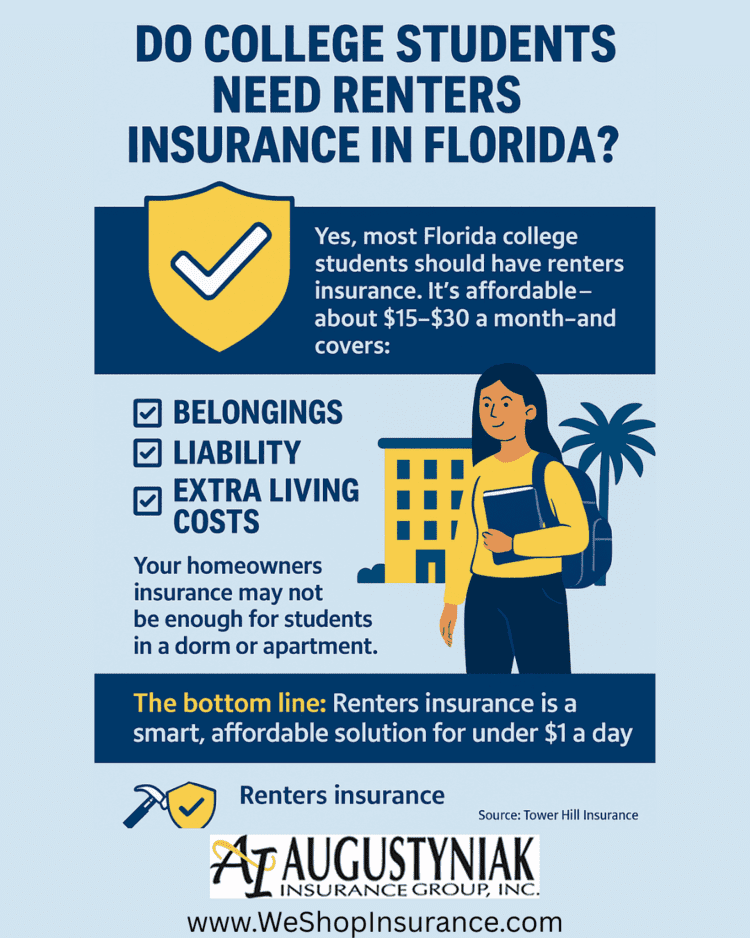
The cost of renters insurance in Florida is generally affordable, with premiums often ranging from $15 to $30 per month. Several factors can influence the price:
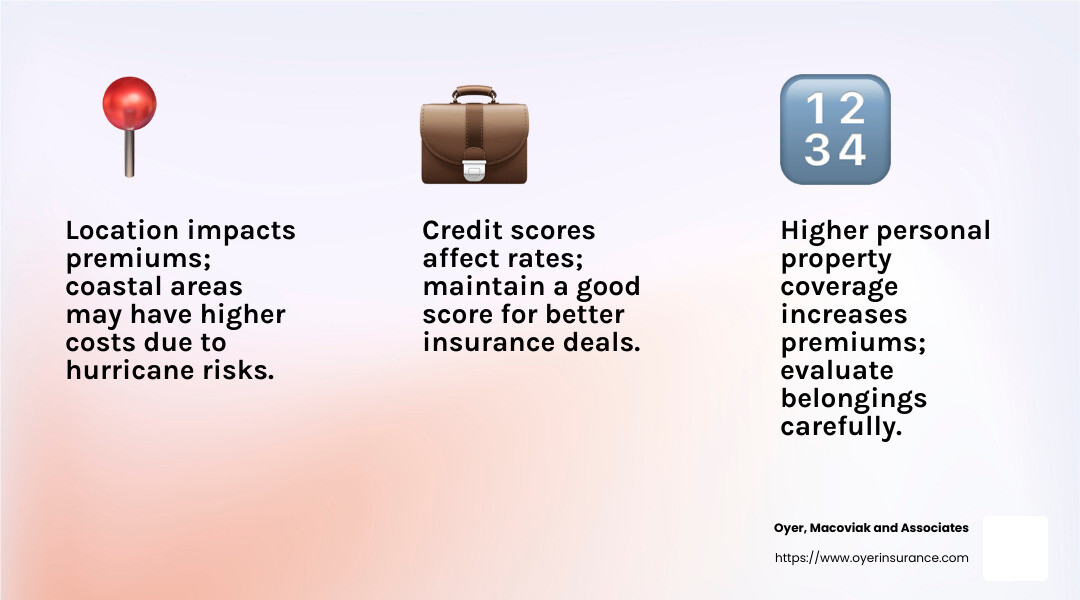
- Coverage Limits: Higher coverage limits will result in higher premiums.
- Deductible: A lower deductible means a higher premium, and vice versa.
- Location: Properties in areas with higher crime rates or a greater risk of natural disasters (like hurricanes) may have higher premiums.
- Policy Type: Replacement Cost Value (RCV) policies are typically more expensive than Actual Cash Value (ACV) policies.
- Insurance Company: Different insurers have different pricing structures and underwriting guidelines.
- Claims History: If you have a history of filing insurance claims, your premiums might be higher.
Conclusion: Peace of Mind for Renters
While Florida law does not universally require renters insurance, the contractual obligation stipulated in lease agreements and the undeniable personal financial protection it offers make it an essential consideration for every renter. From safeguarding your belongings against unforeseen events like fires and storms to providing a safety net for liability claims, renters insurance offers comprehensive protection at an affordable price.
By understanding your lease, assessing your needs, and shopping for the right policy, you can secure peace of mind and financial security as you enjoy your rental home in the beautiful state of Florida. Don’t wait for an emergency to realize the value of this vital insurance.
LifeOutOfTheBox is a participant in the Amazon Services LLC Associates Program, an affiliate advertising program designed to provide a means for sites to earn advertising fees by advertising and linking to Amazon.com. Amazon, the Amazon logo, AmazonSupply, and the AmazonSupply logo are trademarks of Amazon.com, Inc. or its affiliates. As an Amazon Associate we earn affiliate commissions from qualifying purchases.