
The question of proximity between Russia and Alaska often sparks curiosity, conjuring images of icy expanses and the stark beauty of the Arctic. While separated by a vast ocean, these two landmasses are geographically much closer than many realize, a proximity that has shaped history, culture, and continues to influence modern-day tourism and exploration. Understanding this unique geographical relationship opens up a fascinating dimension for travelers and those interested in the extreme north.
The Bering Strait: A Strait of Proximity
The primary geographical feature that brings Russia and Alaska into such close contact is the Bering Strait. This narrow waterway, separating the easternmost point of Asia (Cape Dezhnev in Russia) from the westernmost point of North America (Cape Prince of Wales in Alaska), is a mere 55 miles (88 kilometers) wide at its narrowest point. During the height of winter, when sea ice forms and connects the landmasses, the conceptual and physical distance shrinks even further.

The Diomede Islands: Navigating the International Date Line
Further highlighting this proximity are the Diomede Islands, two small islands situated directly in the middle of the Bering Strait.
- Big Diomede (Ostrov Ratmanova) belongs to Russia.
- Little Diomede (Alaska) belongs to the United States.
These islands are separated by only about 2.5 miles (4 kilometers) of water. More remarkably, they lie on opposite sides of the International Date Line. This means that when it is daylight on Little Diomede, it is already the next day and night on Big Diomede, creating a unique temporal anomaly in such close physical proximity. For travelers keen on understanding global geography and history, the Diomede Islands represent a tangible point where two continents and two different days converge.
Historical Significance: The Bering Land Bridge
The current proximity is a remnant of a much more significant connection: the Bering Land Bridge (also known as Beringia). During the Pleistocene epoch, vast amounts of water were locked up in glaciers, causing sea levels to drop dramatically. This exposed a landmass that once connected Siberia and Alaska, allowing for the migration of people and animals between continents. This prehistoric land bridge is a cornerstone of understanding human migration patterns into the Americas and is a subject of immense interest for anthropologists and naturalists. While the land bridge has long since submerged, its legacy is evident in the genetic makeup of indigenous populations and the shared natural environments of the Arctic region.
Experiencing the Arctic Proximity: Tourism and Exploration
The close geographical relationship between Russia and Alaska, particularly across the Bering Strait, offers a unique niche for adventurous travelers and researchers. While direct, conventional travel between the two regions can be complex due to political and logistical factors, the allure of exploring these frontier lands remains strong.
Unique Travel Opportunities
While there are no regular ferry services or direct flights connecting the main population centers of Russia and Alaska, specialized expeditions and tours offer opportunities to experience this proximity. These often involve:
- Cruises: Expedition cruises that traverse the Bering Sea and Arctic Ocean may include stops near the coastlines of both Russia and Alaska, offering views of the Diomede Islands and the dramatic landscapes. These voyages are typically high-end, catering to those with a deep interest in the Arctic environment and its unique geopolitical position.
- Air Charters: For a more direct, albeit expensive, experience, private air charters can sometimes be arranged to fly over the Bering Strait or to remote landing strips. These offer unparalleled aerial views of the straits, the islands, and the vast, sparsely populated coastlines.
- Scientific and Educational Expeditions: Universities and research institutions often organize expeditions focused on the Arctic ecology, climate change, or indigenous cultures. Participation in such programs can provide a structured way to experience the region and its geopolitical significance.
Key Destinations and Attractions
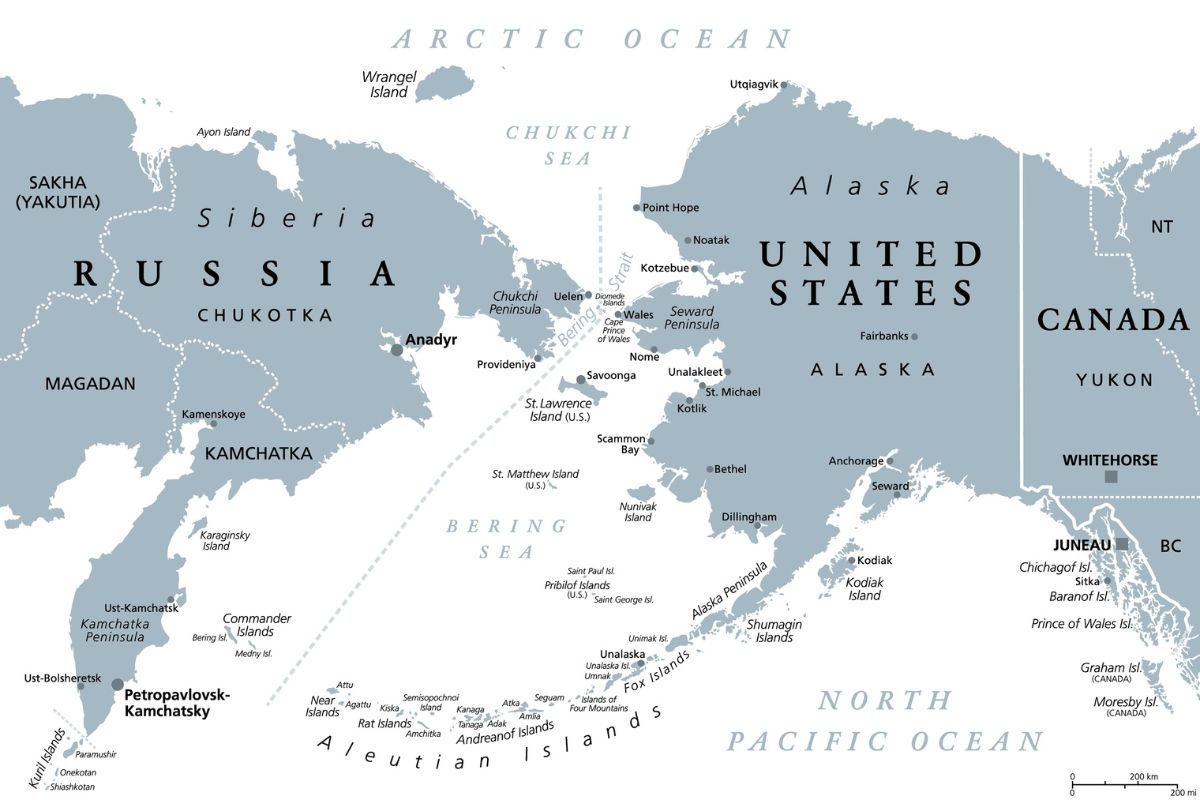
When considering the Arctic regions of Alaska and Russia that are “near” each other, certain points of interest stand out:
Alaska Side:
- Nome: Famous for the Iditarod Trail Sled Dog Race and its gold rush history, Nome is a gateway to western Alaska. From here, one can grasp the immense scale and remoteness of the Alaskan frontier. While not directly on the Bering Strait, it offers a taste of the environment that borders Russia.
- Little Diomede Island: Accessible via small boat or helicopter (weather permitting), visiting or even just viewing Little Diomede provides a profound sense of the proximity to Russia. The indigenous community here lives a life deeply connected to the land and sea, offering a glimpse into a resilient Arctic lifestyle.
- Wainwright and Utqiagvik (Barrow): Further north along the Arctic coast, these villages offer experiences of traditional Inupiat culture and the challenges and beauty of life above the Arctic Circle. While more distant from the Bering Strait, they are part of the broader Alaskan Arctic landscape that shares a border with Russia.
Russian Side:
- Chukotka Autonomous Okrug: This vast and remote region of northeastern Russia is the closest mainland point to Alaska. Its rugged coastline, indigenous cultures (including the Chukchi and Eskimo peoples), and stark beauty are largely untouched by mass tourism.
- Provideniya Bay: A significant port town and administrative center, Provideniya offers a glimpse into life in the Russian Arctic. Its location provides stunning views across the Bering Strait towards Alaska.
- Uelen: Located on the easternmost tip of the Chukotka Peninsula, Uelen is the closest inhabited settlement in Russia to North America. It’s a place steeped in history and indigenous traditions, offering a profound connection to the land bridge era and the ongoing relationship across the straits.
Navigating the Logistics and Realities of Arctic Travel
While the geographical proximity is undeniable, the practicalities of traveling between Russia and Alaska are significant. Both regions are characterized by extreme weather, vast distances, limited infrastructure, and, in the case of Russia, often stringent visa requirements and travel restrictions for foreigners.
Visa Requirements and Border Crossings
For most nationalities, visiting the Russian side of the Bering Strait requires a visa for Russia. Obtaining these visas can be a complex process, often requiring invitation letters and detailed itineraries. Direct border crossings between Alaska and Chukotka are not open to general tourism. Travelers typically need to fly into a major Russian city like Moscow or Vladivostok first, then arrange onward travel to the Chukotka region, which is often done via flights to Anadyr or Provideniya. Similarly, reaching remote parts of western Alaska requires careful planning, often involving flights from hubs like Anchorage or Fairbanks.
Seasonal Considerations
The Arctic environment dictates travel possibilities.
- Summer (June-August): This is the prime season for travel. The sea ice melts, allowing for shipping and cruise ship access. The weather is at its mildest, though still unpredictable, with long daylight hours. This is the most viable period for exploring coastal areas and islands.
- Winter (November-April): The Bering Strait freezes over, creating a formidable icy barrier. While it technically brings Russia and Alaska closer, travel across the ice is extremely dangerous and not feasible for conventional tourism. Temperatures are extreme, and daylight hours are short.
- Shoulder Seasons (Spring/Autumn): These periods can be challenging. Late spring may still have significant ice, while early autumn brings the onset of freezing conditions. Weather remains a primary concern.

Cultural and Environmental Considerations
Travel to these remote regions offers immense rewards but also carries responsibilities.
- Respect for Indigenous Cultures: Both Alaska and Chukotka are home to vibrant indigenous communities with unique traditions and ways of life. Travelers are encouraged to engage respectfully, learn about local customs, and support local economies through responsible tourism practices.
- Environmental Stewardship: The Arctic is a fragile ecosystem. Visitors must adhere to strict environmental guidelines, minimizing their impact, avoiding litter, and respecting wildlife. Climate change is a significant issue in the Arctic, and understanding its effects is often a part of the travel experience.
The question “Is Russia near Alaska?” is more than a geographical query; it’s an invitation to explore a region where continents almost touch, where history is etched in the landscape, and where the wild beauty of the Arctic offers a profound sense of remoteness and wonder. For the intrepid traveler, understanding this proximity is the first step towards planning an unforgettable journey to the edge of two worlds.
LifeOutOfTheBox is a participant in the Amazon Services LLC Associates Program, an affiliate advertising program designed to provide a means for sites to earn advertising fees by advertising and linking to Amazon.com. Amazon, the Amazon logo, AmazonSupply, and the AmazonSupply logo are trademarks of Amazon.com, Inc. or its affiliates. As an Amazon Associate we earn affiliate commissions from qualifying purchases.