
The question of whether Texas operates as a “50/50 divorce state” is a common one, particularly for those navigating the complexities of marital dissolution within the Lone Star State. This moniker often implies an automatic and equal division of assets and debts acquired during the marriage, a notion that, while appealing in its perceived fairness, doesn’t precisely reflect the legal framework in Texas. To understand Texas’s approach, it’s crucial to delve into its classification as a community property state and the principles that guide property division in divorce proceedings.
Understanding Texas’s Community Property System
Texas is one of nine states in the U.S. that adheres to the community property system. This legal framework fundamentally alters how property is treated upon divorce.

The Definition of Community Property
In Texas, all property that a married couple acquires during the marriage is presumed to be “community property,” regardless of whose name is on the title or who earned the income used to purchase it. This includes:
- Income: Wages, salaries, bonuses, and any other earnings from employment.
- Assets Acquired with Community Funds: Real estate, vehicles, bank accounts, investments, retirement accounts, businesses, and personal belongings purchased with income earned during the marriage.
- Debts: Loans, credit card balances, and other financial obligations incurred during the marriage are also considered community debts.
Separate Property vs. Community Property
It is vital to distinguish community property from separate property. A spouse’s separate property remains their sole possession and is not subject to division in a divorce. Separate property in Texas includes:
- Property owned before marriage: Any assets or debts a spouse possessed before tying the knot.
- Property acquired during marriage by gift or inheritance: Assets received as a gift or through inheritance by one spouse are considered that spouse’s separate property.
- Recovery for personal injuries: Damages awarded for personal injuries (except for loss of earning capacity during the marriage) are also separate property.
The distinction between separate and community property can be a significant point of contention in divorce cases. Proving that an asset is separate property often requires meticulous record-keeping and clear evidence of its origin.
“50/50” vs. “Just and Fair” Division
The concept of a “50/50 divorce state” suggests a rigid, equal split. Texas, however, does not mandate an automatic 50/50 division of community property. Instead, Texas law requires a “just and fair” division. This means that while an equal division is often the starting point and a common outcome, a judge has the discretion to award an unequal division of community property if the circumstances warrant it.
Factors Influencing a “Just and Fair” Division
Several factors can lead a court to order an unequal division of community property. These are designed to achieve a result that is equitable, considering the unique circumstances of each couple. Common factors include:

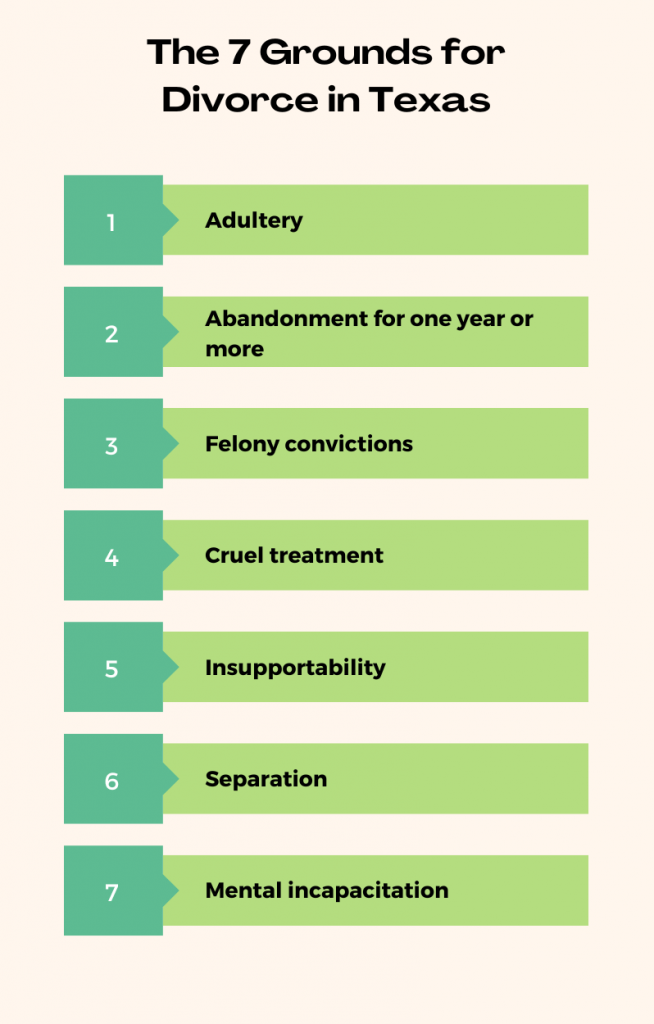
- Fault in the breakup of the marriage: While Texas is a no-fault divorce state, meaning you don’t have to prove wrongdoing to get divorced, fault can be considered when dividing property. Adultery, cruelty, abandonment, or chronic intoxication can influence the court’s decision. For example, a spouse found to be at fault for the divorce might receive a smaller share of the community estate.
- Disparity in earning power: If one spouse has significantly greater earning potential than the other, a court might award a larger share of the community property to the less-earning spouse to ensure their financial stability post-divorce.
- Health of the spouses: The medical condition and needs of each spouse can be a factor. A spouse with significant ongoing medical expenses or disabilities may receive a greater share to help cover these costs.
- Age of the spouses: The age of the parties can play a role, particularly if it impacts their ability to re-enter the workforce or their long-term financial needs.
- Education and future prospects: The educational background and future career opportunities of each spouse can be considered.
- Custodial parent: In cases involving minor children, the spouse who is awarded custody or primary physical possession of the children may receive a larger share of the community property to help support the children.
- Fraud or waste of community assets: If one spouse has dissipated or wasted community assets during the marriage (e.g., by spending excessively on gambling or an extramarital affair), the court can penalize that spouse by awarding a disproportionately smaller share of the remaining community estate.
- Contribution to the marriage: While all contributions are generally valued, the court may consider unique contributions, such as a spouse sacrificing career advancement to support the other’s education or career.
The Presumption of Equal Division
Despite the discretion afforded to judges, a 50/50 split often serves as the baseline. The law presumes that an equal division is just and fair. Therefore, a party seeking an unequal division bears the burden of proving why such a departure is warranted. Many divorces in Texas do conclude with an approximately equal division of assets and debts, especially when there are no complicating factors or significant marital misconduct.
Navigating Property Division in Texas
The process of dividing community property in Texas can be intricate. It typically involves identifying, valuing, and then dividing all community assets and debts.
The Inventory and Appraisement
The first step in the division process is usually the creation of an inventory and appraisement of all marital property. This document lists all assets and debts, along with their estimated values. Both spouses are typically required to provide this information to the court and to each other.
Valuation of Assets
Accurately valuing assets is crucial. Some assets, like bank accounts, have straightforward values. Others, such as businesses, real estate, or complex investment portfolios, may require the assistance of expert appraisers. Disagreements over valuation are common and can lead to extended negotiations or litigation.
Negotiated Settlements vs. Court-Ordered Division
The vast majority of divorce cases in Texas are resolved through a settlement agreement negotiated between the parties, often with the help of their attorneys. This allows the couple to have direct control over the division of their property, rather than leaving the decision entirely to a judge. A settlement agreement must still be approved by the court to ensure it is “just and fair.”
If a settlement cannot be reached, the case proceeds to trial, where a judge will make the final decisions regarding property division based on the evidence presented and the relevant Texas law.
Conclusion: Beyond the “50/50” Label
While the label “50/50 divorce state” might offer a comforting, albeit simplified, understanding, Texas operates under a more nuanced system. The community property laws in Texas are designed to achieve a “just and fair” division, which can result in an equal split but also allows for significant deviations based on specific circumstances.
For individuals facing divorce in Texas, understanding the principles of community property, the factors influencing property division, and the potential for both equal and unequal outcomes is essential. Consulting with an experienced Texas divorce attorney is highly recommended to navigate these complexities and ensure a fair resolution that aligns with legal requirements and personal needs. The path to divorce resolution in Texas is paved with legal intricacies, and a clear grasp of these principles is the first step towards a just conclusion.
LifeOutOfTheBox is a participant in the Amazon Services LLC Associates Program, an affiliate advertising program designed to provide a means for sites to earn advertising fees by advertising and linking to Amazon.com. Amazon, the Amazon logo, AmazonSupply, and the AmazonSupply logo are trademarks of Amazon.com, Inc. or its affiliates. As an Amazon Associate we earn affiliate commissions from qualifying purchases.