
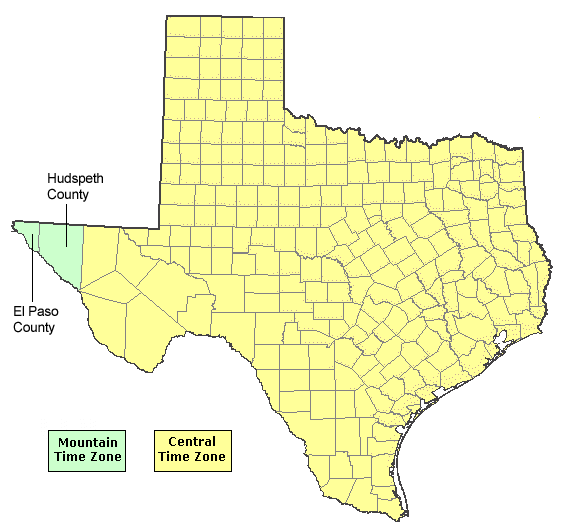
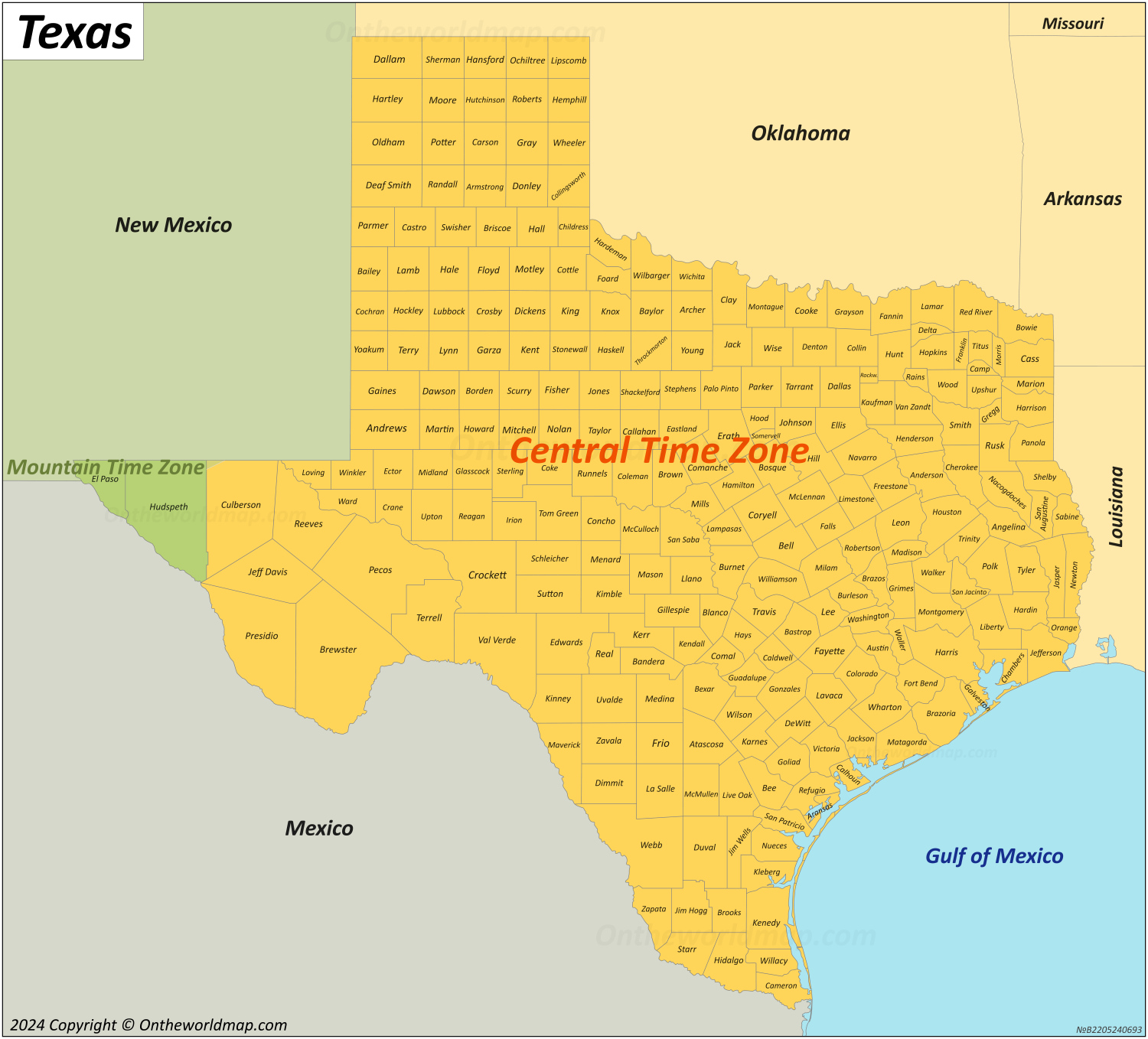
The vast expanse of Texas, a state synonymous with independence, big skies, and a rich tapestry of cultures, often leads travelers and new residents to ponder its geographical and temporal orientation. For many, the answer to “Is Texas on Central Time Zone?” seems straightforward: yes, overwhelmingly. However, like many things in the Lone Star State, there’s a fascinating nuance to this seemingly simple question. While the vast majority of Texas proudly operates on Central Time (CT), a significant western sliver of the state, including the vibrant city of El Paso, adheres to Mountain Time (MT). This unique geographical division has practical implications for anyone planning to travel, work, or live across the diverse landscapes of Texas, impacting everything from flight schedules and hotel bookings to daily routines and business operations.
Understanding this temporal split is crucial for seamless travel and a deeper appreciation of Texas’s unique position on the North American map. From the bustling metropolises of Dallas and Houston to the rugged beauty of Big Bend National Park and the cultural crossroads of El Paso, navigating the time zones becomes an essential part of the Texan experience. This comprehensive guide will delve into the specifics of Texas’s time zones, offer insights for travelers, and explore the lifestyle considerations that arise from living in a state that spans two distinct temporal realities.
Navigating Time Across the Lone Star State
The sheer size of Texas dictates that its geographical features, climate, and even its cultural nuances vary significantly from east to west. This expansive geography is the primary reason behind its unique time zone distribution, reflecting a pragmatic approach to regional alignment and daily life.
The Dominance of Central Time
For the vast majority of its land area and population, Texas proudly observes Central Time. This includes its four largest cities – Houston, San Antonio, Dallas, and Austin – as well as virtually all points east of the 103rd meridian west longitude. Being part of the Central Time Zone aligns much of Texas with neighboring states like Oklahoma, Louisiana, and Arkansas, as well as parts of the Midwest. This alignment facilitates smoother business operations, travel coordination, and communication across a significant portion of the central United States.
For travelers arriving at major airports such as Dallas/Fort Worth International Airport or George Bush Intercontinental Airport in Houston, their clocks will immediately sync with Central Time. Exploring the historical sites of San Antonio, enjoying the live music scene in Austin, or indulging in the culinary delights of Dallas will all occur under the Central Time clock. This consistency simplifies planning for most domestic and international visitors, allowing them to focus on the rich experiences Texas has to offer without constant time adjustments. Whether you’re booking a room at the opulent Luxury Grand Hotel in Houston or planning an excursion to Southfork Ranch near Dallas, all local times will adhere to Central Time.
The Mountain Time Exception: El Paso and Hudspeth County
The exception to Texas’s Central Time rule lies in its far West Texas region, specifically El Paso County and the northern portion of Hudspeth County. These areas observe Mountain Time, which is one hour behind Central Time. This means that when it’s 3 PM in Austin, it’s 2 PM in El Paso.
The historical and geographical reasons for this anomaly are compelling. El Paso is much closer geographically and culturally to New Mexico and Arizona – both predominantly Mountain Time states – than it is to the eastern metropolises of Texas. Its economic and social ties are deeply intertwined with its western neighbors and Mexico, making alignment with Mountain Time a more logical and practical choice for its residents and businesses. The decision to place El Paso on Mountain Time was made by the Interstate Commerce Commission in 1918, recognizing the unique position of this Trans-Pecos region.
For travelers, this time zone change is particularly important when journeying across the state. A road trip from San Antonio to El Paso involves crossing a time zone boundary, essentially “gaining” an hour upon arrival in El Paso and “losing” an hour on the return journey. This applies to everyone, from a student attending the University of Texas at El Paso to tourists exploring Franklin Mountains State Park. Awareness of this shift prevents missed appointments, confusion over event start times, and unnecessary stress during travel.
Practical Implications for Texas Travelers
For those venturing into or across Texas, understanding the dual time zones isn’t just a matter of trivia; it’s a critical element of effective trip planning and a smooth travel experience. Ignoring the time zone difference, particularly when traveling to West Texas, can lead to logistical headaches and missed opportunities.
Planning Your Itinerary and Bookings
When planning a trip to Texas, the initial step is to identify which time zone your primary destination falls into. For cities like Dallas, Houston, Austin, or San Antonio, you’ll be on Central Time. If your adventure takes you to El Paso or the western reaches of Hudspeth County, remember to adjust your schedule for Mountain Time.
- Flight Schedules: Pay close attention to arrival and departure times for flights, especially if you have a connecting flight or are flying into or out of El Paso International Airport. A flight departing Houston at 9 AM CT might land in El Paso at 9:30 AM MT, making the actual travel time much longer than it appears at first glance if you’re not factoring in the time zone change. Always confirm local times for both origin and destination.
- Hotel Check-ins and Check-outs: Most hotels, resorts, and apartments operate on local time. Ensure your expected arrival time aligns with the hotel’s policies based on its specific time zone. If you’re driving from Dallas to El Paso for a 3 PM check-in at the Gateway Inn, remember that you’ll lose an hour relative to your departure time but gain one when you arrive.
- Tour Bookings and Events: Whether it’s a historical tour of The Alamo, a visit to the NASA Johnson Space Center, or attending a concert in Austin, confirm all event times against the local time zone. When planning activities near the time zone border, such as a visit to Guadalupe Mountains National Park (which largely observes Mountain Time), double-check the operating hours. For instance, a reservation for dinner at 7 PM in El Paso would correspond to 8 PM for someone mentally operating on Central Time, making an “early” dinner feel quite late if miscalculated.
Many modern smartphones and devices automatically adjust time zones, which is incredibly helpful. However, it’s always wise to manually confirm the local time upon arrival, especially in border regions, to avoid any confusion.
Lifestyle and Business Considerations
Beyond immediate travel logistics, the time zone division in Texas influences daily life and business practices, particularly for those who frequently interact across the state.
- Remote Work and Business Meetings: For professionals working remotely or conducting business across Texas, the time zone difference is a constant consideration. A 9 AM meeting for someone in Dallas means an 8 AM start for a colleague in El Paso. This requires careful scheduling to ensure everyone is on the same page. Companies with statewide operations often issue directives to specify whether times are quoted in CT or MT, or sometimes even both, to prevent miscommunication.
- Family and Social Calls: For families spread across Texas, coordinating video calls or phone chats can involve a simple one-hour mental adjustment. This becomes second nature for Texans, but it’s a subtle aspect of the state’s diverse internal dynamics.
- Impact on Tourism Activities: Consider a multi-day trip that starts in Central Texas and moves west. A traveler might begin their day exploring the Riverwalk in San Antonio on Central Time and then drive towards Big Bend National Park (which is predominantly on Central Time but close to the border). If they then continue to El Paso, they must remember to adjust their watches and expectations for the time shift, especially if planning sunset views or early morning hikes. This adds an extra layer of planning but also a unique geographical characteristic to the travel experience.
Beyond the Clock: Experiencing Texas
While time zones are a practical consideration, they don’t overshadow the incredible diversity and richness of experiences Texas offers. Instead, understanding the temporal landscape simply enhances the ability to immerse oneself fully in the state’s attractions and lifestyle.
Iconic Destinations and Their Time Zones
Texas boasts an array of landmarks and attractions, each offering a glimpse into its unique history, culture, and natural beauty. Knowing their time zones helps in efficient planning.
-
Central Time Zone Attractions:
- The Alamo and the San Antonio Riverwalk: Located in San Antonio, these historic sites operate on Central Time, inviting visitors to delve into rich Texas history.
- NASA Johnson Space Center: In Houston, explore the wonders of space exploration on Central Time.
- Big Bend National Park: While geographically close to the Mountain Time Zone, most of this majestic national park observes Central Time, offering stunning desert landscapes and stargazing opportunities.
- Fort Worth Stockyards in Fort Worth: Experience the authentic cowboy heritage of Texas on Central Time.
- Six Flags Over Texas in Arlington: Enjoy thrilling rides and entertainment in Central Time.
- Klyde Warren Park in Dallas: This urban oasis offers diverse activities and dining options, all on Central Time.
- Museum District in Houston: A hub of culture and art, operating on Central Time.
- Galveston Island: Historic coastal charm and beach activities, adhering to Central Time.
- Texas State Capitol in Austin: A grand architectural and historical site, also on Central Time.
- Barton Springs Pool in Austin: A refreshing natural swimming pool, perfect for hot Texas days, observing Central Time.
- South Padre Island: A popular resort town with stunning beaches, firmly in the Central Time Zone.
-
Mountain Time Zone Attractions:
- El Paso and its surrounding attractions: From the vibrant downtown area to scenic drives through the Franklin Mountains, all activities in El Paso operate on Mountain Time.
- Guadalupe Mountains National Park: Home to the highest peak in Texas, this park generally operates on Mountain Time, making it a prime destination for hikers and nature lovers in the western part of the state.

Accommodation and Time Zone Awareness
When it comes to accommodation in Texas, the time zone factor should always be at the back of a traveler’s mind, particularly when booking hotels or vacation rentals across different regions. Whether you’re planning a luxurious stay at the Oasis Resort & Spa near Austin or a charming boutique experience at the Historic Downtown Inn in El Paso, understanding the local time is key to a smooth arrival and departure.
For example, if you’re traveling from Houston to El Paso for a business trip, be mindful of the one-hour difference when scheduling your hotel check-in. An early morning flight from Central Time might mean an even earlier wake-up for a Mountain Time hotel if you’re trying to maximize your first day. Similarly, when departing [El Paso](https://lifeoutofthebox.com/el-paso] and heading eastward, remember that you’ll “lose” an hour, so a noon check-out in Mountain Time becomes 1 PM in Central Time, which could impact subsequent travel plans or appointments.
Always check booking confirmations for the specified time zone. Most online booking platforms will display times in the local time of the destination, but a quick double-check can prevent any confusion. This careful planning ensures that your experience, whether it’s lounging by a hotel pool, attending a conference, or exploring local tourism hotspots, remains stress-free and enjoyable, allowing you to fully appreciate the unique lifestyle and charm of the area you’re visiting.
In conclusion, the answer to “Is Texas on Central Time Zone?” is largely yes, but with a crucial exception. While the majority of the state, including its bustling economic and cultural centers, observes Central Time, the far western region, centered around El Paso, operates on Mountain Time. This temporal duality is a fascinating characteristic of Texas’s vast landscape, reflecting its diverse geography and historical connections. For any traveler or resident, an awareness of this time zone split is key to navigating the state efficiently and enjoying all that the Lone Star State has to offer, from its vibrant cities and historic landmarks to its breathtaking natural wonders and unique cultural experiences. So, set your watches, and prepare to explore the temporal nuances of Texas.
LifeOutOfTheBox is a participant in the Amazon Services LLC Associates Program, an affiliate advertising program designed to provide a means for sites to earn advertising fees by advertising and linking to Amazon.com. Amazon, the Amazon logo, AmazonSupply, and the AmazonSupply logo are trademarks of Amazon.com, Inc. or its affiliates. As an Amazon Associate we earn affiliate commissions from qualifying purchases.