
Alabama, a state steeped in Southern charm and rich with historical significance, draws travelers for a myriad of reasons. From the sun-drenched beaches of Gulf Shores to the vibrant cultural scene in Birmingham, and the historic streets of Montgomery, visitors seek diverse experiences. Whether you’re planning a luxurious escape to a resort on the coast, a family adventure exploring the Civil Rights landmarks, or a quiet retreat in a charming villa, understanding local regulations is paramount to a seamless journey. This is particularly true when considering the evolving legal landscape surrounding cannabis, specifically Tetrahydrocannabinol (THC), the primary psychoactive compound in marijuana.

As travelers plan their itineraries, from booking the perfect accommodation to exploring local attractions and savoring regional food, a question that may arise is: “Is THC legal in Alabama?” The answer, like many in the realm of cannabis law, is nuanced and has seen significant shifts in recent years. While Alabama has a history of stringent drug laws, recent legislative actions have introduced complexities that travelers and residents alike need to understand. This exploration delves into the current legal status of THC in Alabama, focusing on the key distinctions between medical and recreational use, and providing practical insights for those visiting the state.
Understanding Alabama’s Cannabis Legal Framework
Alabama’s journey toward reforming its cannabis laws has been a gradual one, marked by a distinction between different forms of cannabis products and their intended use. Unlike some states that have broadly legalized recreational marijuana, Alabama’s approach has been more conservative, prioritizing medical applications.
The Nuances of Medical Cannabis in Alabama
The most significant development in Alabama’s cannabis legislation came with the passage of Senate Bill 46, also known as the Darner-Hale Act, which was signed into law in 2021. This landmark legislation established a framework for a limited medical cannabis program within the state. However, it’s crucial to understand that this program is not a free-for-all for any form of cannabis.
Who Qualifies for Medical Cannabis?
Under the Darner-Hale Act, access to medical cannabis is strictly regulated and only available to patients with specific, qualifying medical conditions. These conditions are carefully defined by the state and include a range of debilitating ailments such as:
- Cancer
- Crohn’s disease
- Epilepsy
- Multiple Sclerosis
- Parkinson’s disease
- Sickle Cell Anemia
- Terminal illnesses
- Any other condition deemed by the Medical Cannabis Commission to warrant treatment with medical cannabis
Patients seeking to legally obtain and use medical cannabis must be registered with the Alabama Medical Cannabis Commission and possess a physician’s recommendation. The physician must also be registered with the commission. This ensures that the program is focused on therapeutic use for those who genuinely need it, under professional medical supervision.
Forms of Medical Cannabis Permitted
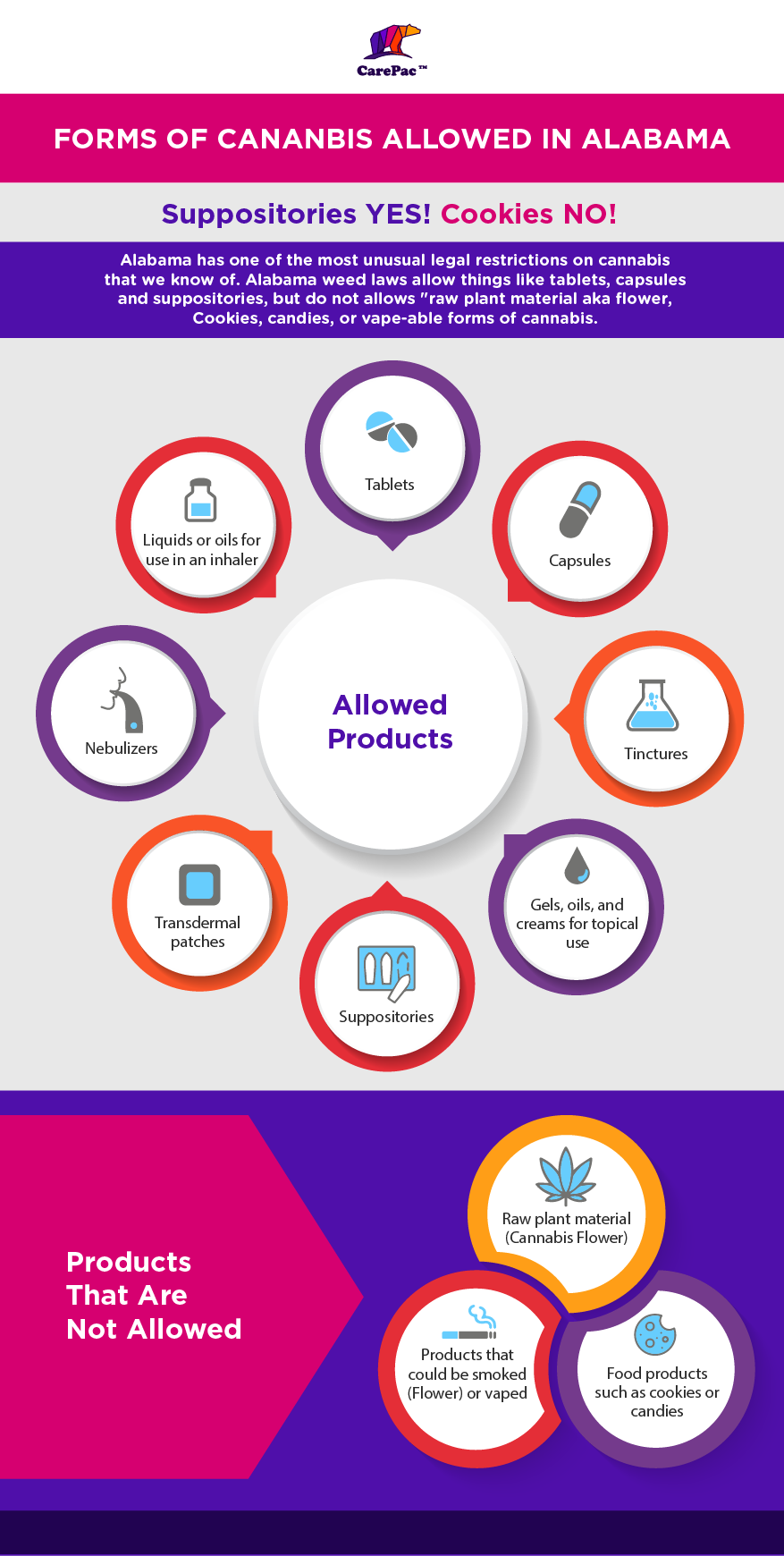
The Darner-Hale Act also specifies the forms in which medical cannabis can be dispensed. This is a critical distinction for travelers. The law permits:
- Tablets
- Capsules
- Ointments
- Suppositories
- Vaporized forms
- Tinctures
- Edibles
Crucially, flower or the raw plant material of marijuana is not permitted under the current medical cannabis law. This means that even registered patients cannot legally purchase or possess raw marijuana buds in Alabama. Furthermore, the THC content in dispensed products is also regulated. This careful control over forms and potency aims to ensure patient safety and maintain a focus on medicinal benefits rather than recreational consumption.
The Status of Recreational THC in Alabama
The question of recreational THC use in Alabama is more straightforward: it remains illegal. Unlike states such as Colorado, California, or Washington, Alabama has not legalized the possession, sale, or consumption of marijuana for recreational purposes.
Penalties for Possession of Recreational Marijuana
Possessing even small amounts of marijuana for recreational use can lead to serious legal consequences in Alabama. Depending on the quantity and prior offenses, individuals can face:
- Misdemeanor charges: For possession of one ounce or less, which can result in fines and jail time.
- Felony charges: For larger quantities, leading to more significant prison sentences and substantial fines.
These penalties can significantly disrupt travel plans and have long-lasting repercussions. Therefore, travelers should exercise extreme caution and be aware that bringing recreational marijuana into or purchasing it within Alabama is a violation of state law. This includes any products containing THC, regardless of their form, unless they are part of the state’s regulated medical cannabis program and the individual is a registered patient with a valid recommendation.
The Role of Delta-8 THC
The legal landscape has become even more complex with the emergence of hemp-derived products, particularly those containing Delta-8 THC. While Delta-8 THC is a cannabinoid found in cannabis plants, its legality has been a subject of debate and varies significantly by state.
In Alabama, the 2018 Farm Bill in the United States legalized hemp and its derivatives, provided they contain no more than 0.3% Delta-9 THC by dry weight. This has led to a proliferation of Delta-8 THC products, often sold in convenience stores, gas stations, and online.
However, the legality of Delta-8 THC in Alabama is a grey area. While it is often marketed as a legal alternative to marijuana, its status is not as clear-cut as it might seem. Some interpretations of Alabama law suggest that any product containing any amount of THC, regardless of its origin or isomer, could potentially be considered illegal if it is not dispensed through the medical cannabis program.
This ambiguity creates a potential risk for consumers. While many Delta-8 THC products are available, their legal standing is not as firmly established as that of prescription medications or products within the regulated medical cannabis program. For travelers, this means that even if a product containing Delta-8 THC is purchased within the state, it could still carry legal risks if law enforcement interprets state statutes strictly. It is advisable for travelers to err on the side of caution and avoid consuming or possessing any THC-containing products that are not part of the state-approved medical cannabis program.
Navigating Alabama: Practical Tips for Travelers
Understanding the legal intricacies of THC in Alabama is essential for a stress-free travel experience. Whether you are visiting for a relaxing beach vacation, exploring the historical sites of Selma, or attending a business conference in Huntsville, being informed can prevent unexpected legal issues.
What Travelers Should Know
- Medical Cannabis Program Limitations: As outlined, Alabama has a very specific and limited medical cannabis program. It is not a recreational market, and access is restricted to registered patients with qualifying conditions. If you are not a registered patient in Alabama, the medical cannabis program does not apply to you.
- Recreational Use is Illegal: Possession, sale, or consumption of recreational marijuana and THC-containing products is illegal in Alabama. This includes products purchased legally in other states. Bringing marijuana or THC products across state lines, even from a legal state, can carry federal charges, as marijuana remains illegal under federal law.
- Delta-8 THC Ambiguity: While Delta-8 THC products are widely available, their legal status in Alabama is not definitive. It is wise to avoid them to prevent potential legal complications.
- Strict Enforcement: Law enforcement in Alabama enforces drug laws. Tourists should be aware that ignorance of the law is not a defense.

Planning Your Trip to Alabama
When planning your trip, focus on enjoying the many attractions Alabama has to offer without engaging in activities that could lead to legal trouble.
- Explore Alabama’s Attractions: Alabama boasts a diverse range of attractions. History buffs can immerse themselves in the Civil Rights Movement by visiting the Rosa Parks Museum in Montgomery or the Edmund Pettus Bridge in Selma. Nature enthusiasts can explore the scenic beauty of Cheaha State Park, the state’s highest point, or the tranquil waters of Lake Martin. For a vibrant urban experience, Birmingham offers the Barber Vintage Motorsports Museum and a burgeoning culinary scene.
- Choose Your Accommodation Wisely: Whether you prefer the luxurious amenities of a beachfront resort in Gulf Shores, the convenience of a family-friendly hotel in Mobile, or a secluded cabin for a quiet getaway, Alabama offers a wide array of accommodation options. Websites dedicated to travel and accommodation booking can help you find the perfect place to stay, with options ranging from charming bed and breakfasts to expansive villas.
- Enjoy Local Culture and Cuisine: Alabama‘s tourism scene is rich with local culture, delicious food, and unique experiences. From savoring authentic Southern barbecue to exploring charming small towns and attending local festivals, there’s plenty to discover.
In conclusion, while Alabama has made some progress in its cannabis legislation with the establishment of a medical program, the state strictly prohibits recreational THC use. Travelers should remain informed about these regulations to ensure a safe and enjoyable visit. By respecting local laws and focusing on the many wonderful aspects of Alabama‘s lifestyle and tourism, visitors can have a memorable and trouble-free experience.
LifeOutOfTheBox is a participant in the Amazon Services LLC Associates Program, an affiliate advertising program designed to provide a means for sites to earn advertising fees by advertising and linking to Amazon.com. Amazon, the Amazon logo, AmazonSupply, and the AmazonSupply logo are trademarks of Amazon.com, Inc. or its affiliates. As an Amazon Associate we earn affiliate commissions from qualifying purchases.