
The Cecil Hotel in Los Angeles has long captured the public imagination, not for its architectural grandeur or luxury amenities, but for its unsettling history and association with some of the city’s most notorious crimes and mysterious deaths. This infamous landmark, once a grand beacon of hospitality in Downtown Los Angeles, has undergone numerous transformations, raising questions among curious travelers and true-crime enthusiasts alike: Is the Cecil Hotel still open for guests, or has its story taken yet another turn?
The answer is complex, reflecting a broader shift in urban development, the evolving landscape of travel and accommodation, and the continuous efforts to address social challenges within major metropolitan areas. While you can no longer book a room for a night’s stay at the Cecil Hotel in its traditional sense, the building itself remains very much “open,” albeit under a completely new guise and with a vastly different purpose. Its journey from a bustling, if troubled, hotel to a symbol of regeneration highlights a fascinating intersection of history, tourism, and community welfare.

A Landmark Shrouded in Mystery: The Cecil Hotel’s Dark Legacy
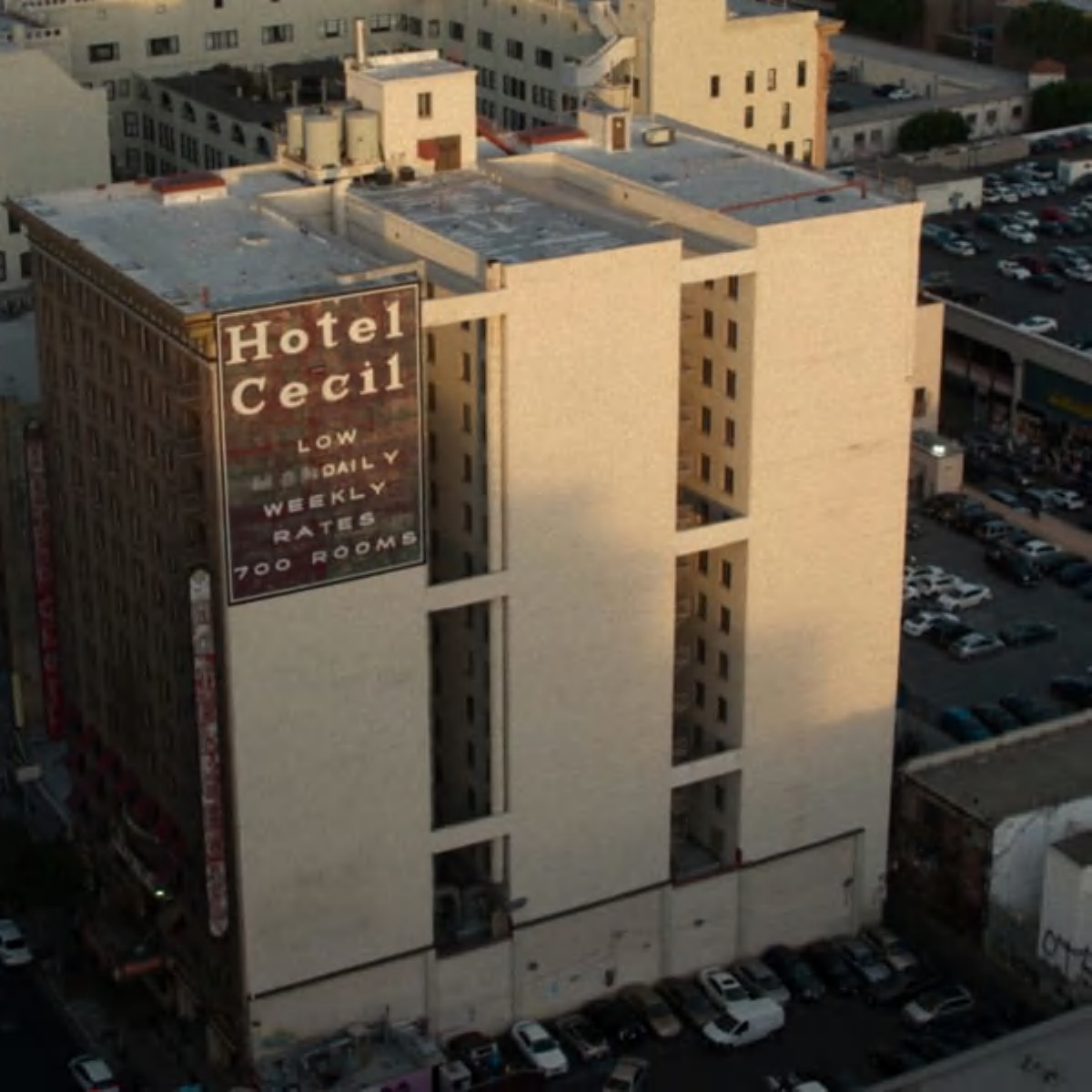
To understand the Cecil Hotel’s current status, one must first delve into its storied past, a narrative steeped in both ambition and tragedy. Built in 1924 by hotelier William Banks Hanner, the Cecil Hotel was originally intended to be a stylish destination for business travelers and tourists exploring the booming city of Los Angeles. With 700 rooms, an opulent lobby, and a prime location near Pershing Square, it aimed to rival the city’s most luxurious establishments. However, its fortunes soon soured, paralleling the economic downturn of the Great Depression, which brought a different clientele and an increasingly dark reputation.
The Early Years and Unsettling Beginnings
Despite its initial promise, the Cecil Hotel began accumulating a disturbing record of suicides and unexplained deaths within its walls surprisingly early in its history. From guests leaping from upper floors to others succumbing to mysterious circumstances in their rooms, the hotel quickly acquired an eerie aura that seemed to cling to it through the decades. This grim reputation was undoubtedly exacerbated by its proximity to Skid Row, an area historically plagued by poverty, homelessness, and crime, which increasingly influenced the hotel’s clientele and overall atmosphere.
Infamy and the Night Stalker’s Haunt
The Cecil Hotel’s infamy reached a fever pitch in the mid-1980s when it unknowingly housed one of America’s most terrifying serial killers, Richard Ramirez, famously known as the Night Stalker. Ramirez reportedly stayed at the hotel for weeks during his killing spree in Los Angeles, allegedly disposing of bloody clothes in the hotel’s dumpsters and walking through the lobby unnoticed by guests or staff. The fact that such a notorious criminal could blend seamlessly into the hotel’s transient population only deepened its unsettling legend.
Adding to its grim roster of residents, Austrian serial killer Jack Unterweger also reportedly stayed at the Cecil Hotel in 1991, during which time he was suspected of murdering several sex workers in the Los Angeles area. These associations cemented the Cecil Hotel’s place in the annals of true crime, making it a morbid fascination for many, yet a place to avoid for most traditional travelers.
The Elisa Lam Tragedy and Global Fascination
Perhaps the most publicized and perplexing incident at the Cecil Hotel occurred in 2013 with the disappearance and eventual discovery of Elisa Lam, a Canadian student. Her mysterious case, which involved strange elevator footage, public appeals, and the eventual discovery of her body in the hotel’s rooftop water tank, captivated global audiences. The circumstances surrounding her death fueled countless theories, from supernatural explanations to more grounded, yet equally unsettling, possibilities.
The Elisa Lam tragedy brought the Cecil Hotel back into the international spotlight, particularly with the release of the Netflix documentary series, Crime Scene: The Vanishing at the Cecil Hotel. This cultural phenomenon further solidified the hotel’s reputation as a magnet for the macabre, attracting a new wave of dark tourism enthusiasts and true crime fanatics eager to explore its history and the mysteries within its walls. The hotel also served as an inspiration for the fifth season of American Horror Story: Hotel, weaving its real-life horrors into fictional narratives that amplified its notoriety.
From Notoriety to Renovation: A Bid for Rebirth
Despite its dark past, the Cecil Hotel has, on several occasions, attempted to shed its sinister image and reinvent itself. The early 21st century saw renewed efforts to modernize the property and attract a different demographic, moving away from its role as a budget accommodation option frequented by long-term residents and a diverse, often vulnerable, population.
The Stay on Main Experiment
In a significant attempt to distance itself from its troubled past, a portion of the Cecil Hotel was rebranded in 2011 as Stay on Main. This separate entrance and reception area aimed to offer a more appealing, contemporary hostel-style experience, targeting younger travelers and backpackers seeking affordable accommodation in Downtown Los Angeles. The idea was to create a fresh identity, unburdened by the Cecil Hotel’s darker associations, even though it operated within the same building. While it offered a brief glimpse of a potential future, the distinct branding couldn’t entirely erase the pervasive shadow of its parent establishment, especially as the Elisa Lam case unfolded just two years later.
The Pandemic’s Impact and a New Vision
Following the widespread attention generated by the Elisa Lam case and the Netflix documentary, the Cecil Hotel officially closed its doors to guests in 2017 for extensive renovations. Simon Baron Development acquired the lease with ambitious plans to transform the building into a mixed-use development, including boutique hotel rooms and residential units. This multi-million dollar renovation aimed to completely overhaul the property, stripping away decades of neglect and attempting to imbue it with a sense of modern appeal and luxury.

However, the global COVID-19 pandemic brought unforeseen challenges and delays to these plans. The economic uncertainties and the shifting landscape of travel and hospitality prompted a reevaluation of the project. The developers, alongside city officials, began exploring alternative uses for the historic building, one that could address pressing social needs in Los Angeles.
The Cecil Hotel Today: A New Chapter in Affordable Housing
In a remarkable pivot, the grand plans for a revitalized boutique hotel and residential complex were ultimately shelved. Instead, the Cecil Hotel has embarked on its most significant transformation yet: it has reopened not as a hotel for transient guests, but as an affordable housing complex, specifically targeting individuals experiencing homelessness or those at risk of it.
In late 2021, after extensive renovations, the Cecil Hotel officially reopened its doors in partnership with the Skid Row Housing Trust and the Los Angeles County Department of Health Services. It now provides permanent supportive housing, offering hundreds of fully furnished units, along with on-site services such as case management, mental health support, and substance abuse counseling. This initiative is part of a broader effort by Los Angeles to combat its severe homelessness crisis, repurposing historic buildings for community benefit.
Impact on Downtown Los Angeles and Skid Row
The repurposing of the Cecil Hotel marks a significant moment for Downtown Los Angeles, particularly for the Skid Row area. While the district continues to grapple with complex social issues, the transformation of such a prominent landmark into supportive housing signals a commitment to holistic urban development. It represents a shift from purely commercial or tourism-driven revitalization to one that prioritizes community welfare and social responsibility. The building, once a symbol of urban decay and morbid curiosity, is now intended to be a beacon of hope and stability for some of the city’s most vulnerable residents.
Tourism and Legacy: Visiting the Area
For travelers interested in the Cecil Hotel’s history and its infamous past, it’s important to understand that the building is no longer a tourist attraction in the traditional sense. You cannot book a room to experience its atmosphere or explore its common areas. It is a private residence for its tenants. However, its exterior, with its distinctive Art Deco architecture, remains a striking presence on South Main Street.
Visitors can still walk past the Cecil Hotel and appreciate its architectural significance, which earned it recognition as a Los Angeles Historic-Cultural Monument. The surrounding Downtown Los Angeles area offers a rich tapestry of history, modern architecture, vibrant arts districts, and diverse culinary experiences. From the historic Grand Central Market to the majestic Walt Disney Concert Hall, there’s much to explore for those interested in the evolution of Los Angeles as a major urban center. While the Cecil Hotel itself is off-limits, its story remains a compelling part of the city’s narrative, accessible through historical accounts, documentaries, and even fictionalized adaptations.
Beyond the Cecil Hotel: Exploring Los Angeles’ Diverse Accommodation and Travel Scene
While the Cecil Hotel has concluded its chapter as a conventional hotel, Los Angeles continues to be one of the world’s premier travel destinations, offering an incredibly diverse range of accommodation options and experiences to suit every traveler’s lifestyle and budget. From luxurious resorts to quaint boutique hotels and practical budget stays, the city’s hospitality sector thrives.
Modern Hotels and Luxury Stays
For those seeking the quintessential Los Angeles experience, the city boasts an array of world-class hotels. In Downtown Los Angeles, you can find upscale establishments like the InterContinental Los Angeles Downtown or the JW Marriott Los Angeles L.A. LIVE, offering stunning views, exquisite dining, and easy access to entertainment venues. Beyond downtown, areas like Beverly Hills and West Hollywood are home to iconic luxury resorts such as The Beverly Wilshire, A Four Seasons Hotel and The London West Hollywood at Beverly Hills, synonymous with celebrity sightings and unparalleled service. Boutique hotels like the Ace Hotel Downtown Los Angeles or The Hoxton offer trendy, culturally immersive experiences for those looking for something unique.
Budget-Friendly Options and Unique Experiences
Travelers on a budget or those seeking more independent accommodations will also find plenty of choices. Numerous hostels are scattered across popular areas like Hollywood and Santa Monica, providing communal living and social opportunities. Additionally, platforms like Airbnb offer a vast selection of private rooms, apartments, and even entire homes, catering to families, long-term stays, or those who prefer a more local, residential experience. For visitors focused on specific attractions, hotels near Universal Studios Hollywood or Disneyland (in nearby Anaheim) offer convenient access and themed experiences.
Navigating Los Angeles as a Tourist
Tourism in Los Angeles is an adventure in itself, given the city’s sprawling nature. Visitors can explore world-renowned museums like The Getty Center and the Los Angeles County Museum of Art (LACMA), soak up the sun on the beaches of Malibu and Venice, or delve into the history of the Golden Age of Hollywood. The city’s diverse culinary scene, from Michelin-starred restaurants to vibrant food trucks, offers a gastronomic journey that reflects its multicultural population.
While driving is often seen as synonymous with Los Angeles, its public transportation system, including the Metro Rail and bus lines, offers increasingly viable options for getting around, especially in popular tourist areas. Many visitors also opt for ride-sharing services or organized tours to navigate the city’s vast landscape efficiently. Ultimately, a trip to Los Angeles promises a rich tapestry of experiences, whether you’re seeking luxury, adventure, cultural immersion, or simply a taste of the quintessential Southern California lifestyle.
In conclusion, while the Cecil Hotel no longer welcomes transient guests, its story continues to evolve. It stands as a testament to Los Angeles’ capacity for reinvention, its complex history, and its ongoing efforts to address profound social challenges. For those seeking accommodation in Los Angeles, the city offers an abundance of choices, ensuring that every traveler can find a suitable place to stay while exploring the wonders of this dynamic metropolis.
LifeOutOfTheBox is a participant in the Amazon Services LLC Associates Program, an affiliate advertising program designed to provide a means for sites to earn advertising fees by advertising and linking to Amazon.com. Amazon, the Amazon logo, AmazonSupply, and the AmazonSupply logo are trademarks of Amazon.com, Inc. or its affiliates. As an Amazon Associate we earn affiliate commissions from qualifying purchases.