
The question of whether the University of Chicago belongs to the elite Ivy League is a common one, frequently posed by prospective students, academics, and even curious travelers exploring the vibrant city of Chicago. While the allure of the Ivy League carries a certain mystique of unparalleled academic prestige and historical significance, the simple answer regarding UChicago is no, it is not an Ivy League institution. However, this straightforward response only scratches the surface of a much richer and more nuanced reality. The University of Chicago stands as a titan in higher education, often regarded as academically equivalent to, if not surpassing, many of its Ivy League counterparts. Its distinctive intellectual culture, profound contributions to various academic disciplines, and stunning campus architecture make it a unique landmark and a significant draw for lifestyle and travel enthusiasts alike.
This article delves into the origins of the Ivy League designation, contrasts it with the exceptional standing of the University of Chicago, and explores the broader experience of visiting this esteemed institution and its dynamic surroundings in Hyde Park, Chicago. Whether you’re considering applying, planning a visit, or simply curious about top-tier education in the United States, understanding UChicago’s place in the academic firmament offers invaluable insights.
Unpacking the Ivy League Myth
The term “Ivy League” is often mistakenly used as a catch-all for any highly selective, prestigious university in the United States. However, its origins are far more specific, rooted in collegiate athletics rather than academic rankings.
What Defines the Ivy League?
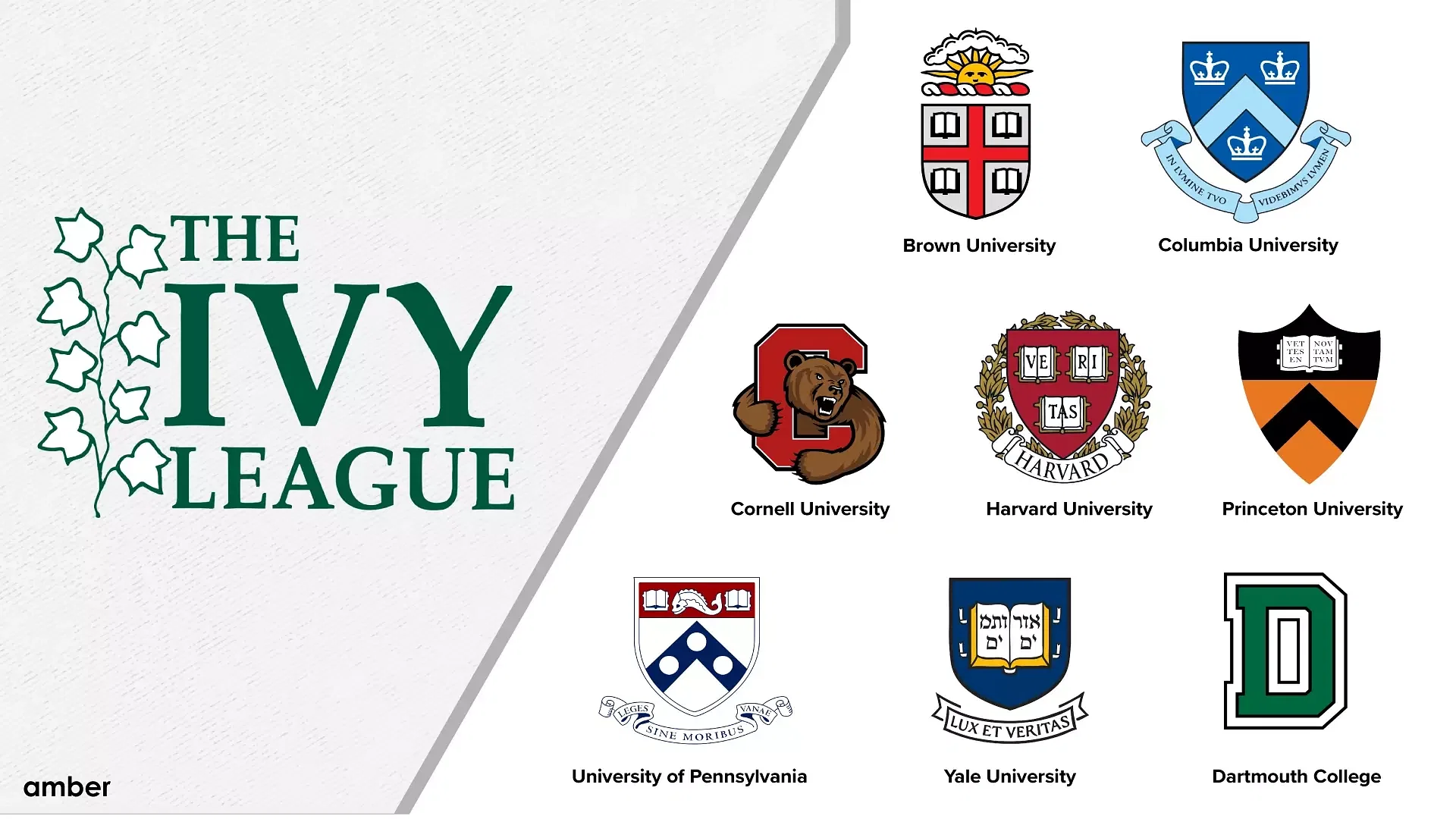
The Ivy League is, at its core, an athletic conference comprising eight private universities in the Northeastern United States. Established in 1954, its members are:
- Brown University
- Columbia University
- Cornell University
- Dartmouth College
- Harvard University
- Princeton University
- University of Pennsylvania
- Yale University
Over time, these institutions became synonymous with academic excellence, rigorous admissions standards, and a legacy of producing influential leaders. Their long histories, substantial endowments, and distinguished research output cemented their reputation globally. While their athletic conference roots remain, the “Ivy League” moniker now predominantly signifies a particular tier of academic prestige.
The University of Chicago’s Distinctive Prestige
The University of Chicago, founded in 1890, came into being significantly later than many of the Ivy League institutions. Located in the bustling metropolis of Chicago, it quickly established itself as a beacon of intellectual rigor and academic freedom. Financed by John D. Rockefeller and guided by its first president, William Rainey Harper, UChicago was designed from its inception to be a world-class research university.
Despite not being part of the Ivy League athletic conference, UChicago consistently ranks among the top universities worldwide, often alongside or above its Ivy League peers in global and national rankings. It is renowned for its contributions to economics (the Chicago School of Economics), sociology, physics (the first self-sustaining nuclear chain reaction was achieved here), and law, among many other fields. The university boasts an extraordinary number of Nobel laureates, Pulitzer Prize winners, and MacArthur Fellows among its faculty and alumni, underscoring its profound impact on global knowledge and innovation. Its admissions process is notoriously selective, attracting some of the brightest minds from around the globe. This level of academic excellence has earned UChicago the unofficial but widely recognized status as a “New Ivy” or “Hidden Ivy,” highlighting its elite standing without the historical conference affiliation.
A Deep Dive into the University of Chicago Experience
Beyond rankings and affiliations, the true essence of the University of Chicago lies in its unique educational philosophy, stunning campus, and vibrant intellectual community. For anyone interested in the academic lifestyle or seeking enriching travel experiences, UChicago offers a compelling destination.
A Legacy of Intellectual Rigor
UChicago is famously known for its “Core Curriculum,” a demanding set of common courses that all undergraduates must complete, emphasizing critical thinking, foundational knowledge across disciplines, and the “life of the mind.” This commitment to a broad, liberal arts education, coupled with a deep dive into specialized fields, cultivates students who are not only experts in their chosen areas but also well-rounded, inquisitive thinkers. The university’s intellectual climate encourages lively debate, challenging established ideas, and a relentless pursuit of knowledge. This distinctive approach makes the University of Chicago a significant landmark in educational philosophy, attracting students and scholars seeking an environment that truly values intellectual exploration.
Architectural Marvels and Historic Landmarks
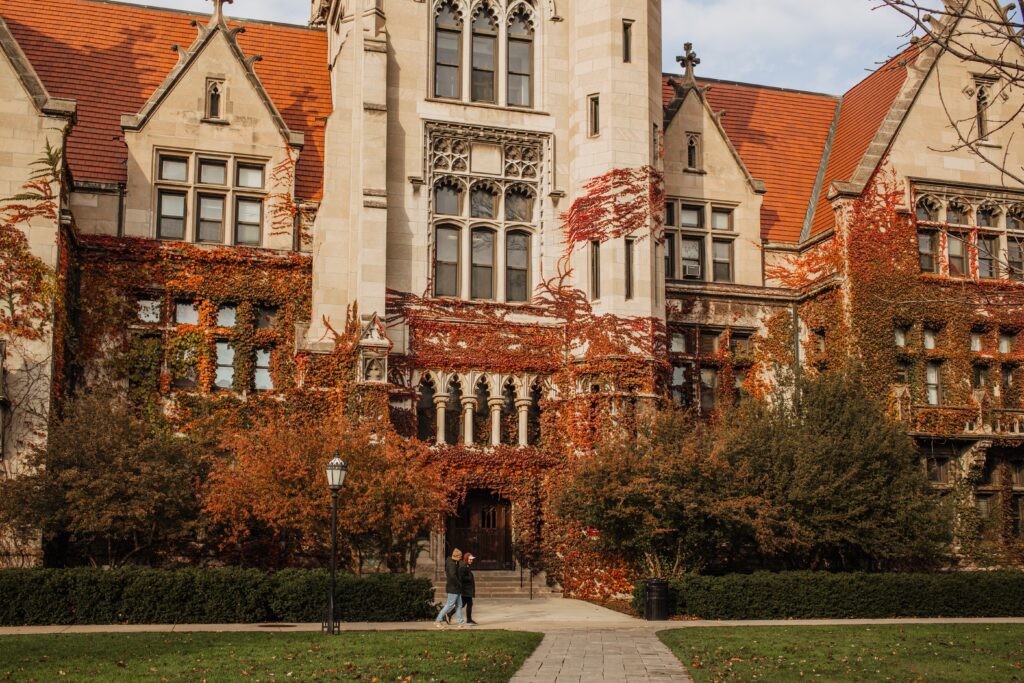
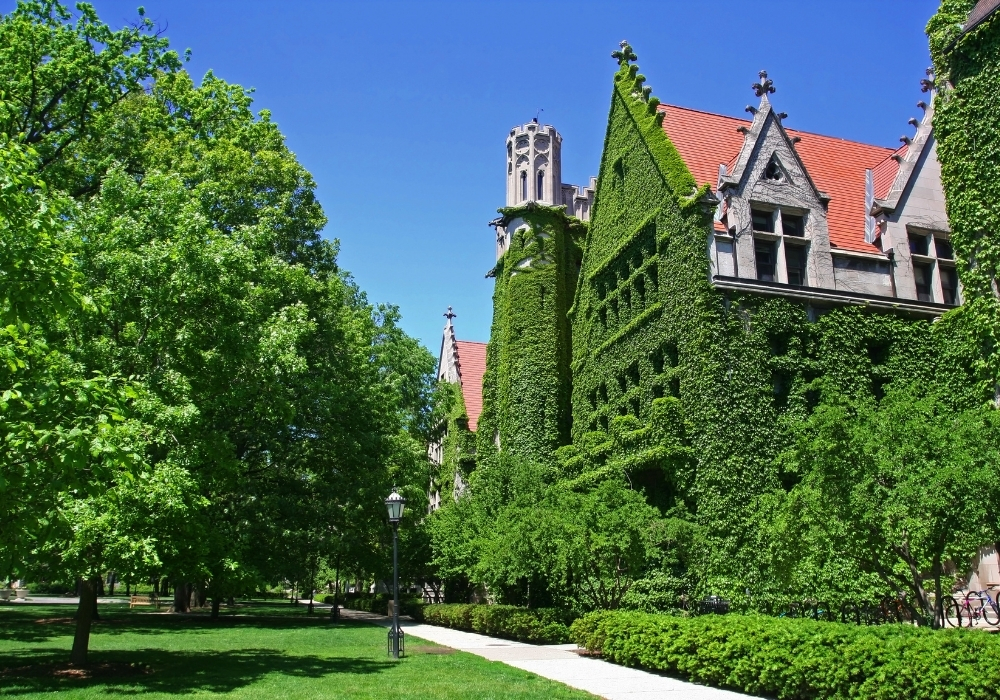
The campus itself is a landmark of architectural grandeur. Located in the Hyde Park neighborhood on Chicago’s South Side, the University of Chicago is a masterpiece of Gothic architecture. Its sprawling grounds feature a harmonious blend of historic stone buildings, picturesque quadrangles, and modern facilities, creating an atmosphere that feels both ancient and cutting-edge. Iconic structures like the majestic Rockefeller Chapel, the stately Harper Memorial Library, and the impressive Law School buildings are not just academic spaces but also significant tourist attractions. Walking through the campus, visitors are transported to a world reminiscent of Oxford or Cambridge, making it a remarkable destination for those who appreciate history, architecture, and scholarly ambiance. The campus’s beauty and historical significance contribute greatly to its status as a must-see landmark within North America.
Student Life and Campus Culture
Life at UChicago is characterized by a vibrant and intellectually stimulating culture. Students are known for their academic prowess, but also for their quirky traditions, deep engagement in extracurricular activities, and a strong sense of community. The university hosts a plethora of student organizations, ranging from debate clubs and research groups to arts ensembles and community service initiatives. Events like the annual “Scav Hunt” (a massive scavenger hunt) and “Kuvia” (Kuviasungnerk, a tradition celebrating winter) are legendary, fostering camaraderie and a unique student lifestyle. For families visiting prospective students, or for travelers interested in local culture, experiencing campus life firsthand—perhaps by attending a lecture, a play, or a sporting event—offers a fascinating glimpse into this distinctive academic world. The Hyde Park neighborhood surrounding the campus provides a diverse array of dining, entertainment, and cultural experiences that enrich the student and visitor experience.
Exploring Hyde Park and the Vibrant City of Chicago
A visit to the University of Chicago is incomplete without exploring its charming neighborhood of Hyde Park and the magnificent city of Chicago itself. These areas offer a rich tapestry of attractions, culture, and lifestyle experiences that cater to every type of traveler.
Hyde Park: A Neighborhood of History and Charm
Hyde Park, located just seven miles South Side of downtown Chicago, is more than just a university neighborhood; it’s a historically significant and culturally rich community. It has been home to prominent figures like President Barack Obama and boasts a diverse array of parks, museums, and architectural gems.
- Museum of Science and Industry: Situated on the northern edge of Hyde Park, the Museum of Science and Industry is one of the largest science museums in the world, housed in the former Palace of Fine Arts from the 1893 World’s Columbian Exposition. It’s a fantastic attraction for families and curious minds, offering immersive exhibits from a captured German U-boat to a working coal mine.
- Robie House: Designed by the legendary architect Frank Lloyd Wright, the Robie House is a quintessential example of the Prairie School style and a UNESCO World Heritage Site. It’s a must-see for architecture enthusiasts, offering tours that delve into Wright’s innovative design principles.
- Oriental Institute Museum: Part of the University of Chicago, this museum is a research center and museum dedicated to the study of the ancient Middle East. Its collection of art and artifacts from ancient Egypt, Mesopotamia, and Persia is unparalleled in the United States.
- Smart Museum of Art: Also affiliated with UChicago, the Smart Museum of Art features a diverse collection spanning five millennia of artistic creation, from ancient Chinese bronzes to modern European paintings.
- Washington Park & Jackson Park: These expansive parks offer green spaces for relaxation, recreation, and even boast historical significance, including remnants from the World’s Columbian Exposition.
Dining in Hyde Park ranges from casual cafes catering to students to upscale restaurants, reflecting the neighborhood’s diverse community and making it a great spot for local food experiences.
Chicago: A World-Class Destination
Beyond Hyde Park, the city of Chicago itself is a premier travel destination, offering an endless array of attractions, entertainment, and culinary delights. Known as the “Windy City,” Chicago is celebrated for its stunning skyline, world-class museums, vibrant arts scene, and friendly atmosphere.
- Architecture Tours: Chicago is an architectural marvel, and a boat tour along the Chicago River or a walking tour of the Loop is an absolute must. You’ll witness masterpieces from renowned architects, including the iconic Willis Tower (formerly Sears Tower), which offers breathtaking views from its Skydeck.
- Museum Campus: This concentrated area along Lake Michigan is home to three of Chicago’s most famous institutions: the Field Museum (natural history), the Shedd Aquarium, and the Adler Planetarium.
- Millennium Park & Grant Park: These downtown parks are cultural hubs. Millennium Park features the iconic “Bean” sculpture (Cloud Gate), the Jay Pritzker Pavilion, and the Crown Fountain. Grant Park is home to Buckingham Fountain and hosts numerous festivals.
- Art Institute of Chicago: One of the oldest and largest art museums in the United States, the Art Institute of Chicago houses an extraordinary collection spanning centuries and cultures, from Impressionist masterpieces to contemporary works.
- Navy Pier: Extending into Lake Michigan, this popular attraction offers entertainment, dining, rides (including a Ferris wheel), and stunning views of the city skyline and lake.
- Culinary Scene: Chicago is a food lover’s paradise. From its legendary deep-dish pizza to Michelin-starred restaurants, diverse ethnic eateries, and vibrant street food, the city caters to every palate and budget, making dining an integral part of the travel experience.
- Shopping: The Magnificent Mile on Michigan Avenue is a world-renowned shopping district, offering everything from luxury brands to department stores.
For travelers, Chicago truly offers a comprehensive travel experience, blending historical landmarks with modern attractions, and a rich local culture with diverse lifestyle options.
Planning Your Visit: Accommodation and Travel Tips
Whether you are visiting the University of Chicago for an admissions tour, a conference, to see a loved one, or simply to explore the city, planning your accommodation and travel logistics is key to an enjoyable trip.
Finding the Perfect Stay Near UChicago
Chicago offers a vast array of accommodation options, suitable for luxury travel, budget travel, family trips, and business stays. When visiting UChicago, you generally have two main choices: staying in Hyde Park itself or opting for downtown Chicago and commuting.
- Hyde Park Hotels: For those who want to be immersed in the university atmosphere and close to the campus, Hyde Park offers several excellent hotel choices. These can range from boutique hotels to well-known chains, providing convenient access to university events and local Hyde Park attractions. Options might include charming historic hotels or modern establishments that cater specifically to university visitors. Booking in advance, especially during university events like graduation or homecoming, is highly recommended.
- Downtown Chicago Hotels: Staying downtown provides access to a wider selection of hotels, from opulent resorts and luxury suites to budget-friendly apartments and extended-stay options. This allows you to easily explore Chicago’s main attractions like Millennium Park, the Art Institute, and the Magnificent Mile. The commute to UChicago from downtown is straightforward via public transportation (Metra electric line or CTA buses) or ride-sharing services, typically taking 20-40 minutes depending on traffic and mode of transport.
- Accommodation Alternatives: Beyond traditional hotels, visitors can also consider booking apartments or villas through various platforms, particularly for longer stays or for families seeking more space and amenities. These options often provide a more local experience and can be a cost-effective alternative to hotel suites. Always check reviews and compare prices to ensure the best fit for your needs and preferences.
Navigating Your Trip to the Windy City
Chicago is a major transportation hub, making it easily accessible for travelers.
- Airports: The city is served by two major airports: O’Hare International Airport (ORD), one of the busiest in the world, and Midway International Airport (MDW), a hub for domestic flights. Both offer excellent public transportation links (CTA Blue Line from O’Hare and Orange Line from Midway) to downtown Chicago, as well as taxis and ride-sharing services.
- Public Transportation: Chicago’s public transit system, the CTA (Chicago Transit Authority), is extensive and efficient, covering the city and many surrounding suburbs with its ‘L’ train lines and bus routes. It’s the most economical way to get around. For reaching Hyde Park and UChicago from downtown, the Metra Electric Line is often the quickest option.
- Best Time to Visit: Chicago experiences all four seasons. Summer (June-August) is popular for its warm weather, outdoor festivals, and bustling Lake Michigan activities, though it can be hot and humid. Spring (April-May) and Fall (September-October) offer pleasant temperatures and beautiful foliage, making them ideal for sightseeing. Winter (November-March) can be very cold with snow, but the city transforms with festive lights and indoor attractions, offering a unique charm for those who brave the chill.
Planning your travel, including considering different hotel amenities, reviewing booking options, and comparing accommodation types, will enhance your overall experience of visiting the University of Chicago and the dynamic city it calls home.
In conclusion, while the University of Chicago is not an Ivy League institution in the traditional sense, its academic prowess, intellectual legacy, and stunning campus place it firmly among the global elite of higher education. Visiting UChicago is not just an opportunity to explore a world-renowned university; it’s an invitation to experience the vibrant culture of Hyde Park and immerse yourself in the endless attractions of Chicago, truly making it a destination for memorable travel and enriching lifestyle experiences.
LifeOutOfTheBox is a participant in the Amazon Services LLC Associates Program, an affiliate advertising program designed to provide a means for sites to earn advertising fees by advertising and linking to Amazon.com. Amazon, the Amazon logo, AmazonSupply, and the AmazonSupply logo are trademarks of Amazon.com, Inc. or its affiliates. As an Amazon Associate we earn affiliate commissions from qualifying purchases.