
The idea of Hawaii conjures images of sun-drenched beaches, lush rainforests, and the gentle rhythm of the ocean. It’s a tropical paradise, a quintessential escape from the everyday. So, when the question arises, “Is there snow in Hawaii?”, it often elicits a surprised chuckle or a look of disbelief. The immediate mental picture of the Hawaiian Islands is one of perpetual summer, a place where the climate is defined by warmth and humidity. However, like many things about this unique archipelago, the reality is far more nuanced and, dare we say, fascinating. The answer, in fact, is a resounding yes, albeit in very specific and somewhat unexpected locations.

This apparent contradiction, a tropical island state experiencing snowfall, speaks volumes about the diverse geography contained within Hawaii’s borders. It’s a testament to the power of elevation and the dramatic climatic shifts that can occur as you ascend from sea level to the towering peaks that dominate the landscape. While the vast majority of visitors and residents will never witness this phenomenon firsthand, it’s a captivating aspect of Hawaii’s natural wonder, offering a glimpse into a side of the islands rarely explored by the casual tourist.
The Surprising Alpine Climate of Hawaii’s Volcanoes
Hawaii’s fame as a tropical destination is undeniable, built on its world-renowned beaches like Waikiki Beach on Oahu, its vibrant coral reefs teeming with marine life, and its consistently pleasant, warm weather. Yet, beneath this familiar veneer lies a dramatic topographical variation. The islands are home to some of the tallest mountains in the world, measured from their base on the ocean floor. Among these giants are the majestic volcanoes that have shaped and continue to shape the islands: Mauna Kea and Mauna Loa on the island of Hawaii (often referred to as the Big Island), and Haleakala on Maui.
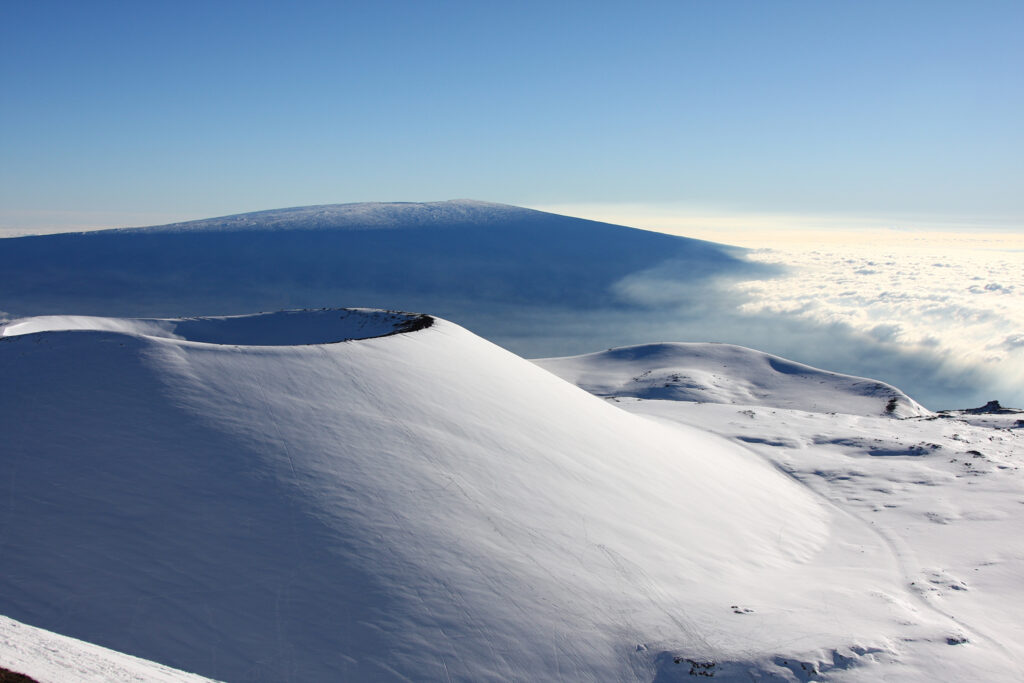
These colossal volcanic peaks rise thousands of feet above sea level, piercing the troposphere and entering a realm where temperatures plummet dramatically. The atmospheric pressure decreases with altitude, and as the air expands, it cools. This fundamental principle of meteorology is the primary reason why snow can fall and accumulate on the summits of these volcanoes. For much of the year, the higher elevations experience temperatures well below freezing, creating an environment that is surprisingly similar to alpine regions found in more temperate or polar climates.
Experiencing the Snowfall: A Journey Above the Clouds
The snowfall in Hawaii is not a constant occurrence, nor is it typically heavy or widespread like in continental snow belts. Instead, it tends to be seasonal, with the winter months – roughly from November to March – being the most likely period to witness this unique spectacle. During this time, storms originating from the Pacific can bring cold fronts and precipitation to the islands. When these systems interact with the cold air masses at higher elevations, snow becomes a distinct possibility.
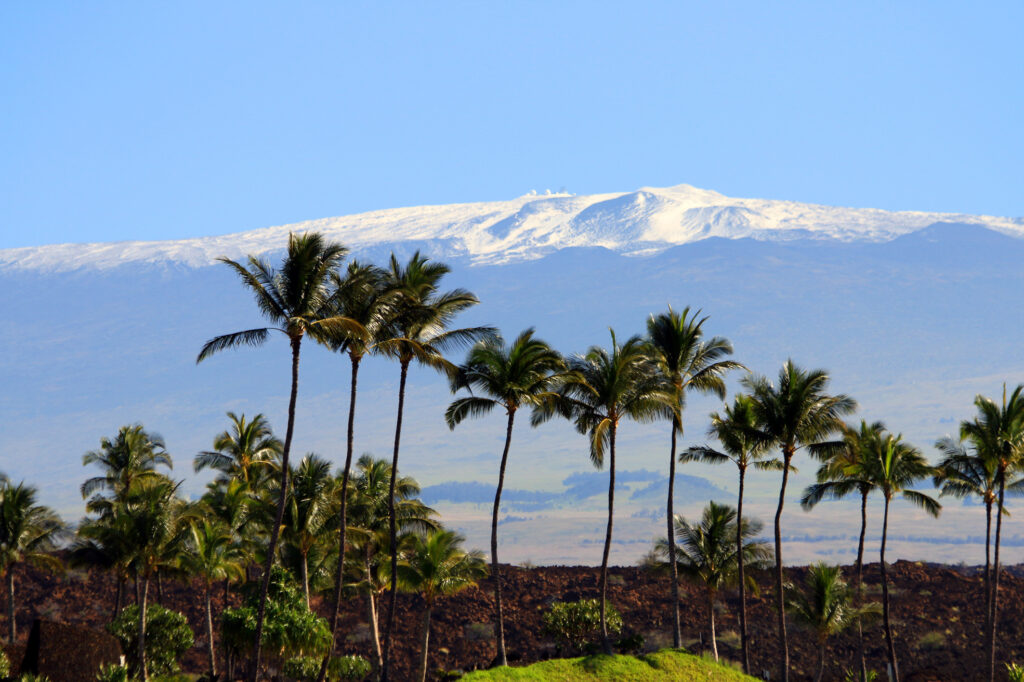
The primary locations for this phenomenon are the summit areas of Mauna Kea, Mauna Loa, and, to a lesser extent, Haleakala. The most significant and consistent snowfall is observed on Mauna Kea, which, at over 13,800 feet (4,207 meters), boasts an elevation that frequently dips below the freezing mark. The Mauna Kea Observatories, perched on its summit, are a prime example of human presence in this extreme environment. These world-class astronomical facilities, designed to capture the incredibly clear and dark skies above the cloud layer, are often dusted or blanketed with snow during the winter season.
For visitors wishing to experience this unusual side of Hawaii, a trip to the summit of Mauna Kea is the most direct route. However, it’s crucial to understand that this is not a casual drive. The road to the summit is steep, winding, and unpaved for the final miles, requiring a 4-wheel drive vehicle and careful attention to weather conditions and road closures. Many visitors opt for guided tours, which provide transportation and often include stops at the visitor information station located at a lower elevation (6,500 feet or 1,980 meters) before proceeding to the summit. Even at this lower elevation, temperatures can be cool, and winter weather can bring rain or sleet, so appropriate clothing is essential.
The experience of seeing snow in Hawaii is, for many, surreal. Imagine standing on the flank of a dormant volcano, the Pacific Ocean stretching out to the horizon below, and then looking up to see snow-capped peaks. The contrast is stark and unforgettable. The stark, volcanic landscape, often characterized by dark lava rock, takes on a completely different appearance when dusted or covered in pristine white snow. It’s a visual dichotomy that encapsulates the extraordinary diversity of Hawaii’s natural environment.
Beyond the Snow: Understanding Hawaii’s Climate Diversity
While the prospect of snow in Hawaii is a fascinating anomaly, it’s important to remember that it represents a very small fraction of the overall climate experience of the islands. The vast majority of visitors come to Hawaii seeking its world-famous tropical climate, and for good reason. The coastal and lower-elevation areas, where most resorts, towns, and popular attractions are located, enjoy consistently warm temperatures year-round, moderated by the gentle sea breezes.
The average daily temperature in Honolulu, Oahu, for instance, hovers around the mid-70s to mid-80s Fahrenheit (24-29 Celsius) throughout the year. This pleasant warmth is what makes Hawaii such an appealing destination for escaping colder climates. The islands experience two main seasons: a generally warmer and drier summer (from May to October) and a slightly cooler and wetter winter (from November to April). However, these distinctions are subtle compared to the dramatic seasonal shifts experienced in many other parts of the world.
Exploring Different Microclimates Within the Islands
Hawaii’s diverse topography creates a fascinating array of microclimates across its islands. Beyond the alpine conditions at the highest elevations, you can find incredibly wet rainforests, arid leeward slopes, and mild, temperate coastal zones. This variation is largely due to the “rain shadow” effect created by the prevailing trade winds.
As moist trade winds blow in from the northeast, they are forced upwards by the mountains. This ascent causes the air to cool and release its moisture as rain on the windward sides of the islands. Consequently, the leeward sides, which lie in the “shadow” of these mountains, are significantly drier and often receive much less rainfall. This is why, for example, the lush, verdant landscapes of Hana on Maui’s eastern coast are a stark contrast to the drier, more arid conditions found in areas like Kona on the western side of the Big Island.
These microclimates influence everything from the type of vegetation that grows to the activities that are best suited for different regions. The windward coasts are ideal for experiencing dramatic waterfalls and lush hiking trails, while the leeward coasts are often preferred for sunbathing and drier outdoor activities. Understanding these variations is key to planning a truly comprehensive Hawaiian adventure.
For instance, if you are staying in a luxury resort like the Four Seasons Resort Maui at Wailea on the sunny southwest coast of Maui, you are unlikely to encounter snow. Your experience will be defined by warm sunshine, gentle ocean breezes, and the typical tropical ambiance Hawaii is known for. However, if you decide to embark on an excursion to the summit of Haleakala, you might experience significantly cooler temperatures, and depending on the season and weather patterns, you could even find yourself in a landscape dusted with frost or light snow.
The islands offer a spectrum of experiences, from the tropical warmth at sea level to the near-arctic conditions at the highest peaks. This makes Hawaii a destination that can surprise and delight even the most seasoned traveler, proving that this Pacific gem is far more than just a collection of beautiful beaches. It’s a land of dramatic contrasts, where volcanic fire meets icy frost, and where the familiar tropical paradise coexists with an unexpected alpine wonderland.
Planning Your Hawaiian Adventure: Considerations for All Climates
When planning a trip to Hawaii, it’s essential to consider the diverse climatic conditions that can affect your experience, especially if you’re interested in exploring beyond the typical beach resort areas. While the majority of tourists flock to Hawaii for its warm, sunny weather, the possibility of snow on the highest volcanic peaks adds a unique dimension to travel planning.
Packing Smart for Varying Conditions
If your itinerary includes a visit to the summit of Mauna Kea or Haleakala during the winter months, packing appropriately is crucial. Even if you are traveling from a warmer part of the islands, the temperature at the summit can drop significantly below freezing, often accompanied by strong winds. Layers are key. A warm, waterproof outer layer, thermal base layers, a fleece jacket, gloves, and a hat are highly recommended. Many tour operators provide parkas, but it’s wise to be prepared. Comfortable, sturdy footwear is also essential, especially if you plan to do any walking around the summit areas.
For the vast majority of your trip, however, you will likely be enjoying the tropical climate. This means lightweight clothing, swimwear, sunscreen, sunglasses, and a hat will be your staples. A light rain jacket might be useful for the occasional shower, particularly on the windward sides of the islands.
Choosing the Right Accommodation and Activities
Your choice of accommodation and planned activities will heavily influence the kind of climate you’ll experience. If you are looking for a classic beach vacation, resorts and hotels in areas like Kaanapali on Maui, Poipu on Kauai, or Waikiki on Oahu will offer consistently warm and sunny weather. These locations are well-equipped with amenities for enjoying the ocean, such as surf lessons, snorkeling tours, and beachfront dining.
For those seeking a more adventurous and varied experience, consider basing yourself in different regions or planning day trips to explore the microclimates. For instance, staying in Volcano Village near Hawaii Volcanoes National Park on the Big Island offers a cooler, more temperate climate and proximity to the park’s active volcanic sites. From here, you can then plan an excursion to the summit of Mauna Kea.
When booking accommodations, always check the location and its typical climate. Websites offering hotel comparisons and reviews can be invaluable in this regard. You might find a charming bed and breakfast nestled in a cooler, higher elevation area, or a luxurious villa on a sun-drenched coast.
The activities available in Hawaii are as diverse as its climates. You can go from snorkeling in the warm waters of Molokini crater to stargazing at the Mauna Kea Observatories. You can hike through lush, misty rainforests on the Road to Hana and then drive to a drier, volcanic landscape within the same island. This adaptability is what makes Hawaii such a compelling destination for a wide range of travelers, from families on budget trips to couples seeking luxury travel experiences.
Ultimately, the question of “Is there snow in Hawaii?” is not just about a meteorological curiosity. It’s a gateway to understanding the incredible geographical diversity of these islands. It reminds us that Hawaii is a place of extremes, a tropical paradise with an alpine heart, offering a rich tapestry of experiences that extend far beyond the sandy shores. Whether you’re drawn by the allure of snow-capped peaks or the promise of sun-kissed beaches, Hawaii delivers an unforgettable journey.