
Texas, the second-largest state in the United States, is a land of vast plains, bustling metropolises, rich history, and a vibrant culture that captivates millions of visitors annually. From the cowboy charm of its ranches to the cutting-edge technology hubs, Texas offers an unparalleled array of experiences. But before you embark on your Lone Star State adventure, there’s a practical detail that often comes up in planning: “What’s the area code for Texas?”
The simple answer is: there isn’t just one. Texas, due to its immense size and rapidly growing population, utilizes a complex system of multiple area codes that cover different geographic regions. Understanding these area codes isn’t just a technicality; it’s a small but significant piece of knowledge that can enhance your travel planning, accommodation bookings, and overall communication during your stay. Whether you’re calling a local restaurant for a reservation, confirming details with your hotel, or simply keeping in touch with newfound friends, knowing the telecommunication landscape of Texas is surprisingly useful.
This comprehensive guide will not only demystify the area codes of Texas but also serve as your gateway to exploring the state’s incredible travel destinations, diverse tourism offerings, exceptional hotels, and the unique lifestyle that defines this iconic part of America. We’ll delve into the practicality of telephone numbers, then seamlessly transition to the boundless opportunities for exploration, relaxation, and adventure that await you in every corner of Texas.
A Deep Dive into Texas’s Telecommunication Landscape
The telephone area code system in Texas is a dynamic reflection of its growth and development over the decades. What began with a few primary codes has evolved into a sprawling network designed to accommodate millions of residents and businesses. For travelers, understanding this system is crucial for seamless communication, particularly in an era where local connections, be it to a tour guide, an eatery, or a local service, are key to an authentic experience.
The Evolving Map of Texas Area Codes
When area codes were first introduced, large states like Texas were typically assigned one or two. The original area codes like 214 for Dallas and North Texas, and 713 for Houston and Southeast Texas, were among the earliest. However, as the state’s population surged throughout the 20th and 21st centuries, these original codes began to run out of available numbers. This necessitated the introduction of new area codes, often through “splits” or “overlays.”
A “split” occurs when a geographic region previously covered by one area code is divided, with one part retaining the original code and the other receiving a new one. For instance, 817 was split from 214 to serve Fort Worth and its western suburbs. Similarly, 281 and 832 were introduced as overlays for the 713 area in Houston and surrounding areas.
An “overlay” plan, now common across the country, means that multiple area codes serve the exact same geographic region. This approach avoids the need for customers to change their numbers, but it mandates 10-digit dialing (area code + 7-digit number) even for local calls within the same area code. This is a critical point for any visitor to Texas: always dial the full 10 digits, regardless of where you are calling from or to within the state.
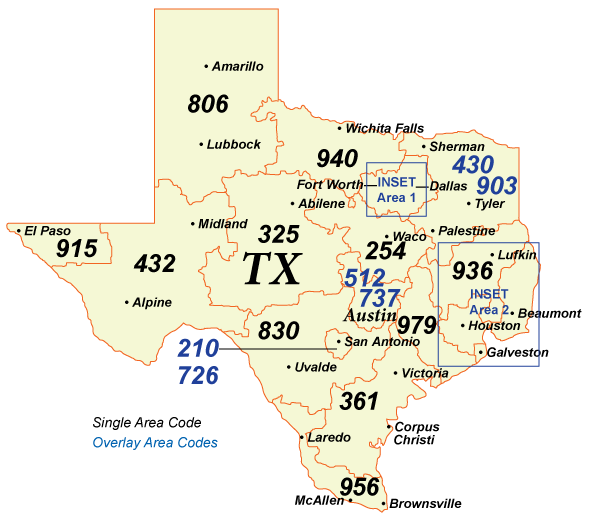
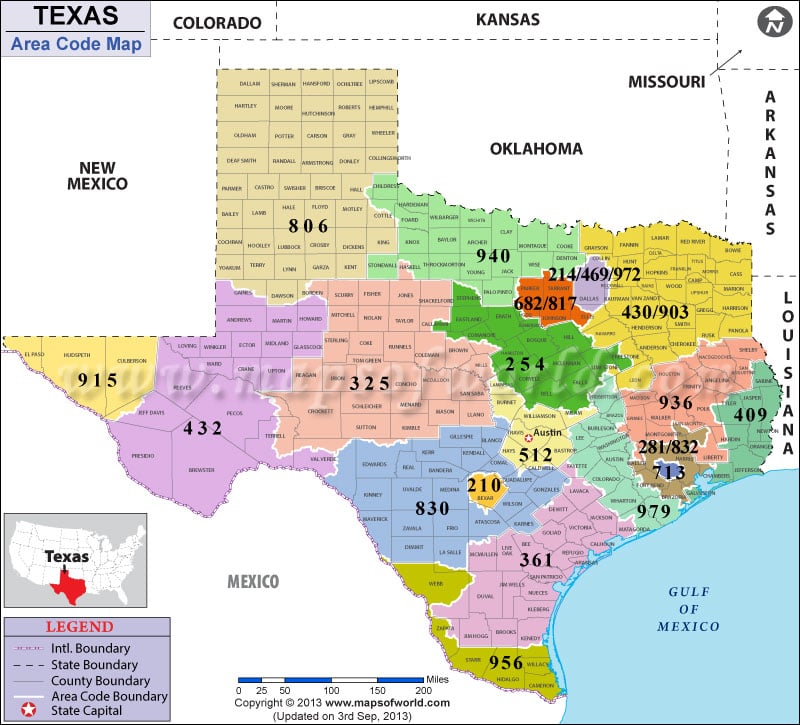
Here’s a breakdown of some of the most prominent area codes in Texas and the major cities or regions they serve:
- 210, 726: San Antonio and surrounding areas (overlay).
- 214, 469, 972, 945: Dallas and its inner suburbs (multiple overlays).
- 254: Waco, Killeen, Fort Hood, and Central Texas.
- 281, 713, 832, 346: Houston and surrounding areas (multiple overlays).
- 325: Abilene, San Angelo, and West Central Texas.
- 361: Corpus Christi, the Coastal Bend, and South Texas.
- 409: Galveston, Beaumont, and Southeast Texas.
- 430, 903: Northeast Texas, including Tyler, Texarkana, and Sherman (overlay).
- 512, 737: Austin and the Central Texas region (overlay).
- 682, 817: Fort Worth and its western suburbs (overlay).
- 806: The Texas Panhandle, including Amarillo and Lubbock.
- 843, 915: El Paso and far West Texas.
- 936: East Texas, including Conroe and Huntsville.
- 956: Laredo, McAllen, Brownsville, and the Rio Grande Valley.
- 979: Bryan, College Station, and the Brazos Valley.
Practical Tips for Travelers and Newcomers
For anyone visiting or new to Texas, a few key practices will ensure your communication is hassle-free:
- Always Use 10-Digit Dialing: This is the golden rule. Even if you’re calling across the street in Dallas, you must include the area code. Your mobile phone will typically handle this automatically if you save numbers with their full 10 digits.
- Save Contacts Fully: When saving hotel numbers, restaurant contacts, or new acquaintances, always include the area code. This eliminates confusion and ensures calls connect, especially when traveling between different Texas regions.
- Understand Roaming for International Visitors: While area codes primarily affect domestic dialing, international visitors should be aware of their mobile plan’s roaming charges. Having local contacts stored with area codes will help you understand if a call is local within Texas or if it’s considered long-distance based on your home country’s plan.
- Emergency Services (911): Remember that 911 is the universal emergency number across the United States for police, fire, and medical assistance. This does not require an area code.
Texas Tourism: Beyond the Dial Tone
Once you’ve mastered the intricacies of Texas area codes, a world of incredible tourism experiences opens up. From its Gulf Coast beaches to its rugged western mountains, Texas is a tapestry of diverse landscapes, cultures, and adventures. This section highlights some of the must-visit destinations and experiences, ensuring your trip is filled with unforgettable memories.
Iconic Destinations and Must-Visit Landmarks
Texas boasts an impressive array of cities and natural wonders, each offering a distinct flavor of the Lone Star State.
- Dallas: A hub of commerce, culture, and cuisine. Visitors flock to the Sixth Floor Museum at Dealey Plaza to learn about the assassination of President John F. Kennedy. The city’s thriving Arts District houses impressive museums and performance venues. For a relaxing urban escape, Klyde Warren Park offers green space over a freeway, complete with food trucks and free activities.
- Houston: The fourth-largest city in the United States and a global energy capital, Houston is synonymous with space exploration. The Space Center Houston, official visitor center of NASA’s Johnson Space Center, is a must-see. The Museum District offers 19 museums, all within walking distance. Nearby, the historic city of Galveston provides beautiful Galveston beaches and charming Victorian architecture.
- Austin: Known as the “Live Music Capital of the World,” Austin is a vibrant city with a unique, laid-back vibe. Beyond its legendary music scene, visitors can explore the magnificent Texas State Capitol building, cool off at Barton Springs Pool in Zilker Park, or enjoy paddleboarding on Lady Bird Lake.
- San Antonio: Steeped in history and Spanish colonial heritage, San Antonio is home to The Alamo, a symbol of Texas independence. The picturesque River Walk, a network of walkways along the San Antonio River bordered by shops, restaurants, and hotels, is perfect for a leisurely stroll or boat tour. The city also features several historic missions, including Mission San Jose, part of a UNESCO World Heritage Site.
- Big Bend National Park: For nature lovers seeking solitude and stunning landscapes, Big Bend National Park in West Texas offers dramatic mountains, desert expanses, and the majestic Rio Grande. It’s a prime destination for hiking, stargazing, and exploring the remote wilderness.
- Padre Island National Seashore: Stretching for 70 miles along the Gulf of Mexico near Corpus Christi, this protected barrier island is the longest undeveloped barrier island in the world. It’s a haven for birdwatchers, campers, and anyone looking to enjoy pristine Texas beaches and abundant wildlife.
Texas Lifestyle and Culinary Adventures
Beyond its landmarks, Texas offers a distinct lifestyle and a world-renowned culinary scene that travelers shouldn’t miss.
- Foodie Paradise: Texas is famous for its barbecue, with iconic establishments like Franklin Barbecue in Austin drawing lines for its tender brisket. Tex-Mex cuisine, a delicious fusion of Texas and Mexican flavors, is ubiquitous, from sizzling fajitas to cheesy enchiladas. And, of course, no visit is complete without indulging in a hearty steak, celebrating the state’s cattle ranching heritage.
- Cultural Experiences: Dive into the state’s Western heritage by attending a rodeo, visiting a dude ranch, or exploring historic towns like Luckenbach Texas, a legendary country music venue. Austin’s vibrant music scene extends beyond country, hosting world-famous festivals like SXSW (South by Southwest), covering film, interactive media, and music. The Gruene Historic District near New Braunfels offers a charming glimpse into the past with its historic dance hall and shops.
- Outdoor Adventures: From hiking and biking in its numerous state parks to fishing in its vast lakes and rivers, Texas caters to all types of outdoor enthusiasts. The Hill Country offers scenic drives, wineries, and charming small towns perfect for exploration.
Accommodation and Hospitality in the Lone Star State
Securing the right accommodation is paramount to any successful trip. Texas, with its booming tourism industry, offers an incredible spectrum of lodging options, catering to every budget and style. From luxurious city hotels to cozy boutique inns and expansive resorts, finding your ideal home away from home is an exciting part of the Texas experience. And yes, remembering the area code for your booking confirmation or late check-in call remains a small but vital detail.
Finding Your Perfect Texas Stay
The diversity of Texas extends to its hospitality sector, ensuring there’s a perfect place for every traveler.
- Luxury Hotels: For those seeking opulent experiences, Texas’s major cities boast world-class luxury hotels. The Joule Dallas stands out with its art-filled interiors and cantilevered pool. In San Antonio, the historic Hotel Emma on the Pearl Brewery campus offers a unique, sophisticated stay. Hotel ZaZa Houston provides themed suites and a vibrant social scene.
- Boutique Options: For a more personalized and intimate stay, boutique hotels are a fantastic choice. Hotel Saint Cecilia Austin offers an exclusive, rock-and-roll-inspired sanctuary. These establishments often reflect the local culture and provide exceptional service.
- Resorts and Spas: For a getaway focused on relaxation and amenities, Texas has numerous resorts. The JW Marriott San Antonio Hill Country Resort & Spa provides golf, water parks, and spa treatments. Similarly, the Hyatt Regency Lost Pines Resort and Spa near Austin offers a serene escape with abundant outdoor activities.
- Budget-Friendly Stays: For budget-conscious travelers, major hotel chains like Holiday Inn Express, Hampton Inn, and La Quinta Inn & Suites are widely available across the state, offering comfortable and reliable accommodation.
- Unique Accommodations: For a truly Texan experience, consider a stay at a dude ranch in the Hill Country, a charming bed & breakfast in a historic town, or even glamping sites near natural attractions like Big Bend.
Booking Tips and Local Insights
- Book in Advance: Especially during peak seasons, major festivals (SXSW, Austin City Limits), or sporting events, accommodations can fill up quickly. Booking well in advance is highly recommended.
- Check Amenities: Consider your priorities: Do you need a pool to beat the Texas heat? Is complimentary breakfast important? What about parking, especially if you’re renting a car? Don’t forget to check pet-friendly policies if you’re traveling with furry companions.
- Location, Location, Location: Decide if you prefer being in the heart of the city’s nightlife, close to specific attractions, or in a quieter suburban area. Public transport varies by city, so proximity to your planned activities can significantly impact your experience.
- Long-Term Stays: For business travelers or those planning extended vacations, many hotels offer suites with kitchenettes or discounted rates for longer stays. Websites specializing in apartment or villa rentals are also popular for a home-away-from-home feel.
Planning Your Texas Adventure: A Traveler’s Toolkit
Embarking on a Texas adventure requires a blend of practical preparation and an open mind for exploration. By understanding the functional aspects like area codes and having a grasp of the diverse experiences available, you’re set for a truly memorable journey.

Seamless Travel in a Connected State
- Transportation: Texas is a vast state, and driving is the most common way to get around and experience its diverse landscapes. Major airports like DFW (Dallas Fort Worth International Airport), IAH (George Bush Intercontinental Airport Houston), AUS (Austin-Bergstrom International Airport), and SAT (San Antonio International Airport) serve as key entry points for domestic and international travelers. Consider renting a car upon arrival to maximize your flexibility.
- Connectivity: Mobile phone coverage is generally excellent in urban and suburban areas of Texas. However, if you plan to venture into remote regions, such as Big Bend National Park or other natural areas, coverage can be spotty or nonexistent. It’s wise to download maps offline and inform others of your travel plans when heading off the beaten path. Wi-Fi is readily available in most hotels, cafes, and public spaces in cities.
- Weather Considerations: Texas weather can be extreme and varies greatly by region and season. Summers are hot across the state, particularly in the south and west. Winters are mild in the south but can bring freezing temperatures and occasional snow to the Panhandle and North Texas. Always check the forecast for your specific destinations before packing.
- Local Etiquette: Texans are renowned for their hospitality and friendly demeanor. A simple “howdy” or “y’all” can go a long way. Southern charm is alive and well, so don’t be surprised by genuine warmth and helpfulness from locals.
In conclusion, while the question “What’s the area code for Texas?” might seem like a straightforward query, it opens the door to understanding a vital aspect of communicating within this expansive state. More importantly, it serves as a jumping-off point for discovering the incredible tapestry of experiences that define Texas. From its iconic cities and historic landmarks to its vibrant lifestyle and mouth-watering cuisine, Texas promises an adventure for every type of traveler. By keeping a few practical tips in mind, especially regarding communication and planning, your journey through the Lone Star State will be as seamless as it is spectacular. Pack your bags, remember your 10-digit dialing, and prepare to be captivated by the spirit of Texas!
LifeOutOfTheBox is a participant in the Amazon Services LLC Associates Program, an affiliate advertising program designed to provide a means for sites to earn advertising fees by advertising and linking to Amazon.com. Amazon, the Amazon logo, AmazonSupply, and the AmazonSupply logo are trademarks of Amazon.com, Inc. or its affiliates. As an Amazon Associate we earn affiliate commissions from qualifying purchases.