
The allure of Hawaii extends far beyond its pristine beaches, world-class resorts, and vibrant cultural tapestry. For discerning travelers seeking a deeper connection with nature and a unique sense of place, the Hawaiian Islands offer an unparalleled experience. Among the many natural wonders that define this breathtaking archipelago, one stands out as a true symbol of its resilience and unique biodiversity: the Nēnē, or Hawaiian Goose, Hawaii’s official state bird.
Understanding the Nēnē is not merely about identifying a species; it’s an invitation to explore the intricate ecosystems, the challenges of conservation, and the profound cultural significance of Hawaii’s natural heritage. This article delves into the fascinating world of the Nēnē, offering insights for those planning a journey to these remote Pacific jewels, eager to weave responsible tourism and meaningful wildlife encounters into their travel adventures.
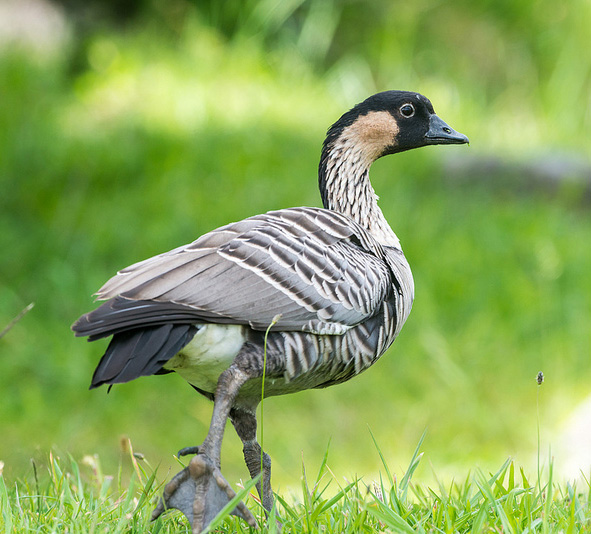
The Nēnē: Hawaii’s Avian Ambassador and a Story of Survival
The Nēnē (Branta sandvicensis) is more than just a bird; it’s a living testament to the unique evolutionary journey of the Hawaiian Islands. As the world’s rarest goose and the only goose native to Hawaii, its story is intrinsically linked to the land and its people. For any traveler seeking to truly understand Hawaii, an appreciation for the Nēnē is essential.
A Symbol of Hawaiian Heritage and Resilience
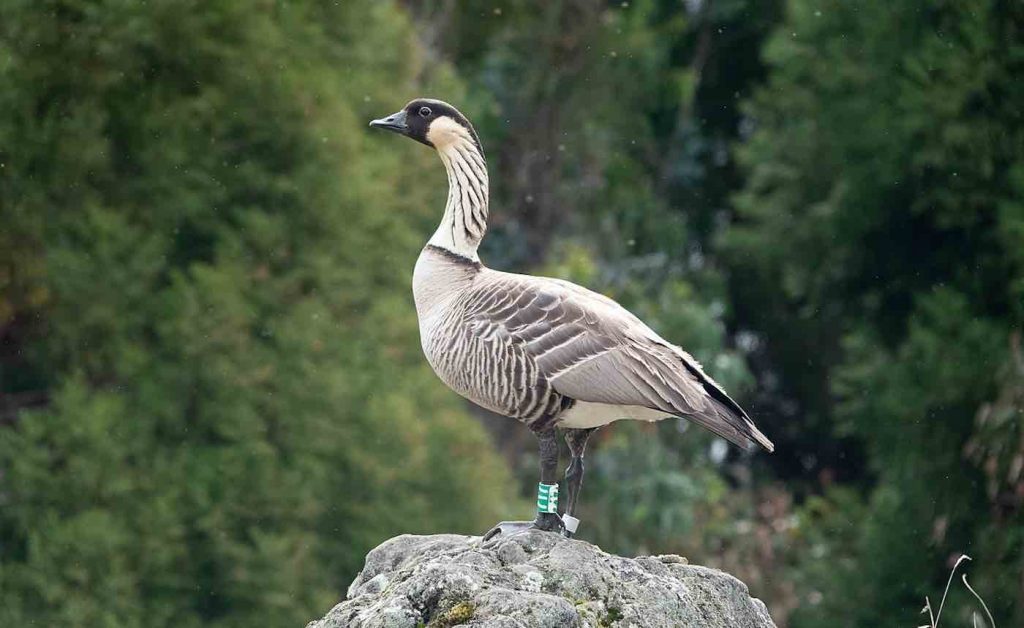
Imagine a bird that has adapted over millennia to an isolated volcanic landscape, evolving from its Canadian goose ancestors to thrive in environments ranging from lush forests to barren lava fields. The Nēnē is a medium-sized goose, distinguishable by its black head and neck, buff cheeks, and a distinctive deeply furrowed neck plumage that gives it a striped appearance. Unlike most geese, the Nēnē has partially webbed feet, a clear adaptation to its terrestrial lifestyle, allowing it to traverse rough lava flows with greater ease.
Its unique evolution in isolation on the Hawaiian Islands makes it a prime example of adaptive radiation, a phenomenon where a single ancestral species diversifies into multiple new species. The Nēnē’s ancestors arrived in Hawaii millions of years ago, likely blown off course during migration. Over time, in the absence of ground predators and with abundant food sources, they gradually lost the need for strong flight and developed characteristics suited to a life on land, primarily feeding on grasses, leaves, seeds, and berries. This unique adaptation reflects the profound impact of Hawaii’s remote environment on its endemic species.
Beyond its biological uniqueness, the Nēnē holds a significant place in Hawaiian culture. It is revered as a symbol of the islands’ unique natural heritage and the delicate balance of its ecosystems. Its presence reminds both locals and visitors of the importance of preserving Hawaii’s invaluable biodiversity and the intricate web of life that makes this destination so extraordinary.
Conservation Efforts and Their Impact
The story of the Nēnē is also one of immense challenge and inspiring recovery. By the mid-20th century, the Nēnē population had plummeted to fewer than 50 individuals, largely due to habitat loss, introduced predators such as mongooses, cats, and dogs, and hunting. It faced imminent extinction, a stark reminder of the fragile nature of island ecosystems and the irreversible impact of human activity.
Recognizing the dire situation, extensive conservation efforts were launched. These multifaceted programs, involving both governmental agencies and dedicated private organizations, focused on captive breeding, habitat restoration, and predator control. Nēnē were bred in captivity in various locations, including Hawaii and the United States mainland, before being reintroduced into protected areas across the Hawaiian Islands.
Today, thanks to these tireless efforts, the Nēnē population has rebounded significantly, now numbering over 3,000 birds. While still an endangered species, this remarkable recovery is a testament to what can be achieved through dedicated conservation. For travelers interested in sustainable tourism and ecological preservation, witnessing the Nēnē is a poignant reminder of the success stories that can emerge from collective action. It underscores the concept of responsible travel, where visitors contribute to the preservation of the very landscapes and species they come to admire. Many national parks and wildlife refuges in Hawaii are at the forefront of these efforts, offering visitors a chance to learn about and support these vital initiatives.
Encountering the Nēnē: Where to Spot Hawaii’s Avian Ambassador
For nature enthusiasts and birdwatchers, spotting a Nēnē in its natural habitat is a highlight of any Hawaiian adventure. While their population has increased, they remain relatively rare, and finding them requires a bit of planning and a respectful approach.
Prime Locations for Nēnē Viewing
The Nēnē can be found on several of the Hawaiian Islands, but certain locations offer better chances for an encounter.

- Hawaii Island (The Big Island): This is perhaps one of the best places to see Nēnē, particularly within Hawaii Volcanoes National Park. Here, these resilient birds often forage in open areas, sometimes even near visitor centers or along roadsides, accustomed to human presence. The park’s diverse landscapes, from active volcanoes like Kīlauea to lush rainforests, provide various habitats for the Nēnē. Beyond the park, populations can also be found in certain pastures and agricultural lands.
- Maui: Haleakalā National Park on Maui is another crucial Nēnē stronghold. The unique crater environment and surrounding slopes offer ideal breeding and feeding grounds. Visitors exploring the park, especially at higher elevations, have a good chance of spotting them. The serene, almost lunar landscape of Haleakalā provides a dramatic backdrop for these remarkable birds.
- Kauaʻi: The “Garden Isle” also boasts a thriving Nēnē population, largely due to successful reintroduction programs. While less concentrated in a single national park, Nēnē can be observed in various wildlife refuges and even golf courses across Kauaʻi. Areas around Kapaʻa and the North Shore are known for sightings.
- Molokaʻi: Although less frequently visited by tourists, Molokaʻi also has a small but stable Nēnē population, particularly within the Kalaupapa National Historical Park area and surrounding natural habitats.
When planning your visit, consider checking with park rangers or local wildlife experts for recent sightings and recommended viewing spots. Many parks offer guided tours or educational programs that provide excellent opportunities to learn more about the Nēnē and other endemic species, enhancing your overall tourism experience.
Respectful Wildlife Tourism and Photography
Observing the Nēnē is a privilege, and it comes with the responsibility of adhering to ethical wildlife viewing guidelines. To ensure the well-being of these endangered birds and to promote sustainable tourism:
- Maintain a Safe Distance: Always keep a respectful distance, typically at least 20 feet (6 meters). Do not approach, chase, or harass the birds. Using binoculars or a telephoto lens for photography allows for close-up views without disturbance.
- Never Feed Wildlife: Feeding wild animals, including Nēnē, can alter their natural behaviors, make them dependent on humans, and expose them to inappropriate foods. It is harmful to their health and survival.
- Stay on Marked Trails: Venturing off designated paths can disturb nesting sites, damage sensitive habitat, and expose you to hazards.
- Drive Carefully: In areas where Nēnē are known to frequent, especially along roadsides, drive slowly and be vigilant. Nēnē often cross roads, and vehicle collisions are a significant threat.
- Control Pets: If traveling with pets, ensure they are leashed at all times and do not approach wildlife.
- Support Conservation: Consider donating to or volunteering with organizations dedicated to Nēnē conservation. Your travel choices can directly impact the future of these magnificent birds.
By following these simple rules, visitors can enjoy memorable encounters with the Nēnē while contributing to their continued protection and fostering a culture of responsible tourism in Hawaii.
Planning Your Hawaiian Adventure: Beyond Birdwatching
Integrating the quest to see the Nēnē into a broader Hawaiian itinerary enhances the richness of your travel experience. Hawaii offers a kaleidoscope of attractions and activities, from exploring vibrant cities to relaxing on secluded beaches, and the Nēnē can serve as a beautiful thread connecting you to the islands’ natural heart.
Integrating Nature into Your Itinerary
A trip to Hawaii can be a diverse blend of adventure, relaxation, and cultural immersion. After a morning spent searching for Nēnē in Hawaii Volcanoes National Park, you might spend the afternoon hiking across recent lava flows, witnessing the raw power of creation. On Maui, a sunrise visit to Haleakalā National Park to spot Nēnē can be followed by a scenic drive along the iconic Road to Hana, stopping at cascading waterfalls and black sand beaches like Waiʻanapanapa State Park.
For those on Kauaʻi, combining Nēnē sightings with exploring the majestic Na Pali Coast by boat or helicopter, or hiking through the breathtaking Waimea Canyon, creates an unforgettable itinerary. Even on Oʻahu, while Nēnē are rarer, visitors can explore other natural landmarks like Diamond Head or the lush Kualoa Ranch, ensuring a comprehensive nature experience. Consider adding visits to botanical gardens, marine sanctuaries, or cultural sites that highlight Hawaii’s unique flora, fauna, and indigenous heritage. These experiences deepen the understanding of why creatures like the Nēnē are so vital to the islands.
Accommodation and Lifestyle Choices for Nature Enthusiasts
Your choice of accommodation can significantly enhance your nature-focused Hawaiian adventure. Many hotels and resorts across the islands are committed to sustainability and offer eco-friendly practices that align with a responsible travel lifestyle.
On Hawaii Island, consider staying near Volcano Village for easy access to the national park, where cozy bed and breakfasts or charming villas blend seamlessly with the natural surroundings. For a more luxurious, yet still nature-integrated experience, resorts along the Kohala Coast, such as the Four Seasons Resort Hualalai, often feature expansive grounds that incorporate local flora and fauna, offering a blend of opulence and environmental consciousness.
On Maui, choices range from boutique hotels in upcountry Kula, perfect for early morning trips to Haleakalā, to stunning resorts in Kapalua, like The Ritz-Carlton, Kapalua, which are often situated amidst natural preserves and offer activities focused on local ecology. On Kauaʻi, options like the Grand Hyatt Kauaʻi Resort & Spa in Poʻipū or smaller, eco-lodges further north provide convenient access to the island’s natural beauty. Many accommodations cater to travelers seeking immersive experiences, offering amenities like guided nature walks, cultural workshops, and farm-to-table dining that highlights local produce.
For those interested in long-term stays or a more independent lifestyle, renting an apartment or a villa provides the flexibility to explore at your own pace and prepare your own meals using fresh, local ingredients, further deepening your connection to the islands. By choosing accommodations that prioritize sustainability and local engagement, travelers not only enjoy a more authentic experience but also contribute positively to the communities and ecosystems they visit.
The Nēnē serves as a compelling emblem of Hawaii’s unique identity and its ongoing commitment to conservation. For anyone planning a trip to these magical islands, understanding and appreciating this remarkable bird adds an invaluable layer to the travel experience. It transforms a simple vacation into a journey of discovery, offering insights into evolutionary marvels, the power of conservation, and the profound beauty of a truly extraordinary place. So, as you pack your bags for paradise, remember to keep an eye out for the Nēnē – Hawaii’s resilient avian ambassador, waiting to share its story with you.
LifeOutOfTheBox is a participant in the Amazon Services LLC Associates Program, an affiliate advertising program designed to provide a means for sites to earn advertising fees by advertising and linking to Amazon.com. Amazon, the Amazon logo, AmazonSupply, and the AmazonSupply logo are trademarks of Amazon.com, Inc. or its affiliates. As an Amazon Associate we earn affiliate commissions from qualifying purchases.