
Choosing the right point of entry is the first and perhaps most critical decision when planning a journey to the Big Island of Hawaii. Unlike the more compact islands of Oahu or Maui, the Big Island is vast, encompassing nearly 4,000 square miles of diverse terrain, from frozen tundra atop Mauna Kea to the tropical rainforests of the Hamakua Coast. Because of its sheer scale, the island is served by two primary commercial airports: Ellison Onizuka Kona International Airport at Keahole (KOA) on the western side and Hilo International Airport (ITO) on the eastern side.

Deciding between Kona and Hilo depends entirely on your itinerary, your preferred climate, and your desire for convenience versus adventure. While both airports connect the island to the rest of the United States and the world, they offer vastly different experiences upon arrival.
Ellison Onizuka Kona International Airport (KOA): The Gateway to the Sun
Located on the leeward (western) side of the island, Ellison Onizuka Kona International Airport is the busier of the two hubs. It serves as the primary gateway for tourists seeking the classic Hawaiian vacation experience: white sand beaches, luxury resorts, and consistent sunshine.
Layout and Atmosphere
One of the most striking features of Kona International Airport is its architecture. Unlike the enclosed, air-conditioned terminals found in most major cities, Kona features a series of open-air pavilions with thatched-style roofs. This design allows travelers to immediately feel the warm Pacific Ocean breeze and smell the tropical salt air the moment they step off the plane. There are no jet bridges here; passengers typically deplane via mobile ramps or stairs directly onto the tarmac, offering an immediate, panoramic view of the surrounding lava fields.
Airlines and Direct Flight Options
For travelers coming from the mainland United States, Canada, or even Japan, Kona is often the most convenient choice. It handles the majority of the island’s trans-Pacific traffic. Major carriers such as Hawaiian Airlines, Southwest Airlines, United Airlines, American Airlines, Delta Air Lines, and Alaska Airlines offer frequent non-stop flights from cities like Los Angeles, San Francisco, Seattle, and Denver. Additionally, Air Canada and WestJet provide seasonal service from Vancouver. For international travelers, Japan Airlines has historically offered direct routes from Tokyo to Kona.
Nearby Destinations and Resorts
Choosing Kona International Airport is ideal if your primary destination is the Kohala Coast or Kailua-Kona. Most of the island’s high-end resorts, such as the Four Seasons Resort Hualalai, the Fairmont Orchid, and the Mauna Lani, are located within a 20 to 45-minute drive north of the airport. The bustling village of Kailua-Kona, known for its historic sites, shopping, and dining, is a mere 15-minute drive south. This side of the island is also the best base for snorkeling at Kealakekua Bay or visiting the Puuhonua o Honaunau National Historical Park.
Hilo International Airport (ITO): The Portal to Lush Landscapes
On the windward (eastern) side of the island lies Hilo International Airport. While smaller and less frequented by trans-Pacific flights than its western counterpart, Hilo offers an entry point into the “real” Hawaii—a world of dramatic waterfalls, botanical gardens, and active volcanic landscapes.
A More Local Feel
Hilo International Airport feels significantly more traditional and low-key. The terminal is enclosed and reflects a mid-century Hawaiian aesthetic. Because it primarily handles inter-island traffic, the crowds are thinner, the security lines are shorter, and the overall pace is much slower. Arriving in Hilo feels like stepping back in time to an era before massive tourism development dominated the landscape.
Accessibility and Connectivity
The vast majority of flights into Hilo are inter-island hops from Honolulu on Oahu or Kahului on Maui. Hawaiian Airlines and Southwest Airlines are the primary operators here. While there have been occasional direct flights from the mainland (notably from Los Angeles via United Airlines), most travelers will need to connect through Daniel K. Inouye International Airport in Honolulu to reach Hilo. This makes it a slightly less convenient option for those coming from outside the state, but a perfect choice for those already exploring other islands.
Proximity to Nature and Volcanoes
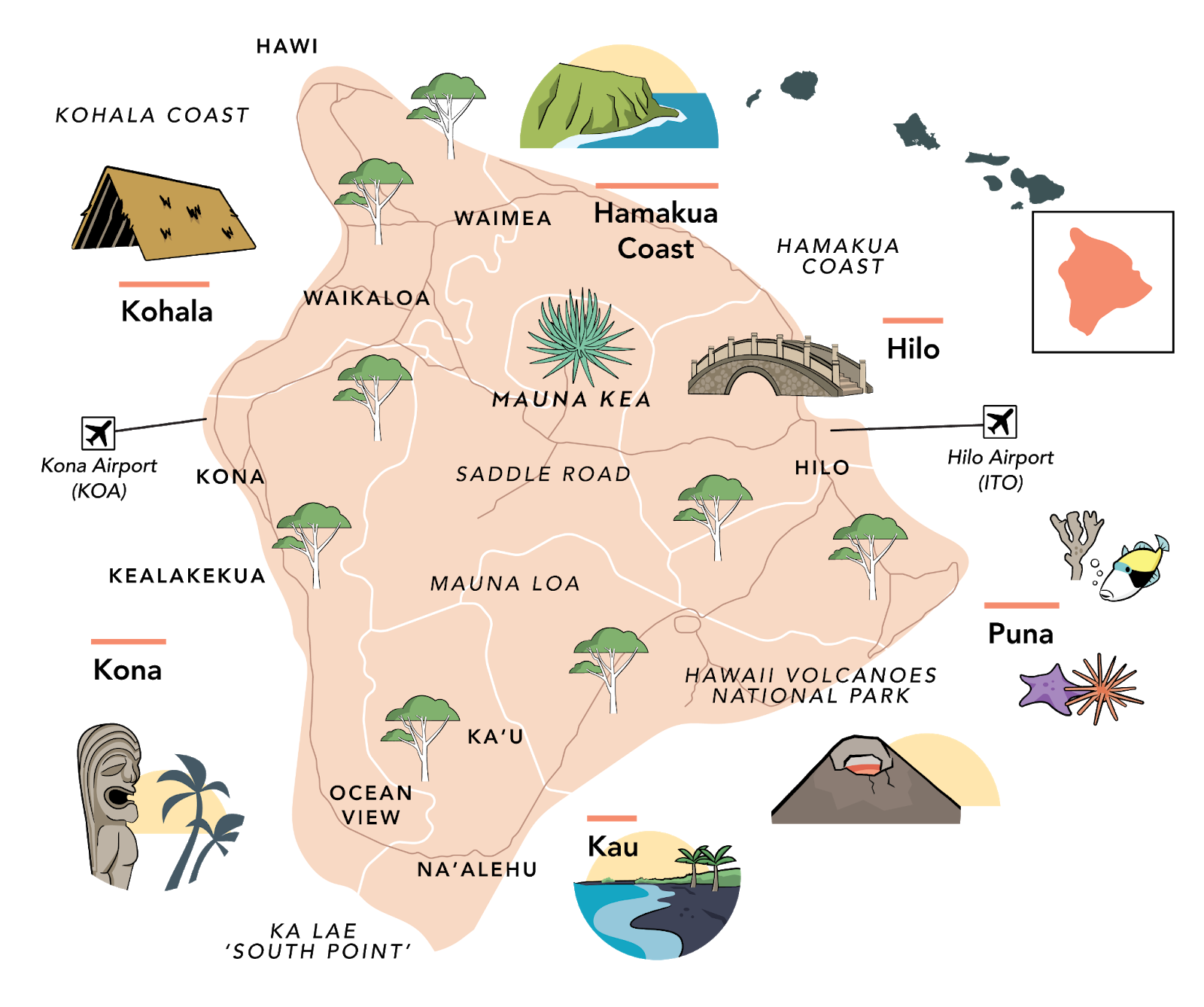
The primary reason travelers choose Hilo is its proximity to Hawaii Volcanoes National Park. The park entrance is only a 45-minute drive from the airport, making Hilo the best base for those who want to witness the power of Kilauea and Mauna Loa. Additionally, Hilo is the gateway to the Puna district and the stunning Hamakua Coast. Nearby attractions include Akaka Falls State Park, Rainbow Falls, and the Hawaii Tropical Botanical Garden. If your dream vacation involves hiking through rainforests and seeing black sand at Punaluu Black Sand Beach, Hilo is your best starting point.
Strategic Logistics: How to Choose the Right Entry Point
When asking “What airport on the Big Island of Hawaii should I use?” the answer often involves a bit of geographical strategy. Because the island is so large, a “wrong” choice can lead to hours of unnecessary driving.
The Geography of the Big Island
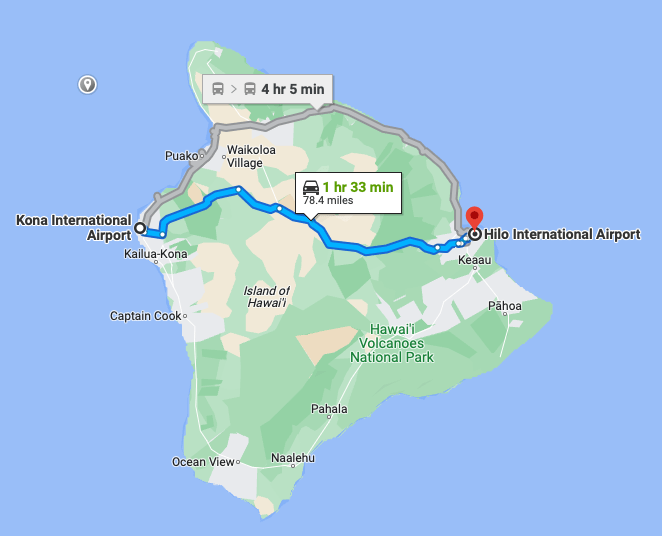
To put the size of the Big Island into perspective, all the other Hawaiian islands could fit inside it with room to spare. Driving from Kona to Hilo takes approximately 1.5 to 2 hours depending on the route and weather conditions. If you book a hotel in Waikoloa Village but fly into Hilo, you are looking at a significant commute before your vacation even truly begins.
Generally, travelers follow the “split stay” rule. If you have a week or more, it is often recommended to spend half your time on the Kona side for sun and sea, and the other half on the Hilo side for volcanoes and greenery. In this scenario, many travelers fly into one airport and out of the other.
Using Both Airports: The Multi-City Strategy
A popular “pro-tip” for Big Island travel is the “Open Jaw” or multi-city flight booking. You can fly into Kona International Airport, rent a car, spend several days exploring the west and north, drive across the island to Hilo, and finally fly out of Hilo International Airport. This eliminates the need to drive back across the island on your final day, saving you time and fuel. Most car rental agencies, such as Hertz or Enterprise, allow for one-way rentals between the two airports, though a drop-off fee may apply.
Navigating the Island After Arrival
Regardless of which airport you choose, your experience upon landing will be defined by the logistics of island travel. There is very limited public transportation on the Big Island, making a vehicle almost mandatory for any meaningful exploration.
Car Rentals and Ground Transportation
Both Kona and Hilo have on-site car rental facilities. At Kona International Airport, the rental car counters are located a short shuttle ride away from the terminal. Given the high demand, it is essential to book your vehicle well in advance. Rideshare services like Uber and Lyft operate at both airports, but they can be expensive for long-distance trips across the island. For those staying at major resorts like the Hilton Waikoloa Village, private shuttle services are often available, though these usually limit your ability to explore the island independently.
Driving Times and the Saddle Road Experience
The two sides of the island are connected by the Daniel K. Inouye Highway, commonly known as the Saddle Road. This road cuts directly between Mauna Kea and Mauna Loa, reaching elevations of over 6,600 feet. It is a well-maintained, high-speed highway that has revolutionized travel between Kona and Hilo.
However, travelers should be aware of the dramatic weather changes along this route. You might leave the sunny shores of Kailua-Kona in shorts and a t-shirt, only to encounter thick fog, heavy rain, and temperatures in the 50s as you cross the “saddle.” Having a rental car and a light jacket is essential for this cross-island journey.
Small Commuter Airports
While KOA and ITO handle all the major commercial jet traffic, it is worth noting that there is a third, much smaller airstrip on the island: Waimea-Kohala Airport (MUE). Located in the town of Waimea (also known as Kamuela), this airport is primarily served by Mokulele Airlines. It offers small commuter flights to Kahului or Honolulu. While not a typical entry point for mainland visitors, it is an incredibly scenic and convenient option for those traveling specifically to the upcountry ranch lands or the Kohala region.
Whether you choose the sun-drenched tarmac of Kona or the rainforest-adjacent runways of Hilo, the Big Island offers an unparalleled diversity of experience. By matching your airport choice to your destination—whether it’s the luxury of the Waikoloa resorts or the volcanic wonders near Naalehu—you set the stage for a seamless and unforgettable Hawaiian adventure.
LifeOutOfTheBox is a participant in the Amazon Services LLC Associates Program, an affiliate advertising program designed to provide a means for sites to earn advertising fees by advertising and linking to Amazon.com. Amazon, the Amazon logo, AmazonSupply, and the AmazonSupply logo are trademarks of Amazon.com, Inc. or its affiliates. As an Amazon Associate we earn affiliate commissions from qualifying purchases.