
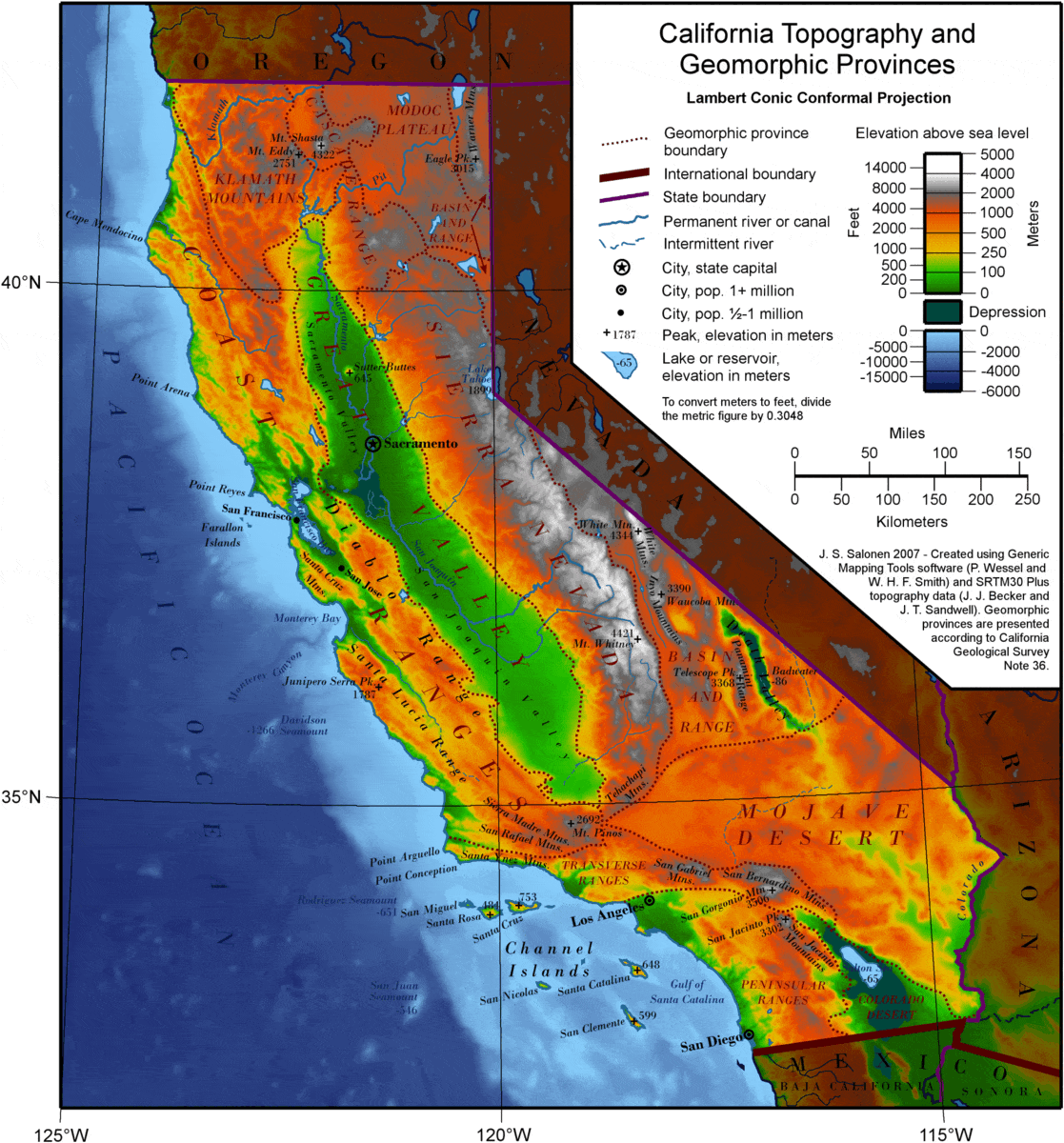
California, a state renowned for its diverse landscapes, boasts a dramatic and majestic mountainous spine that shapes its geography, climate, and recreational opportunities. While the state offers a tapestry of natural wonders, three dominant mountain ranges stand out for their sheer scale, ecological significance, and the profound impact they have on the Californian experience. These ranges are not merely geological features; they are vibrant ecosystems, popular destinations for adventure, and essential components of the state’s identity. Understanding these major ranges provides a crucial lens through which to appreciate California’s unparalleled natural beauty and its rich outdoor pursuits.

The Sierra Nevada: The Backbone of California
Dominating the eastern side of the state, the Sierra Nevada is arguably California’s most iconic mountain range. Its name, Spanish for “snowy mountain range,” perfectly captures its essence, especially during winter when its peaks are blanketed in pristine white. This colossal range stretches for approximately 400 miles, running from the northern reaches of California southwards into Nevada. The Sierra Nevada is a young and geologically active range, characterized by its dramatic granite formations, soaring peaks, and deep glacial valleys.
Geological Marvels and Natural Wonders
The geological story of the Sierra Nevada is one of immense uplift and erosion. The range was primarily formed by fault-block movement, with the eastern side dropping significantly to create the Owens Valley. Over millions of years, glaciers carved out the spectacular features we see today, most notably in its high-alpine regions. The most famous example of this glacial artistry is Yosemite Valley, with its sheer granite cliffs like El Capitan and Half Dome, and its breathtaking waterfalls such as Yosemite Falls.
Further south, the Sierra Nevada is home to the tallest peaks in the contiguous United States. Mount Whitney, standing at 14,505 feet, is a challenging but rewarding destination for experienced hikers and climbers, offering unparalleled panoramic views of the surrounding wilderness. The range is also famous for its ancient and colossal trees, particularly the giant sequoias. Groves of these magnificent giants can be found in parks like Sequoia National Park and Kings Canyon National Park, where trees like the General Sherman Tree dwarf all other living things.
Outdoor Adventures and Recreational Opportunities
The Sierra Nevada is a mecca for outdoor enthusiasts, offering a staggering array of activities year-round. In the summer and fall, hiking and backpacking are paramount. The Pacific Crest Trail, a legendary long-distance hiking route, traverses the heart of the range, providing opportunities for multi-day adventures through diverse ecosystems. Rock climbing is exceptionally popular, especially in Yosemite National Park, attracting climbers from around the globe.
Winter transforms the Sierra Nevada into a snowy playground. World-class ski resorts, including Palisades Tahoe (formerly Squaw Valley and Alpine Meadows), Mammoth Mountain, and Heavenly Mountain Resort, draw skiers and snowboarders eager to carve down powdery slopes. Snowshoeing, cross-country skiing, and ice climbing are also popular activities in the quieter winter months, offering a serene way to experience the snow-laden landscapes. Lake Tahoe, a stunning freshwater lake nestled within the Sierra Nevada, offers opportunities for boating, swimming, and fishing during warmer months and transforms into a winter sports hub.
The Coast Ranges: A Verdant Barrier to the Pacific
Stretching along California’s extensive coastline, the Coast Ranges form a rugged and picturesque barrier between the Pacific Ocean and the interior valleys. Unlike the towering, snow-capped peaks of the Sierra Nevada, the Coast Ranges are generally lower in elevation, characterized by rolling hills, steep canyons, and dense forests. This range is not a single, continuous chain but rather a series of smaller ranges and valleys that run roughly parallel to the coast.
Diverse Ecosystems and Coastal Beauty
The Coast Ranges are home to a remarkable diversity of ecosystems, influenced by the proximity to the ocean and varying rainfall patterns. In the north, the mountains are cloaked in dense old-growth redwood forests, the tallest trees on Earth. Redwood National and State Parks, encompassing areas like Redwood National Park, are sanctuaries for these ancient giants, creating an awe-inspiring and almost mystical atmosphere. Further south, the vegetation transitions to chaparral, oak woodlands, and grasslands, adapted to drier Mediterranean climates.
The western slopes of the Coast Ranges often plunge dramatically into the Pacific, creating breathtaking coastal vistas. Iconic scenic drives, such as the Pacific Coast Highway (Highway 1), wind along these bluffs, offering unparalleled views of the ocean, sea stacks, and hidden coves. Charming coastal towns dot the landscape, providing unique cultural experiences and access to the rugged shoreline. The Channel Islands, an archipelago off the southern California coast, are often considered an extension of the Coast Ranges, featuring unique endemic species and pristine marine environments.
Exploring the Coastal Wilderness
The Coast Ranges offer a different, yet equally captivating, set of outdoor adventures. Hiking is a primary draw, with trails ranging from gentle coastal paths to challenging climbs through redwood forests and chaparral. Point Reyes National Seashore, a rugged peninsula jutting into the Pacific, is renowned for its dramatic cliffs, historic lighthouse, and abundant wildlife, including tule elk and migrating whales. Big Sur, a particularly spectacular stretch of the Coast Ranges, is celebrated for its dramatic cliffs, redwood-filled canyons, and iconic landmarks like the Bixby Creek Bridge.
Coastal activities abound, from kayaking and whale watching to tide pooling and beachcombing. The marine protected areas along the coast are vital for preserving biodiversity and offer incredible opportunities for snorkeling and diving. Wine enthusiasts will find themselves drawn to the renowned wine regions nestled within the valleys of the Coast Ranges, such as the Napa Valley and Sonoma Valley, where vineyards thrive on the hillsides. Exploring these areas often involves scenic drives, wine tastings at world-class wineries, and indulging in the farm-to-table culinary scene.
The Transverse Ranges: California’s Unique East-West Backbone
A distinctive geological anomaly in California’s mountainous terrain is the Transverse Ranges. Unlike the predominantly north-south orientation of the Sierra Nevada and Coast Ranges, the Transverse Ranges run east-west, a unique characteristic that profoundly influences the state’s climate and geography. This chain of mountains extends across Southern California, from the Santa Barbara area eastward into the Mojave Desert.
Shaping Southern California’s Landscape
The east-west orientation of the Transverse Ranges plays a critical role in shaping the climate of Southern California. They act as a barrier to the cool Pacific air, creating distinct microclimates. For example, the mountains north of Los Angeles often receive significantly more rainfall than the coastal plains, supporting different vegetation types. These ranges are geologically active, featuring numerous fault lines, including the infamous San Andreas Fault, which runs along their southern boundary. This geological activity contributes to their rugged terrain and dramatic topography.
Within this range are some of Southern California’s highest peaks. The San Gabriel Mountains, which flank the Los Angeles Basin, are a popular recreational escape for millions. Peaks like Mount Baldy (officially Mount San Antonio) offer challenging hikes and winter snow opportunities. Further east, the San Bernardino Mountains rise impressively, culminating in San Gorgonio Mountain, the highest peak in Southern California. These mountains contain Big Bear Lake, a popular resort destination known for its four-season appeal. The desert-facing slopes of the Transverse Ranges transition into arid landscapes, featuring Joshua trees and rugged canyons.

Recreation and Desert Encounters
The Transverse Ranges provide vital natural spaces and recreational opportunities for the heavily populated Southern California region. The San Gabriel Mountains National Monument and the Angeles National Forest offer extensive trail networks for hiking, mountain biking, and horseback riding. Climbing and bouldering are popular in areas like the Stony Point Park. During winter, areas like Mountain High and Big Bear Mountain Resort become ski destinations.
The eastern portions of the Transverse Ranges extend into desert environments, offering a stark contrast to the coastal and alpine regions. The Mojave National Preserve, part of this expansive mountain system, showcases vast desert landscapes, unique geological formations like the Kelso Dunes, and the iconic Joshua trees. These areas are ideal for off-roading, camping under a star-filled desert sky, and exploring the stark beauty of the arid West. The transition from chaparral-covered slopes to arid desert scrub is a testament to the dramatic climatic influences of this unique mountain range.
LifeOutOfTheBox is a participant in the Amazon Services LLC Associates Program, an affiliate advertising program designed to provide a means for sites to earn advertising fees by advertising and linking to Amazon.com. Amazon, the Amazon logo, AmazonSupply, and the AmazonSupply logo are trademarks of Amazon.com, Inc. or its affiliates. As an Amazon Associate we earn affiliate commissions from qualifying purchases.