
New York, a state synonymous with vibrant cities, picturesque landscapes, and rich history, is a tapestry woven from 62 distinct counties. These administrative divisions, each with its unique character, contribute to the immense diversity and allure of the Empire State. Understanding the counties of New York is not merely an exercise in geography; it’s a gateway to appreciating the state’s multifaceted identity, from its bustling metropolises to its serene rural expanses, its significant historical sites to its burgeoning cultural hubs. This exploration will guide you through the organizational framework of New York, highlighting key regions and the essence they bring to the state’s overall appeal.
Navigating New York: A Geographical Overview
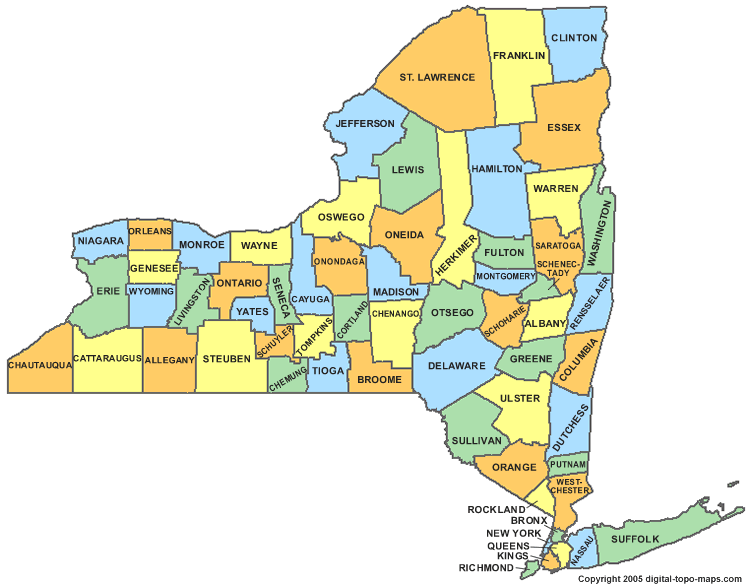
The state of New York is divided into 62 counties, each serving as a fundamental unit of local government and administration. These counties are further grouped into nine regions, offering a broader perspective on their geographical and economic relationships. This organizational structure provides a framework for understanding the state’s diverse environments, from the Atlantic coast to the Great Lakes, and from the Adirondack Mountains to the Appalachian Plateau. Each county, in its own right, possesses unique geographical features, historical significance, and cultural nuances that collectively define the character of New York.
Metropolitan Marvels and Their Surrounding Shires
The heart of New York’s urban dynamism lies within its metropolitan areas, most notably the colossal New York City metropolitan area. This region alone encompasses five counties, often referred to as the “Five Boroughs”: New York County (Manhattan), Kings County (Brooklyn), Queens County (Queens), Bronx County (The Bronx), and Richmond County (Staten Island). These urban powerhouses are the epicenter of global finance, fashion, arts, and culture, attracting millions of visitors annually.
Beyond the immediate city limits, numerous suburban counties are intricately linked to the metropolitan core, forming a vast and interconnected region. Westchester County, known for its affluent communities and picturesque parks, lies just north of The Bronx. To the east, Nassau County and Suffolk County, collectively known as Long Island, offer a blend of suburban tranquility and coastal charm, with renowned beaches and vibrant towns. These counties are integral to the economic and social fabric of the greater metropolitan area, providing both residential communities and significant commercial centers.
Upstate Serenity and Historic Roots
Venture beyond the metropolitan sprawl, and you’ll discover the vast and varied landscapes of Upstate New York. This expansive region is characterized by its rolling hills, pristine lakes, majestic mountains, and fertile agricultural lands, each county contributing its distinct charm.
The Capital Region and the Mohawk Valley
The Capital Region, centered around Albany, the state capital, is a hub of government and history. Albany County, along with neighboring counties like Rensselaer, Schenectady, and Saratoga, forms a historically significant area. Saratoga County, in particular, is famous for its natural springs and its role in the American Revolutionary War, specifically the pivotal Battle of Saratoga. The Mohawk Valley, named after the Indigenous people who once inhabited the region, is a corridor of historical significance, with counties like Herkimer, Montgomery, and Oneida bearing witness to early American settlement and industrial development.
Central New York and the Finger Lakes
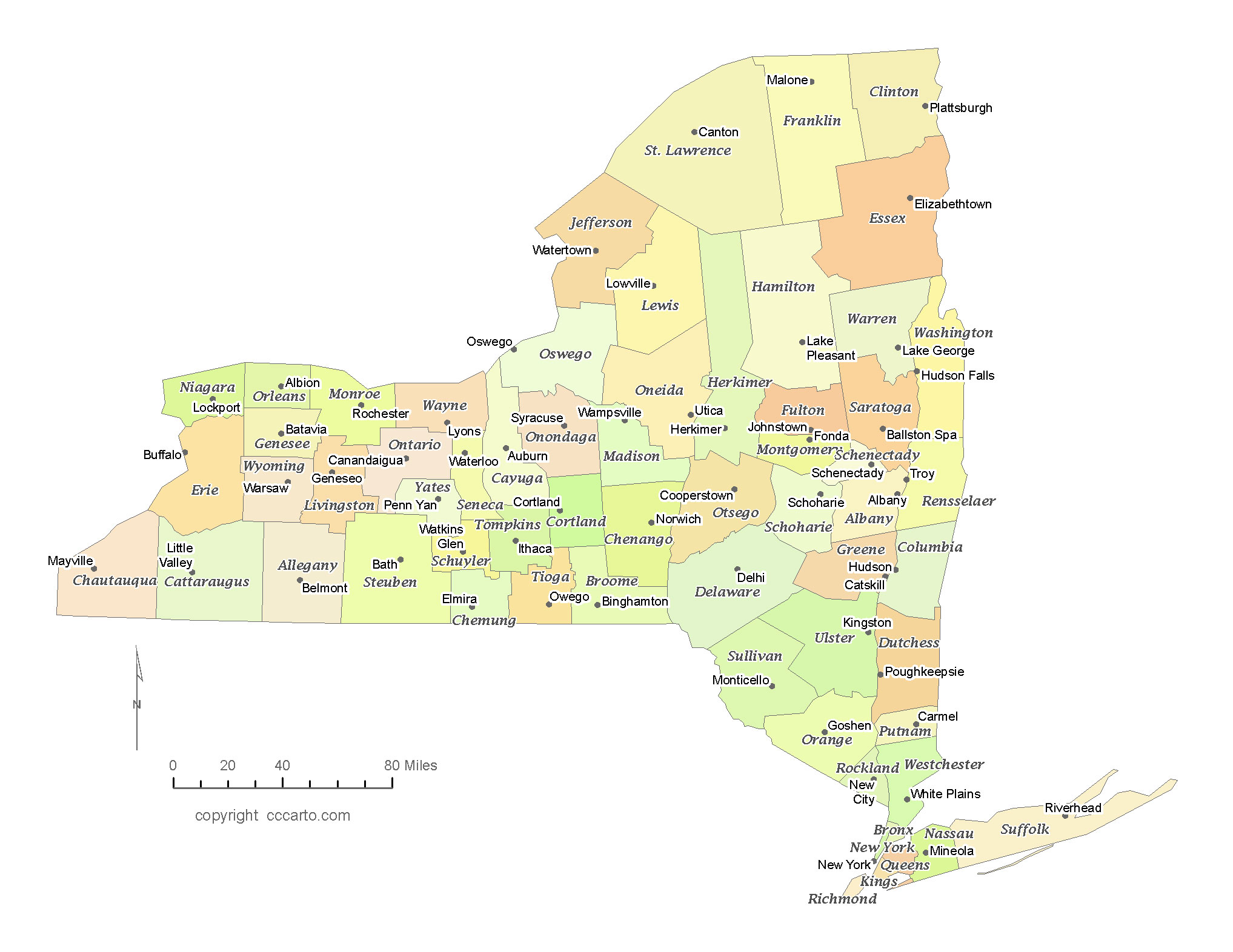
Central New York is a region of striking natural beauty and agricultural bounty. Counties such as Onondaga (home to Syracuse), Cortland, and Madison are known for their charming towns, vibrant local economies, and access to outdoor recreation. Further west, the Finger Lakes region is a jewel of New York, renowned for its eleven long, narrow glacial lakes. Counties like Monroe (including the city of Rochester), Ontario, Seneca, Tompkins (home to Cornell University and Ithaca), and Steuben are celebrated for their world-class wineries, picturesque scenery, and charming lakeside communities. This region is a prime destination for wine enthusiasts, outdoor adventurers, and those seeking a more relaxed pace of life.
The North Country and the Adirondacks
To the north, the North Country region borders Canada and encompasses the breathtaking Adirondack Mountains. Counties such as Essex, Franklin, and Hamilton are largely dominated by the Adirondack Park, the largest state park in the contiguous United States. This vast wilderness offers unparalleled opportunities for hiking, camping, skiing, and wildlife viewing. The region also includes historical sites and towns that reflect its frontier past and its connection to natural resources. Further west, along the shores of Lake Ontario, counties like Jefferson and Oswego are known for their maritime history and recreational activities.
Western New York and the Great Lakes Frontier
Western New York is a region rich in history and natural wonders, famously bordering Canada and sharing shorelines with Lake Erie and Lake Ontario. Erie County, home to Buffalo, is a major urban center with a strong industrial heritage and a burgeoning arts scene. Its proximity to Niagara Falls, one of the most iconic natural wonders in the world, makes it a significant tourist destination. Other counties in this region, such as Niagara, Orleans, and Chautauqua, offer a mix of agricultural landscapes, charming small towns, and access to the Great Lakes for boating and recreation. The Chautauqua Institution, a renowned educational and cultural center, is a prominent landmark in Chautauqua County.
The Role of Counties in New York’s Identity
The 62 counties of New York are more than just geographical markers; they are the building blocks that shape the state’s diverse identity. Each county contributes to New York‘s reputation as a place of contrasts and continuities, from the urban intensity of New York City to the quiet beauty of the Adirondacks. Understanding these divisions allows for a deeper appreciation of the state’s varied landscapes, its rich history, and the unique cultures that thrive within its borders.
Historical Echoes and Modern Development
Many of New York‘s counties bear the imprints of significant historical events. From the Revolutionary War battles fought in Saratoga County to the industrial prowess of Erie County in Buffalo, history is interwoven into the fabric of each region. Indigenous heritage, colonial settlements, and waves of immigration have all left their mark, contributing to the unique cultural mosaics found in different parts of the state. Today, these historical foundations are complemented by modern development, with counties adapting and evolving to meet contemporary economic and social needs.
Economic Landscapes and Cultural Tapestries
The economic landscapes of New York‘s counties are as varied as their geography. Some counties thrive on finance and technology, while others depend on agriculture, tourism, or manufacturing. This economic diversity fosters unique cultural expressions, from the sophisticated arts scene in New York County to the robust agricultural traditions in the Finger Lakes. Each county offers a distinct set of attractions, from world-class museums and theaters to natural parks and historical sites, inviting exploration and engagement.
Local Governance and Community Spirit
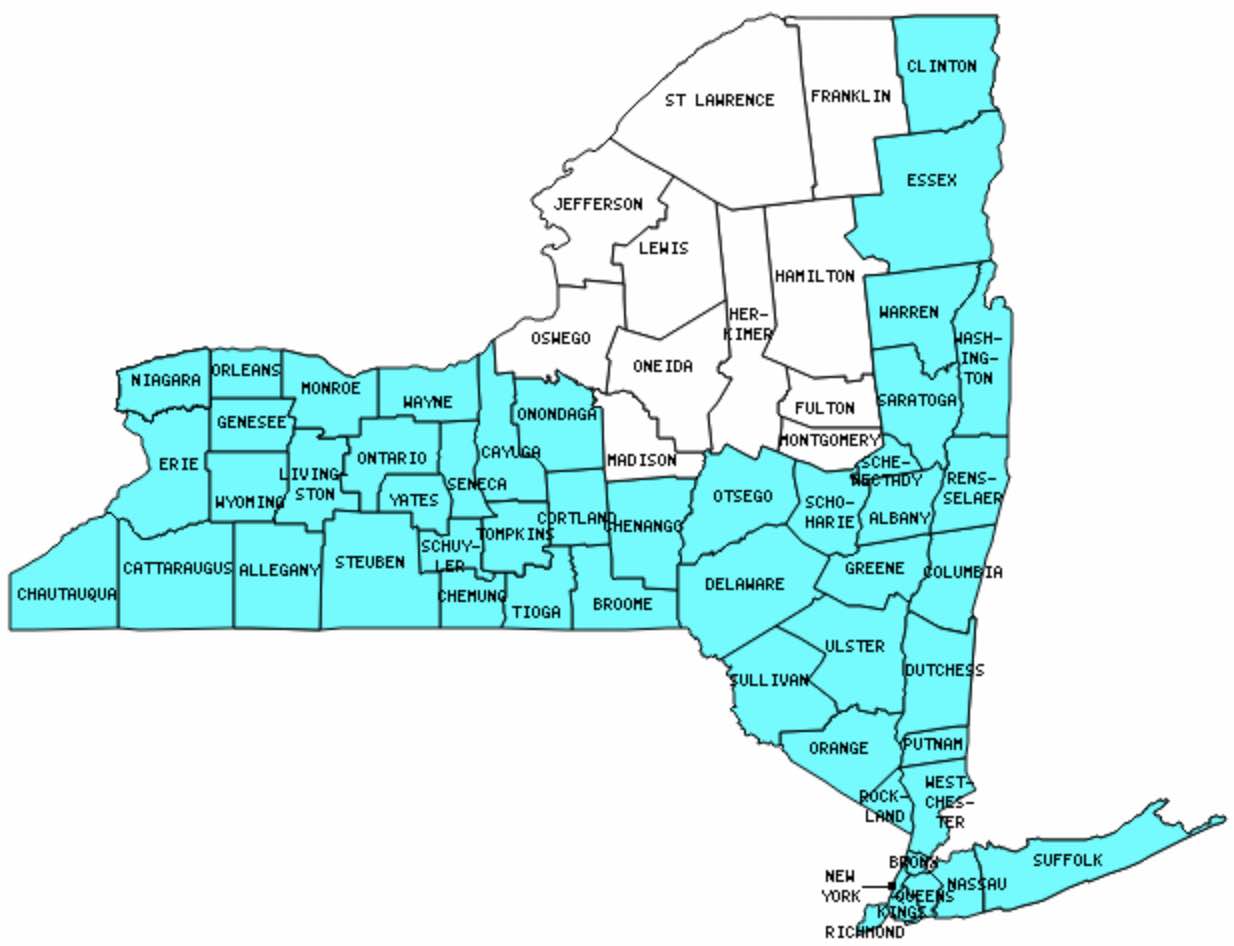
At the local level, county governments play a crucial role in providing essential services, managing infrastructure, and fostering community development. This decentralized structure allows for tailored approaches to local needs and priorities, contributing to a strong sense of local identity and pride within each county. Whether it’s a bustling urban center or a quiet rural town, the spirit of community is palpable, driven by the shared experiences and unique characteristics of each of New York‘s 62 counties.
LifeOutOfTheBox is a participant in the Amazon Services LLC Associates Program, an affiliate advertising program designed to provide a means for sites to earn advertising fees by advertising and linking to Amazon.com. Amazon, the Amazon logo, AmazonSupply, and the AmazonSupply logo are trademarks of Amazon.com, Inc. or its affiliates. As an Amazon Associate we earn affiliate commissions from qualifying purchases.