
The evolution of the hospitality industry has transitioned from quaint roadside inns to massive, self-contained metropolises. Today, the world’s largest hotels are no longer just places to rest; they are architectural marvels, entertainment hubs, and administrative triumphs that house thousands of guests simultaneously. When we examine the scale of these establishments, we look beyond mere room counts to the complexity of their suites, the breadth of their amenities, and the sheer logistical precision required to keep them operational. This exploration into the giants of the industry reveals how cities like Las Vegas and regions like Southeast Asia have redefined the concept of a mega-resort.
The Epicenters of Grandeur: Las Vegas and Beyond
For decades, the United States has been home to some of the most expansive hotel complexes on the planet, specifically within the state of Nevada. The concentration of massive resorts in a single corridor has created a unique ecosystem where size is a primary competitive advantage.
The Venetian and The Palazzo Complex
Standing as a testament to the maximalist philosophy of Las Vegas, the combined complex of The Venetian and The Palazzo represents one of the largest hotel operations in the world. With over 7,000 keys, this destination is unique because every single room is a suite. Unlike standard hotel rooms, these suites offer sunken living areas, marble-clad bathrooms, and multiple televisions, ensuring that the guest experience remains luxurious despite the massive volume of visitors.
The design of the resort takes inspiration from Italy, specifically the romantic architecture of Venice. Beyond the rooms, the complex houses a massive shopping mall with indoor canals, dozens of world-class restaurants, and several pool decks. Managing such a property requires an army of staff and a sophisticated reservation system that can handle thousands of check-ins and check-outs daily without compromising the high-end feel.
MGM Grand Las Vegas
Once the undisputed king of size, the MGM Grand Las Vegas remains a titan in the industry. Known for its iconic emerald-green glass and its ties to the golden age of Hollywood, the main building alone contains over 5,000 rooms. When including the adjacent towers and the signature suites, the count climbs even higher.
The MGM Grand Las Vegas is essentially a city within a city. It features a sprawling casino floor that is among the largest in the world, a massive arena for concerts and sporting events, and a complex pool system that includes a lazy river. For those seeking even higher levels of exclusivity within the giant, the resort offers “Skylofts,” which are two-story boutique suites located at the top of the building, providing a “hotel-within-a-hotel” experience that caters to high-net-worth individuals.
CityCenter and the Modern Urban Resort
A more modern approach to the mega-hotel concept can be seen in the CityCenter complex. This development was one of the largest privately funded construction projects in history. It includes the Aria Resort & Casino, which serves as the centerpiece with its 4,004 rooms featuring advanced smart-room technology.
Adjacent to the Aria Resort & Casino is the Vdara, a non-gaming, all-suite hotel that offers a more tranquil atmosphere within the bustling complex. The Waldorf Astoria Las Vegas also occupies a portion of this space, adding a layer of ultra-luxury to the high-density environment. The CityCenter model shows how multiple brands can coexist in a single massive footprint to capture different segments of the market.
Southeast Asia’s Record-Breaking Establishments
While Las Vegas dominates the list by volume of properties, the title of the absolute largest hotel in the world currently belongs to Malaysia.
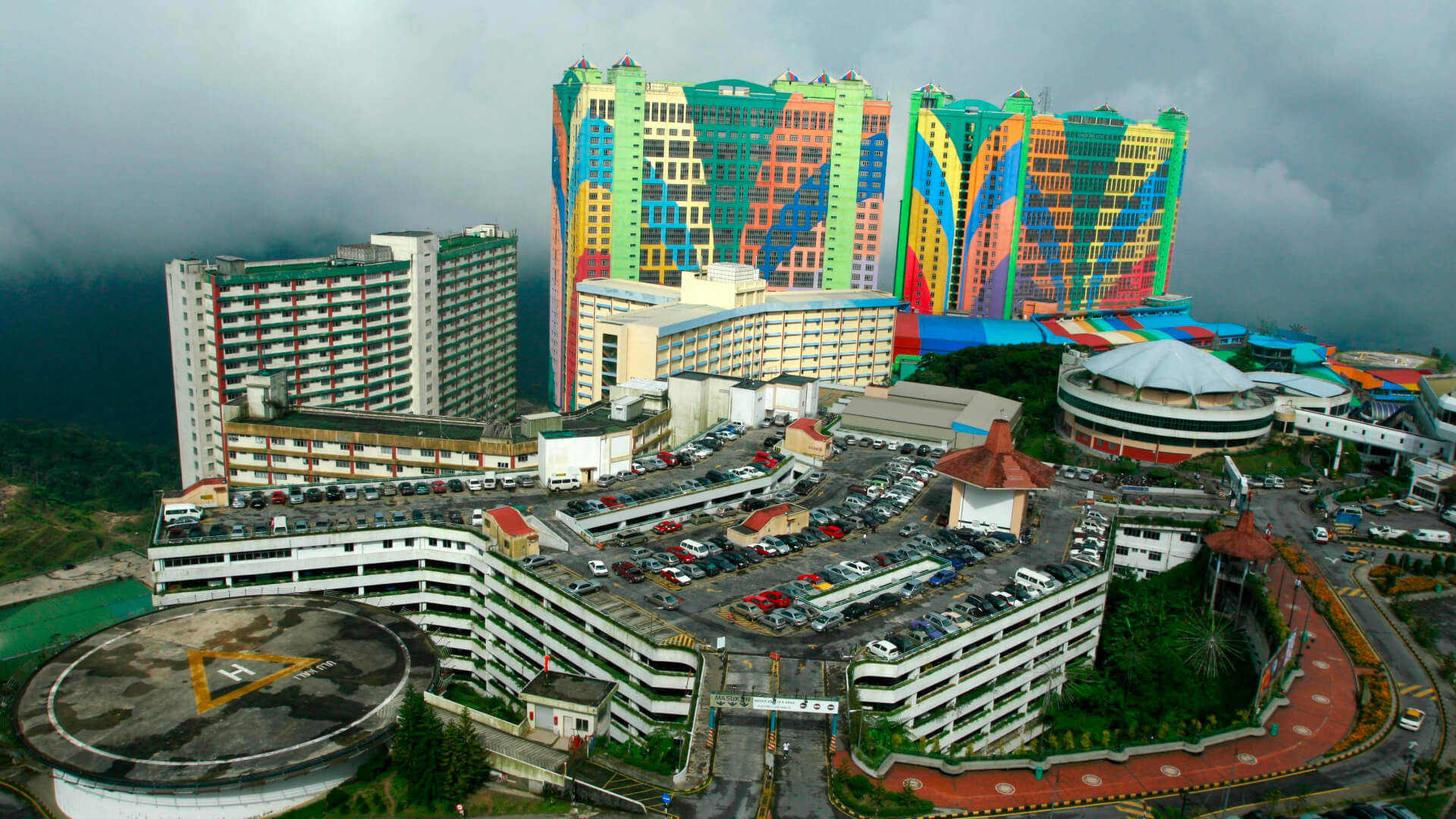
First World Hotel in Genting Highlands
Located in the Genting Highlands of Pahang, the First World Hotel holds the Guinness World Record for the most rooms. With 7,351 rooms spread across two brightly colored towers, it is a marvel of high-density hospitality. The hotel is situated within a massive resort complex that includes theme parks, shopping malls, and casinos, all perched on a mountain peak.
The First World Hotel focuses on efficiency. To manage its massive influx of guests, it pioneered the use of automated check-in kiosks and streamlined room layouts. While the rooms are generally more functional than those in the United States counterparts, the sheer scale of the operation is unparalleled. The resort serves as a major hub for tourism in Malaysia, catering to both domestic travelers and international visitors looking for entertainment in a cooler mountain climate.
Ambassador City Jomtien in Pattaya
In Thailand, the Ambassador City Jomtien in Pattaya stands as one of the largest beach resorts globally. With approximately 4,210 rooms, it is divided into several wings, each offering different price points and views of the Gulf of Thailand.

This property is a prime example of a self-contained resort. It features massive convention spaces, multiple Olympic-sized swimming pools, and extensive sports facilities. The Ambassador City Jomtien caters heavily to large tour groups and corporate events, proving that size is a significant asset when hosting massive international delegations.
Defining Features of the World’s Largest Resorts
Building a hotel with thousands of rooms requires more than just bricks and mortar; it requires a specialized approach to design and amenities.
Luxury Suites and Diverse Room Categories
One of the challenges of these massive hotels is preventing the guest from feeling like just a number. To combat this, resorts like Wynn Las Vegas and its sister property, Encore Las Vegas, focus on high-end finishes and diverse room categories.
At the Luxor Las Vegas, the iconic pyramid shape inspired by Egypt houses “inclinator” elevators that travel at an angle. Despite its theme, the hotel offers everything from budget-friendly pyramid rooms to high-end suites in the neighboring towers. Similarly, Mandalay Bay and the Delano Las Vegas share a campus that provides guests with choices ranging from tropical-themed resort rooms to sophisticated, all-white boutique suites.
Comprehensive Amenities: Cities Within Cities
The largest hotels in the world must provide every conceivable service on-site to keep guests from needing to leave. This includes:
- Massive Convention Centers: Properties like the Excalibur Hotel and Casino and Caesars Palace utilize their footprint to host international trade shows.
- Extensive Culinary Programs: A hotel with 5,000 rooms might have 20 to 30 distinct dining outlets, ranging from casual food courts to Michelin-starred fine dining.
- Entertainment Venues: From the fountains of the Bellagio to the theater at Marina Bay Sands in Singapore, these hotels are destinations for world-class shows and nightlife.
The Logistics of Managing a Mega-Hotel
Operating a property of this scale is a feat of industrial engineering. When a hotel has over 5,000 rooms, the daily requirements are staggering.
Human Resources and Operations
A mega-hotel can employ between 5,000 and 10,000 people. This workforce includes not just front-desk staff and housekeepers, but also specialized engineers, florists, security teams, and data analysts. The laundry facilities alone at a property like the MGM Grand Las Vegas handle tens of thousands of pounds of linens every day.
Technological Innovations in Large-Scale Stays
To maintain efficiency, these hotels have turned to technology. Many now offer mobile check-in and digital keys, allowing guests to bypass the lobby entirely. Advanced building management systems control the climate and lighting in thousands of rooms simultaneously to reduce the environmental impact of such massive structures. In the Aria Resort & Casino, rooms are programmed to “wake up” when a guest enters, opening curtains and adjusting temperature, a necessary luxury that helps the property maintain a five-star rating despite its size.
Looking Forward: The Future of Global Mega-Hotels
The race for the title of “world’s largest” continues, with new projects constantly on the horizon.
Abraj Kudai in Saudi Arabia
The most anticipated project in this category is the Abraj Kudai in Mecca, Saudi Arabia. If completed as planned, this hotel would shatter all previous records with an estimated 10,000 rooms. The complex is designed to look like a desert fortress with 12 towers, multiple helipads, and a massive dome. It is intended to accommodate the millions of pilgrims who visit the city annually, showing that the demand for massive-scale accommodation is often driven by religious and cultural landmarks.

The Sustainability Challenge
As the industry moves forward, the focus for the world’s largest hotels is shifting from pure size to sustainability. Massive resorts are major consumers of water and energy. Future giants will likely be judged not just by their room counts, but by their ability to operate with a neutral carbon footprint. This evolution is already visible in Singapore and Las Vegas, where new builds are incorporating LEED certification and massive solar arrays.
In conclusion, the world’s largest hotels are triumphs of human ambition and organizational skill. Whether it is the suite-heavy luxury of The Venetian, the record-breaking room count of the First World Hotel, or the futuristic vision of Abraj Kudai, these structures represent the pinnacle of modern hospitality. They are more than just buildings; they are self-contained worlds that offer a glimpse into the future of how we travel and stay.
LifeOutOfTheBox is a participant in the Amazon Services LLC Associates Program, an affiliate advertising program designed to provide a means for sites to earn advertising fees by advertising and linking to Amazon.com. Amazon, the Amazon logo, AmazonSupply, and the AmazonSupply logo are trademarks of Amazon.com, Inc. or its affiliates. As an Amazon Associate we earn affiliate commissions from qualifying purchases.