
The Boston Marathon is not merely a race; it’s an iconic global event, a testament to athletic endurance, and for many, the ultimate bucket-list travel destination. Held annually on Patriots’ Day in Massachusetts, it draws runners and spectators from every corner of the world, transforming the city of Boston into a vibrant hub of excitement, celebration, and shared human spirit. The allure of crossing the finish line on Boylston Street is immense, but the road to Boston is paved with determination, rigorous training, and a fundamental prerequisite: meeting the stringent qualifying standards.
For aspiring participants, understanding these qualifying times is the first crucial step in planning what will undoubtedly be one of the most memorable travel experiences of their lives. Beyond the pursuit of a specific finish time, the journey to the Boston Marathon encompasses meticulous travel planning, securing ideal accommodation, and immersing oneself in the rich tourism and lifestyle offerings of a historic American city. This article will delve into the intricacies of qualifying for this prestigious event and guide you through transforming your athletic dream into an unforgettable travel adventure.
The Prestigious Path to Boylston Street: Understanding Boston Marathon Qualifying Standards
The Boston Marathon is unique among major marathons worldwide due to its strict entry requirements. Unlike a lottery system, entry is predominantly based on a runner’s ability to achieve a specific time in a certified marathon within a designated qualification window. This system ensures a highly competitive and skilled field, upholding the event’s legendary status.
The Age-Group System: A Tailored Challenge
The Boston Athletic Association (BAA), the race organizer, sets qualifying standards that vary significantly based on a runner’s age and gender. These standards are typically released well in advance of the registration period, allowing runners ample time to plan their qualifying attempts. The age group is determined by the runner’s age on the date of the Boston Marathon itself, not on the date of their qualifying race. This nuance is critical for those on the cusp of an age-group change.
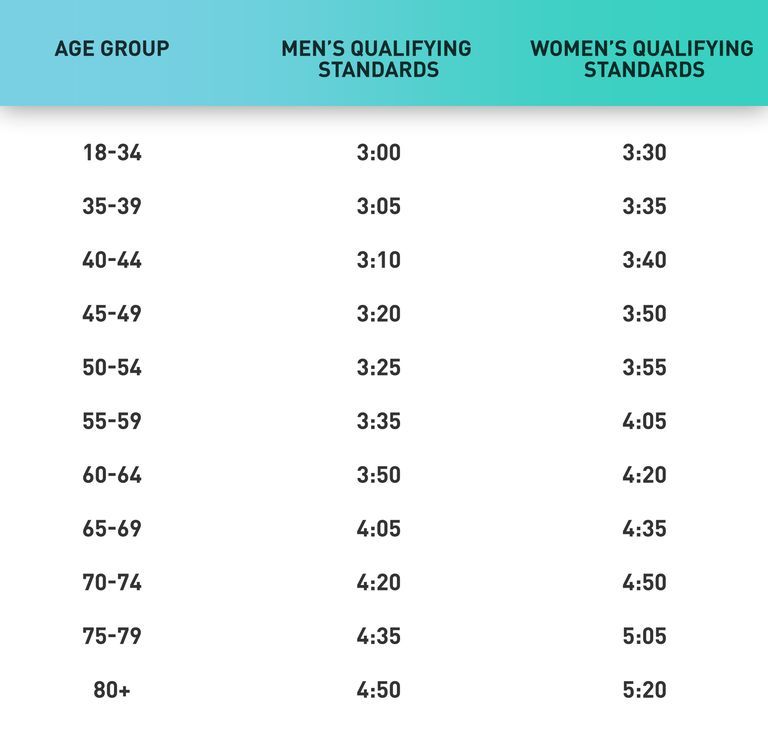
To illustrate, here’s a general overview of the qualifying times for recent editions of the Boston Marathon (it’s always crucial to check the official BAA website for the most current information, as standards can adjust slightly year to year):
-
Men:
- Ages 18-34: Generally require a marathon finish time of 3 hours and 0 minutes (3:00:00).
- Ages 35-39: The standard typically increases to 3 hours and 5 minutes (3:05:00).
- Ages 40-44: Runners aim for 3 hours and 10 minutes (3:10:00).
- Ages 45-49: The target shifts to 3 hours and 20 minutes (3:20:00).
- Ages 50-54: A time of 3 hours and 25 minutes (3:25:00) is usually required.
- Ages 55-59: The benchmark is often 3 hours and 35 minutes (3:35:00).
- Ages 60-64: A 3 hour and 50 minute (3:50:00) marathon finish is generally sought.
- Ages 65-69: The standard is typically 4 hours and 5 minutes (4:05:00).
- Ages 70-74: A 4 hour and 20 minute (4:20:00) marathon is required.
- Ages 75-79: The time becomes 4 hours and 35 minutes (4:35:00).
- Ages 80 and over: Runners aim for 4 hours and 50 minutes (4:50:00).
-
Women:
- Ages 18-34: Generally require a marathon finish time of 3 hours and 30 minutes (3:30:00).
- Ages 35-39: The standard typically increases to 3 hours and 35 minutes (3:35:00).
- Ages 40-44: Runners aim for 3 hours and 40 minutes (3:40:00).
- Ages 45-49: The target shifts to 3 hours and 50 minutes (3:50:00).
- Ages 50-54: A time of 3 hours and 55 minutes (3:55:00) is usually required.
- Ages 55-59: The benchmark is often 4 hours and 5 minutes (4:05:00).
- Ages 60-64: A 4 hour and 20 minute (4:20:00) marathon finish is generally sought.
- Ages 65-69: The standard is typically 4 hours and 35 minutes (4:35:00).
- Ages 70-74: A 4 hour and 50 minute (4:50:00) marathon is required.
- Ages 75-79: The time becomes 5 hours and 5 minutes (5:05:00).
- Ages 80 and over: Runners aim for 5 hours and 20 minutes (5:20:00).
It’s vital to note that these are minimum qualifying times. Due to the popularity of the Boston Marathon and field size limitations, the BAA often implements a “cut-off” time, meaning that runners may need to be faster than their age-group standard to gain entry. In recent years, runners have often needed to be several minutes under their standard to be accepted, making the qualification even more competitive.
The Qualification Window and Application Process
The window for achieving a qualifying time typically spans about 18 months prior to the next Boston Marathon. For example, to qualify for the April 2025 race, a runner might need to have run their qualifying marathon between September 2023 and September 2024. The official registration period usually opens in September of the year preceding the race (e.g., September 2024 for the April 2025 race) and lasts for a few days or weeks.
The application process is handled online through the BAA website. It’s a “rolling admission” system, meaning that the fastest qualifiers are typically accepted first. If the number of applicants exceeds the available field size, those with the fastest times relative to their age-group standard are given priority. Therefore, running significantly faster than the minimum standard greatly increases one’s chances of acceptance.
Crucially, qualifying races must be officially certified by USA Track & Field (USATF) or a foreign equivalent under the Association of International Marathons and Distance Races (AIMS). This ensures that the course distance is accurate and fair. Only full marathons (26.2 miles or 42.195 kilometers) count, and results from shorter distances or non-certified events are not accepted. The official results from the qualifying marathon must be verifiable online.
Beyond the Finish Line: Experiencing Boston as a Marathoner or Spectator
For many, the Boston Marathon is more than just a race; it’s a grand journey, a pilgrimage that involves significant travel, accommodation planning, and an opportunity to explore a city steeped in history and culture. Whether you’re an elite qualifier, a dedicated charity runner, or a passionate spectator, Marathon Weekend offers an unparalleled experience.
Strategic Stays: Finding Your Ideal Accommodation in Boston
Securing the right accommodation is paramount for a stress-free Marathon Weekend. Boston offers a diverse range of hotels, suites, and apartments, catering to various budgets and preferences. However, due to the immense popularity of the event, booking extremely early is not just recommended, it’s essential. Hotels in prime locations can sell out a year in advance.

- Back Bay & Copley Square: This area is highly sought after as it’s right at the finish line on Boylston Street and near the race expo. Luxury options like the Fairmont Copley Plaza, Mandarin Oriental, Boston, and Lenox Hotel offer unparalleled access but come with a premium price tag. The Boston Public Library and Trinity Church are also prominent landmarks here, adding to the historic ambiance.
- Seaport District: A modern, vibrant waterfront area offering newer hotels like the Omni Boston Hotel at the Seaport or the Hyatt Regency Boston. It’s a bit further from the finish line but easily accessible via public transport (the “T”) and offers excellent dining and entertainment options.
- Downtown Crossing & Financial District: Central and well-connected, these areas provide a mix of business and leisure hotels, often at slightly more competitive rates than Back Bay. The Omni Parker House is a historic gem here.
- Cambridge: Across the Charles River, Cambridge offers a vibrant academic atmosphere, home to Harvard University and Massachusetts Institute of Technology (MIT). Hotels here, such as the Hyatt Regency Cambridge, provide good value and are a short ride on the T to downtown Boston.
- Vacation Rentals: Platforms like Airbnb offer apartments and villas, which can be ideal for groups or families seeking more space and kitchen facilities. These also need to be booked far in advance.
Regardless of your choice, proximity to the subway (the “T”) is a significant advantage for navigating the city, especially during crowded Marathon Weekend.
Immersing in Boston’s Rich Culture and Landmarks
Beyond the marathon itself, Boston is a treasure trove of historical landmarks, world-class museums, and a vibrant culinary scene. For runners, the days leading up to the race are often a delicate balance of rest, carbohydrate loading, and exploring.
The Boston Marathon Expo at the Hynes Convention Center is a must-visit, not just for bib pickup but also for an immersive experience into the world of running gear, nutrition, and race history. Beyond that, the city beckons:
- History Buffs: Walk the iconic Freedom Trail, a 2.5-mile red-lined path that winds through 16 historically significant sites, including the Paul Revere House, Old North Church, Faneuil Hall, and the USS Constitution Museum. Explore the cobblestone streets of Beacon Hill with its charming row houses.
- Culture & Arts: Immerse yourself in the masterpieces at the Museum of Fine Arts or the unique collection at the Isabella Stewart Gardner Museum. Catch a show in the Theatre District or stroll through the Boston Common and the adjacent Public Garden, especially beautiful in springtime.
- Sports Enthusiasts: Take a tour of Fenway Park, home of the Boston Red Sox, an essential Boston landmark even if it’s not baseball season.
- Culinary Delights: Indulge in fresh New England seafood, particularly clam chowder and lobster rolls, at establishments along the Seaport or Faneuil Hall Marketplace. Explore the vibrant North End for authentic Italian food and delicious pastries.
The Race Day Spectacle: From Hopkinton to the Finish
Race day is a spectacle unlike any other. For runners, it begins with an early morning bus ride from Boston to the serene starting line in Hopkinton. The atmosphere at the Athletes’ Village is a mix of nervous energy and camaraderie, a testament to the shared journey of qualifying.
For spectators, mapping out strategic viewing spots is key to experiencing the marathon’s iconic moments:
- Wellesley College Scream Tunnel (Mile 13): A legendary section where Wellesley students line the road, offering loud cheers and even kisses to passing runners. It’s an electrifying experience for participants and a lively spot for spectators.
- Heartbreak Hill (Mile 20-21 in Newton): Part of the famous “Newton Hills,” this is where the race truly tests a runner’s mental and physical fortitude. Watching runners conquer this incline is incredibly inspiring. The atmosphere is intense, with crowds urging every participant forward.
- Boston College (Mile 21-22): Just after Heartbreak Hill, the energy from Boston College students provides a massive boost as runners begin their descent towards the city.
- Kenmore Square (Mile 25): With Fenway Park nearby, this area offers a buzzing, electric atmosphere as runners know the finish line is within reach.
- Boylston Street (Finish Line): The ultimate destination. While finding a prime spot close to the finish line can be challenging due to crowds and security, the sheer elation and emotional culmination of the race are palpable. Viewing from nearby areas on Commonwealth Avenue or Beacon Street can also provide fantastic views of runners making their final push.
The entire course, from the picturesque New England towns to the bustling city streets, is lined with millions of cheering fans, creating an atmosphere of unparalleled enthusiasm and support that embodies the spirit of Boston.
The Journey Continues: Training, Travel Planning, and the Spirit of the Marathon
The Boston Marathon experience is a holistic one, extending far beyond the 26.2 miles on race day. It integrates athletic discipline with the joys of travel and cultural immersion, defining a unique lifestyle pursuit.
The Long Road to Boston: Training as a Lifestyle
Qualifying for Boston requires unwavering dedication over months, often years. It’s a testament to a lifestyle choice that prioritizes health, perseverance, and goal-setting. For many, the training journey itself becomes an opportunity for “lifestyle travel,” participating in destination races in scenic locations or planning training runs around picturesque holiday spots. This approach transforms rigorous preparation into an enjoyable part of a broader travel and wellness journey, making the pursuit of that qualifying time an adventure in itself. Each long run, each speed workout, is a step closer to the dream of Boston.

Practical Travel Tips for Marathon Weekend
Careful planning ensures that your travel logistics are as smooth as your race execution (or spectator experience).
- Flights: Book your flights into Boston Logan International Airport (BOS) well in advance. Airfares can skyrocket closer to Marathon Weekend.
- Transportation: Boston has an efficient public transportation system (the “T”), which is often the best way to get around the city, especially with road closures and heavy traffic during the marathon. Consider purchasing a multi-day pass. Ride-sharing services are also available but can experience surges in pricing and availability issues during peak times.
- Dining: Make dinner reservations, especially for the night before the race, if you have a specific restaurant in mind. Many establishments cater to runners with special pre-race menus.
- Weather: Boston in April can be unpredictable, ranging from warm and sunny to cold and rainy. Pack layers, waterproof gear, and be prepared for various conditions.
- Hydration and Nutrition: For runners, stick to your tried-and-true pre-race nutrition plan. Familiarize yourself with aid station offerings. For spectators, carry water and snacks, as it can be a long day of standing and cheering.
The entire experience, from the moment you book your flight and accommodation to the electrifying race day and the celebratory aftermath, is interwoven with travel, tourism, and lifestyle choices.
The Boston Marathon remains one of the most revered events in the world of running and a compelling destination for travelers. Achieving the qualifying times is a monumental athletic accomplishment, but the journey to Boston itself is an equally rich and rewarding adventure. It’s an opportunity to experience an iconic American city, immerse yourself in its history and culture, and be part of a global celebration of human spirit and endurance. Whether you’re running or cheering, the Boston Marathon offers a travel experience that truly stands out.
LifeOutOfTheBox is a participant in the Amazon Services LLC Associates Program, an affiliate advertising program designed to provide a means for sites to earn advertising fees by advertising and linking to Amazon.com. Amazon, the Amazon logo, AmazonSupply, and the AmazonSupply logo are trademarks of Amazon.com, Inc. or its affiliates. As an Amazon Associate we earn affiliate commissions from qualifying purchases.