
New York City, a metropolis synonymous with ambition and vertical aspiration, boasts a skyline that is both iconic and ever-evolving. For centuries, this bustling urban landscape has been a canvas for architectural marvels, pushing the boundaries of engineering and design. From the early days of steel-frame construction to the gleaming supertalls of the 21st century, the city’s towering structures are not merely buildings; they are potent symbols of innovation, economic power, and the enduring spirit of the United States. If you’re planning a visit to the Big Apple, understanding its most imposing edifices is a crucial part of appreciating its unique character and rich history.

The quest to build higher has always been a defining characteristic of New York City. This drive is fueled by a combination of factors: limited land, the prestige associated with height, and the desire to create spaces that accommodate a growing population and thriving businesses. These skyscrapers are more than just their physical dimensions; they are centers of commerce, residential hubs, and, for many visitors, significant tourist attractions offering unparalleled views of the surrounding urban expanse.
This article delves into the fascinating world of New York City‘s tallest buildings, exploring not only their impressive statistics but also their architectural significance, historical context, and the experiences they offer. Whether you’re a fervent architecture enthusiast, a curious traveler seeking the best viewpoints, or simply someone captivated by the sheer scale of human achievement, this guide will illuminate the vertical landscape of one of the world’s most dynamic cities.
Ascending to Greatness: The Reigning Giants of the NYC Skyline
The New York City skyline is a dynamic entity, constantly reshaped by new constructions. While the definition of “tallest” can sometimes be debated (based on spire height, occupied floor, or roof height), there’s a general consensus on the top contenders that dominate the visual panorama. These buildings are not just feats of engineering; they are often integrated into the city’s fabric, housing offices, residences, hotels, and retail spaces, making them vital components of New York City life.
The Apex Predators: Unveiling the Top Tier
The competition for the title of the tallest building in New York City has been fierce and enduring. Historically, structures like the Empire State Building and the Chrysler Building held sway, their art deco spires etching themselves into the global consciousness. However, the modern era has seen a new generation of supertalls rise, redefining the city’s vertical limits.
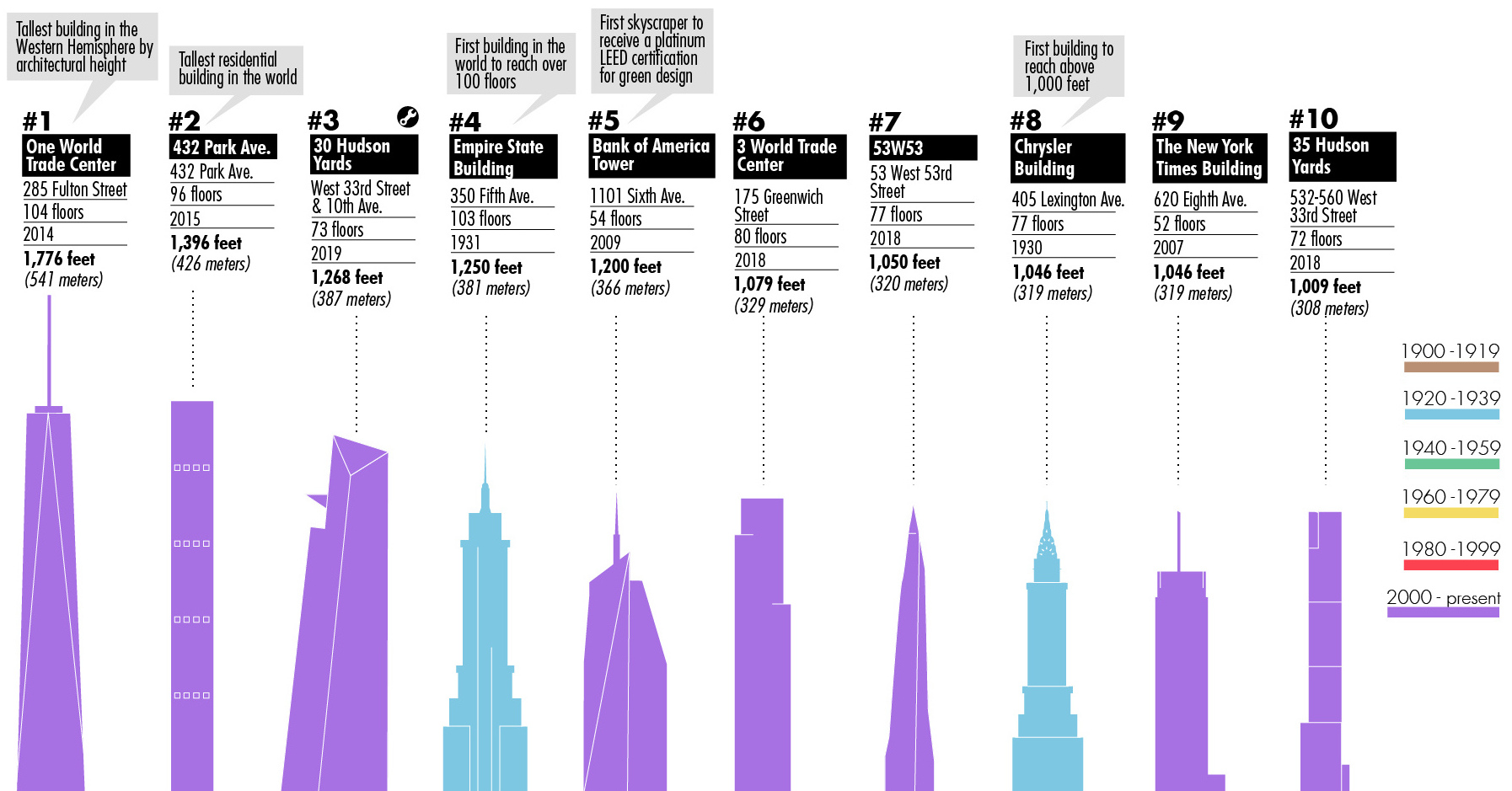
One World Trade Center, standing at a symbolic 1,776 feet (541.3 meters), is currently the undisputed king of the New York City skyline. This monumental structure, located at the site of the former World Trade Center complex, is more than just its height; it is a testament to resilience, remembrance, and rebirth. Its design, a collaboration between architect David Childs and the firm Skidmore, Owings & Merrill, is both innovative and deeply meaningful. The building’s base is a reinforced concrete structure, providing security and stability, while its upper sections are clad in glass and steel, reflecting the sky and the surrounding cityscape. The 1,776-foot height is a deliberate nod to the year the United States Declaration of Independence was signed, imbuing the building with profound patriotic significance. Visitors can experience breathtaking panoramic views from the One World Observatory, located on the 100th, 101st, and 102nd floors, offering a 360-degree vista that stretches for miles on clear days.
Following closely in height is Central Park Tower, a residential skyscraper that pierces the sky at approximately 1,550 feet (472 meters). Located along Billionaires’ Row on West 57th Street, this imposing structure offers some of the most exclusive and luxurious residential living in New York City. Its design by Adrian Smith + Gordon Gill Architecture is characterized by its slender profile and elegant facade. The building is topped by a striking crown and features a distinctive set of setbacks that create terraces and maximize light and views for its residents. While primarily residential, its immense height makes it a dominant feature of the skyline, visible from numerous vantage points across Manhattan.
Another significant contender is 111 West 57th Street, also known as Steinway Tower. This supertall skyscraper, designed by SHoP Architects, stands at approximately 1,428 feet (435 meters). It is renowned for its extreme slenderness, with a width-to-height ratio that makes it one of the thinnest residential towers in the world. Its facade is adorned with intricate terra cotta panels and bronze detailing, creating a sense of historical elegance that complements its ultra-modern structure. Like Central Park Tower, it offers a highly exclusive residential experience and contributes to the dramatic verticality of its neighborhood.
Historic Icons and Enduring Legacies
While newer titans have emerged, the historical giants of New York City‘s skyscraper era continue to captivate and inspire. These buildings represent pivotal moments in architectural history and remain beloved landmarks for both locals and tourists.
The Empire State Building, at 1,454 feet (443.2 meters) including its antenna, was once the world’s tallest building and held that title for nearly 40 years. Completed in 1931, this art deco masterpiece, designed by Shreve, Lamb & Harmon Associates, is an enduring symbol of New York City‘s ambition and resilience. Its distinctive silhouette, illuminated in various colors to commemorate special occasions, is instantly recognizable. The building’s 86th-floor open-air observatory and the 102nd-floor enclosed observatory offer iconic views that have been cherished by millions of visitors. The experience of ascending to these observation decks is a quintessential New York City travel experience, often ranked among the top attractions for any visitor. The Empire State Building remains a vibrant hub of commercial activity and a testament to timeless design.
The Chrysler Building, with its distinctive art deco spire and gargoyles, stands at 1,046 feet (318.9 meters). Designed by William Van Alen, it was briefly the world’s tallest building before being surpassed by the Empire State Building. Its gleaming stainless-steel crown, inspired by automotive design, and its terraced setbacks are iconic. While its observation deck is no longer publicly accessible, its exterior is a constant source of admiration and a prime example of the glamour of early 20th-century New York City architecture. Many visitors seeking architectural inspiration make a point of seeing this gem.
Experiencing the Vertical City: Observation Decks and Architectural Marvels
The allure of New York City‘s tallest buildings extends beyond their physical stature. Many offer unique opportunities for visitors to experience the city from breathtaking heights, providing unparalleled perspectives and unforgettable memories. These observation decks are popular tourist attractions, drawing crowds eager to witness the urban sprawl from above.

Views from the Top: Observation Deck Experiences
The most direct way to appreciate the scale of New York City‘s tallest buildings is by visiting their observation decks. Each offers a distinct experience and a unique vantage point.
One World Observatory at One World Trade Center provides a state-of-the-art experience. The ascent itself is designed to be engaging, with interactive displays and multimedia presentations showcasing the history and construction of the building and the city. The observatory offers expansive 360-degree views, allowing visitors to identify famous landmarks like the Statue of Liberty, Central Park, and the bridges spanning the East River. The clarity of the views, especially on a clear day, is astounding.
For a more panoramic, less focused view of the city’s density, SUMMIT One Vanderbilt offers a multi-sensory journey. Located near Grand Central Terminal, this relatively new attraction features mirrored rooms and immersive art installations that play with light and reflection, creating a surreal and visually stunning experience. The views here are also spectacular, offering a different perspective on Midtown Manhattan.
While the observation deck of the Empire State Building is a classic, it continues to be a beloved choice for a reason. The open-air 86th-floor deck provides an authentic, wind-swept experience, allowing visitors to truly feel part of the city. The 102nd-floor observatory offers a more enclosed and climate-controlled view. Its enduring popularity speaks to its iconic status and the sheer magic of looking out over the city that never sleeps.
Architectural Styles and Innovation
The evolution of New York City‘s tallest buildings reflects shifts in architectural styles, construction technologies, and urban planning. From the ornate details of the art deco era to the sleek, minimalist designs of contemporary supertalls, each structure tells a story of its time.
The Art Deco period, which spanned the 1920s and 1930s, saw a boom in skyscraper construction. Buildings like the Chrysler Building and the Empire State Building are prime examples, characterized by their setbacks, decorative elements, and use of new materials like stainless steel and aluminum. These buildings were designed to impress, conveying a sense of opulence and progress.
The post-war era brought a shift towards International Style and modernism, with an emphasis on clean lines, glass facades, and open-plan interiors. While not always the tallest, buildings from this period often showcase innovative engineering and a focus on functionality.
The 21st century has ushered in the era of the supertall and megatall skyscrapers. Advancements in structural engineering, materials science, and wind-resistance technology have enabled architects to design buildings that reach unprecedented heights. The supertalls of today, such as One World Trade Center and Central Park Tower, are not just tall; they are often sophisticated marvels of engineering, incorporating sustainable design principles and advanced building systems. Their designs are often more slender and more focused on maximizing views and natural light, catering to a luxury market for both residential and commercial spaces.
Beyond the Height: The Impact and Future of NYC’s Vertical Landscape
The presence of these towering structures profoundly impacts New York City in numerous ways, shaping its identity, economy, and daily life. Understanding this impact provides a fuller appreciation of what makes the city so unique.
Economic and Cultural Significance
Tall buildings are often powerful engines of economic growth. They concentrate businesses, create jobs, and attract investment. The prestigious addresses offered by skyscrapers like those in Midtown Manhattan or the Financial District are highly sought after, contributing to the city’s status as a global financial capital. Furthermore, the residential spaces within these towers, particularly the luxury apartments, cater to a high-net-worth demographic, influencing the city’s real estate market and lifestyle.
Culturally, these buildings are more than just real estate; they are iconic symbols recognized worldwide. They appear in countless films, photographs, and works of art, becoming inextricably linked with the image of New York City. They inspire a sense of awe and wonder, drawing millions of tourists each year who come to marvel at their scale and architectural ingenuity. The presence of these landmarks contributes to New York City‘s vibrant cultural scene, offering a constant reminder of human ambition and creative spirit.
The Future of Sky-High Living and Working
The construction of tall buildings in New York City is far from over. The city’s continued growth and demand for space ensure that the skyline will keep reaching upwards. Future developments are likely to focus on even greater heights, more sustainable building practices, and integrating mixed-use functions to create vertical neighborhoods. Innovations in materials, construction techniques, and smart building technology will undoubtedly play a crucial role.
One can anticipate seeing buildings that are not only taller but also smarter, greener, and more adaptable to changing needs. This includes incorporating more green spaces within or around these structures, improving energy efficiency, and utilizing advanced technologies for climate control and resource management. The ongoing dialogue about urban density, sustainability, and the livability of supertall structures will continue to shape the future of New York City‘s vertical landscape. As the city evolves, so too will its iconic skyline, a testament to its enduring capacity for innovation and its relentless pursuit of the sky.
LifeOutOfTheBox is a participant in the Amazon Services LLC Associates Program, an affiliate advertising program designed to provide a means for sites to earn advertising fees by advertising and linking to Amazon.com. Amazon, the Amazon logo, AmazonSupply, and the AmazonSupply logo are trademarks of Amazon.com, Inc. or its affiliates. As an Amazon Associate we earn affiliate commissions from qualifying purchases.