
Texas, a state renowned for its vast landscapes, rich history, and independent spirit, is also a significant hub for military installations. These Army bases serve critical roles in national defense, training, and supporting the troops who dedicate their lives to service. For those considering relocation, visiting family, or simply exploring the diverse facets of the Lone Star State, understanding the presence and function of these military communities offers a unique perspective on Texas.
Major Army Installations Across Texas
The sheer size of Texas means it hosts some of the largest and most strategically important Army posts in the United States. These bases are not just points on a map; they are vibrant communities with distinct histories, purposes, and impacts on the surrounding civilian populations. Exploring these installations reveals a significant layer of Texas’s identity and its integral role in the U.S. military infrastructure.
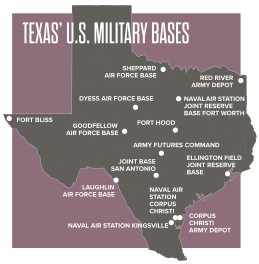
Fort Hood: The Great Place
Perhaps the most widely recognized Army installation in Texas, Fort Hood is a colossal military post situated near Killeen. Renowned as “The Great Place,” it is home to the 1st Cavalry Division and the 3rd Cavalry Regiment, among other significant units. Its immense size and the diverse array of combat and support units stationed here make it a crucial training ground and power projection platform. The base encompasses over 214,000 acres, providing ample space for large-scale training exercises.
History and Significance
Established in 1942, Fort Hood has played a pivotal role in numerous conflicts, from World War II to operations in Iraq and Afghanistan. Its strategic location in Central Texas allows for rapid deployment and extensive training capabilities. The post’s infrastructure includes extensive training ranges, maneuver areas, and facilities supporting a wide range of military occupational specialties. The economic impact of Fort Hood on the surrounding communities, including Killeen, Harker Heights, and Copperas Cove, is substantial, making it a cornerstone of the regional economy. Visitors to the Killeen area will find a community deeply intertwined with the presence of the base, offering a unique blend of civilian and military life.
Fort Bliss: Bordering El Paso
Located in the arid expanse of West Texas, adjacent to the city of El Paso, Fort Bliss is one of the largest and most important installations in the U.S. Army. It is home to the 1st Armored Division, the largest armored division in the U.S. Army, and significant elements of the U.S. Air Force and U.S. Army Reserve. The base covers over 1.12 million acres, making it the second-largest Army installation in the United States by area. This vastness is essential for conducting large-scale armored and combined-arms training exercises in a desert environment, simulating conditions found in many operational theaters.
Strategic Importance and Training
Fort Bliss’s proximity to the U.S.-Mexico border also lends it a strategic importance in border security and joint operations. The training conducted here is rigorous and realistic, preparing soldiers for a wide array of combat scenarios. The installation boasts extensive facilities, including live-fire ranges, maneuver areas, and sophisticated simulation centers. For those interested in the history of military technology and strategy, Fort Bliss offers insights into modern armored warfare. The base also plays a vital role in the El Paso community, contributing significantly to the local economy and cultural landscape.
Camp Bullis and Joint Base San Antonio
While not a standalone Army base in the same vein as Fort Hood or Fort Bliss, Camp Bullis is a critical training facility that falls under the umbrella of Joint Base San Antonio (JBSA). JBSA itself is a vast complex that includes three main installations: Fort Sam Houston, Lackland Air Force Base, and Randolph Air Force Base. Camp Bullis, located north of San Antonio, provides invaluable training land for various branches of the military, including the Army.
Training Ground for the Future
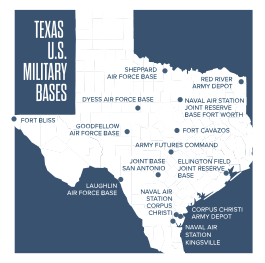
Camp Bullis offers extensive maneuver areas, firing ranges, and field training sites essential for preparing soldiers for deployment. Its diverse terrain supports a wide range of training exercises, from small-unit tactics to larger-scale operations. The integration of Camp Bullis into JBSA highlights the collaborative nature of modern military operations and the efficiency gained by consolidating resources and support functions. For individuals visiting or living in the San Antonio area, understanding the role of these military installations provides context for the region’s importance in national defense.
Red River Army Depot
Located in North Texas, near the town of New Boston, the Red River Army Depot (RRAD) is a crucial facility for the maintenance, repair, and overhaul of Army vehicles and equipment. It is one of the largest industrial facilities in the region, employing a significant number of civilians and military personnel.
Industrial Might and Logistics
RRAD’s primary mission revolves around providing readiness support for the U.S. Army’s fleet of vehicles, including tactical wheeled vehicles, armored vehicles, and other critical equipment. Its capabilities in logistics, repair, and modernization ensure that the Army’s materiel is ready for deployment at a moment’s notice. The depot’s operations are vital for maintaining the operational effectiveness of Army units worldwide. For those interested in military logistics and industrial operations, RRAD represents a significant aspect of the Army’s sustainment capabilities.
Defense Distribution Depot San Antonio (DDSA)
Another key logistical hub, the Defense Distribution Depot San Antonio (DDSA) is part of the Defense Logistics Agency (DLA). While not exclusively an Army base, it plays an indispensable role in supporting all branches of the U.S. military, including the Army, by managing and distributing a vast array of supplies and equipment.
The Backbone of Supply Chains
DDSA is responsible for storing, managing, and distributing everything from spare parts and clothing to medical supplies and food. Its strategic location in San Antonio allows it to efficiently serve military installations and operational units across the southeastern United States and beyond. The efficiency and effectiveness of depots like DDSA are paramount to the successful execution of military missions. Understanding the role of such installations highlights the complex logistical network that underpins military readiness.
Beyond the Major Posts: Specialized Facilities and Training Areas
While the aforementioned bases represent the largest and most prominent Army installations in Texas, the state also hosts a variety of smaller, specialized facilities and training areas. These sites, though less visible, are equally vital to the Army’s overall mission.
Small Unit Training and Reserve Components
Texas’s extensive geography and favorable climate make it an ideal location for various smaller training sites and facilities that support Reserve and National Guard units. These often overlooked installations provide crucial local training opportunities, reducing the need for extensive travel for many service members. They are integral to maintaining readiness at the local level and integrating civilian soldiers into the broader defense apparatus.

Impact on Local Communities and Travel
The presence of these Army bases has a profound and multifaceted impact on the surrounding Texas communities. Beyond the significant economic contributions through employment and local spending, military installations foster a unique cultural dynamic. Many towns and cities near bases have adapted to accommodate military families, offering services, housing, and community events that cater to the military population.
For travelers, understanding the presence of these bases can enrich their experience of Texas. Visiting towns near Fort Hood, for instance, offers a glimpse into a community shaped by its military demographic. Local restaurants, shops, and historical sites may reflect the influence of military culture. Furthermore, for those with friends or family serving at these installations, knowledge of their locations and functions is essential for planning visits and understanding their daily lives. The sheer scale of these installations also means they often encompass natural areas and historical landmarks that are unique to their military purpose, offering a different perspective on exploration within the Lone Star State. Whether it’s the vast training grounds of Fort Bliss or the industrial might of Red River Army Depot, Texas’s Army bases are integral components of its landscape and its national defense strategy.
LifeOutOfTheBox is a participant in the Amazon Services LLC Associates Program, an affiliate advertising program designed to provide a means for sites to earn advertising fees by advertising and linking to Amazon.com. Amazon, the Amazon logo, AmazonSupply, and the AmazonSupply logo are trademarks of Amazon.com, Inc. or its affiliates. As an Amazon Associate we earn affiliate commissions from qualifying purchases.