
Have you ever checked into a luxury suite at the Ritz-Carlton or spent a weekend at the Four Seasons Hotel and wondered why the bed feels like a cloud? That crisp, immaculate, hotel-white aesthetic is not an accident. It is the result of decades of textile engineering, rigorous laundering protocols, and heavy investment in high-end hospitality amenities. Replicating that exact sleep experience at home is a common quest for travelers who fall in love with their hotel room’s bedding.
Understanding what bed sheets hotels use requires looking beyond simple thread counts. It involves examining fabric types, weaves, sourcing practices, and the commercial laundering durability that keeps luxury hospitality sheets looking pristine through hundreds of industrial washes.
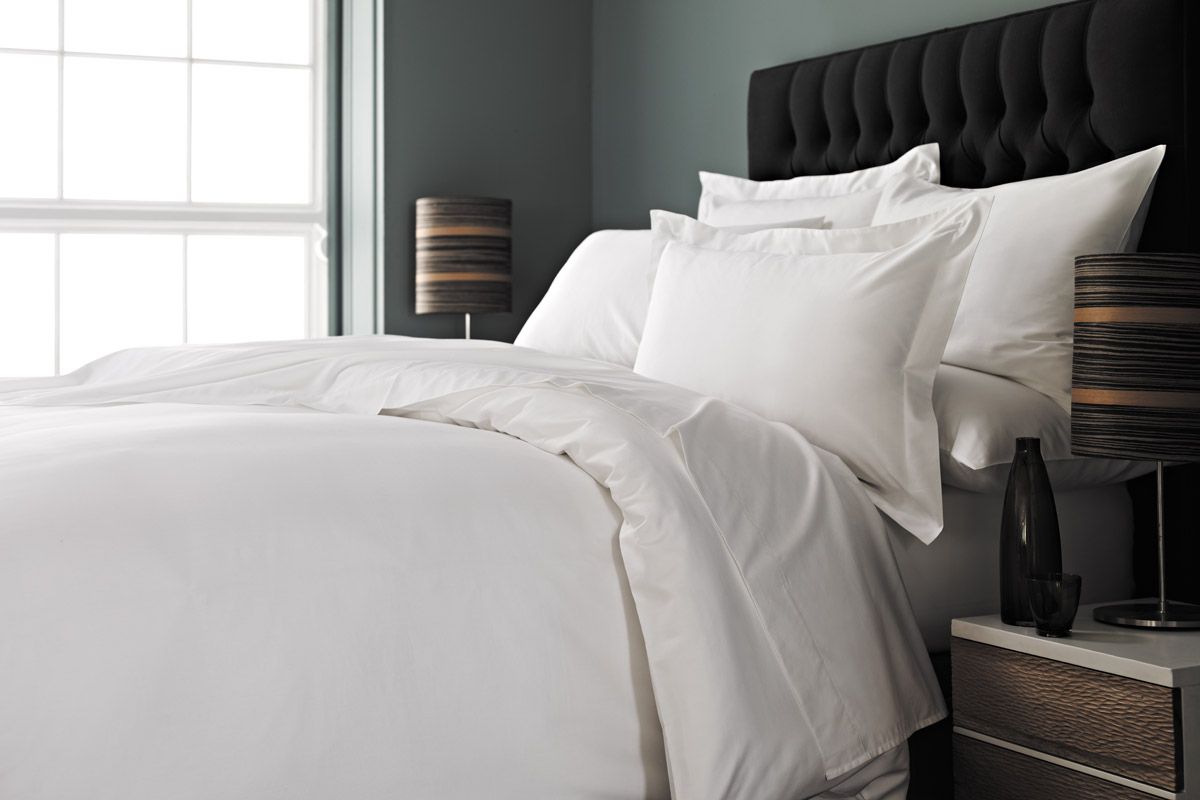
The Fabric Secrets: Why Cotton Reigns Supreme
When investigating hotel bed linens, the primary material choice is almost universally cotton. While synthetic blends like polyester-cotton (poly-cotton) are sometimes used in budget motels because of their wrinkle resistance and low cost, top-tier luxury hotels avoid them entirely.
Long-Staple and Extra-Long-Staple Cotton
Luxury properties such as those managed by Marriott International or Hilton Worldwide prioritize cotton fibers known as long-staple (LSC) or extra-long-staple (ELSC). These categories include renowned variants like Egyptian cotton and Pima cotton.
- Durability: Longer fibers mean fewer fiber ends are exposed, which drastically reduces pilling and tearing over time.
- Softness: The longer the individual fiber, the smoother and silkier the resulting yarn feels against the skin.
- Breathability: Natural cotton allows for superior airflow, regulating body temperature throughout the night—a critical factor for guests with varying comfort preferences.
The Truth About Thread Count
Marketing campaigns from big-box retailers have long conditioned consumers to believe that a higher thread count always equates to a better sheet. However, the hospitality industry operates under a different philosophy.
Most luxury hotels utilize sheets with a thread count ranging between 300 and 600. Going higher than 600 often requires multi-ply yarns that actually make the fabric heavier, less breathable, and more prone to trapping heat. Hotels prefer a moderate thread count woven from superior-grade yarn because it strikes the ideal balance between silkiness, weight, and commercial durability.
Weave Styles: Percale vs. Sateen
Not all cotton sheets feel the same, and hotels strategically choose their weave based on the brand identity and the climate of the property. The two primary weaves found in commercial hospitality are percale and sateen.
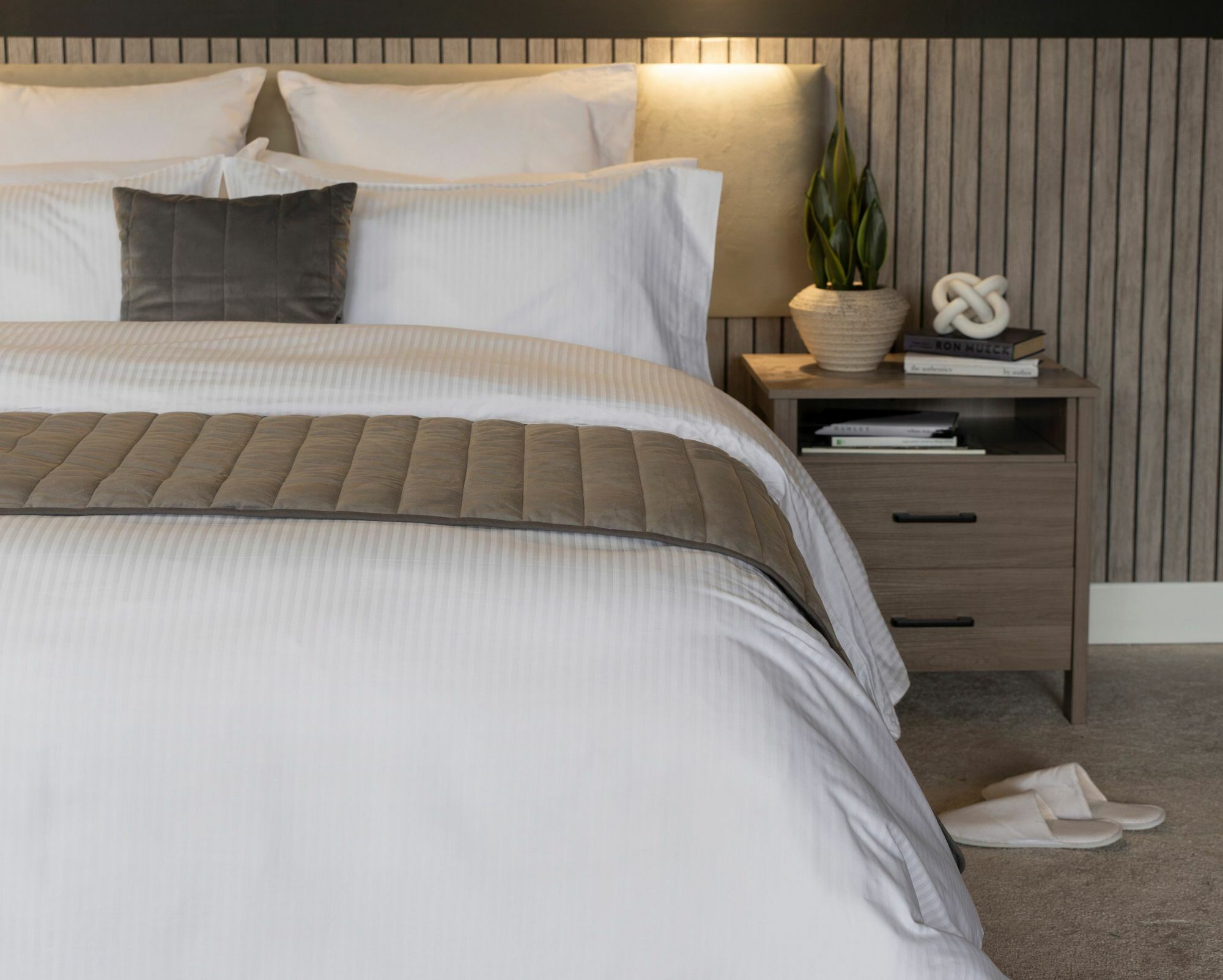
Crisp and Cool: The Percale Weave
If you prefer a sheet that feels crisp, matte, and cool to the touch—reminiscent of a freshly laundered button-down shirt—you are experiencing a percale weave.
- Structure: Percale uses a simple one-over, one-under grid pattern.
- Application: Properties in warmer destinations like the Ritz-Carlton, Grand Cayman or boutique coastal resorts often favor percale for its exceptional breathability and cooling properties.
Smooth and Luminous: The Sateen Weave
If your hotel bed felt exceptionally silky with a subtle, luxurious sheen and a heavier drape that hugs the body, it was likely a sateen weave.
- Structure: Sateen utilizes a one-under, three-or-four-over pattern, which brings more thread surface to the top of the fabric.
- Application: Urban luxury icons like the Mandarin Oriental, New York or the Peninsula Paris frequently opt for sateen to deliver a decadent, cocoon-like sleeping environment.
Commercial Laundering and the All-White Aesthetic
One of the greatest mysteries for guests is how hotels keep their sheets blindingly white despite heavy use, spills, and constant turnover. The secret lies in a combination of textile selection, commercial-grade chemical treatments, and the psychological impact of the color white.
Why White?
The ubiquitous white bed sheet is a relatively modern hospitality standard pioneered largely by legendary properties like The Westin St. Francis in San Francisco. Before this shift, colored and patterned sheets were common because they hid stains.
However, in 2000, Westin introduced the “Heavenly Bed,” featuring an all-white palette. The reasoning was twofold:
- Perception of Cleanliness: White visually communicates absolute purity and rigorous sanitation. Guests subconsciously equate white linen with a sterile, deeply cleaned sleep surface.
- Laundering Efficiency: White sheets can be washed with industrial-strength bleach and optical brighteners without the risk of fading or color bleeding.
Industrial Laundering Tolerances
Consumer sheets bought at standard retail stores are designed to withstand home washing machines, which typically run gentle cycles. In contrast, hotel sheets are engineered to endure heavy-duty commercial washers and industrial tumble dryers running at extreme temperatures. Manufacturers construct institutional linens with reinforced stitching, secure hems, and pre-shrunk cotton to survive hundreds of aggressive commercial laundering cycles without losing structural integrity.
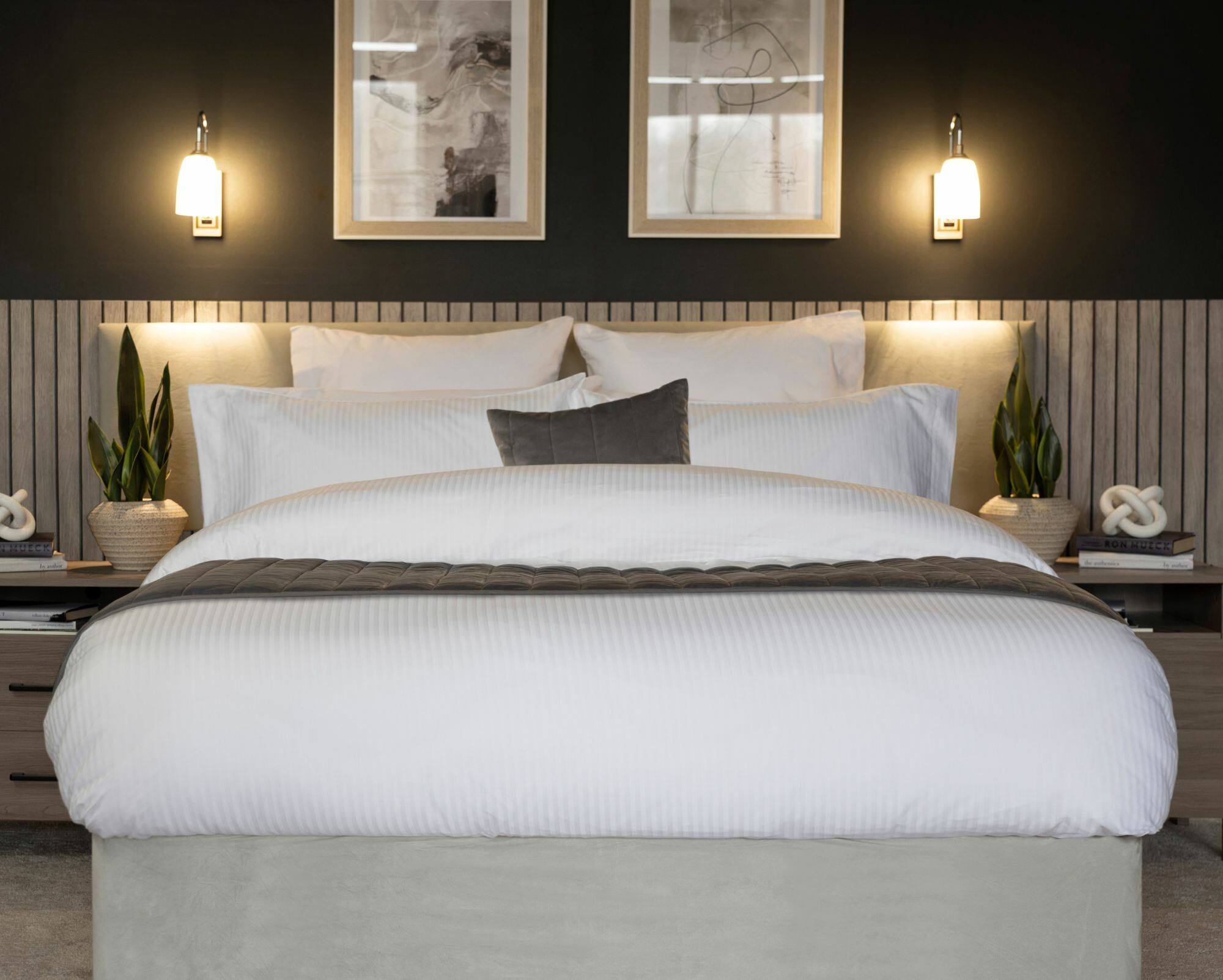
Buying Guide: How to Get Hotel-Quality Sheets at Home
Recreating the five-star hotel bed experience in your own bedroom requires looking past marketing gimmicks and focusing on specific commercial standards. When shopping for hotel-quality sheets, keep the following guidelines in mind:
- Check the Fiber Source: Look for 100% certified Egyptian, Pima, or Supima cotton. Avoid vague labels that simply say “cotton blend” or “microfiber” if your goal is true luxury comfort.
- Evaluate the Weave: Choose percale if you sleep hot and prefer a crisp, matte feel. Choose sateen if you prefer a heavier, silky drape with a slight sheen.
- Ignore Ultra-High Thread Counts Claims: Be skeptical of sheets boasting 1,000 to 1,500 thread counts. Stick to the sweet spot of 300 to 500 single-ply threads for optimal breathability and longevity.
- Invest in Sizing and Depth: Hotels use deep-pocket fitted sheets (often 15 inches or deeper) paired with oversized flat sheets and heavy mattresses. Ensure your home mattress depth matches your sheet pocket size so the corners never pop off mid-sleep.
By understanding the materials, weaves, and laundering standards utilized by world-class hospitality brands, you can transform your everyday bedroom into a luxurious sanctuary worthy of the finest travel destinations.
LifeOutOfTheBox is a participant in the Amazon Services LLC Associates Program, an affiliate advertising program designed to provide a means for sites to earn advertising fees by advertising and linking to Amazon.com. Amazon, the Amazon logo, AmazonSupply, and the AmazonSupply logo are trademarks of Amazon.com, Inc. or its affiliates. As an Amazon Associate we earn affiliate commissions from qualifying purchases.