
To ask what community defines New York City is to misunderstand the fundamental architecture of the metropolis. It is not a singular community; it is a sprawling, vertical archipelago of micro-societies, each governed by its own unspoken rules, culinary dialects, and rhythmic sensibilities. While the world views the city through the lens of Manhattan or the shimmering glass of Midtown, the true heartbeat of the city is found in the interstitial spaces where local culture dictates the flow of daily life.
The Mosaic of Boroughs: Beyond the Tourist Map
The structure of New York City is defined by its five boroughs, each functioning as a semi-autonomous cultural entity. To navigate them is to witness the evolution of urban identity.
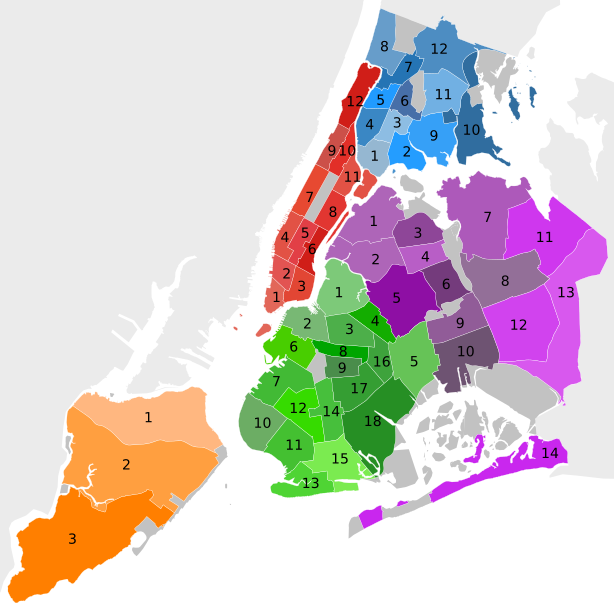
Brooklyn: The Renaissance of Neighborhoods
Brooklyn has successfully shed its secondary status to become a global brand of creative industry. From the brownstones of Brooklyn Heights to the industrial pulse of Williamsburg, the community here is anchored in a sense of curation. Residents prize local makers, artisanal coffee roasters, and repurposed warehouses that serve as hubs for the arts. The community pride in Brooklyn is rooted in a deliberate departure from the frenetic pace of Wall Street, favoring instead a lifestyle that values aesthetic integrity and neighborhood-scale interaction.
Queens: The Global Village
If New York City is the melting pot of the world, Queens is the stove. It is arguably the most linguistically diverse place on the planet. Here, community is defined by proximity to authentic, global cuisine and a shared immigrant experience. Walking through Jackson Heights, you are as likely to hear Tibetan as you are Spanish or English. The community cohesion here is built on the celebration of cultural heritage, where street festivals and food markets act as the primary forums for social exchange.
The Cultural Pulse: Where Locals Actually Live
For the visitor, it is easy to mistake landmarks for communities. However, the true residents of New York operate in a parallel reality to the tourist trail.
The Evolution of the Village
Greenwich Village once served as the bohemian epicenter for writers and artists. Today, its community is a blend of historic preservationists, affluent academics, and students from New York University. The “village” feel persists through its low-rise architecture and a refusal to modernize every storefront. It remains a community that values intellectual history, exemplified by the quiet corners of Washington Square Park, where the community gathers not for spectacle, but for the tradition of public assembly.
Harlem: Resilience and Heritage
Harlem stands as a testament to the power of cultural preservation. The community here is built upon a legacy of musical innovation, political activism, and religious institutions. While gentrification has reshaped parts of Upper Manhattan, the bedrock of the community remains firmly planted in the history of the Harlem Renaissance. Sunday mornings spent in the neighborhood’s historic churches or evenings at the Apollo Theater offer a glimpse into a community that prioritizes lineage and collective memory over the transient trends of the downtown scene.

The Anatomy of Urban Interaction
The “New York Community” is not defined by shared geography, but by shared inconvenience and the subsequent camaraderie it breeds.
The Transit Ecosystem
There is perhaps no greater unifying force in the city than the New York City Subway. While commuters may never speak to one another, they share a collective understanding of delay, navigation, and the social etiquette of the platform. This shared experience creates a unique form of “commuter community.” When the L Train breaks down or the A Train is redirected, the resulting frustration is a communal experience that briefly tears down the wall of anonymity typically prized by New Yorkers.
Public Spaces as Living Rooms
Because New York City apartments are notoriously compact, the city’s public spaces function as the true living rooms of the community. In Central Park, the social strata of the city collide. You will see fitness enthusiasts, dog walkers, and sunbathers sharing the same Great Lawn. In the summer months, these parks become the primary community center, proving that in this city, ownership of space is less important than the ability to claim a small patch of grass for an hour of respite.
Sustaining the City: The Future of Urban Living
As the city continues to grapple with the rising costs of living and shifting economic tides, the question remains: Can the distinct communities of New York survive the pressure of homogeneity?
The Preservation of Character
The pressure from corporate chains and luxury developments threatens to dilute the specific character of neighborhoods like The Lower East Side or Astoria. However, the resilience of New York lies in its fierce localism. Residents are often deeply invested in the survival of their local Bodega, their neighborhood independent bookstore, and their local parks. This protective instinct is the immune system of the city.

The Hybrid Identity
Ultimately, to be part of the New York community is to accept a hybrid identity. You are a resident of your block, a commuter on your specific subway line, and a consumer of your local food scene. You are simultaneously an inhabitant of the United States and a citizen of a global hub that transcends national boundaries.
The community of New York City is not a stagnant thing. It is a constantly moving, shifting, and re-negotiating set of relationships. It is found in the shared silence of a subway car, the chaotic energy of the Union Square greenmarket, and the quiet dignity of a brownstone stoop in Brooklyn Heights. It is a city that demands a lot from its residents—patience, resilience, and curiosity—but in return, it offers membership into one of the most vibrant, diverse, and enduring social experiments in history.
Whether one is sipping espresso in a West Village cafe or navigating the bustling markets of Chinatown, the essence of the city remains the same: an unwavering commitment to the idea that life is best experienced in the company of millions, all searching for their own quiet corner in the loudest, most brilliant city on earth.
LifeOutOfTheBox is a participant in the Amazon Services LLC Associates Program, an affiliate advertising program designed to provide a means for sites to earn advertising fees by advertising and linking to Amazon.com. Amazon, the Amazon logo, AmazonSupply, and the AmazonSupply logo are trademarks of Amazon.com, Inc. or its affiliates. As an Amazon Associate we earn affiliate commissions from qualifying purchases.