
The vast and diverse landscape of Texas is a tapestry woven with sprawling ranches, vibrant cities, and charming small towns. For travelers, explorers, and residents alike, understanding the geography of this expansive state is key to unlocking its full potential. Whether you’re planning a road trip through the Hill Country, seeking out the best barbecue in Central Texas, or simply trying to navigate your way to a new Airbnb, knowing your county is an essential piece of the puzzle. This guide will help you answer the ever-important question: “What county am I in [Texas]?”
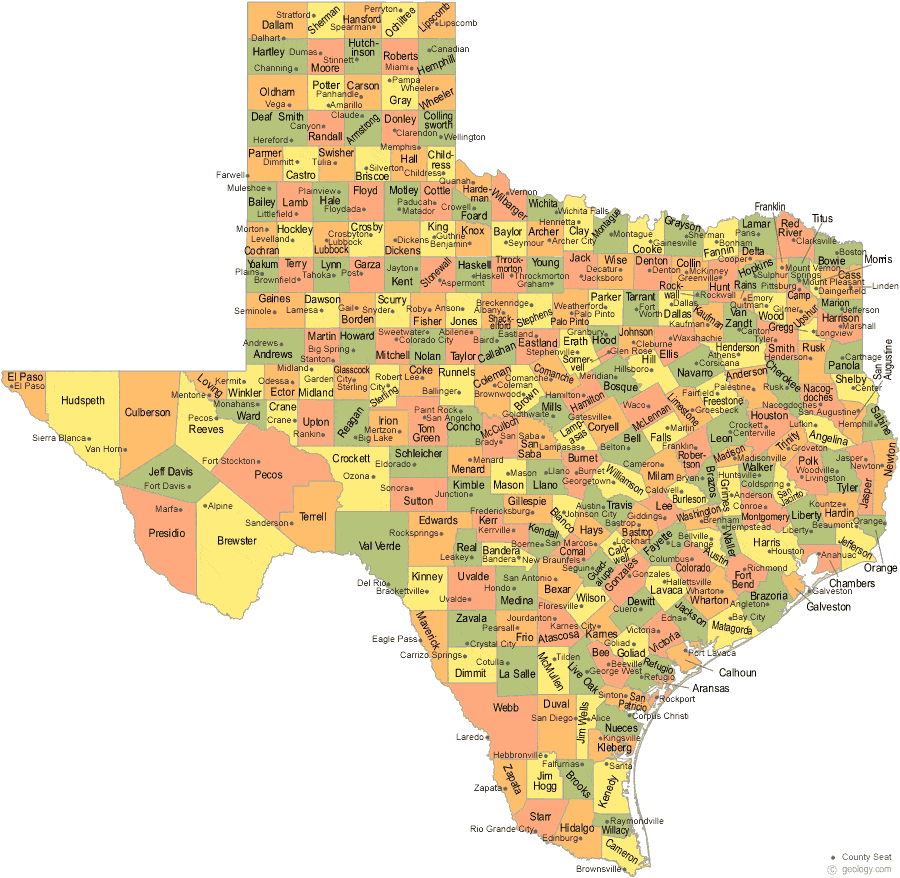
Navigating the Lone Star State: A County-by-County Exploration
Texas is the second-largest state in the United States, both in area and population, and it is divided into 254 counties. This extensive network of counties serves as the primary administrative and governmental subdivisions, playing a crucial role in everything from law enforcement and public health to elections and property records. For anyone visiting or living in Texas, a basic understanding of its counties can significantly enhance your experience, making it easier to locate specific destinations, access local services, and appreciate the unique character of each region.
Understanding Texas’s Diverse Regions and Their Counties
The sheer size of Texas means that its counties encompass a remarkable variety of landscapes and cultures. From the arid West Texas plains to the humid Gulf Coast, from the piney woods of East Texas to the rolling hills of the Edwards Plateau, each county has its own distinct identity. Understanding which county you’re in can help you anticipate the local environment, the prevalent industries, and the types of attractions you might find. For instance, knowing you are in Brewster County might bring to mind the vast expanses of Big Bend National Park, while being in Dallas County immediately suggests an urban, metropolitan experience with world-class museums and dining.
Major Metropolitan Areas and Their County Affiliations
The major population centers of Texas are often sprawling across multiple counties, adding another layer of complexity to navigation.
- Houston, the most populous city in Texas, is primarily located in Harris County, but it also extends into neighboring Fort Bend County, Montgomery County, and Waller County. This means that if you’re exploring the greater Houston area, you could easily find yourself in several different counties without even leaving the metropolitan region. This is important for understanding local regulations, property taxes, and even emergency services.
- Dallas and Fort Worth, often referred to as the Dallas-Fort Worth Metroplex, are similarly distributed. Dallas County is the core of the Dallas side, but the metroplex also encompasses significant portions of Tarrant County (where Fort Worth is located), Collin County, Denton County, and Kaufman County. For travelers visiting attractions like the Dallas Arboretum and Botanical Garden or attending an event at the AT&T Stadium, knowing the specific county can sometimes be relevant for accessing parking or understanding local transit.
- San Antonio, rich in history and culture, is predominantly situated in Bexar County. However, its ever-expanding suburbs mean that parts of the city can also be found in neighboring counties like Comal County, Medina County, and Kendall County. When visiting iconic landmarks such as the Alamo or exploring the Riverwalk, you are likely in Bexar County.
- Austin, the state capital and a hub for live music and technology, is mainly within Travis County. However, its growth has led to parts of its metropolitan area extending into Williamson County and Hays County. A visit to the Texas State Capitol places you firmly in Travis County.
Practical Applications for Travelers and Residents
Knowing your county in Texas has numerous practical benefits, whether you are on a leisure trip or a business stay.

Locating Attractions and Accommodations
When using travel guides, booking hotels, or searching for specific attractions, county information can be a crucial locator. For example, if you’re looking for a unique resort experience in the Texas Hill Country, you might be researching places in counties like Gillespie County (home to Fredericksburg) or Kendall County (home to Boerne). Similarly, if you’re planning to visit a specific national or state park, knowing the county will help you pinpoint its exact location and understand the surrounding infrastructure, including nearby towns for lodging or dining. For instance, Big Bend National Park is a significant landmark in the expansive Brewster County.
Understanding Local Services and Regulations
Each county in Texas has its own local government that provides essential services and enforces specific regulations. This can impact your stay in various ways.
- Emergency Services: In case of an emergency, knowing your county can help dispatchers send help to the correct location more quickly. While GPS is usually reliable, a verbal confirmation of your county can be invaluable.
- Local Laws and Ordinances: While state laws apply statewide, some counties may have specific ordinances related to things like open container laws, noise regulations, or even hunting and fishing rules.
- Healthcare and Hospitals: If you require medical attention, knowing the county will help you locate the nearest hospital or clinic. For example, Parkland Health is a major hospital in Dallas County, while MD Anderson Cancer Center is a renowned institution in Harris County.
- Transportation: Local transportation services, such as county-run bus routes or specific traffic advisories, might be county-specific. When planning your travel, understanding the county can help you find the most efficient routes, especially in rural areas where interstates are less frequent.
Exploring Local Culture and Cuisine
The unique culture and culinary traditions of Texas are often deeply tied to its counties. Each county can boast its own regional specialties, from the mesquite-smoked brisket of Central Texas to the Tex-Mex flavors found closer to the border. When exploring a new town, understanding the county can provide context for its history, its people, and its local delicacies. For instance, exploring the historic missions in San Antonio means you’re delving into the heritage of Bexar County, while experiencing the German heritage in Fredericksburg points you towards Gillespie County.

How to Find Out What County You Are In
In the digital age, determining your current county in Texas is easier than ever.
- Smartphone Mapping Applications: Apps like Google Maps or Apple Maps are incredibly powerful tools. Simply open the app, and once your location is pinpointed, you can often tap on the location marker or access the details of your current position. The county information is usually listed among the address details.
- Online County Maps and Databases: Numerous websites offer interactive maps of Texas counties. A quick search for “Texas county map” will yield many results. These maps allow you to zoom in on your specific location and identify the county boundaries. The official website for the State of Texas or individual county government websites often provide downloadable maps or GIS data.
- GPS Devices: Dedicated GPS navigation devices also display your current location, including the county, as part of their navigation information.
- Local Road Signs: In many areas, particularly as you cross county lines, you will see signs indicating the name of the county you are entering. These are a classic and reliable way to orient yourself.
By understanding the county you are in, you unlock a deeper appreciation for the diverse geography, rich history, and unique culture that make Texas such a captivating destination. Whether you are seeking luxury accommodations, budget-friendly adventures, or a taste of authentic local life, knowing your county is your first step to a more informed and rewarding experience.
LifeOutOfTheBox is a participant in the Amazon Services LLC Associates Program, an affiliate advertising program designed to provide a means for sites to earn advertising fees by advertising and linking to Amazon.com. Amazon, the Amazon logo, AmazonSupply, and the AmazonSupply logo are trademarks of Amazon.com, Inc. or its affiliates. As an Amazon Associate we earn affiliate commissions from qualifying purchases.