
When planning a journey, whether driving across United States or booking a cozy weekend getaway in Paris, choosing the right place to stay is crucial. Two of the most common lodging options travelers encounter are motels and hotels. While they may sound nearly identical and both offer a roof, a bed, and a bathroom, they are fundamentally different concepts tailored to entirely distinct types of travelers. Understanding the architectural layout, target audience, amenities, pricing structures, and historical context of both options ensures you make the best booking decision for your next trip, whether you are visiting the bustling streets of New York City or driving down the scenic Pacific Coast Highway.

Origins and Architecture: The Physical Layout
The most immediate distinction between a motel and a hotel lies in how they are built and how guests access their rooms. This physical layout is rooted in their historical origins and the specific needs of the travelers they were originally designed to serve.
The Evolution of the Motel
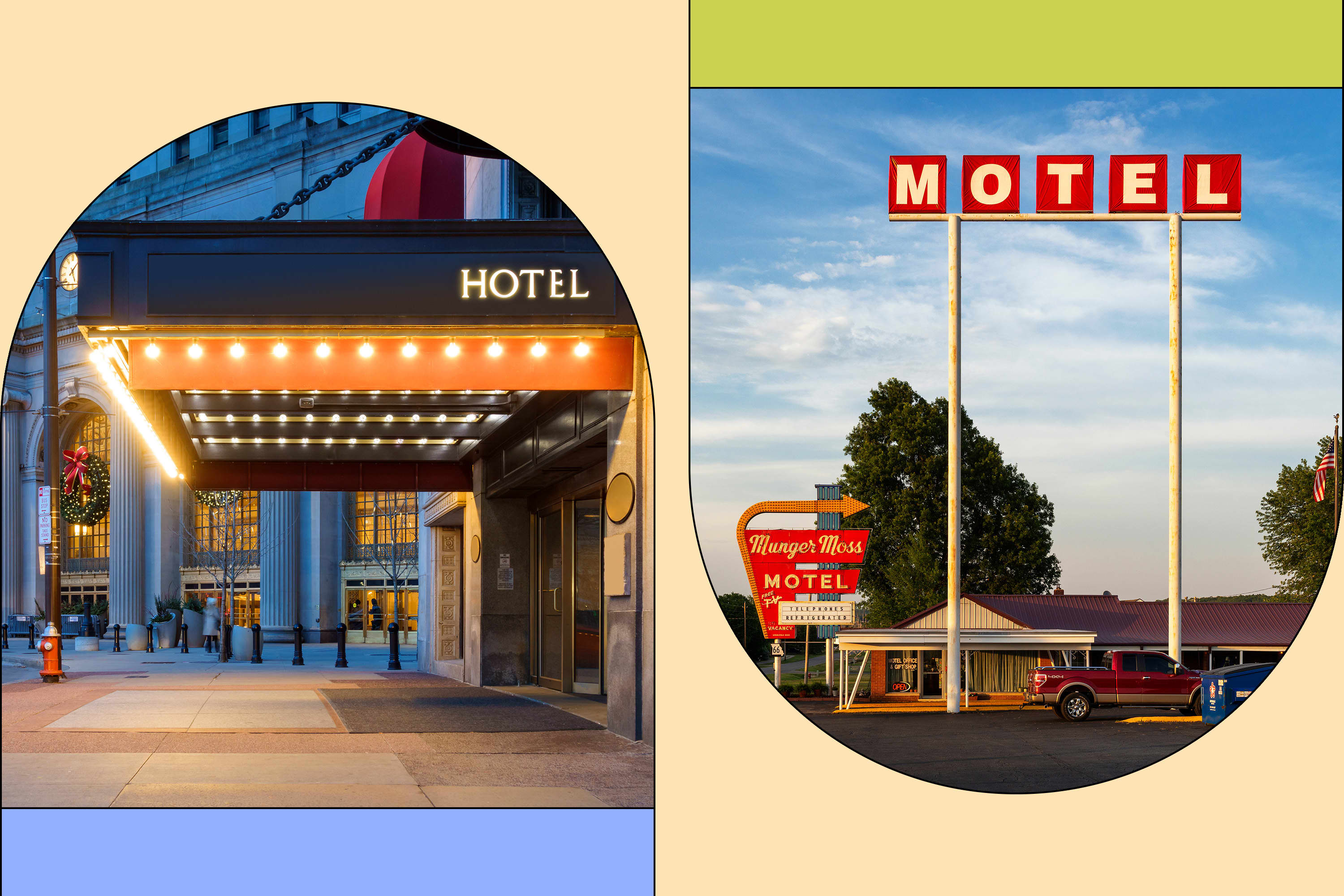
The word “motel” is a portmanteau of “motor” and “hotel.” Pioneered in the early 20th century as automobile travel exploded across North America, motels were specifically built to cater to road-trippers and drivers traversing vast distances. Architecturally, a motel is typically a low-rise building—usually one or two stories—where guest rooms open directly onto an outdoor parking lot or exterior walkway. This design allowed weary drivers to park their cars immediately in front of or directly beneath their room doors, making it exceptionally convenient to unload luggage without navigating long indoor corridors, elevators, or multi-level parking garages. Iconic roadside icons like the Blue Swallow Motel along historic Route 66 perfectly embody this classic American architectural style.
The Structure of the Hotel
In contrast, a hotel is designed as a centralized, multi-story establishment focused on interior communal spaces. Guests enter through a grand lobby, check in at a formal reception desk, and navigate interior hallways, elevators, and stairwells to reach their rooms. Unlike motels, hotel rooms do not face the outside parking area; instead, they look out over city streets, interior courtyards, or scenic landscapes. This enclosed architecture provides enhanced security, weather protection, and a sense of insulation from the surrounding environment. Famous hospitality institutions like the Plaza Hotel in New York or the Ritz-Carlton exemplify this traditional, inward-facing, multi-story lodging format.
Amenities and Services: From Basic Needs to Luxury Experiences
The depth and breadth of amenities offered represent another major dividing line between these two types of accommodations. What you receive beyond a bed varies wildly depending on whether you choose a roadside motor lodge or a full-service hospitality property.
What to Expect at a Motel
Motels are built around the concept of functional simplicity and economy. They provide the fundamental essentials for a night’s rest: a comfortable bed, a clean bathroom, a television, and basic climate control. Historically, amenities were bare-minimum, though modern independent motels and budget chains have significantly upgraded their offerings to include complimentary Wi-Fi, basic continental breakfast, and coffee makers. However, you will rarely find luxury features at a standard motel. They generally lack:
- Full-service restaurants and bars
- Indoor swimming pools or spas
- Fitness centers and business facilities
- Concierge services and bellhop assistance
- Valet parking
What to Expect at a Hotel
Hotels are designed to be destinations in their own right, offering a comprehensive suite of services and upscale amenities meant to enhance the entire travel experience. Whether staying at a business-oriented property like a Marriott or a leisure-focused resort in Hawaii, guests can typically access a wide array of facilities:
- Multiple dining options, from casual cafes to fine-dining restaurants and rooftop lounges
- Room service available during restricted or 24-hour windows
- Indoor or outdoor swimming pools, hot tubs, and wellness spas
- Fully equipped fitness centers and yoga studios
- Business centers, meeting rooms, and conference facilities
- Dedicated front desk staff, concierge desks, and luggage assistance
Location, Accessibility, and Target Audience

Where you find motels versus hotels is heavily influenced by who uses them and why. Location is often the ultimate deciding factor for travelers mapping out their itineraries.
The Strategic Placement of Motels
Motels are strategically located along major highways, interstate off-ramps, rural byways, and the outskirts of towns. They are engineered for accessibility by car. If you are embarking on a cross-country road trip through the American Midwest or driving through the scenic landscapes of Scotland, motels serve as practical, no-fuss pit stops where you can pull off the road late at night, sleep soundly, and hit the road again at dawn without getting entangled in urban traffic or paid parking structures.
The Urban and Destination Focus of Hotels
Hotels, meanwhile, are concentrated in high-density urban centers, downtown financial districts, near major airports, tourist hubs, and popular resort destinations worldwide—such as London, Tokyo, or Sydney. They place guests within walking distance of business headquarters, museums, shopping districts, theaters, and famous landmarks. Because they cater to business travelers, vacationers, and tourists staying for extended periods, their locations prioritize proximity to city attractions rather than highway access.
Cost Structure, Stay Duration, and Booking Value
Budget considerations often dictate the final choice between a motel and a hotel. Understanding pricing dynamics helps travelers maximize the value of their accommodation budget.
Affordability and Short-Term Stays at Motels
Motels are inherently budget-friendly. Because they require fewer staff members, have lower overhead maintenance costs for shared indoor spaces, and offer fewer amenities, these savings are passed directly to the consumer. Nightly rates are typically a fraction of hotel prices. Furthermore, motels are optimized for short stays—usually just one or two nights as travelers pass through a region. Checking in and out is streamlined and rapid, requiring minimal administrative interaction.
Premium Pricing and Extended Stays at Hotels
Hotels involve higher operational costs, which are reflected in their nightly tariffs. Premium pricing covers expansive real estate in prime locations, extensive staffing, utility costs for large common areas, and the upkeep of luxury amenities. While luxury properties command top dollar, hotels also accommodate a wider range of durations. Guests frequently book hotels for week-long vacations, corporate conferences, or multi-week business secondments, taking advantage of comprehensive housekeeping services, laundry facilities, and room service.
Modern Blur of Definitions and How to Choose
In the modern travel landscape, the strict line separating motels and hotels has begun to blur. Many independent boutique properties have revitalized vintage roadside motels, transforming them into hip, design-forward retreats with curated interiors, artisan coffee shops, and trendy gathering spaces. Conversely, budget hotel chains offer exterior corridor access reminiscent of traditional motels while maintaining standardized indoor amenities.
When deciding between a motel and a hotel for your next trip, ask yourself a few key questions:
- How are you traveling? If you are driving across the country with a car full of gear and simply need an affordable place to sleep, a motel offers unbeatable convenience and parking access.
- What is the purpose of your trip? If you are attending a business conference, celebrating an anniversary, or seeking a relaxing resort vacation with dining and wellness facilities on-site, a hotel is the superior choice.
- What is your budget? If keeping accommodation costs to an absolute minimum is your priority so you can spend your money on local dining and sightseeing adventures, a motel delivers exceptional value.
By weighing location, amenities, architectural style, and your specific travel style, you can confidently select the ideal accommodation for your journey ahead.
LifeOutOfTheBox is a participant in the Amazon Services LLC Associates Program, an affiliate advertising program designed to provide a means for sites to earn advertising fees by advertising and linking to Amazon.com. Amazon, the Amazon logo, AmazonSupply, and the AmazonSupply logo are trademarks of Amazon.com, Inc. or its affiliates. As an Amazon Associate we earn affiliate commissions from qualifying purchases.