
Navigating the process of obtaining a Texas driver’s license can seem daunting, but with a clear understanding of the requirements, it becomes a straightforward journey. Whether you’re a new resident of the Lone Star State, a teenager embarking on your first driving experience, or an individual looking to update your credentials, this guide will illuminate the path to securing your Texas driver’s license. We will delve into the essential documentation, necessary steps, and specific considerations for various applicant types, ensuring you are well-prepared for your visit to the Texas Department of Public Safety (DPS) or a certified third-party provider.
Essential Documentation for All Applicants
The foundation of obtaining any official identification, including a driver’s license, lies in presenting the correct documentation. For a Texas driver’s license, the Department of Public Safety (DPS) has a stringent set of requirements designed to verify identity, lawful presence, social security, and residency. Gathering these documents in advance will significantly streamline your application process and minimize potential delays.
Proof of Identity and Lawful Presence
Your first priority is to provide proof of your identity and your legal right to be in the United States. The DPS accepts a variety of documents, but it’s crucial to ensure they are current and valid.
- Primary Identification: A U.S. birth certificate or a U.S. Passport are typically the most straightforward primary documents. These must be original or certified copies.
- Lawful Presence: For non-U.S. citizens, an unexpired Permanent Resident Card (I-551), an Employment Authorization Card (I-766), or an I-94 Arrival/Departure Record with a valid foreign passport are commonly accepted. Specific documentation may vary based on immigration status, so it’s advisable to consult the DPS website for the most current list.
Proof of Social Security Number
You will need to present evidence of your Social Security number (SSN).
- Social Security Card: Your original Social Security card is the most direct form of proof.
- Alternative Documents: If you do not have your card, other official documents that display your SSN, such as W-2 forms, pay stubs, or SSA-1099 forms, may be accepted. However, these must be originals and clearly show your name and SSN.
Proof of Texas Residency
Demonstrating that you reside in Texas is another critical requirement. You will need to provide at least two documents that show your current Texas address. These documents must be current, typically issued within the last 60 to 90 days.
- Utility Bills: Electric, gas, water, or internet bills are commonly used. Ensure they list your name and current Texas address.
- Lease Agreements: A current rental or lease agreement for your Texas residence is acceptable.
- Bank Statements: Statements from a financial institution showing your Texas address are often accepted.
- Mortgage Statements: If you own your home in Texas, a recent mortgage statement will suffice.
- Texas Vehicle Registration: Proof of vehicle registration in Texas can also serve as residency verification.
- Other Official Mail: Mail from government agencies or educational institutions addressed to you at your Texas residence can sometimes be used.
Proof of Citizenship
While primary identification documents like a U.S. birth certificate or U.S. Passport often serve this purpose, if you are using other forms of identity, you may need additional proof of U.S. citizenship.
Specific Requirements for Different Applicant Types
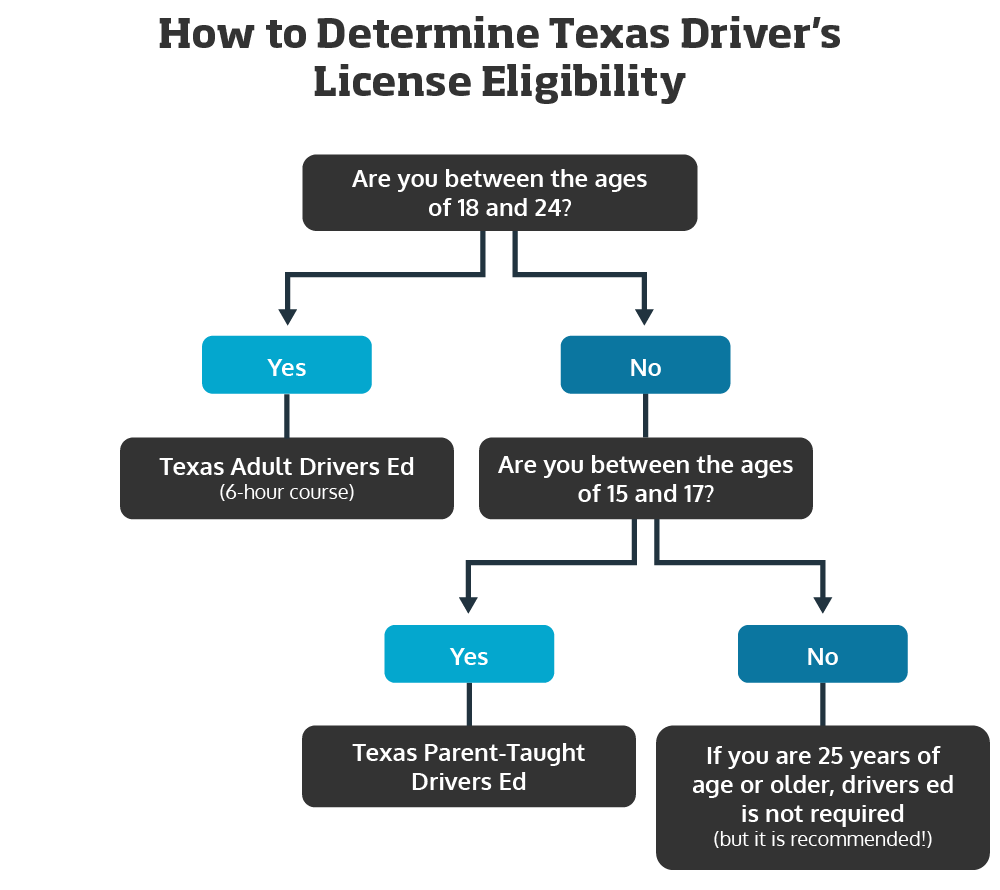
The requirements for obtaining a Texas driver’s license can differ based on your age and previous driving experience.
First-Time Driver’s License Applicants (Under 18)
Texas has a tiered licensing system for individuals under 18, designed to provide progressive driving experience and education. This system involves obtaining a learner’s permit first, followed by a provisional license, before a full driver’s license can be issued.
Learner’s Permit (Instruction Permit)
To be eligible for a learner’s permit, you must be at least 15 years old. You will need to complete a state-approved driver education program, which includes 32 hours of classroom instruction and 7 hours of behind-the-wheel training.
- Required Documents:
- Proof of identity, lawful presence, and Social Security number.
- Proof of Texas residency.
- Certificate of Completion for a Driver Education Program ( ফর্ম DE-964 or HOP-964).
- Proof of enrollment in high school or a GED program, or proof of graduation. This can be a high school transcript, certificate of enrollment, or diploma.
- Testing: You must pass the knowledge test administered by the DPS. You will also need to pass a vision test.
Provisional Driver’s License
Once you have held your learner’s permit for at least six months and are at least 16 years old, you can apply for a provisional license. This license allows you to drive unsupervised but comes with certain restrictions.
- Requirements:
- Have held a learner’s permit for at least six months.
- Be at least 16 years old.
- Complete 30 hours of supervised driving practice with a licensed adult who is 21 years or older and has at least one year of driving experience.
- Pass the driving test (road test) administered by the DPS or a third-party provider.
- Restrictions: Provisional license holders cannot drive between midnight and 5:00 a.m., unless it’s for school-related activities, work, or medical emergencies. Additionally, for the first six months, they cannot have more than one passenger under the age of 21 in the vehicle who is not a family member.
Full Driver’s License
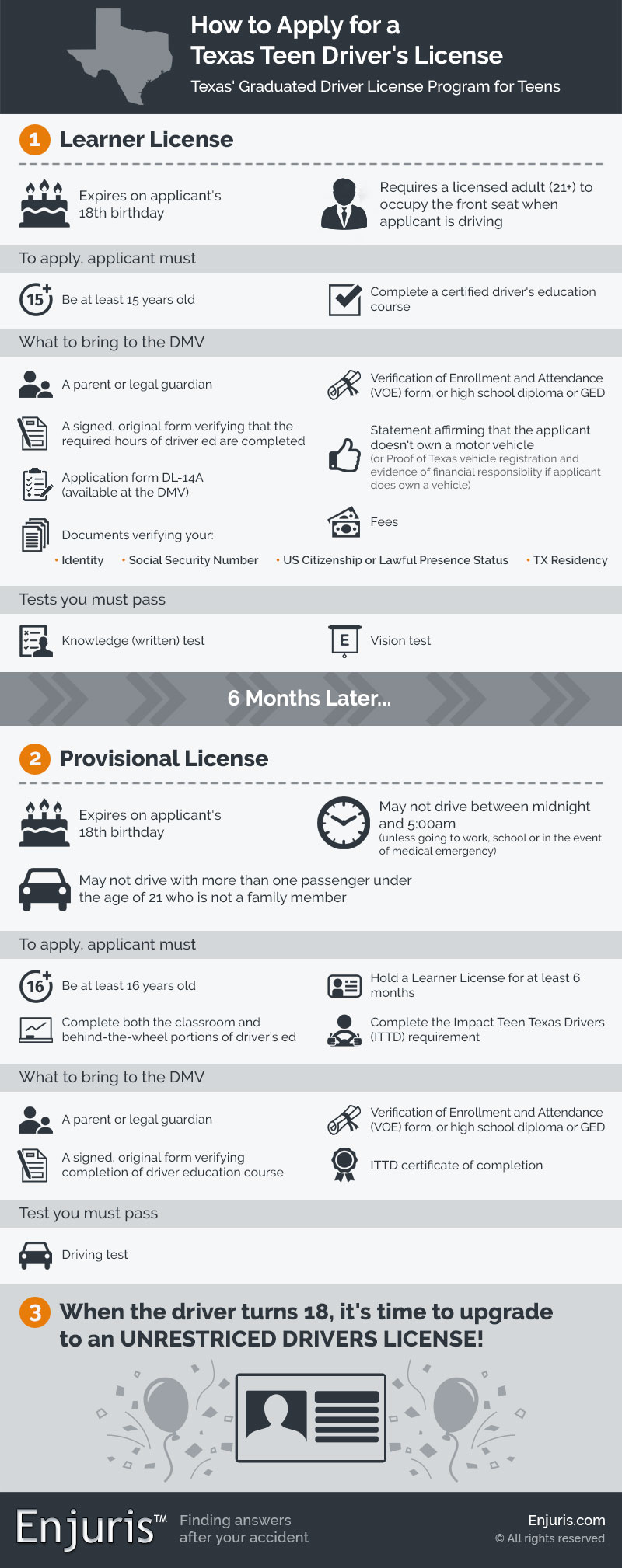
Upon turning 18, provisional license holders can apply for a full, unrestricted driver’s license, provided they have met all previous requirements. If you are applying for your first license at 18 or older, you will generally skip the provisional stage and proceed directly to a full license after meeting the initial requirements.
New Texas Residents (18 and Older)
If you are moving to Texas and hold a valid driver’s license from another U.S. state or territory, you are generally not required to take the written or driving tests again. However, you must surrender your out-of-state license and obtain a Texas license within 90 days of establishing residency.
- Required Documents:
- Proof of identity, lawful presence, and Social Security number.
- Proof of Texas residency (two documents).
- Your valid out-of-state driver’s license.
- Testing: You will be required to pass a vision test.
If you are moving to Texas from another country and hold a valid foreign driver’s license, you may need to complete the full licensing process, including passing the written and driving tests, depending on reciprocity agreements between Texas and your country of origin.
Applying for a Commercial Driver’s License (CDL)
Obtaining a CDL in Texas involves additional steps and endorsements. This typically requires specific training and testing related to the type of commercial vehicle you intend to operate. The CDL process is managed by the DPS and has its own set of requirements, including medical certifications and specialized endorsements for hazardous materials, school buses, and passenger transport.
The Application Process: Step-by-Step
Once you have meticulously gathered all necessary documentation, the next phase involves the actual application process. This typically involves visiting a Texas Department of Public Safety (DPS) driver license office or, in some cases, a certified third-party provider.
Step 1: Gather Your Documents
As detailed above, this is the most crucial preparatory step. Ensure all documents are original or certified copies and meet the DPS’s validity and currency requirements.
Step 2: Complete the DL-44 Application Form
You can often start the application process online before your visit by completing the DL-44 application form. This can save you time at the DPS office. You will need to print the confirmation page and bring it with you.
Step 3: Visit a Driver License Office or Third-Party Provider
Schedule an appointment if possible, as wait times can be significant. Be prepared to present all your gathered documents for verification.
Step 4: Vision and Knowledge Tests
You will undergo a vision test to ensure your eyesight meets the minimum requirements for driving. Subsequently, you will take the knowledge test, which assesses your understanding of Texas traffic laws and safe driving practices. If you are a new resident with an out-of-state license, you may only need the vision test.
Step 5: Driving Test (Road Test)
If required (e.g., for first-time drivers under 18), you will need to pass a driving test. This test evaluates your ability to safely operate a vehicle in various driving conditions. You will typically need to provide a vehicle that is properly registered, insured, and in safe operating condition for the test.
Step 6: Photo and Fees
Once you have successfully passed all required tests and your documentation is verified, you will have your photograph taken for your driver’s license. You will also be required to pay the applicable licensing fees.
Step 7: Receive Your Driver’s License
You will typically receive a temporary driver’s license on-site, and your official Texas driver’s license will be mailed to your provided address within a few weeks.
Tips for a Smooth Application Experience
To ensure your experience obtaining a Texas driver’s license is as smooth and efficient as possible, consider the following recommendations:
- Check the Official DPS Website: The Texas Department of Public Safety’s website is the most authoritative source for requirements, forms, and office locations. Requirements can change, so always verify the latest information directly from the DPS.
- Utilize Online Services: The DPS offers various online services, including the ability to complete the DL-44 form, check driver license status, and even schedule appointments.
- Be Prepared for Wait Times: Driver license offices can be busy. Arrive with patience or, ideally, schedule an appointment if available.
- Double-Check Your Documents: Ensure every document is current, valid, and precisely matches the name and address information you are providing.
- Practice for the Road Test: If you need to take the driving test, practice the maneuvers and driving scenarios that are typically evaluated. Familiarize yourself with the vehicle you will use for the test.
- Understand the Restrictions: For provisional licenses, be fully aware of the driving restrictions to avoid violations.
Obtaining a Texas driver’s license is a significant step in integrating into the state’s community and enjoying the freedom of the open road. By understanding the necessary documentation, adhering to the specific requirements for your applicant type, and following the streamlined application process, you can confidently achieve this goal. Safe travels and welcome to Texas!
LifeOutOfTheBox is a participant in the Amazon Services LLC Associates Program, an affiliate advertising program designed to provide a means for sites to earn advertising fees by advertising and linking to Amazon.com. Amazon, the Amazon logo, AmazonSupply, and the AmazonSupply logo are trademarks of Amazon.com, Inc. or its affiliates. As an Amazon Associate we earn affiliate commissions from qualifying purchases.