
Establishing a new life or an extended stay in the Sunshine State often begins with acquiring the necessary state identification. A Florida driver’s license or ID card is more than just a piece of plastic; it’s a gateway to daily living, from opening bank accounts to registering a vehicle, and is a fundamental aspect of integrating into the local lifestyle. Understanding the requirements and process is crucial for a smooth transition. This guide will walk you through everything you need to know to secure your Florida license.
Understanding Florida Driver Licenses and IDs
Before diving into the documentation, it’s important to differentiate between a driver’s license and a state identification card, and to understand the significance of Real ID compliance.
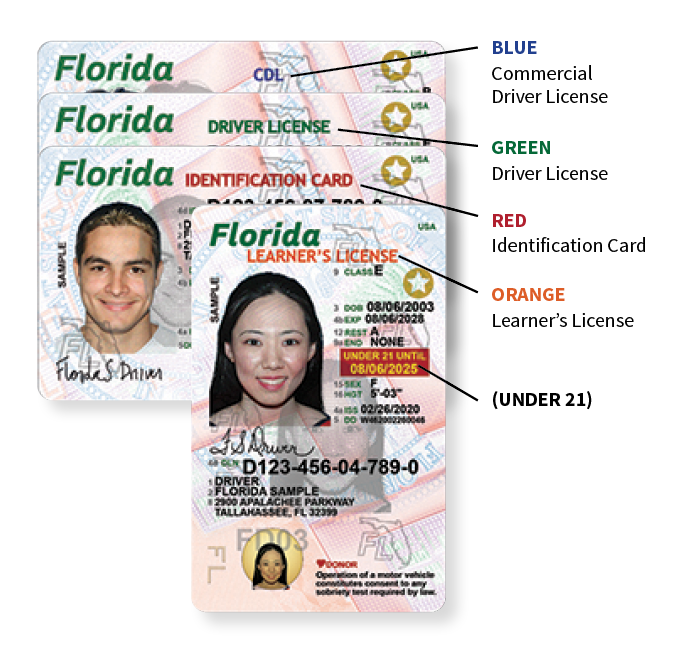
Driver License vs. State ID Card
A Florida Driver License grants you the legal privilege to operate a motor vehicle on public roads. There are various classes of licenses depending on the type of vehicle you intend to drive (e.g., Class E for standard non-commercial vehicles, Class A, B, or C for commercial vehicles, and motorcycle endorsements). For most new residents, a Class E license is the primary goal.
A Florida Identification Card, on the other hand, does not authorize driving. It serves purely as proof of identity and residency for individuals who do not drive or do not currently possess a driver’s license. It’s an essential document for non-drivers who still need official state identification for various daily transactions and activities. Both documents are issued by the Florida Department of Highway Safety and Motor Vehicles (FLHSMV).
Real ID Compliance
Since 2010, Florida has been issuing Real ID compliant driver licenses and ID cards. These cards are identifiable by a star in the upper right-hand corner. The Real ID Act, passed by Congress after the September 11, 2001, terrorist attacks, establishes minimum security standards for state-issued driver licenses and identification cards and prohibits federal agencies from accepting for certain purposes driver licenses and identification cards from states that do not meet these standards. This means that for domestic air travel, accessing federal facilities, or entering nuclear power plants, a Real ID compliant license or another accepted form of identification (like a passport) will be required. When applying for your Florida license, you will automatically be issued a Real ID compliant card, provided you present the correct documentation.
Essential Documentation for Your Florida License
The process of obtaining a Florida driver’s license or ID card is contingent upon presenting specific documents to verify your identity, legal presence, Social Security number, and residential address. It is imperative to have original documents or certified copies; photocopies are generally not accepted.
Proof of Identity
You will need one primary document to prove your identity. Acceptable documents typically include:
- A certified birth certificate (U.S. issued).
- A valid, unexpired U.S. passport or passport card.
- A Certificate of Naturalization.
- A Consular Report of Birth Abroad.
For non-U.S. citizens, specific immigration documents such as a valid alien registration card, employment authorization card, or a valid nonimmigrant visa with supporting I-94 form and foreign passport are required.
Proof of Social Security Number
To demonstrate your Social Security Number (SSN), you must provide one of the following:
- Your original Social Security card.
- A W-2 form.
- A pay stub displaying your SSN.
- Any 1099 form.
The name on the SSN document must match the name on your identity document. If there’s a discrepancy due to marriage or other life events, you’ll need to provide supporting legal documents (e.g., a marriage certificate or court order) to link the names.
Proof of Residential Address
This is a critical component for establishing Florida residency. You must provide two different documents that show your residential address in Florida. These cannot be P.O. boxes. Examples of acceptable documents include:
- A deed, mortgage, monthly mortgage statement, or residential rental/lease agreement.
- A utility bill (water, electric, gas, cable, internet) from the last two months.
- A vehicle registration or title.
- A voter registration card.
- A Florida professional license.
- A W-2 form or 1099 form.
- A mail from a financial institution (checking, savings, investment account statement) from the last two months.
- A mail from a governmental agency (excluding mail from the FLHSMV).
If you are unable to provide two proofs of address in your name (e.g., living with family or friends), the FLHSMV may allow you to submit a “Certification of Address” form, completed by the homeowner/lessee, along with two proofs of address in their name and your proof of mail at that address.
Proof of Legal Presence (for non-U.S. citizens)

Non-U.S. citizens must provide documentation confirming their legal presence in the United States. This typically involves your valid foreign passport, along with immigration documents such as an I-94 form, a Permanent Resident Card (Green Card), an Employment Authorization Document (Work Permit), or a valid visa appropriate for your status. The validity period of your license will often be tied to the expiration date of your legal presence documents.
The Application Process: Step-by-Step
Once you have gathered all your essential documents, the application process involves a few key steps.
Schedule Your Appointment
While some FLHSMV service centers may accept walk-ins, it is highly recommended to schedule an appointment online through the FLHSMV website or your local county tax collector’s office. This can significantly reduce your wait time. You will need to visit a driver license service center in person to complete the process. Many major cities in Florida, such as Miami, Orlando, Tampa, and Jacksonville, have multiple locations.
Complete Required Exams
If you are applying for a Florida driver’s license for the first time, or if your out-of-state license has expired beyond a certain grace period, you will typically need to complete several exams:
- Knowledge Test: A multiple-choice exam on Florida traffic laws and road signs. You can study for this using the official Florida Driver Handbook available on the FLHSMV website. Many online courses also offer practice tests.
- Vision Test: A basic eye exam to ensure your vision meets the state’s minimum requirements for safe driving.
- Hearing Test: A simple test to ensure you can hear adequately for safe driving.
- Driving Skills Test (Road Test): This test assesses your ability to safely operate a vehicle in various traffic situations. You must provide a vehicle that is properly registered, insured, and in safe working condition. A licensed driver must accompany you to the testing site. Note that the driving skills test can sometimes be waived for new residents who are surrendering a valid, unexpired driver’s license from another U.S. state or territory.
Fees and Validity
There are fees associated with obtaining a Florida driver’s license or ID card, as well as for any required tests. These fees can vary slightly, so it’s best to check the current schedule on the FLHSMV website. Standard Class E driver licenses are typically valid for eight years for U.S. citizens, while state ID cards are also valid for eight years. For non-U.S. citizens, the validity period will generally align with the expiration date of their legal presence documents.
Special Considerations for New Florida Residents
Moving to a new state involves more than just getting a driver’s license; it often includes converting your vehicle registration and adapting to local regulations.
Out-of-State License Conversion
If you are a new resident surrendering a valid, unexpired driver’s license from another U.S. state, U.S. territory, or a Canadian province, you may be able to convert it directly to a Florida Class E driver’s license without taking the knowledge or driving skills tests. However, you will still need to pass the vision and hearing tests and provide all the required documentation (proof of identity, SSN, and two proofs of residential address). This streamlines the process significantly for those relocating.
Vehicle Registration Requirements
Once you become a Florida resident, you are required to register your out-of-state vehicle(s) in Florida within 10 days of establishing residency or within 30 days of employment in Florida. This process often goes hand-in-hand with obtaining your driver’s license. You will need your out-of-state title, proof of Florida insurance (minimum personal injury protection and property damage liability), and proof of identity. A vehicle identification number (VIN) verification may also be required, which can often be done at the same service center where you obtain your license.
Maintaining Your Florida License
Once you have your Florida license, understanding renewal procedures and the importance of keeping your information current is key to avoiding future complications.
Renewals and Updates
Florida driver licenses and ID cards typically require renewal every eight years for U.S. citizens. You will usually receive a renewal notice by mail, but it is ultimately your responsibility to renew on time. Many renewals can be processed online, provided there are no changes to your name or address and you have a valid photo on file. If you need to update your address or name, or if your license has expired, you may need to visit a service center in person.

Importance for Daily Living
Your Florida license or ID card is a cornerstone of your daily life in the state. It’s used for everything from proving your age to making purchases, applying for jobs, and accessing various services. Keeping it current and secure is not just a legal requirement but a practical necessity for seamless integration into the vibrant Florida lifestyle. Whether you’re moving to the bustling streets of Miami, the family-friendly suburbs of Orlando, or the tranquil communities of the Gulf Coast, a valid Florida license ensures you’re ready for whatever the Sunshine State has in store.
LifeOutOfTheBox is a participant in the Amazon Services LLC Associates Program, an affiliate advertising program designed to provide a means for sites to earn advertising fees by advertising and linking to Amazon.com. Amazon, the Amazon logo, AmazonSupply, and the AmazonSupply logo are trademarks of Amazon.com, Inc. or its affiliates. As an Amazon Associate we earn affiliate commissions from qualifying purchases.