
Moving to, or establishing a long-term presence in, the Sunshine State of Florida is an exciting prospect for many. With its pristine beaches, vibrant cities, and endless attractions, Florida offers a lifestyle that beckons travelers, families, and professionals alike. Whether you’re dreaming of living near the magic of Walt Disney World Resort in Orlando, exploring the cultural tapestry of Miami, or enjoying the relaxed pace of the Florida Keys, having your own vehicle is often essential for navigating this expansive state. This guide will walk you through everything you need to know about registering your car in Florida, ensuring a smooth transition into your new Florida lifestyle.
For those embarking on a new journey, be it a seasonal stay or a permanent move, understanding the bureaucratic steps is crucial. Registering your vehicle isn’t just a legal requirement; it’s a foundational step towards fully embracing the freedom and opportunities that Florida offers. From planning family trips to iconic landmarks like Everglades National Park to simply commuting for business, your registered car will be your trusted companion. This article aims to demystify the process, integrating helpful insights for anyone looking to make Florida their home base for travel, tourism, and accommodation.
Understanding Florida Car Registration Basics
Before diving into the specifics, it’s important to grasp the fundamental principles behind vehicle registration in Florida. The state operates under specific guidelines designed to ensure all vehicles on its roads are properly documented, insured, and safe. This process is managed by the Florida Department of Highway Safety and Motor Vehicles (FLHSMV), which oversees everything from driver’s licenses to vehicle titles.
Who Needs to Register a Vehicle in Florida?
The rules around who needs to register a vehicle in Florida are relatively straightforward, primarily hinging on residency. Generally, if you are moving to Florida and establish residency, you are required to register your out-of-state vehicle within 10 days of becoming a resident. Establishing residency can involve various factors, such as:
- Accepting employment in Florida.
- Enrolling children in public school.
- Registering to vote in Florida.
- Filing for a homestead exemption.
- Maintaining a primary residence in Florida for more than six months.
Even if you maintain a residence elsewhere, if you intend to stay in Florida for an extended period, particularly if it becomes your primary mode of transportation for daily activities, registration is advised. This applies to “snowbirds” who spend several months enjoying the warmer climate but aren’t yet full-time residents. While some temporary visitors might be exempt, those planning a long-term stay, whether for business or leisure, will find registering their vehicle and obtaining a Florida driver’s license to be an essential step towards a seamless Florida lifestyle. It facilitates everything from local tourism activities to setting up long-term accommodation.
The Importance of Timely Registration
Failing to register your vehicle within the stipulated timeframe can lead to fines and other legal complications. Beyond avoiding penalties, timely registration contributes to your overall peace of mind and mobility. Imagine planning a spontaneous trip to St. Augustine, America’s oldest city, or a weekend getaway to the tranquil beaches of Anna Maria Island; you want to be sure your vehicle is fully compliant. Having your car properly registered also simplifies interactions with law enforcement and insurance providers, making your daily life and travel experiences in Florida much smoother. It’s an integral part of settling into your new destination and making the most of all the experiences Florida has to offer.
Essential Documents for Your Florida Vehicle Registration
The cornerstone of a successful vehicle registration is having all the correct documentation. Gathering these items beforehand will save you time and potential frustration when you visit your local Tax Collector’s Office or Department of Motor Vehicles (DMV) service center.
Proof of Ownership
This is perhaps the most critical document. For most vehicles, this means the original vehicle title. If your vehicle is financed and a lienholder holds the title, you will need to provide the lienholder’s name and address. The FLHSMV will often contact the lienholder directly to request the title or an electronic title transfer. If your vehicle is brand new, you’ll need the Manufacturer’s Certificate of Origin (MCO). Ensure all names on the title match your identification and that there are no discrepancies. This step is fundamental, as it legally establishes you as the vehicle owner, a prerequisite for any further action.
Proof of Florida Insurance
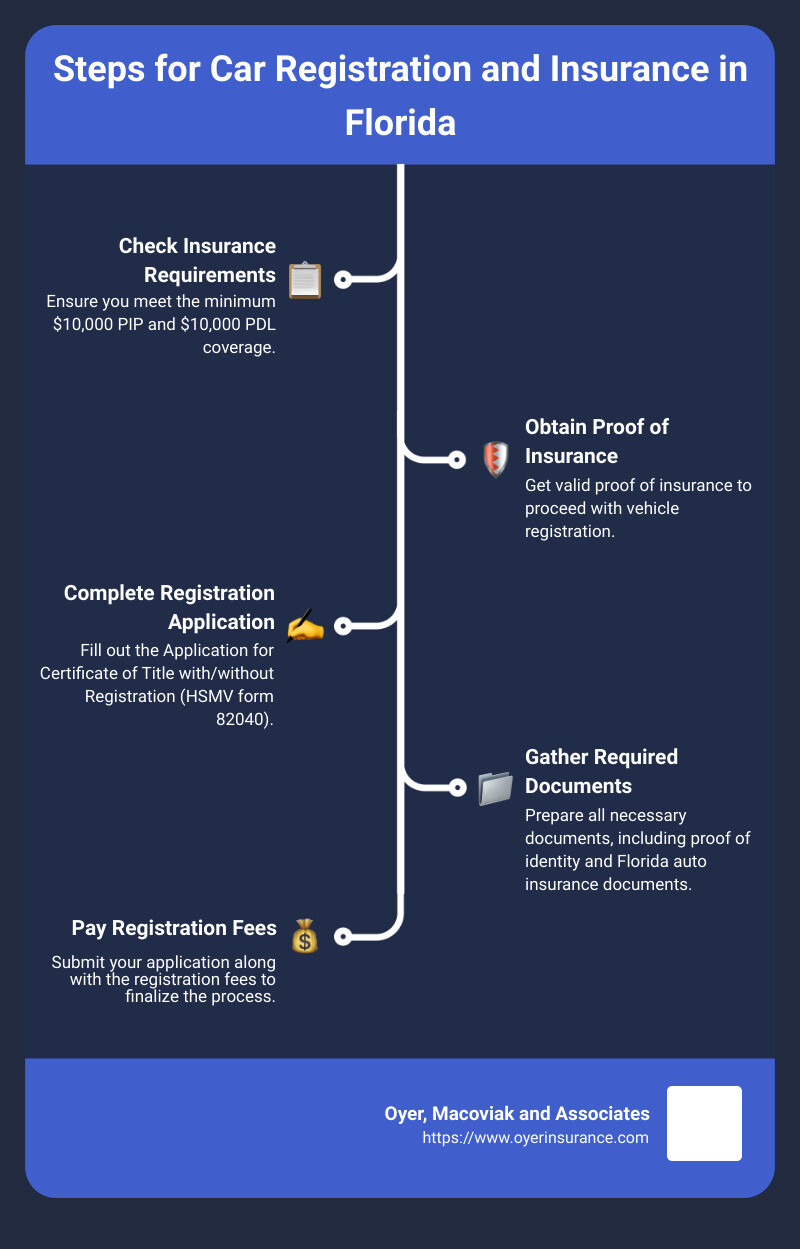
Florida requires all registered vehicles to carry specific minimum levels of insurance. You must have proof of current Florida insurance when registering your vehicle. The minimum coverage requirements are:
- $10,000 Personal Injury Protection (PIP): Covers 80% of medical expenses and 60% of lost wages resulting from an accident, regardless of fault.
- $10,000 Property Damage Liability (PDL): Covers damages your vehicle causes to other people’s property.
It’s crucial to obtain insurance from a company licensed to do business in Florida. Your out-of-state policy will not suffice. Many insurance providers offer competitive rates in Florida, and it’s wise to shop around to find a policy that suits your budget and lifestyle, especially if you plan on extended travel across the state.
Proof of Identity and Residency
You’ll need to demonstrate your identity and prove your Florida residency. This typically involves:
- Florida Driver’s License or ID Card: This is the primary form of identification. If you haven’t obtained one yet, you’ll generally need to do so concurrently with or prior to registering your vehicle.
- Proof of Florida Residency: This could be a utility bill, a lease agreement for your accommodation, a mortgage statement, or even mail from a financial institution. Your physical address in Florida is necessary for registration, which is why securing your accommodation (whether a long-term apartment, resort, or rental home) is often one of the first steps in your move.
Vehicle Identification Number (VIN) Verification
For all vehicles previously titled out-of-state, a VIN verification is required. This process confirms that the vehicle identification number on your car matches the number on your title document. VIN verification can be performed by:
- A Florida Department of Highway Safety and Motor Vehicles (FLHSMV) examiner or inspector.
- Any law enforcement officer (police officer, sheriff’s deputy).
- A licensed dealer in Florida.
- Military police officers if you are an active service member.
You’ll typically complete a Form HSMV 82042, which includes a section for the VIN verification. Some counties offer this service directly at the Tax Collector’s office, while others require you to get it done elsewhere beforehand. Always check with your specific county’s requirements.
The Registration Process: Step-by-Step
Once you have gathered all your essential documents, navigating the registration process becomes much simpler. Here’s a general overview of the steps involved:
Locating Your Local DMV/Tax Collector’s Office
In Florida, vehicle registrations are primarily handled by your county’s Tax Collector’s Office, not a traditional “DMV” as found in many other states. While the FLHSMV sets statewide policies, local Tax Collector’s offices manage the direct interaction with the public. You can usually find the nearest office and their specific requirements by visiting your county’s Tax Collector website or the official FLHSMV website. Many offices allow you to schedule appointments online, which can significantly reduce wait times, especially in popular tourist destinations or rapidly growing areas like Tampa or Jacksonville. Some offices even offer expedited services or specific hours for certain transactions.
Completing the Necessary Forms

Upon arrival, you’ll need to complete a few forms. The most common include:
- Application for Certificate of Title With/Without Registration (Form HSMV 82040): This is the main application for both your title and registration.
- Vehicle Identification Number and Odometer Verification (Form HSMV 82042): If your VIN verification wasn’t completed prior.
- Proof of Insurance: Provide your valid Florida insurance card or policy.
Ensure all forms are filled out accurately and completely. Don’t hesitate to ask for assistance from the staff if you have any questions; they are there to help streamline the process.
Paying Fees and Taxes
This is often the part that catches newcomers by surprise. Florida has several fees associated with vehicle registration:
- Initial Registration Fee ($225): This is a one-time fee for new registrations for passenger vehicles, trucks, and motor homes weighing under 5,000 pounds. It’s often referred to as the “new plate fee.”
- License Plate Fee: This varies based on the type of plate (standard, specialty, personalized) and often includes an annual registration fee.
- Title Fee: Approximately $75.25 for an electronic title or $77.50 for a paper title.
- Sales Tax: If you purchased your vehicle out-of-state within the last six months, you may owe Florida sales tax (currently 6%) on the vehicle’s purchase price, less any sales tax paid to another state.
- Lien Fees: If applicable, for vehicles with a lienholder.
- Service Fees: Small fees charged by the Tax Collector’s office for processing.
It’s advisable to check the FLHSMV website or your local Tax Collector’s website for the most current fee schedule, as these can change. Budgeting for these costs is an important aspect of planning your move and managing your new Florida lifestyle.
Receiving Your License Plate and Registration Decal
Once all documents are approved and fees are paid, you will typically receive your new Florida license plate, registration certificate, and registration decal on the spot. Affix the decal to the upper right corner of your license plate, and keep your registration certificate in your vehicle at all times. This marks the successful completion of your vehicle registration, granting you the freedom to explore all corners of Florida, from the bustling streets of South Florida to the tranquil springs of Central Florida.
Beyond Registration: Florida Driving & Lifestyle Considerations
Registering your car is just one piece of the puzzle when establishing your life in Florida. To truly embrace the Florida lifestyle, there are other driving-related considerations and general tips to keep in mind.
Renewing Your Registration
Florida vehicle registrations must be renewed annually. The renewal month is determined by the first letter of the registered owner’s last name (or the company name for businesses). You will receive a renewal notice by mail, typically a few weeks before your registration expires. Renewals can often be completed:
- Online: Through the FLHSMV’s GoRenew.com portal.
- By Mail: Sending your payment and renewal notice to the Tax Collector’s office.
- In Person: At your local Tax Collector’s office.
- At Kiosks: Many grocery stores and other locations offer self-service kiosks for quick renewals.
Keeping your registration current is vital, so mark your calendar or set reminders!
Florida Driver’s License Requirements
If you’re moving to Florida and plan to register your vehicle, you’ll also need to obtain a Florida driver’s license within 30 days of establishing residency. This process often goes hand-in-hand with vehicle registration. You’ll need proof of identity, social security number, and two proofs of residential address. For those who enjoy international travel, a Florida driver’s license also serves as a robust form of identification for many travel-related services, from hotel check-ins to car rentals.
Navigating Florida’s Roads
Florida has an extensive network of roads, including many toll roads, especially around major metropolitan areas like Orlando and Miami. Consider getting a SunPass transponder for convenient electronic toll payment. This will make your travel experiences smoother and avoid potential surcharges for Pay By Plate services. Understanding the local driving culture, especially in tourist-heavy areas or cities like Key West with unique road layouts, will enhance your safety and enjoyment of the state. Your registered vehicle empowers you to embark on countless adventures, from exploring the historical sites of Tallahassee to visiting the stunning beaches of Siesta Key or Amelia Island.
Vehicle Maintenance for Florida’s Climate
Florida’s hot and humid climate can be tough on vehicles. Regular maintenance, especially for air conditioning systems, tires, and cooling systems, is crucial. The intense sun can also degrade interiors and exteriors over time. Investing in good car care will ensure your registered vehicle remains reliable for all your Florida adventures, whether it’s a daily commute, a family trip to Universal Orlando Resort, or a luxurious road trip along the coast.
Making Your Move to Florida Seamless
The process of moving and settling in a new state like Florida involves more than just vehicle registration. It’s a comprehensive lifestyle adjustment that touches upon accommodation, budgeting, and embracing local culture.
Planning Your Accommodation
Securing accommodation is often the first step in establishing residency. Whether you’re looking for a short-term rental while you house hunt, a long-term apartment, or considering purchasing a villa or resort property, Florida offers a diverse range of options. Sites and services focused on booking, reviews, and comparison of hotels, suites, resorts, and apartments can be invaluable. Your chosen accommodation will directly impact your proof of residency for car registration and driver’s license applications. For those looking for a luxurious stay or a budget-friendly option, planning ahead for your accommodation will make the entire moving process significantly smoother.
Exploring Florida’s Attractions
With your car properly registered, the real fun begins. Florida is a treasure trove of attractions and landmarks. Your vehicle gives you the flexibility to:
- Visit world-renowned theme parks in Orlando.
- Discover the pristine beaches along the Gulf and Atlantic coasts.
- Explore natural wonders like the Everglades National Park or numerous state parks.
- Delve into the rich history of cities like St. Augustine.
- Witness space launches from the Kennedy Space Center Visitor Complex.
A registered car is your ticket to experiencing the full spectrum of Florida’s tourism, local culture, and unique experiences. It transforms a list of destinations into accessible adventures.

Budgeting for Your Florida Lifestyle
Beyond the initial car registration fees, it’s wise to budget for ongoing vehicle-related expenses in Florida, including annual registration renewals, insurance premiums, fuel costs, and maintenance. These are integral parts of your overall budget, whether you’re planning a budget travel experience or a luxury travel lifestyle. Considering these costs alongside housing, food, and entertainment will help you create a realistic financial plan for your new life in the Sunshine State.
In conclusion, registering your car in Florida is a manageable process, provided you come prepared with the right documents and a clear understanding of the steps involved. By following this guide, you can ensure a smooth transition, freeing you up to enjoy all the incredible experiences and destinations that make Florida such a captivating place to live, visit, and explore. Welcome to the Sunshine State, where every road trip promises a new adventure!
LifeOutOfTheBox is a participant in the Amazon Services LLC Associates Program, an affiliate advertising program designed to provide a means for sites to earn advertising fees by advertising and linking to Amazon.com. Amazon, the Amazon logo, AmazonSupply, and the AmazonSupply logo are trademarks of Amazon.com, Inc. or its affiliates. As an Amazon Associate we earn affiliate commissions from qualifying purchases.