
The allure of the Lone Star State is undeniable, whether you’re drawn by its vibrant cities, expansive natural landscapes, or the unique blend of cultures that define Texas. From the bustling metropolises of Houston and Dallas to the live music capital of Austin and the historic charm of San Antonio, there’s an endless array of experiences waiting to be discovered. For many, truly embracing the Texan lifestyle – or even just embarking on an extended travel adventure – means having the freedom of personal transportation. A car is more than just a convenience here; it’s often a necessity for exploring everything from urban attractions to remote natural wonders like Big Bend National Park or the coastal beauty of Padre Island National Seashore.
If you’re planning a long-term stay, relocating for work or pleasure, or simply purchasing a vehicle within the state, understanding the car registration process in Texas is a fundamental step. It can seem daunting at first, especially if you’re new to the state or accustomed to different regulations. However, with the right information and preparation, registering your vehicle can be a straightforward process, paving the way for countless road trips and seamless daily commutes. This guide aims to demystify the requirements and steps, ensuring you’re well-equipped to navigate the administrative journey and get your wheels legally spinning on Texan highways. We’ll delve into everything from necessary documents to the crucial inspections, all framed to help you integrate smoothly into your new Texan chapter, whether it’s for a seasonal retreat or a permanent move.
Navigating the Lone Star State: Why Car Registration Matters
For anyone considering an extended stay or a permanent move to Texas, getting your vehicle properly registered is far more than a bureaucratic hurdle; it’s an essential step that underpins your ability to fully experience the state. The sheer size and diversity of Texas mean that public transportation, while robust in select urban cores like Dallas and Houston, often falls short for comprehensive exploration beyond city limits. A registered vehicle empowers you with the independence to discover hidden gems, commute efficiently, and truly embrace the Texan way of life.
A Gateway to Exploration and Convenience
Imagine the freedom of waking up in Austin and spontaneously deciding to drive down to San Antonio to walk the historic Riverwalk or visit The Alamo. Or perhaps a weekend trip from Fort Worth to explore the Texas Hill Country wineries around Fredericksburg. These quintessential Texan experiences are best enjoyed with the convenience and reliability of your own car. Proper registration ensures that your vehicle is legally recognized, providing peace of mind as you embark on these adventures. It signifies that your car meets state safety and environmental standards, contributing to safer roads for everyone, including fellow travelers and local residents.
For those on a long-term travel adventure or seeking a change of scenery, establishing residency in a new city like Plano or Corpus Christi often involves a car. Having a registered vehicle simplifies daily life, from grocery runs to exploring local attractions like the Space Center Houston or the Stockyards National Historic District in Fort Worth. It also impacts other aspects of your lifestyle, such as securing parking at your chosen accommodation, whether it’s a luxurious stay at the Hyatt Regency Dallas or a quaint apartment in a quiet neighborhood.
For New Residents and Long-Term Visitors
If you’re moving to Texas from another state, you generally have 30 days to register your vehicle after establishing residency. This isn’t just a recommendation; it’s a legal requirement designed to integrate you and your vehicle into the state’s regulatory framework. Establishing residency can be defined by various actions, such as gaining employment, enrolling children in school, or obtaining a Texas driver’s license. For digital nomads or those exploring the option of a long-term base, understanding this timeframe is crucial to avoid penalties and ensure a smooth transition.
Similarly, even if you don’t intend to become a permanent resident but plan an extended stay – perhaps for a seasonal job in Galveston or a lengthy family visit – familiarity with registration rules can be beneficial. While short-term visitors usually rely on their home state’s registration, the 30-day rule for new residents serves as a general guideline for when a vehicle becomes more than just a temporary presence. Adhering to these regulations ensures that you are covered by appropriate insurance and that your vehicle contributes to the state’s infrastructure through registration fees, ultimately enhancing your entire Texan experience.
The Essentials: Documents and Steps for Texas Car Registration
Embarking on the car registration journey in Texas doesn’t have to be a bewildering experience. With a clear understanding of the required documentation and a step-by-step approach, you can navigate the process efficiently, freeing up more time to explore destinations like Canyon Lake or enjoy the vibrant culture of cities like Austin.
Gathering Your Documentation Arsenal
Before you even think about heading to the local county office, ensure you have all the necessary paperwork in order. This preparation will save you significant time and potential frustration.
- Proof of Ownership: This is paramount. If you’ve just purchased a vehicle, you’ll need the original Certificate of Title or a Manufacturer’s Certificate of Origin (MCO) for a new car. If you’re transferring a vehicle from another state, you’ll need your out-of-state title. Ensure the title is properly signed and notarized if required.
- Proof of Texas Residency: To register a car in Texas, you must prove you are a resident. Acceptable documents include a current utility bill (electricity, water, gas), a lease agreement, a mortgage statement, or a voter registration card showing a Texas address. If you’re settling into a new apartment in San Antonio or a resort villa in the Texas Hill Country for an extended period, these documents are crucial.
- Proof of Insurance: Texas law mandates specific minimum liability insurance coverage for all registered vehicles. You’ll need proof of current insurance that meets these state requirements. This typically includes liability coverage of at least $30,000 for injury or death per person, $60,000 for injury or death per accident, and $25,000 for property damage. Ensure your policy is active and issued by a company authorized to do business in Texas. This robust coverage provides peace of mind when venturing on long drives, perhaps to South Padre Island or to visit family across the state.
- Vehicle Inspection Report: Before you can register your vehicle, it must pass a safety inspection and, in certain counties, an emissions test. We’ll detail this further below, but remember to bring the official Vehicle Inspection Report (VIR) with you.
- Photo ID: A valid government-issued photo identification, such as your Texas driver’s license or out-of-state driver’s license, is required.
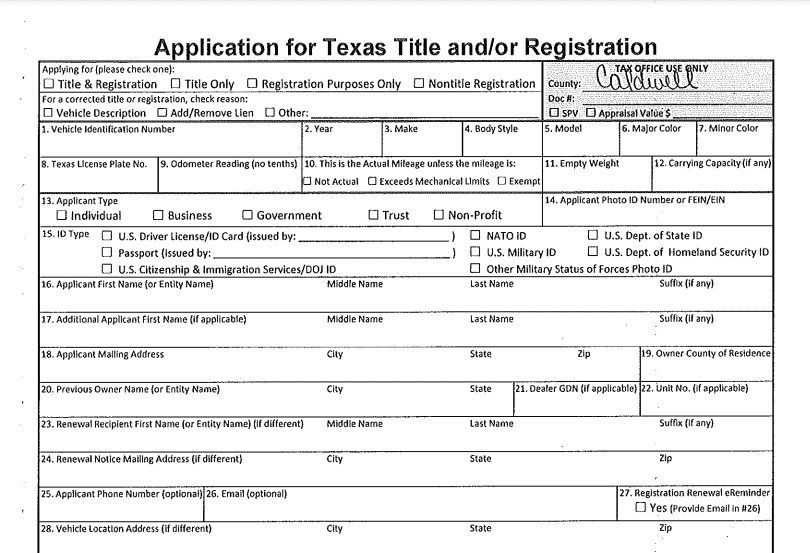
- Application for Texas Title and/or Registration (Form 130-U): While this form can usually be obtained and filled out at the county office, having it pre-filled can expedite your visit. It’s available for download on the Texas Department of Motor Vehicles (TxDMV) website.
The Registration Process Demystified
Once your documents are gathered, the process itself involves a few distinct steps:
- Get Your Vehicle Inspected: This is often the first and most critical step. Your vehicle must pass a state-approved safety inspection at a certified inspection station. These stations are readily identifiable by an official sign. The inspection checks various components, including brakes, tires, lights, horn, and window tint. If you reside in certain counties, primarily those within major metropolitan areas like Dallas, Houston, Austin, or El Paso, your vehicle will also require an emissions test. This test ensures your car meets air quality standards, reflecting Texas’s commitment to environmental stewardship. Once passed, you’ll receive a Vehicle Inspection Report (VIR).
- Obtain Proof of Insurance: Ensure your insurance policy is current and meets Texas’s minimum liability requirements. It’s wise to shop around for coverage that not only meets state minimums but also provides adequate protection for your specific travel and lifestyle needs, especially if you plan on frequent long-distance journeys.
- Head to the County Tax Assessor-Collector’s Office: Vehicle registration in Texas is handled at the county level. You’ll need to visit the Tax Assessor-Collector’s office in the county where you reside. For instance, if you’re living in Grapevine, you’d go to the Tarrant County office; if you’re in Galveston, you’d visit the Galveston County office. Bring all your gathered documents: title, proof of residency, insurance, VIR, and photo ID.
- Pay Fees: At the office, you’ll pay the necessary registration fees, which include a base registration fee, local fees, and potentially a processing and inspection fee. If you’ve just purchased the vehicle, you’ll also pay sales tax at this time (6.25% of the sales price or standard presumptive value, whichever is greater, less any trade-in allowance). These fees contribute to maintaining the extensive road networks you’ll undoubtedly utilize for exploring destinations like Lake Travis or the Marriott Marquis Houston for a business trip.
- Receive Your Stickers and Plates: Upon successful completion of all steps and payment, you will be issued a registration sticker for your windshield and new license plates if you don’t already have Texas plates. The sticker indicates your vehicle’s current registration validity, and it’s crucial to display it properly.

Beyond the Basics: Important Considerations for Car Owners in Texas
Once your car is officially registered in Texas, you’re well on your way to enjoying the freedom of the open road. However, there are a few additional considerations and nuances that every car owner, especially new residents or long-term visitors, should be aware of to maintain compliance and ensure a hassle-free experience.
Understanding Texas Sales Tax and Title Transfer
For individuals purchasing a vehicle in Texas or bringing one from out of state, understanding the intricacies of sales tax and title transfer is key. When you buy a vehicle from a dealership, they typically handle the sales tax payment and title application on your behalf. However, if you purchase from a private seller, you are responsible for paying the sales tax (6.25% of the purchase price or the standard presumptive value, whichever is higher, minus any trade-in allowance) and applying for the title transfer within 30 days of purchase at the county Tax Assessor-Collector’s office. This also applies when moving a vehicle from another state; the sales tax will be assessed upon first registration in Texas, unless you can prove you’ve owned and operated the vehicle for more than 12 months in another state or if you paid a comparable sales tax in another state. This process is integral for establishing legal ownership within the state and affects how your vehicle is officially recognized, especially important for those who might be considering luxury travel options or investing in a specialized vehicle for exploring various parts of Texas.
Renewing Your Texas Registration
Vehicle registration in Texas is an annual process. Your registration expires on the last day of the month indicated on your inspection sticker. Approximately two to three months before your registration expires, the Texas Department of Motor Vehicles will mail a renewal notice to the address on file. This notice contains important information, including your renewal fees and options for renewal.
To renew your registration, your vehicle must pass an annual safety inspection (and emissions test if applicable) before you can renew. The inspection station electronically transmits the inspection results, so the county office can verify it. Once your vehicle has passed inspection and you have proof of current liability insurance, you can renew your registration online, by mail, or in person at your county Tax Assessor-Collector’s office. Online renewal is often the most convenient option for busy travelers or new residents settling into cities like Plano. You’ll receive your new registration sticker by mail within a few weeks. Staying on top of renewals ensures uninterrupted travel, allowing you to focus on planning your next adventure rather than worrying about expired paperwork.
Special Cases: Leased Vehicles, Military Personnel, and Out-of-State Transfers
While the general guidelines cover most scenarios, some situations warrant specific attention.
- Leased Vehicles: If your car is leased, the leasing company typically holds the title. You’ll need to coordinate with them to ensure they provide the necessary documentation for registration. Often, the leasing company will handle the initial registration, and you will be responsible for annual renewals.
- Military Personnel: Active-duty military personnel stationed in Texas may have specific exemptions or modified requirements, especially if their legal residence is still in another state. It’s advisable to check with the Texas Department of Motor Vehicles or their military base’s legal assistance office for precise guidelines.
- Out-of-State Transfers: As mentioned, if you’re bringing a vehicle from another state, you’ll generally follow the same steps, including inspection, proof of residency, and potentially paying Texas sales tax if you haven’t owned the vehicle for an extended period or paid comparable tax elsewhere. The key is to address the title transfer to a Texas title promptly. For those considering long-term accommodation in places like the JW Marriott San Antonio Hill Country Resort & Spa, understanding these nuances ensures a smooth integration into the state’s vehicle laws.
Enhancing Your Texas Journey: Car Registration and Lifestyle
Having a properly registered vehicle in Texas isn’t just about compliance; it’s about unlocking a richer, more flexible lifestyle, whether you’re here for a short-term adventure or a permanent relocation. The seamless integration of your car into the state’s legal framework means you can truly maximize your time and explore Texas on your own terms.
Road Trips and Scenic Drives
The true essence of Texas reveals itself on its sprawling highways and scenic backroads. With your car legally registered, the possibilities for road trips become endless. Imagine cruising along the Gulf Coast to Galveston for a beach getaway, or venturing into the majestic landscapes of Big Bend National Park, where rugged beauty meets starry skies. The Texas Hill Country offers picturesque drives through vineyards and charming small towns like Fredericksburg, while a trip to Lake Travis near Austin promises refreshing watersports.
A registered vehicle means you can confidently plan these excursions, knowing you’re legally equipped for the journey. It allows for spontaneous detours to lesser-known attractions, provides the flexibility to carry all your gear for camping or hiking, and ensures you have reliable transport to and from even the most remote destinations. This freedom is especially appealing for those who appreciate budget travel, as owning a reliable vehicle can often be more cost-effective than relying solely on rental cars for extended periods of exploration. Conversely, for luxury travel enthusiasts, a registered high-end vehicle enhances the prestige and comfort of exploring the state’s upscale resorts and exclusive destinations.
Planning Your Stay: From Hotels to Long-Term Accommodation
The decision to register your car in Texas is often intertwined with your accommodation choices and overall lifestyle plans. If you’re considering a long-term stay, perhaps as a digital nomad setting up a temporary base in Austin to soak in the Sixth Street music scene, having a registered vehicle is almost a prerequisite for apartment hunting and daily living. Many residential areas, even in major cities like Houston or Dallas, are car-dependent.
For shorter, but still significant, stays, a registered vehicle provides flexibility when choosing hotels and resorts. You might opt for a resort with ample parking outside the immediate city center, perhaps the JW Marriott San Antonio Hill Country Resort & Spa for a family trip, knowing your car is properly legal. Even urban hotels like The Driskill in Austin or the Marriott Marquis Houston often provide valet or self-parking options, making a registered personal vehicle a convenient choice for exploring the city’s landmarks and attractions.
Beyond tourism, a registered car is vital for business stays or family trips, allowing easy access to meetings across a sprawling city like Fort Worth or comfortable transport for children and luggage. It’s an investment in your personal mobility, giving you the power to shape your Texan experience exactly as you envision it, whether that involves urban exploration, rural retreats, or a seamless blend of both.
Successfully registering your car in Texas is a fundamental step toward fully integrating into the dynamic lifestyle of the Lone Star State. While the process involves specific documentation and steps, it is designed to be straightforward for residents and long-term visitors alike. By preparing your paperwork, understanding the inspection requirements, and navigating the county office procedures, you unlock the unparalleled freedom that comes with having a legally recognized vehicle. This freedom empowers you to explore Texas’s vast and varied landscapes, from the vibrant urban centers to the serene natural parks, and to make the most of your travel, accommodation, and lifestyle choices within this remarkable state. Get your car registered, and let your Texan adventure begin!
LifeOutOfTheBox is a participant in the Amazon Services LLC Associates Program, an affiliate advertising program designed to provide a means for sites to earn advertising fees by advertising and linking to Amazon.com. Amazon, the Amazon logo, AmazonSupply, and the AmazonSupply logo are trademarks of Amazon.com, Inc. or its affiliates. As an Amazon Associate we earn affiliate commissions from qualifying purchases.