
Moving to a new state or purchasing a vehicle can often bring a flurry of administrative tasks, and for those venturing into the vast and vibrant landscapes of Texas, registering your car is a crucial step. Whether you’re a long-term traveler settling down, a digital nomad embracing the Lone Star State’s unique lifestyle, or simply an individual relocating for work or family, understanding the nuances of vehicle registration is key to a smooth transition. This comprehensive guide aims to demystify the process, ensuring you’re well-equipped to navigate the requirements and get your wheels legally rolling across the expansive highways and scenic routes that define Texas life. From the bustling metropolises of Houston and Dallas to the artistic vibes of Austin and the historic charm of San Antonio, having a properly registered vehicle opens up a world of exploration, making every journey, whether a daily commute or a spontaneous road trip, a seamless experience.
The process of registering a car in Texas might seem daunting at first glance, but by breaking it down into manageable steps and understanding the required documentation, you’ll find it’s quite straightforward. This isn’t just about legal compliance; it’s about ensuring your vehicle is roadworthy and that you’re prepared for any adventure, from exploring local culture and food scenes to embarking on epic journeys through the state’s diverse attractions. Our focus here is to provide a clear, concise, and exhaustive guide, blending practical advice with the spirit of travel and lifestyle that our platform embodies.
Understanding the Texas Vehicle Registration Landscape
Before diving into the specifics of documentation, it’s essential to grasp the overall structure of vehicle registration in Texas. Unlike some states where a single Department of Motor Vehicles handles everything, Texas divides responsibilities between several key entities. The Texas Department of Motor Vehicles (TxDMV) oversees vehicle titles and licenses, while county Tax Assessor-Collector offices are responsible for vehicle registration and local fees. Furthermore, vehicle inspections are carried out by state-licensed inspection stations. This distributed system means you’ll typically interact with at least two or three different entities to complete the full registration process.
For those planning an extended stay or considering a permanent move, navigating this system efficiently is crucial. Imagine planning a trip to Big Bend National Park, exploring the historic sites in Galveston, or even just driving to a renowned resort like the Hyatt Regency Hill Country Resort and Spa near San Antonio – you’ll want the peace of mind that comes with a legally registered and road-ready vehicle. Understanding each stage helps prevent delays and ensures you can focus on enjoying the rich experiences Texas has to offer.
New Residents vs. Used Car Purchases in Texas
The specific requirements for vehicle registration can vary slightly depending on your situation. If you’re a new resident moving to Texas from another state, you’ll be bringing an out-of-state title. The process will involve transferring that title to Texas and then registering the vehicle. If you’re purchasing a used vehicle within Texas, the process will involve transferring the existing Texas title into your name and then renewing or obtaining new registration. Each scenario has its own set of forms and considerations, but the core documents remain largely similar. Our guide will cover the common denominators, making it applicable to most situations.
For new residents, it’s recommended to initiate the process within 30 days of establishing residency in Texas. This includes getting a Texas driver’s license, which is often a prerequisite for some registration steps. This prompt action helps avoid potential penalties and ensures you’re fully compliant with state laws as you begin your Texas adventure. Many travelers choose to make Texas a long-term base due to its diverse attractions, from vibrant city life to serene natural landmarks, making car registration an integral part of their lifestyle adoption.
The Essential Checklist: Documents You’ll Need
Gathering the correct documents is paramount. Missing even one item can lead to frustrating delays and multiple trips to the Tax Assessor-Collector’s office. Think of this as preparing your travel itinerary – every detail counts for a smooth journey. Here’s a breakdown of the critical documents and items required for car registration in Texas:
1. Proof of Texas Vehicle Inspection (VIR)
Before you can even think about registering your car, it must pass a state-mandated safety inspection and, in most counties, an emissions inspection. This is performed at any official Texas Department of Public Safety (DPS) vehicle inspection station. You’ll receive a Vehicle Inspection Report (VIR) confirming your vehicle passed. This inspection ensures your car meets basic safety and environmental standards, a vital aspect for road safety and preserving the natural beauty of Texas for all travelers. The inspection must be current, usually performed within 90 days of registration.
Key Information:
- Locate a certified inspection station. Many repair shops and dealerships are authorized.
- The inspection checks lights, brakes, tires, steering, emissions (in certain counties like those encompassing Houston or Dallas), and other safety components.
- You will receive an electronic record of the inspection, but it’s always wise to keep a physical copy or screenshot of the VIR for your records.
2. Proof of Financial Responsibility (Texas Liability Insurance)
Texas law requires all registered vehicles to have liability insurance. You must provide proof of current Texas liability insurance coverage when registering your vehicle. The minimum coverage requirements are 30/60/25, meaning $30,000 for bodily injury per person, $60,000 for bodily injury per accident, and $25,000 for property damage per accident. This insurance is not just a legal requirement but a crucial aspect of responsible travel and vehicle ownership, protecting you and others on the road.
Key Information:
- Your insurance card or policy declaration page will serve as proof.
- The insurance must be from a company licensed to do business in Texas.
- If you’re a new resident, you might need to update your out-of-state policy to a Texas policy.
3. Proof of Ownership (Vehicle Title or Manufacturer’s Certificate of Origin)
This is perhaps the most critical document. It establishes you as the legal owner of the vehicle.
- For New Vehicles: You’ll need the Manufacturer’s Certificate of Origin (MCO). This document is typically provided by the dealership.
- For Used Vehicles: You’ll need the original vehicle title.
- Texas Title: If you purchased a used car in Texas from a private seller, the seller must sign the title over to you, and you will need to apply for a new Texas title in your name.
- Out-of-State Title: If you’re a new resident, you’ll present your out-of-state title. The Tax Assessor-Collector will process a new Texas title for your vehicle as part of the registration process.
Important Note: If there’s a lien on your vehicle (i.e., you have a loan), the lienholder (bank or finance company) may hold the physical title. In such cases, you’ll typically need to provide information about the lienholder, and they may be contacted directly by the TxDMV.
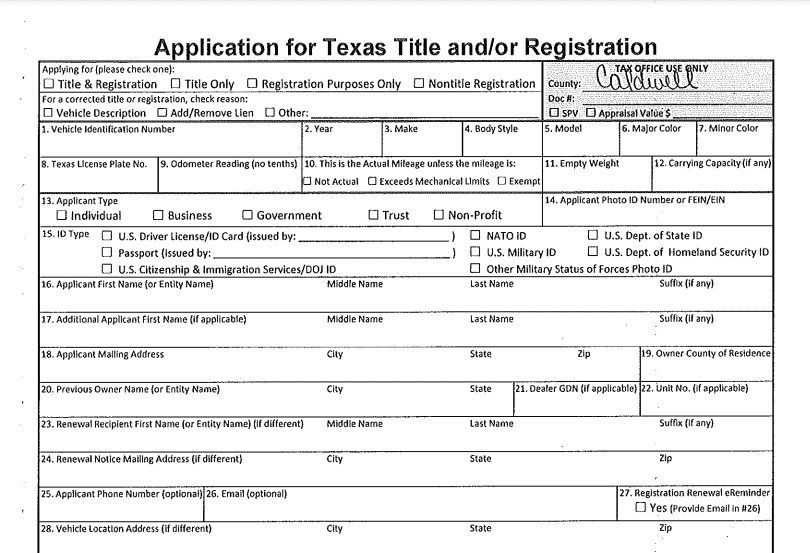
4. Application for Texas Title and/or Registration (Form 130-U)
This form is essential for both titling and registering your vehicle. It gathers all the necessary information about you and your vehicle. You can usually download it from the Texas Department of Motor Vehicles (TxDMV) website or obtain it at your local county Tax Assessor-Collector’s office. Filling this out accurately and completely before your visit can save a lot of time.
Key Information:
- Ensure all sections are filled out, including vehicle identification number (VIN), odometer reading, purchase date, and sales price (if applicable).
- Both the buyer and seller must sign this form for private party sales.
5. Valid Photo Identification
You’ll need to present a valid form of identification, typically a Texas driver’s license or identification card. If you’re a new resident, and you haven’t obtained your Texas driver’s license yet, your out-of-state driver’s license may be accepted, but it’s always best to check with your specific county’s Tax Assessor-Collector office beforehand. Getting your Texas driver’s license should be one of your first priorities when establishing residency.
6. Payment for Applicable Fees and Taxes
There are several fees associated with car registration in Texas. These include:
- Registration Fees: This is the annual fee to register your vehicle. The base fee for most passenger vehicles is currently $50.75, plus additional local county fees and a state portion.
- Title Fees: If you’re transferring a title or applying for a new Texas title, there’s a fee for this, typically around $33.
- Sales Tax: If you purchased the vehicle, you would owe sales tax on the purchase price. In Texas, the motor vehicle sales tax rate is 6.25% of the sales price or the standard presumptive value (SPV) of the vehicle, whichever is greater. This is a significant cost to factor in, especially for those budgeting their move or considering luxury travel options.
- Inspection Fees: The inspection itself has a separate fee, paid directly to the inspection station.
It’s advisable to check with your county’s Tax Assessor-Collector website for the most current and exact fee structure, as local fees can vary slightly. Most offices accept cash, checks, and credit/debit cards, though card payments may incur a convenience fee.
The Registration Process: Step-by-Step
With all your documents in hand, the actual registration process becomes much simpler. Here’s a general sequence of events:
1. Get Your Vehicle Inspected
This is the first physical step. Find a certified Texas vehicle inspection station. Many auto repair shops and dealerships offer this service. The inspection will typically take about 15-30 minutes. Once your vehicle passes, you’ll receive the VIR. This is a critical prerequisite, much like booking your accommodation before arriving at your travel destination.
2. Purchase Texas Liability Insurance
Ensure you have a valid Texas liability insurance policy active for your vehicle. If you’re switching from an out-of-state policy, do this after you’ve established your Texas residency address.
3. Visit Your County Tax Assessor-Collector’s Office
This is where the magic happens. Bring all the documents listed above:
- Passed Vehicle Inspection Report (VIR)
- Proof of Texas Liability Insurance
- Original Vehicle Title (or MCO)
- Completed Form 130-U (Application for Texas Title and/or Registration)
- Valid Photo ID
- Payment for all applicable fees and taxes
At the office, a clerk will review your documents, process your application, and collect the fees. If everything is in order, they will issue you new license plates, a registration sticker (to be affixed to your windshield), and a registration receipt. This sticker is your permit to explore everything from the vibrant cultural districts of Dallas to the serene Gulf Coast beaches.
4. Affix Your Registration Sticker and License Plates
Immediately affix your new registration sticker to the lower left corner of your vehicle’s windshield and securely attach your new license plates to the front and rear of your vehicle. You are now legally registered to drive in Texas!
Special Considerations and Tips for Travelers & New Residents
For individuals whose lifestyle involves frequent travel or relocating, some additional points are worth noting:
- Temporary Permits: If you’ve just moved to Texas and need a little more time to gather your documents, you might be able to obtain a temporary permit from the TxDMV. This allows you to legally operate your vehicle for a short period while completing the full registration process. This can be particularly useful if you’re staying in a hotel or temporary accommodation like the Omni Dallas Hotel while searching for a permanent residence.
- Renewals: Once registered, you’ll receive a renewal notice in the mail or via email (if you opt for electronic notices) before your registration expires. You can typically renew your registration online, by mail, or in person at your county Tax Assessor-Collector’s office.
- Long-term Stays & Digital Nomads: If you’re a digital nomad or on an extended stay in Texas for more than 30 days and operate a vehicle, you are generally expected to register it. While the specific definition of “residency” can sometimes be ambiguous, it’s always best to err on the side of compliance to avoid legal issues, ensuring your travel experiences remain stress-free.
- Military Personnel: Active duty military personnel and their dependents may have different registration requirements. It’s important for them to check with their local military installation’s legal assistance office or the TxDMV for specific exemptions or procedures.
- Vehicle Modifications: If your vehicle has significant aftermarket modifications, ensure they comply with Texas safety and emissions standards before undergoing inspection. This applies whether you’re cruising through the historic streets of Fort Worth or taking a scenic drive along the Texas Hill Country.
- Lost Documents: If you lose your title, registration, or license plates, you can apply for replacements through the TxDMV or your county Tax Assessor-Collector’s office.
Conclusion: Driving into Your Texas Adventure
Registering your car in Texas is more than just a bureaucratic hurdle; it’s an essential step towards fully immersing yourself in the state’s vibrant culture and diverse attractions. With your vehicle legally registered, you’re free to embark on countless adventures, from exploring the historic Alamo in San Antonio to discovering the burgeoning food scene in Austin, or even venturing out to the pristine beaches of Padre Island National Seashore. This process, while requiring attention to detail, ultimately provides the freedom and peace of mind to navigate your Texas journey with confidence.
By following this comprehensive guide, gathering your documents meticulously, and understanding the role of each agency, you can streamline your car registration experience. So, prepare your paperwork, pass that inspection, and get ready to hit the road. Texas awaits, offering an unparalleled blend of tourism, lifestyle, and landmarks for every traveler and resident. Happy driving, and enjoy every mile of your Texas adventure!
LifeOutOfTheBox is a participant in the Amazon Services LLC Associates Program, an affiliate advertising program designed to provide a means for sites to earn advertising fees by advertising and linking to Amazon.com. Amazon, the Amazon logo, AmazonSupply, and the AmazonSupply logo are trademarks of Amazon.com, Inc. or its affiliates. As an Amazon Associate we earn affiliate commissions from qualifying purchases.