
The concept of “accessible” in the context of a hotel room extends far beyond simply meeting basic building code requirements. It represents a commitment to inclusivity, ensuring that every guest, regardless of their physical abilities, can enjoy a comfortable, safe, and dignified stay. For travelers with disabilities, mobility challenges, or age-related considerations, an accessible hotel room is not a luxury but a necessity. Understanding the multifaceted nature of accessibility in hotel design and operation is crucial for both lodging providers aiming to cater to a wider clientele and for travelers seeking accommodations that truly meet their needs.
Understanding the Core Principles of Accessible Hotel Design
At its heart, accessibility in hotel rooms is about removing barriers and providing equitable access. This involves meticulous attention to detail in both the physical layout of the room and its amenities, as well as in the operational policies and staff training. It’s a holistic approach that considers the entire guest experience, from the initial booking to check-out.
Navigating the Physical Space
The most visible aspect of an accessible hotel room lies in its physical design. This encompasses a range of features specifically engineered to accommodate guests with mobility impairments, visual or auditory challenges, and other specific needs.
Wider Doorways and Clear Paths of Travel
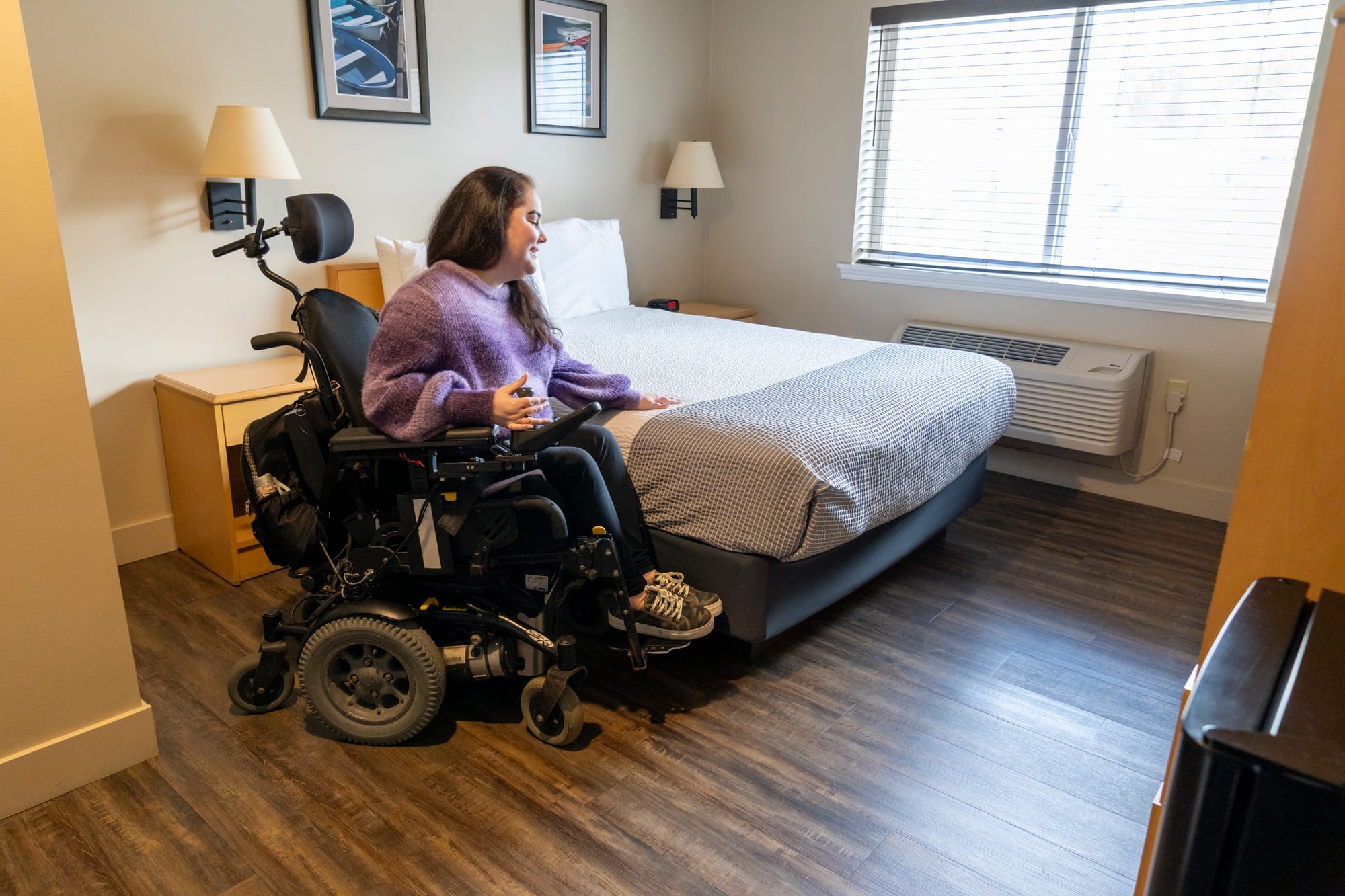
One of the primary considerations is ensuring sufficient space for maneuverability. Doorways into the room and within the bathroom need to be wider than standard to comfortably accommodate wheelchairs and other mobility devices. Equally important is maintaining clear, unobstructed pathways throughout the room. This means strategically placing furniture and ensuring that there are no tripping hazards. The floor surface itself should be firm, stable, and slip-resistant, avoiding thick carpeting that can impede wheelchair movement.
Accessible Bathroom Fixtures
The bathroom is often the area requiring the most significant modifications for accessibility. This includes:
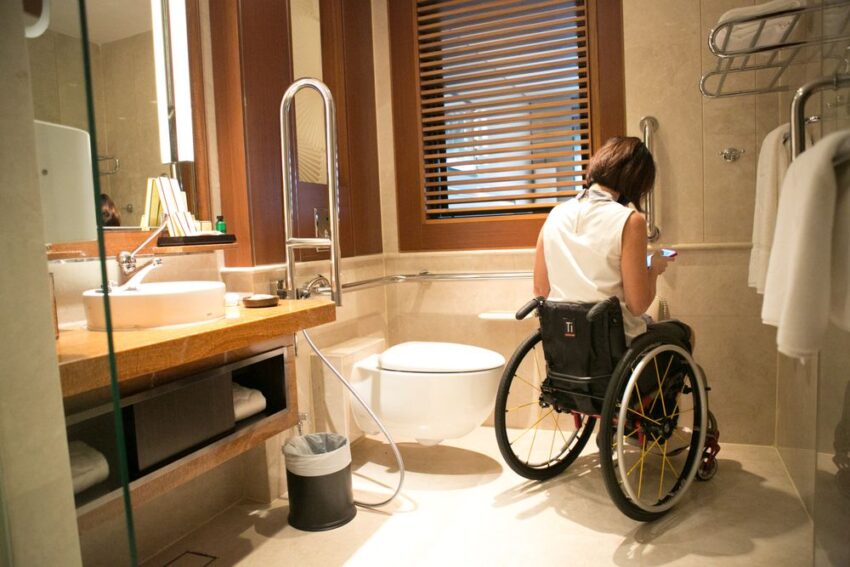
- Roll-in Showers: These are designed without a raised lip, allowing a wheelchair to easily roll directly into the shower. Grab bars are essential, strategically placed at various heights to provide support for transferring in and out of the shower, as well as for stability. Handheld showerheads with adjustable height mounts offer greater flexibility and ease of use.
- Accessible Toilets: Toilets in accessible rooms are typically set at a higher height to facilitate transfers from a wheelchair. Ample clear space around the toilet is crucial, and grab bars are again a critical safety feature, installed on at least one side and the rear.
- Accessible Sinks and Vanities: Sinks should be mounted at a height that allows a wheelchair user to approach and use them comfortably. This often means having an open space beneath the sink for knee clearance. Faucets should be lever-style or motion-activated for ease of use, rather than knobs.
Thoughtful Furniture Placement and Features
Beyond the bathroom, the main living area of the accessible room also requires consideration. Light switches, thermostats, and control panels for amenities like televisions and air conditioning should be placed within easy reach from a seated position. Bedside tables should be designed to allow a wheelchair to be positioned close by. In some cases, beds themselves may be height-adjustable or at a specific height to facilitate transfers.
Enhancing Sensory Accessibility
Accessibility is not solely about physical movement; it also involves catering to guests with visual and auditory impairments.
Visual Aids and Information
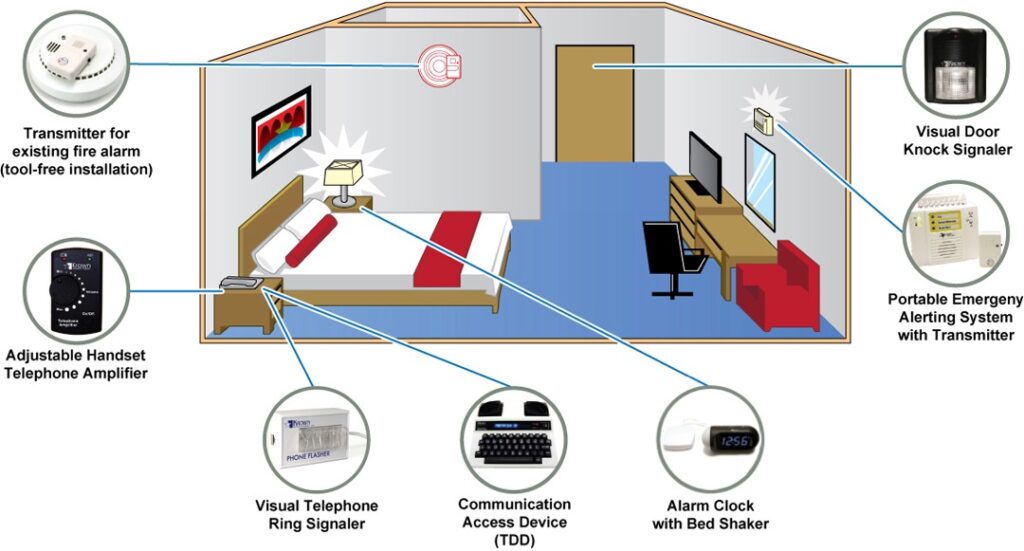
For guests with low vision or blindness, audible alarms and visual alerts are essential. This includes visual smoke detectors and doorbells that flash a light. Braille signage for room numbers and important instructions can also be invaluable. Many hotels are now offering larger print menus and information in accessible formats.
Auditory Assistance
For guests who are deaf or hard of hearing, visual alarms are equally important. This can extend to vibrating alarm clocks that can be placed under a pillow. In-room communication devices, such as TTY (teletypewriter) phones, can also be provided. Staff training on non-verbal communication cues and the use of visual aids can significantly enhance the experience for these guests.
Operational Excellence in Accessible Hospitality
Beyond the physical room itself, the operational aspects of a hotel play a pivotal role in delivering a truly accessible experience. This encompasses staff training, service protocols, and a proactive approach to guest needs.
Staff Training and Awareness
Well-trained staff are the cornerstone of an inclusive hospitality environment. Training should cover:
- Understanding Diverse Needs: Educating staff on the various types of disabilities and the unique challenges guests might face. This fosters empathy and a greater understanding.
- Proper Etiquette: Teaching staff how to interact respectfully and effectively with guests with disabilities, including how to offer assistance without being patronizing.
- Knowledge of Accessible Features: Ensuring that all staff members are knowledgeable about the specific accessible features within the hotel and can confidently explain them to guests.
- Emergency Procedures: Training staff on how to assist guests with disabilities during emergency situations.
Service Protocols and Guest Support
Proactive service can make a significant difference. This includes:
- Pre-Arrival Communication: Encouraging guests to communicate their specific needs when booking, allowing the hotel to prepare accordingly. This might involve confirming the presence of specific features or arranging for specialized equipment.
- Personalized Assistance: Offering assistance with luggage, navigating the hotel, or accessing services.
- Availability of Assistive Devices: Having a readily available inventory of common assistive devices, such as shower chairs, bed rails, or even portable ramps, can be a significant advantage.
- Clear and Accessible Information: Ensuring that hotel websites and information brochures are accessible, with clear descriptions of accessible room features and contact information for specific inquiries.
Communication and Technology
Leveraging technology can further enhance accessibility. This includes:
- Accessible Booking Platforms: Ensuring that online booking systems are user-friendly for individuals with various assistive technologies.
- In-Room Technology: Exploring options like voice-activated controls for lights, curtains, and entertainment systems, which can benefit a wide range of guests.
- Communication Tools: Providing services like video relay for guests who are deaf or hard of hearing, or offering concierge services via text message for those who prefer it.
Beyond the Standard: Elevating the Accessible Guest Experience
While meeting the baseline requirements for accessibility is essential, leading hotels go further to create an experience that is not just functional but truly enjoyable and memorable for all guests.
Designing for Universal Appeal
The concept of Universal Design, which aims to create environments that are usable by all people, to the greatest extent possible, without the need for adaptation or specialized design, is increasingly influential. This means creating spaces and amenities that are inherently more accessible and intuitive for everyone, not just those with specific needs. For example, lever-style door handles are easier for anyone to use, regardless of grip strength.
Attention to Aesthetics and Comfort
An accessible room should not feel clinical or utilitarian. The focus should be on creating a comfortable, stylish, and welcoming environment that rivals any standard room. This involves:
- High-Quality Furnishings: Using comfortable and well-designed furniture that also meets accessibility standards.
- Pleasing Aesthetics: Incorporating thoughtful decor, lighting, and color schemes that enhance the overall ambiance.
- Comfort Amenities: Ensuring that standard comfort amenities, such as quality linens, climate control, and entertainment options, are readily available and easy to operate.
Fostering a Welcoming Atmosphere
Ultimately, true accessibility is about creating a welcoming atmosphere where all guests feel valued and respected. This is achieved through a combination of thoughtful design, attentive service, and a genuine commitment to inclusivity. When a hotel room is truly accessible, it opens up the world of travel to a broader range of individuals, allowing them to explore new destinations, connect with loved ones, and experience the joys of hospitality without limitations. It’s about ensuring that every traveler has the opportunity to create lasting memories, in comfort and with dignity.
LifeOutOfTheBox is a participant in the Amazon Services LLC Associates Program, an affiliate advertising program designed to provide a means for sites to earn advertising fees by advertising and linking to Amazon.com. Amazon, the Amazon logo, AmazonSupply, and the AmazonSupply logo are trademarks of Amazon.com, Inc. or its affiliates. As an Amazon Associate we earn affiliate commissions from qualifying purchases.