
Navigating the intricacies of travel documentation can often be a daunting task, especially with evolving federal regulations. For those planning to travel within the United States or specifically to and from Alaska, understanding the appearance and purpose of an Alaska REAL ID is paramount. This document is more than just a driver’s license or state ID card; it’s a federally compliant form of identification designed to enhance security for domestic air travel and access to certain federal facilities. As the deadline for the full enforcement of the REAL ID Act approaches, travelers must be prepared to present an acceptable form of identification to pass through Transportation Security Administration (TSA) checkpoints. Understanding what an Alaska REAL ID looks like and how it functions in the travel landscape is crucial for a hassle-free journey.
The REAL ID Act and Its Importance for Travelers
The REAL ID Act, passed by Congress in 2005, was a direct response to the September 11, 2001 terrorist attacks. It established minimum security standards for state-issued driver’s licenses and identification cards and prohibits federal agencies from accepting for certain purposes driver’s licenses and identification cards from states that do not meet these standards. For travelers, the most significant impact of this legislation pertains to domestic air travel. Without a compliant ID, boarding a domestic flight will become impossible.
What is a REAL ID?
A REAL ID is a type of state-issued driver’s license or identification card that meets the security standards set by the Department of Homeland Security (DHS). These standards require states to incorporate specific anti-counterfeit technology and verify an applicant’s identity, date of birth, legal status, Social Security number, and residential address before issuing the card. Unlike a standard license, which may only require basic proof of identity and residency, a REAL ID demands more rigorous documentation, ensuring that the identity of the cardholder is thoroughly vetted and secure. For travelers, this means a REAL ID acts as a universally recognized and federally accepted proof of identity for specific purposes, primarily at airport security checkpoints.
The Looming Deadline for Domestic Air Travel
The original deadline for REAL ID enforcement was extended several times, most recently due to the COVID-19 pandemic. The current enforcement date set by the DHS is May 7, 2025. From this date forward, every air traveler 18 years of age and older will need a REAL ID compliant driver’s license, state-issued identification card, or another acceptable form of identification (such as a valid U.S. passport) to fly within the United States. Travelers without a compliant ID after this date will be unable to pass through TSA checkpoints and, consequently, will not be permitted to board domestic flights. This deadline underscores the urgency for Alaskan residents to understand and acquire their REAL ID.
Visual Characteristics of an Alaska REAL ID
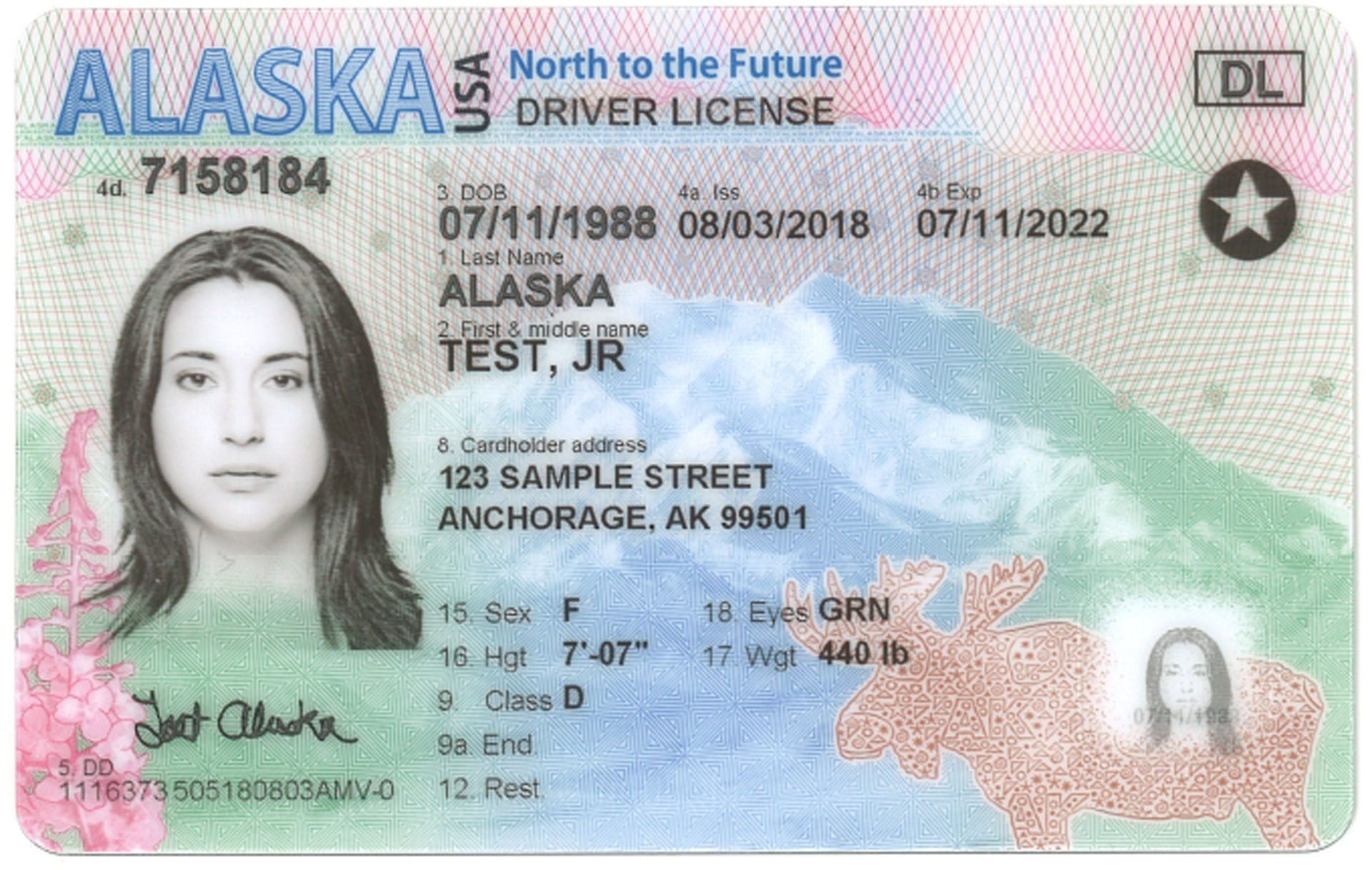
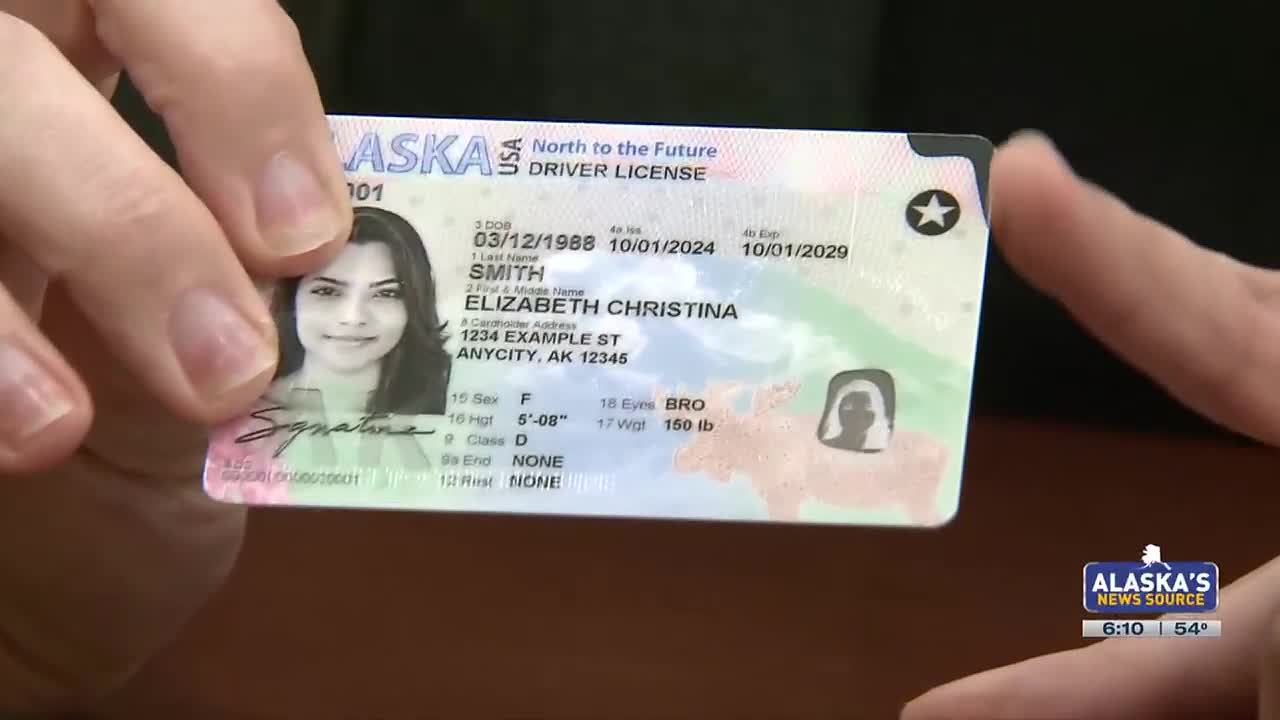
The most distinguishing feature of a federally compliant Alaska REAL ID is a small, usually gold or black, star symbol located in the upper right-hand corner of the card. This star is the universal indicator that the card meets federal security standards. Without this star, a regular Alaska driver’s license or state ID will not be accepted for domestic air travel or entry into federal facilities after the enforcement deadline.
The Gold Star Emblem
When you look at an Alaska REAL ID, the immediate identifier will be the gold star. This emblem is conspicuously placed and signifies that the cardholder has gone through the enhanced verification process required by the REAL ID Act. It’s a quick visual cue for TSA agents and other federal personnel to confirm the document’s compliance. Residents of Alaska who choose to obtain a standard driver’s license or ID card that is not REAL ID compliant will typically see “NOT FOR FEDERAL IDENTIFICATION” or similar wording printed on their card, usually above or below the photo. This clearly differentiates it from a compliant card.
Key Security Features
Beyond the gold star, Alaska REAL ID cards incorporate several security features designed to prevent counterfeiting and fraud. While specific details might vary slightly, these often include:
- Holographic Overlays: Intricate patterns or images that are visible at certain angles, making duplication difficult.
- Microprinting: Extremely tiny text that is difficult to replicate accurately and often appears as a solid line to the naked eye.
- Ultraviolet Features: Elements that are only visible under UV light, used by authorities to verify authenticity.
- Tactile Features: Raised printing or specific textures that can be felt, adding another layer of security.
- Ghost Images or Laser Engraving: A secondary, smaller image of the cardholder’s photo, often faint, or details laser-engraved onto the card material itself.
These features, combined with the rigorous application process, ensure that an Alaska REAL ID is a highly secure and reliable form of identification, critical for maintaining travel security.
Applying for Your Alaska REAL ID: A Traveler’s Guide
Obtaining an Alaska REAL ID requires a visit to a local Division of Motor Vehicles (DMV) office and presenting specific documentation. This process is more stringent than for a standard license, reflecting the enhanced security requirements. Preparing beforehand can significantly streamline your experience.
Essential Documents Required
To apply for an Alaska REAL ID, you will typically need to provide the following original documents or certified copies:
- Proof of Identity and Date of Birth: A U.S. birth certificate, valid U.S. passport, or permanent resident card.
- Proof of Social Security Number: Your Social Security card, a W-2 form, or a pay stub with your name and SSN.
- Proof of Alaska Residency (Two Documents): Utility bills, rental agreements, bank statements, or vehicle registrations showing your current Alaskan address.
- Proof of Signature: Your current driver’s license or ID card, or a U.S. passport.
- Proof of Name Change (if applicable): Marriage certificates or court orders if your current name differs from your birth certificate or other primary identity documents.
It’s highly recommended to check the official Alaska DMV website for the most up-to-date and complete list of acceptable documents before your visit.
The Application Process at the DMV
Once you have gathered all necessary documents, schedule an appointment or visit your nearest Alaska DMV office. The process typically involves:
- Presenting Documents: A DMV representative will review and verify your original documents.
- Photo and Fingerprints: Your photo will be taken, and you may be required to provide fingerprints for biometric verification.
- Signature: You will sign an application form.
- Vision Test: If applying for a driver’s license, a vision test will be administered.
- Payment: Pay the applicable fees.
Your new Alaska REAL ID card will likely be mailed to you within a few weeks, with a temporary paper ID issued on the spot.
Fees and Validity
The cost for an Alaska REAL ID is generally the same as a standard driver’s license or state ID card in Alaska. These fees can vary, so consulting the DMV website for current rates is advisable. The validity period for a REAL ID driver’s license or ID card typically aligns with the standard duration for these documents in Alaska, usually several years, before renewal is required.
REAL ID Alternatives for Alaska Travelers
While an Alaska REAL ID is highly recommended for convenience, it is not the only acceptable form of identification for domestic air travel. Travelers have several other options that are federally compliant.
U.S. Passport or Passport Card
A valid U.S. passport or U.S. passport card is the gold standard for identification and is always accepted for domestic air travel. For travelers who frequently travel internationally or prefer not to carry multiple forms of ID, using their passport is a seamless solution. The passport card is a less bulky alternative, valid for land and sea travel to Canada, Mexico, the Caribbean, and Bermuda, and also accepted for domestic flights.
Other Acceptable Forms of Identification
The TSA accepts several other types of identification for domestic air travel, including:
- DHS trusted traveler cards (Global Entry, NEXUS, SENTRI, FAST)
- U.S. military ID
- Permanent resident card
- Tribal photo ID
- DHS Form I-766, Employment Authorization Document (EAD)
- Foreign government-issued passport
For a complete and current list, travelers should consult the official TSA website.
Considerations for International Travel
It’s crucial to remember that a REAL ID is not valid for international travel. For any travel outside the United States, a valid U.S. passport is mandatory. The REAL ID serves its primary purpose within the domestic borders of the United States.
Planning Your Alaska Adventure: Why Your ID Matters
For those living in or visiting Alaska, proper identification is not just a matter of compliance but a key to smooth and stress-free travel. Alaska’s vast landscapes and remote communities often necessitate air travel, making REAL ID compliance particularly relevant for residents traversing the state.
Seamless Airport Experiences
Having an Alaska REAL ID ensures that your journey through Ted Stevens Anchorage International Airport or any other airport in the United States will be as smooth as possible. You won’t face delays or potential denied boarding due to non-compliant identification. This is especially important for connecting flights or tight schedules, where any hiccup can derail your travel plans. The gold star on your card signals immediate compliance to TSA agents, allowing you to proceed through security efficiently.

Beyond the Airport: Other ID Needs
While the primary focus of the REAL ID Act for most citizens is air travel, it’s also important for accessing certain federal facilities, such as military bases, federal courthouses, and other restricted areas. For Alaskans who might need to interact with federal agencies or visit such sites, a REAL ID can facilitate entry. Regardless of your travel habits, ensuring your identification is up to federal standards is a proactive step toward maintaining your freedom to move and access services when needed. Therefore, understanding what an Alaska REAL ID looks like and securing one is a vital part of contemporary travel planning and civic preparedness.
LifeOutOfTheBox is a participant in the Amazon Services LLC Associates Program, an affiliate advertising program designed to provide a means for sites to earn advertising fees by advertising and linking to Amazon.com. Amazon, the Amazon logo, AmazonSupply, and the AmazonSupply logo are trademarks of Amazon.com, Inc. or its affiliates. As an Amazon Associate we earn affiliate commissions from qualifying purchases.