
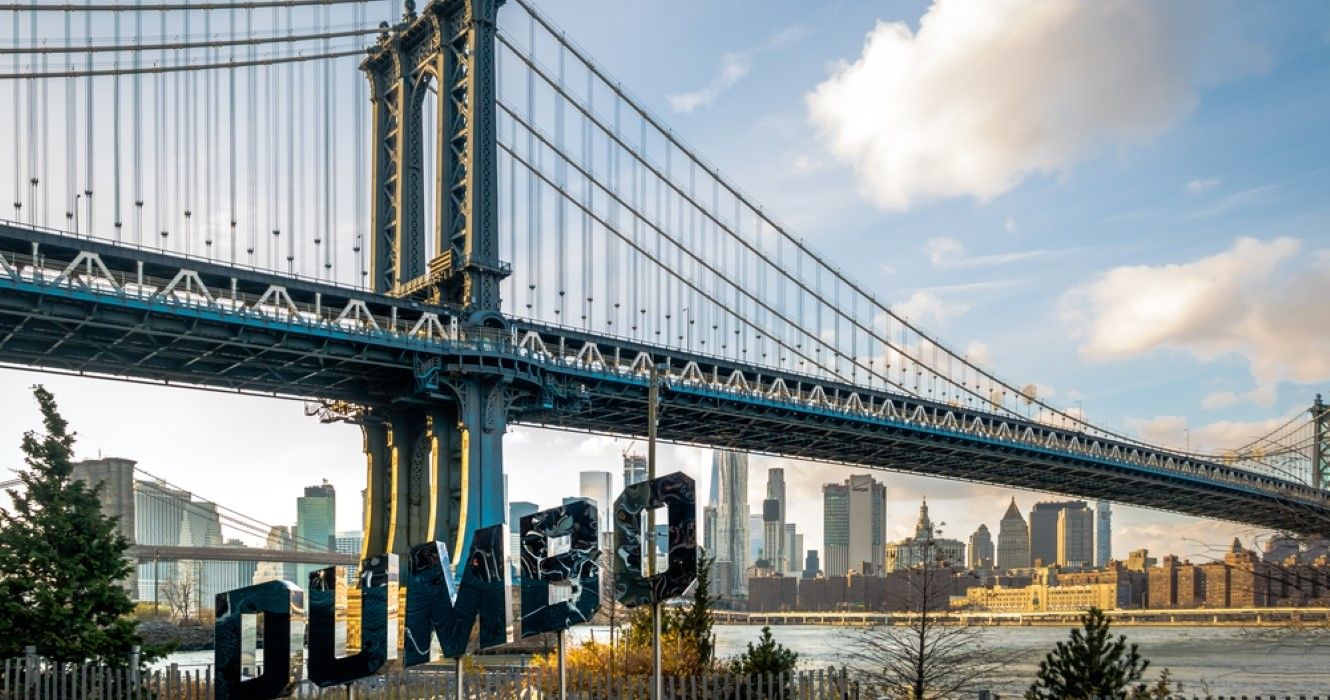
When travelers first arrive in New York City, they are often struck by the alphabet soup of neighborhood acronyms. Among the most famous—and perhaps the most misunderstood—is Dumbo. While it sounds like the whimsical name of a famous cartoon elephant, the reality of this waterfront enclave is deeply rooted in the industrial evolution of Brooklyn. Dumbo is an acronym that stands for “Down Under the Manhattan Bridge Overpass,” a moniker that tells the story of a neighborhood that transformed from a gritty manufacturing hub into one of the most desirable addresses in America.
The Industrial Origins of a Waterfront Icon
To understand why this area carries such a unique name, one must look back to the 19th and early 20th centuries. Long before the cobblestone streets were filled with boutique shops and art galleries, the area was the beating heart of New York industry.
The Power of the Waterfront
Situated between the Brooklyn Bridge and the Manhattan Bridge, this stretch of land was perfectly positioned for maritime commerce. Large-scale factories, warehouses, and shipping terminals defined the skyline. The area was dominated by the Gair Company complex, which manufactured corrugated boxes and played a pivotal role in the local economy. At the time, the area wasn’t known by a catchy acronym; it was simply part of the East River waterfront, an industrial landscape filled with the sounds of machinery and the bustling activity of merchant vessels.
The Construction of the Manhattan Bridge
The defining moment for the neighborhood’s eventual naming occurred with the construction of the Manhattan Bridge, which was completed in 1909. As the massive steel infrastructure sliced through the neighborhood, it literally created a geographical boundary—a space “under” the overpass. However, for decades, the area remained largely industrial, and residents rarely referred to it by any specific name other than the broader labels of Vinegar Hill or Fulton Ferry.
The Gentrification and Rebranding of the 1970s
The acronym “Dumbo” is a relatively modern invention. It emerged in the 1970s as a strategic effort by artists and developers to brand the area and stave off the threat of aggressive rezoning.
Resisting Industrial Decay
In the mid-20th century, as manufacturing jobs began to migrate away from the urban core, the warehouses of Brooklyn were largely abandoned. This left a void in the city’s economy, but it also created an opportunity for a new wave of residents. Artists and creators, priced out of Soho and Tribeca, began moving into the sprawling, light-filled lofts of the waterfront. They saw beauty in the raw, industrial aesthetic that others viewed as blight.

The Power of a Catchy Name
When developers looked to revitalize the area in the late 1970s, they feared that the name “Down Under the Manhattan Bridge Overpass” was too long and clunky. Legend has it that the name Dumbo was specifically chosen as a deterrent. By making the neighborhood sound unappealing or whimsical, the early residents and developers hoped to discourage speculators from driving up real estate prices. Ironically, the name became iconic, signaling a shift from a place of production to a place of prestige. It cemented the neighborhood’s identity as a distinct pocket of New York City that was separate from the surrounding areas.
Dumbo Today: A Blend of History and Luxury
Walking through the neighborhood today, the “Dumbo” of the 1970s has evolved into a polished, high-end destination that serves as a hallmark of modern American urban design.
Architecture as a Tourist Attraction
The neighborhood is now a masterclass in adaptive reuse. The very factories that once produced cardboard boxes and sugar have been converted into luxury residential lofts and tech-focused office spaces. The iconic Empire Stores stand as a testament to this, housing a mix of retail, dining, and workspace that preserves the heavy timber and brick aesthetic of the 19th century. Visitors often flock to the intersection of Washington Street and Water Street, where the view of the Manhattan Bridge framed by century-old buildings has become one of the most photographed spots in the entire city.
The Integration of Public Space
The evolution of the neighborhood cannot be discussed without mentioning Brooklyn Bridge Park. This massive reclamation project transformed the derelict piers into a world-class recreational space. By connecting the Dumbo waterfront with the rest of the Brooklyn shoreline, the park has turned the area into a hub for locals and tourists alike. Whether you are riding the historic Jane’s Carousel or enjoying a picnic with a direct view of the Manhattan skyline, the transition from industrial wasteland to public oasis is complete.
Why Dumbo Captures the Global Imagination
The allure of Dumbo lies in its ability to reconcile the past and the present. It stands as a symbol of how New York City reinvents itself while maintaining a physical connection to its history.
The Cultural Significance
Beyond its architecture, Dumbo serves as a cultural anchor. It is home to world-class art galleries, independent theaters, and a culinary scene that draws people from all corners of the globe. The neighborhood’s atmosphere is decidedly different from the frantic pace of Midtown or the residential density of Queens. It carries a specific, refined vibe that appeals to those who value both history and innovation.

A Lesson in Urban Evolution
For the traveler, Dumbo provides a unique perspective on the United States. It shows that the history of a city isn’t just found in museums or monuments; it’s etched into the street grid, the repurposed warehouses, and the very names we give our neighborhoods. What began as a geographic description—a place beneath a bridge—has become a global landmark of lifestyle and design.
The story of Dumbo is ultimately the story of Brooklyn itself: a narrative of resilience, artistic vision, and the continuous search for identity in an ever-changing urban environment. When you visit and stand on the cobblestones beneath the shadows of the Manhattan Bridge, you are not just standing in a neighborhood; you are standing in a living timeline of New York City history. It is a reminder that sometimes the most unlikely places, with the most peculiar names, hold the greatest significance.
LifeOutOfTheBox is a participant in the Amazon Services LLC Associates Program, an affiliate advertising program designed to provide a means for sites to earn advertising fees by advertising and linking to Amazon.com. Amazon, the Amazon logo, AmazonSupply, and the AmazonSupply logo are trademarks of Amazon.com, Inc. or its affiliates. As an Amazon Associate we earn affiliate commissions from qualifying purchases.