
To ask what Idaho looks like is to prepare oneself for a visual paradox. It is a state that refuses to be defined by a single landscape, shifting abruptly from the sun-drenched, high-desert plains of the south to the jagged, glacial-carved spires of the north. For the traveler, Idaho is not merely a destination; it is a sprawling, rugged masterpiece that demands to be explored with an open eye and a sense of wonder.
The High Desert and the Snake River Plain
The southern portion of the state presents a landscape of stark, dramatic beauty. Here, the Snake River carves its path through ancient basalt plains, creating deep, dramatic canyons that serve as the lifeblood of the region.

Shoshone Falls
Often referred to as the “Niagara of the West,” Shoshone Falls stands as a testament to the raw power of water against volcanic rock. Standing at the edge of the canyon, visitors are greeted by a roaring curtain of water that cascades over a 212-foot drop. The contrast between the emerald-hued river and the rugged, arid cliffs is a signature element of the Idaho aesthetic.
Craters of the Moon
Further east, the landscape transitions into the otherworldly expanse of Craters of the Moon National Monument and Preserve. Walking through this vast field of lava flows, cinder cones, and lava tubes feels less like traveling through North America and more like exploring a lunar surface. The blackened earth, dotted with resilient wildflowers, paints a picture of a planet still in the process of cooling—a haunting, monochromatic beauty that serves as a stark reminder of Idaho’s volcanic heritage.
The Alpine Majesty of the Sawtooth Mountains
As one ventures toward central Idaho, the flat, sagebrush-covered horizons dissolve into the formidable silhouettes of the Sawtooth Mountains. This is the mountain wilderness that people imagine when they think of the American West at its most pristine.
Stanley and the Salmon River
The town of Stanley acts as the gateway to this alpine paradise. The view from the valley floor, looking up at the jagged, snow-capped teeth of the granite peaks, is perhaps the most iconic image associated with the Gem State. Here, the Salmon River—affectionately known as “The River of No Return”—winds through dense pine forests, its crystal-clear waters reflecting the towering summits that surround it.
Redfish Lake
Nestled at the base of the mountains lies Redfish Lake. The lake is famous for its deep, sapphire-blue waters, which are so clear that you can see the rounded stones on the lake bed far from the shore. In the quiet hours of the morning, when the surface of the lake acts as a perfect mirror, the mountains are reflected with such precision that it becomes difficult to tell where the earth ends and the sky begins.
The Verdant Panhandle and Northern Lakes

Moving north toward the Canadian border, the arid high desert is entirely replaced by dense, old-growth forests and interconnected glacial lakes. This is Idaho’s “Panhandle,” a region that feels more akin to the rugged coastlines of the Pacific Northwest than the dusty plains of the south.
Lake Coeur d’Alene
The city of Coeur d’Alene sits on the shores of its namesake lake, a massive body of water that acts as the recreational heart of Northern Idaho. With its floating golf greens, bustling waterfront boardwalks, and emerald-green forested hillsides, Lake Coeur d’Alene embodies the lush, water-rich beauty of the region. The interplay of light on the water, combined with the deep greens of the surrounding hemlock and cedar forests, creates a palette of color that is strikingly vibrant compared to the muted tones of the south.
Sandpoint and Lake Pend Oreille
Further north, Sandpoint sits on the edge of Lake Pend Oreille, one of the deepest and largest lakes in the United States. The mountains here—the Selkirk Mountains and the Cabinet Mountains—rise sharply from the water’s edge, creating a fjord-like atmosphere that is breathtaking in its scale. During the autumn months, the hillsides erupt into a firestorm of gold and amber as the western larch trees turn, providing a seasonal contrast that defines the northern experience.
The Cultural Landscapes of Idaho’s Cities
While the natural scenery dominates the identity of the state, Idaho’s urban centers add a distinct, human-made dimension to the visual experience.
Boise: The City of Trees
Boise serves as the vibrant capital, a city that manages to blend modern, high-desert urbanity with a profound connection to nature. The Boise River acts as a green ribbon running through the center of the city, lined with the famous Boise River Greenbelt. This lush parkway, populated by cottonwoods and maples, provides a verdant contrast to the dry hills that overlook the metropolitan area. Whether it is the historic architecture of the Basque Block or the modern skylines reflecting off the river, Boise represents the intersection of Idaho’s cultural history and its future-forward growth.
Ketchum and Sun Valley
Ketchum and Sun Valley represent the intersection of rugged mountain life and refined leisure. These communities are defined by their wide-open spaces, sophisticated architecture, and an enduring respect for the wilderness that looms just beyond the town limits. The visual aesthetic here is one of “mountain chic”—timber-framed homes, wide porches, and views that frame the surrounding peaks like paintings.
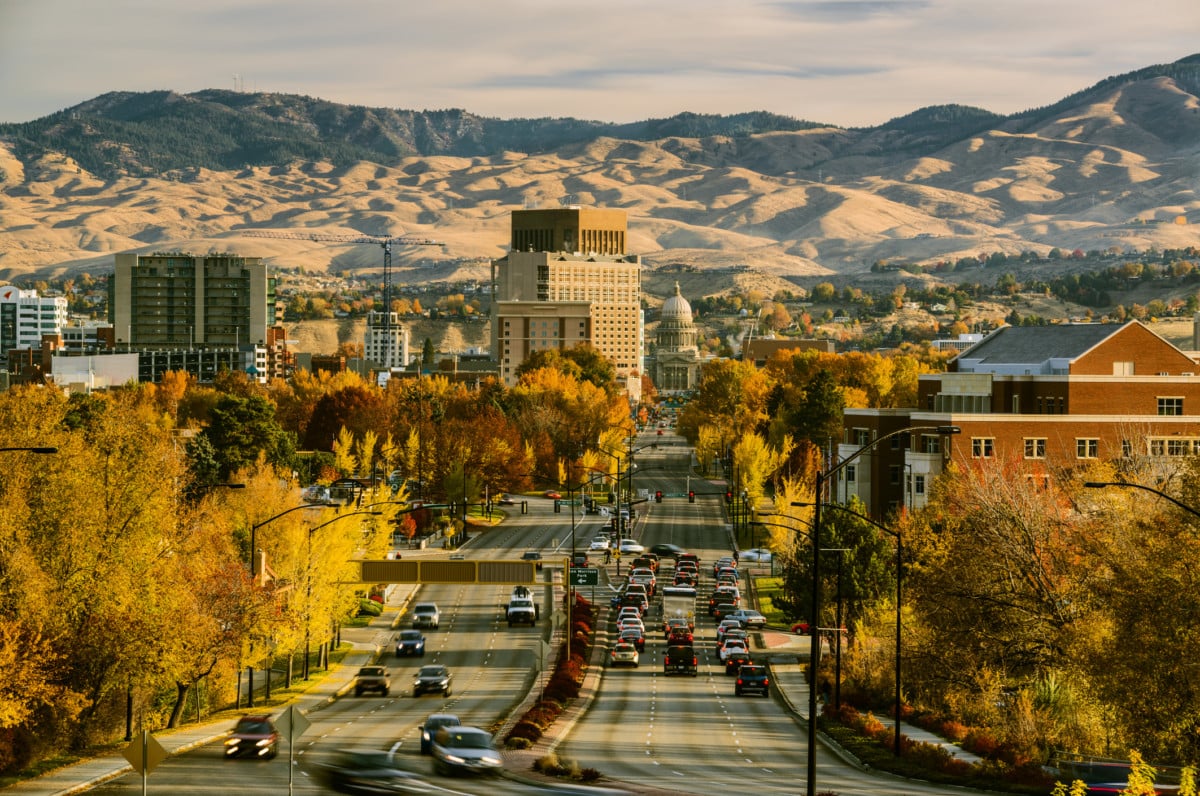
A Composite Image of the Gem State
What, then, does Idaho look like? It looks like the collision of extremes. It is the deep, dark basalt of the Snake River Canyon contrasted with the blinding white snow of the high peaks. It is the muted, sandy colors of the high desert sagebrush transitioning into the deep, saturated blues and greens of the northern lake country.
To travel through Idaho is to observe a landscape that is constantly evolving. As you drive from the high-altitude Bitterroot Range in the east down toward the fertile valleys of the west, you aren’t just crossing county lines; you are witnessing a geological and ecological survey of the American West. The state possesses a visual weight that is hard to shake once you have seen it. It is a place that feels ancient, untouched, and vast, offering a sense of scale that makes one feel both small and invigorated.
Whether you are seeking the tranquility of a secluded mountain lake, the adrenaline of a whitewater river, or the quiet contemplation of a high-desert sunrise, the imagery of Idaho is defined by its diversity. It is a state that refuses to be categorized, offering instead a kaleidoscopic array of terrains, textures, and horizons that capture the spirit of untamed nature. It is this variety—this ability to be everything from a volcanic wasteland to a verdant alpine sanctuary—that makes the visual identity of Idaho one of the most compelling in the United States.
LifeOutOfTheBox is a participant in the Amazon Services LLC Associates Program, an affiliate advertising program designed to provide a means for sites to earn advertising fees by advertising and linking to Amazon.com. Amazon, the Amazon logo, AmazonSupply, and the AmazonSupply logo are trademarks of Amazon.com, Inc. or its affiliates. As an Amazon Associate we earn affiliate commissions from qualifying purchases.