
The Section 8 Housing Choice Voucher Program (HCV) is a vital federal initiative administered by the U.S. Department of Housing and Urban Development (HUD) and implemented locally by Public Housing Agencies (PHAs). Its core purpose is to provide rental assistance to low-income families, the elderly, and the disabled, enabling them to afford safe and decent housing in the private market. When considering a three-bedroom unit in Florida, understanding the nuances of Section 8 assistance is crucial for both prospective tenants and landlords. This program doesn’t directly “give” a fixed amount for a three-bedroom unit; rather, it determines the maximum assistance a voucher holder can receive based on Fair Market Rents (FMRs) set by HUD for specific bedroom counts and geographic areas.

Understanding Fair Market Rents (FMRs) in Florida
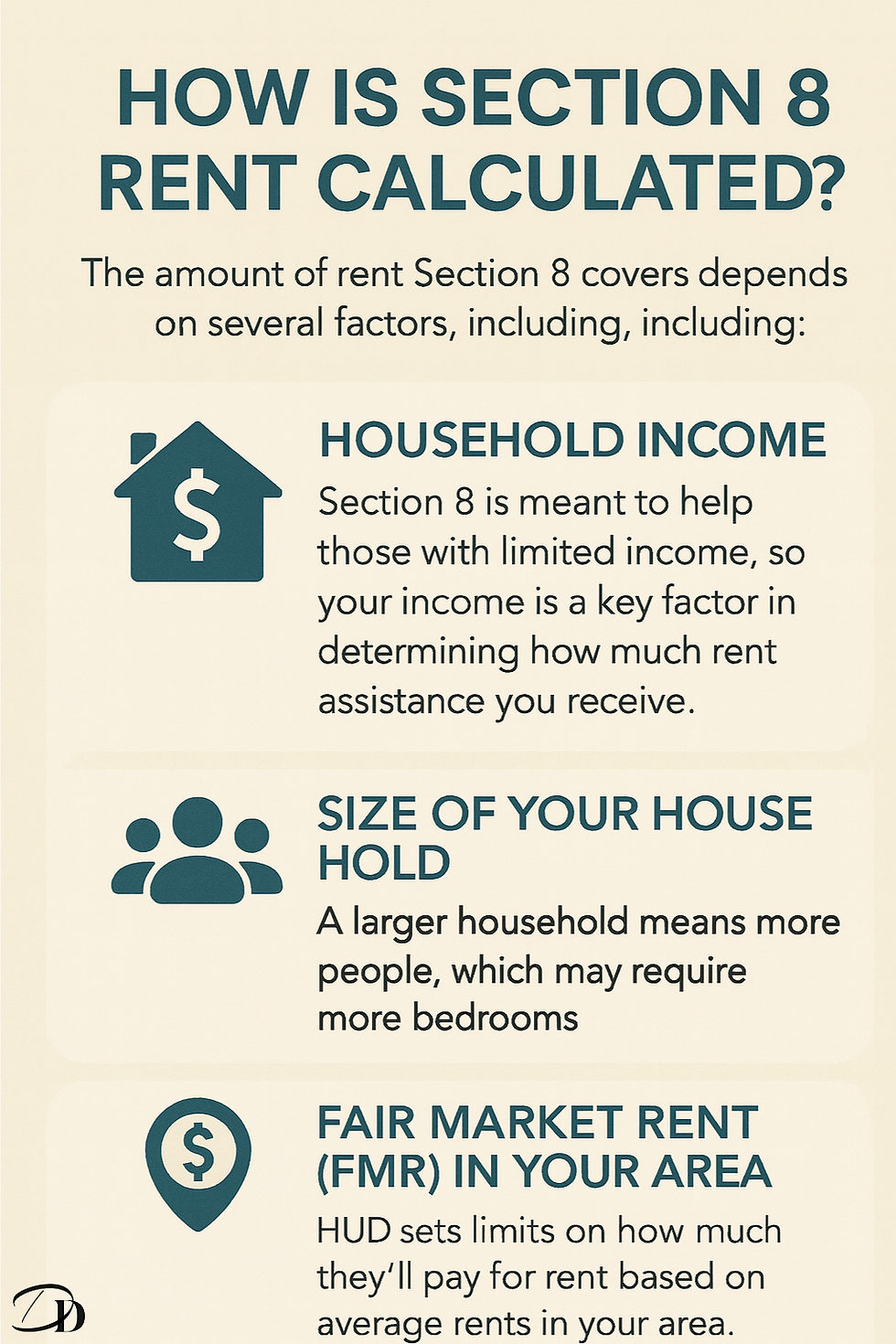
Fair Market Rents are the estimated maximum monthly rent that a voucher holder can afford for a specific type of dwelling in a particular metropolitan area or county. These figures are recalculated annually by HUD, taking into account local market conditions, the cost of utilities, and the number of bedrooms in the unit. For a three-bedroom unit in Florida, the FMR will vary significantly depending on the county or metropolitan statistical area (MSA). For instance, a three-bedroom apartment in a high-cost area like Miami-Dade County will have a much higher FMR than one in a more rural or less populated county in the state.
How FMRs Impact Voucher Value
The value of a Section 8 voucher is directly tied to the FMR. A voucher holder is typically responsible for paying 30% of their adjusted gross income towards rent. The PHA then subsidizes the remainder of the rent, up to the FMR. If the actual rent of a three-bedroom unit is below the FMR, the tenant pays 30% of their income, and the voucher covers the rest. However, if the actual rent exceeds the FMR, the tenant would be responsible for the FMR amount plus the difference between the actual rent and the FMR, in addition to their 30% income contribution. This is why selecting a unit with a rent at or below the FMR is generally the most financially advantageous for a voucher holder.
Factors Influencing Florida’s FMRs
Several factors contribute to the determination of FMRs in Florida:
- Geographic Location: As mentioned, urban centers and popular tourist destinations often have higher FMRs due to increased demand and property values. Areas like Orlando, Tampa, and the Florida Keys will naturally have higher FMRs than less developed regions.
- Number of Bedrooms: The FMR for a three-bedroom unit will always be higher than that for a one-bedroom or two-bedroom unit in the same area, reflecting the increased size and capacity of the dwelling.
- Utility Costs: The cost of utilities (electricity, gas, water, sewer, trash) is factored into the FMR calculation. Regions with higher utility expenses will see corresponding increases in their FMRs.
- Property Type: While FMRs are primarily based on bedroom count, there can be slight variations for different types of properties, though this is less pronounced than the bedroom count and location.
Calculating Tenant and PHA Contributions for 3-Bedroom Units
Once a three-bedroom unit is identified and its rent is established, the respective contributions of the tenant and the PHA are calculated. This process is governed by specific rules to ensure affordability and program compliance.
Tenant’s Rent Contribution
The tenant’s portion of the rent is calculated as 30% of their adjusted monthly income. Adjusted income is derived from gross income minus certain deductions, such as allowances for family members, child care expenses, and disability-related expenses. This ensures that the rent burden remains manageable for families with limited financial resources. For example, if a tenant’s adjusted monthly income is $1,200, their rent contribution for any unit, regardless of size, would be $360 (30% of $1,200).
PHA’s Subsidy Contribution
The Public Housing Agency’s contribution, or the subsidy amount, is the difference between the actual rent charged by the landlord and the tenant’s rent contribution, capped by the FMR for a three-bedroom unit in that specific jurisdiction.
Formula:
- Subsidy Amount = Actual Rent – Tenant’s Rent Contribution
However, this is subject to the FMR:
- If Actual Rent – Tenant’s Rent Contribution ≤ FMR: The PHA pays the full calculated subsidy amount.
- If Actual Rent – Tenant’s Rent Contribution > FMR: The PHA will only pay up to the FMR amount. The tenant must then cover the difference between the FMR and the actual rent, in addition to their 30% income contribution.
Example Scenario:
Let’s consider a three-bedroom unit in Broward County, Florida, with a monthly rent of $2,000. The FMR for a three-bedroom unit in this area is $1,900. A voucher holder with an adjusted monthly income of $1,400 would have their rent contribution calculated as follows:
- Tenant’s Contribution = 30% of $1,400 = $420.
- The calculated subsidy needed from the PHA would be $2,000 (Actual Rent) – $420 (Tenant’s Contribution) = $1,580.
- Since $1,580 is less than the FMR of $1,900, the PHA would approve this rent and pay $1,580. The total rent paid would be $420 (tenant) + $1,580 (PHA) = $2,000.
Now, consider a unit in the same area with a monthly rent of $2,300.
- Tenant’s Contribution remains $420.
- The calculated subsidy needed would be $2,300 – $420 = $1,880.
- Since $1,880 is less than the FMR of $1,900, the PHA would approve this rent and pay $1,880. The tenant’s total rent would be $420 (tenant) + $1,880 (PHA) = $2,300.
However, if the rent was $2,400:
- Tenant’s Contribution remains $420.
- The calculated subsidy needed would be $2,400 – $420 = $1,980.
- Since $1,980 is greater than the FMR of $1,900, the PHA will only pay up to the FMR. Thus, the PHA would pay $1,900.
- The tenant would be responsible for their 30% contribution ($420) plus the difference between the FMR and the calculated subsidy needed ($1,980 – $1,900 = $80).
- The tenant’s total monthly rent would be $420 + $80 = $500, plus the PHA’s $1,900 subsidy, totaling $2,400. This scenario is less common for voucher holders as landlords are often hesitant to rent at rates significantly above FMR.
Navigating the Three-Bedroom Market in Florida
For families in Florida utilizing Section 8 for a three-bedroom unit, the process involves diligent searching and careful negotiation.
Finding Suitable Properties
Prospective tenants should actively search for available three-bedroom units that are within the FMR for their specific county. Many PHAs maintain lists of participating landlords, and online rental platforms often allow filtering by voucher acceptance. Websites like GoSection8.com are specifically designed to connect voucher holders with landlords willing to accept vouchers. It’s also beneficial to inquire at local real estate agencies and community centers, as they may have information on available properties.
Landlord Responsibilities and Tenant Rights
Landlords participating in the Section 8 program agree to adhere to housing quality standards (HQS) set by HUD. This ensures that the properties are safe, sanitary, and decent. Before a lease is signed, an HQS inspection will be conducted by the PHA. The landlord is responsible for maintaining the property in good repair throughout the tenancy. Tenants, in turn, have specific rights and responsibilities, including paying their portion of the rent on time and maintaining the unit in good condition.

The Importance of Local PHAs
Each Florida PHA operates with its own set of rules and procedures, though they all adhere to HUD guidelines. It is essential for voucher holders to maintain open communication with their local PHA to understand specific requirements, receive guidance on their voucher, and inquire about the current FMRs for their desired location and bedroom count. The Miami-Dade Public Housing and Community Development, the Orange County Housing Authority, and the Tampa Housing Authority are examples of such agencies across the state, each serving distinct populations and geographic areas.
In conclusion, Section 8 provides a significant financial bridge for families seeking three-bedroom accommodations in Florida. The program’s assistance is not a direct cash handout but rather a calculated subsidy determined by Fair Market Rents, tenant income, and local housing costs. By understanding these parameters, voucher holders can more effectively navigate the rental market and secure suitable housing that meets their family’s needs.
LifeOutOfTheBox is a participant in the Amazon Services LLC Associates Program, an affiliate advertising program designed to provide a means for sites to earn advertising fees by advertising and linking to Amazon.com. Amazon, the Amazon logo, AmazonSupply, and the AmazonSupply logo are trademarks of Amazon.com, Inc. or its affiliates. As an Amazon Associate we earn affiliate commissions from qualifying purchases.