
Texas is a state of vast landscapes, vibrant cities, and endless possibilities for exploration. From the bustling metropolitan hubs of Houston and Dallas to the historic charm of San Antonio and the live music capital of Austin, the Lone Star State beckons with a unique blend of culture, history, and natural beauty. Whether you’re planning a cross-country road trip, relocating for a new job, or simply enjoying an extended stay, understanding the local nuances of vehicle ownership is crucial. For anyone living in, moving to, or spending significant time within its borders, one of the foundational aspects of navigating life in Texas is understanding car registration. It’s not just a bureaucratic hoop to jump through; it’s a fundamental step that ensures legal compliance, road safety, and your freedom to discover every corner of this magnificent state.
For travelers and residents alike, knowing the ins and outs of vehicle registration can save time, prevent headaches, and ensure a smooth transition into the Texas lifestyle. This comprehensive guide will walk you through what Texas car registration looks like, both literally and figuratively, detailing the process, requirements, and what you can expect, all within the context of maximizing your travel and lifestyle experiences in the state.
Understanding Texas Vehicle Registration: A Traveler’s and Resident’s Guide
Vehicle registration in Texas serves multiple important purposes. It’s a legal mandate that ensures all vehicles on the road meet certain safety and environmental standards, contributing to safer roads for everyone. For new residents, it signifies your commitment to establishing roots and integrating into the local community. For those who already call Texas home, regular renewal ensures continued compliance and uninterrupted access to the state’s sprawling network of highways and scenic routes.
The process might seem daunting at first, especially if you’re new to the state or unfamiliar with its specific regulations, but it is remarkably straightforward once you understand the steps. Essentially, it involves ensuring your vehicle is roadworthy through a state inspection, confirming you have adequate insurance coverage, and then visiting your local County Tax Assessor-Collector’s office to complete the paperwork and pay the necessary fees. This culminates in receiving your physical registration documents and a critical little sticker that makes your vehicle officially recognized by the state.
The Physical Look: What You Receive
When you successfully register or renew your vehicle registration in Texas, you won’t just get a pat on the back. You’ll receive two primary items that are crucial for demonstrating your vehicle’s compliance:
-
The Registration Sticker: This is perhaps the most recognizable symbol of Texas car registration. It’s a small, colorful sticker that you affix to the lower left-hand corner of your vehicle’s windshield (when viewed from outside). This sticker clearly displays the month and year your registration expires, making it easy for law enforcement to verify your vehicle’s current status at a glance. Prior to March 2015, two stickers were issued: one for inspection and one for registration. However, Texas transitioned to a “Two Steps, One Sticker” program, meaning your vehicle inspection must be current before you can renew your registration, and only one sticker is issued, signifying both. This simplified system streamlines the process and reduces clutter on your windshield. The design of the sticker might vary slightly year to year or by county, but its purpose remains constant: visible proof of current registration.
-
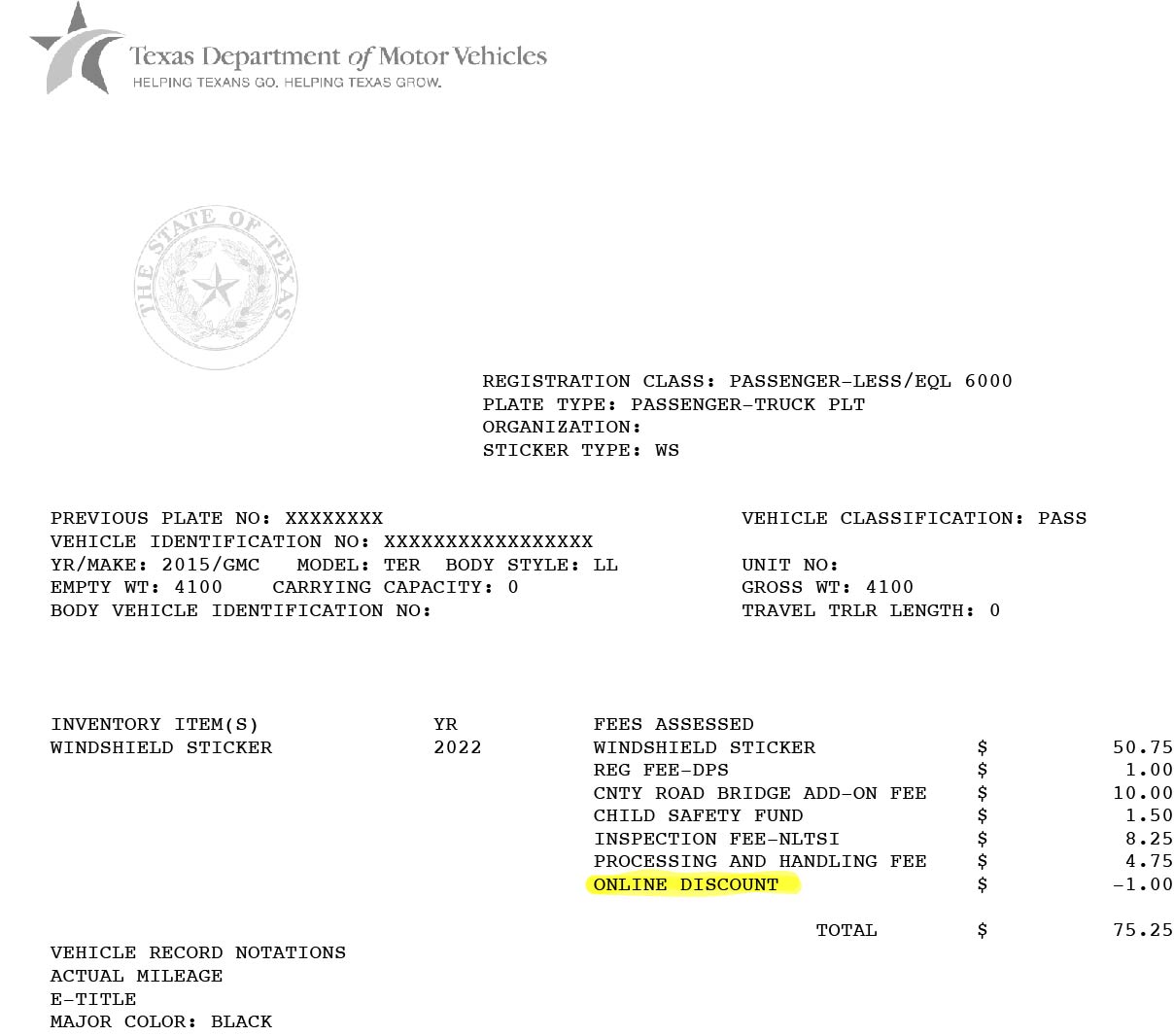
The Registration Receipt: Alongside your sticker, you’ll be issued a paper registration receipt. This document is just as important as the sticker, if not more so, as it contains all the detailed information about your vehicle’s registration, including the vehicle identification number (VIN), license plate number, registered owner’s name and address, and the registration period. While the sticker is for external visibility, the receipt is your official proof of registration to carry within your vehicle. It’s advisable to keep this receipt in your glove compartment with your proof of insurance and driver’s license. It serves as your primary record and may be requested by law enforcement during a traffic stop or by insurance companies in the event of an accident.
Keeping both the sticker properly displayed and the receipt readily accessible is not merely a suggestion; it’s a legal requirement that can prevent fines and further complications. For travelers, this means peace of mind as you traverse long stretches of highway or explore remote Texas towns, knowing your documentation is in order.
Navigating the Registration Process: Steps for Smooth Sailing
The journey to registering your vehicle in Texas is a structured one, designed to be efficient if you come prepared. Whether you’re a new resident bringing an out-of-state vehicle or a long-time Texan renewing your plates, understanding each step is key.
Initial Registration for New Residents
If you’re making Texas your new home, congratulations! You’re about to embark on an exciting chapter. However, with new residency comes the responsibility of registering your vehicle within 30 days of moving to the state.
-
Step 1: Get a Vehicle Inspection. Before you can register your vehicle, it must pass a safety inspection, and in many Texas counties—including the major ones like Dallas, Houston, Austin, and San Antonio—it also requires an emissions inspection. You can find state-licensed inspection stations at many auto repair shops, dealerships, and oil change facilities. The inspection typically checks brakes, lights, tires, steering, exhaust system, and horn, among other safety features. For emissions, it assesses pollutants. Once passed, you’ll receive a Vehicle Inspection Report (VIR) or the information will be electronically submitted to the state. This report is crucial for the next steps.
-
Step 2: Obtain Proof of Insurance. Texas law mandates that all drivers carry minimum liability insurance. Before you register your vehicle, you must have proof of current Texas liability insurance coverage that meets the state’s minimum requirements (currently 30/60/25: $30,000 for injury to one person, $60,000 for injury to two or more people, and $25,000 for property damage).
-
Step 3: Gather Required Documents. To register your vehicle, you’ll need:
- Proof of ownership: This is typically your vehicle’s title. If your vehicle has a lienholder, you’ll need to provide the name and address of the lienholder. For out-of-state vehicles, you’ll need the out-of-state title or proof of registration.
- Proof of identification: A valid photo ID, such as your Texas driver’s license.
- Vehicle Inspection Report (VIR): As mentioned, proof of a passing vehicle inspection.
- Proof of insurance: Your current Texas liability insurance card or policy.
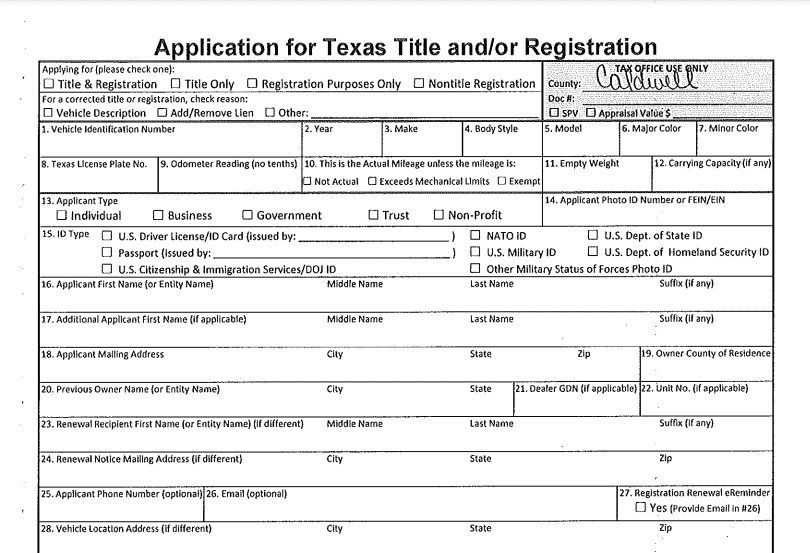
- Application for Texas Title and/or Registration (Form 130-U): This form can be filled out at the office or downloaded in advance from the Texas Department of Motor Vehicles (TxDMV) website.
-
Step 4: Visit Your County Tax Assessor-Collector’s Office. This is where the magic happens. Unlike some states that use a centralized Department of Motor Vehicles (DMV) system, Texas vehicle registration is handled at the county level by the County Tax Assessor-Collector. You must visit the office in the county where you reside. For instance, if you live in El Paso, you’ll go to the El Paso County Tax Assessor-Collector’s office. Here, you’ll present your documents, pay the necessary fees, and receive your new license plates (if applicable), registration sticker, and receipt.
-
Step 5: Pay Fees. The fees include the base registration fee, local county fees, and potentially sales tax if you’ve recently purchased the vehicle (more on costs later).
Renewing Your Registration
For existing Texas residents, the renewal process is generally simpler and can often be completed without a visit to a physical office, making it a convenient aspect of the Texas lifestyle. You’ll receive a renewal notice in the mail or via email (if opted in) approximately 6-8 weeks before your registration expires.
- When to Renew: You can renew up to 90 days before your registration expires and up to 12 months after it expires (though late fees and potential citations may apply if you drive with an expired registration).
- What You Need for Renewal: A passing vehicle inspection on file with the state (remember the “Two Steps, One Sticker” rule), and current proof of insurance.
- Renewal Options:
- Online: The most convenient method. Visit the TxDMV website’s online registration system, enter your license plate number and VIN, pay the fees, and your new sticker and receipt will be mailed to you within a few weeks.
- By Mail: You can mail your renewal notice, payment, and proof of inspection (if not already on file) to your County Tax Assessor-Collector.
- In Person: You can still visit your County Tax Assessor-Collector’s office or even a deputized substation, such as some grocery stores, to renew your registration. This is a good option if you need your sticker immediately.
Special Considerations for the Texas Explorer
Texas’s vastness means many people move here, buy vehicles, or travel extensively. Here are some specific scenarios:
- Out-of-State Vehicles (Relocating): As mentioned, you have 30 days to register your out-of-state vehicle once you become a Texas resident. This typically means establishing residency, such as getting a Texas driver’s license.
- Buying a Vehicle in Texas:
- From a Dealership: If you purchase a vehicle from a licensed Texas dealer, they will typically handle the title transfer, registration, and issuance of temporary plates. They’ll also collect sales tax on your behalf.
- From a Private Seller: If buying from a private party, you are responsible for titling the vehicle in your name and then registering it. You’ll need the signed-over title, proof of insurance, and a passing inspection. You also have 30 days from the date of purchase to title and register the vehicle.
- Temporary Permits: If you’ve just purchased a vehicle and haven’t had time to register it, or if you’re transporting an unregistered vehicle, you might need a temporary permit. These can be obtained from the TxDMV website or at a County Tax Assessor-Collector’s office and are valid for a short period (typically 30 days), allowing you to legally drive the vehicle until permanent registration is complete.
- Travelers with Out-of-State Plates: If you’re visiting Texas for tourism, a vacation, or a short-term stay, and your vehicle is properly registered in your home state, you do not need to register it in Texas. The registration requirements apply to residents or those establishing residency. This allows visitors to freely explore attractions like Big Bend National Park, the River Walk in San Antonio, or the beaches of Galveston and South Padre Island without concern for local registration.
The Cost of Convenience: Fees and Taxes
Understanding the financial aspect of car registration is essential for budgeting, whether you’re planning a move or just maintaining your vehicle. The fees associated with Texas car registration are generally straightforward, though they can vary slightly by county.
- Base Registration Fee: The statewide base fee for passenger vehicles is typically around $50.75. This covers the fundamental cost of registration.
- County Fees: Each county may add a small local fee, usually ranging from $1.50 to $11.00, which contributes to local road and bridge funds or other county services.
- Inspection Fee: This is a separate cost paid directly to the inspection station when your vehicle undergoes its safety and emissions check. It’s usually around $7 to $25, depending on the type of inspection required (safety only vs. safety and emissions).
- Sales Tax: This is a significant cost when purchasing a vehicle. Texas charges a 6.25% motor vehicle sales tax on the purchase price of the vehicle. If you buy from a dealer, they typically collect and remit this on your behalf. If you buy from a private seller, you will pay this tax when you title the vehicle at the County Tax Assessor-Collector’s office. This tax applies whether the vehicle is new or used.
- Title Transfer Fee: When you purchase a vehicle, there’s also a fee to transfer the title into your name, typically around $33.
It’s important to note that these fees are separate and distinct. The inspection fee is paid at the inspection station, while the registration fees and sales tax (if applicable) are paid at the County Tax Assessor-Collector’s office. Always factor these costs into your budget when planning to acquire or maintain a vehicle in Texas.
Beyond the Basics: Tips for a Seamless Texas Lifestyle
For those embracing the Texas lifestyle, a properly registered vehicle isn’t just a requirement; it’s a key to unlocking the full potential of the state. To make your experience as smooth as possible, consider these tips:
- Plan Ahead: Don’t wait until the last minute. Allow ample time for inspections, gathering documents, and potential wait times at the County Tax Assessor-Collector’s office, especially if you’re new to the state or trying to get things done in a busy urban center like Fort Worth. Renewing online well in advance is highly recommended for existing residents.
- Keep Documents Handy: Always have your current registration receipt, proof of insurance, and driver’s license in your vehicle. Digital copies on your phone are often accepted for insurance, but a physical copy of your registration is always wise.
- Stay Informed: The official Texas Department of Motor Vehicles (TxDMV) website is an invaluable resource. It provides the most up-to-date information on fees, forms, office locations, and policy changes. Regularly checking it can save you a trip or provide clarity on specific situations.
- Embrace the Freedom: With your vehicle properly registered, you are free to explore all that Texas has to offer. Drive down historic Route 66 in the panhandle, visit the State Fair of Texas in Dallas, delve into the history of The Alamo in San Antonio, or marvel at space exploration at the NASA Johnson Space Center in Houston. Your registered vehicle is your passport to experiencing the true diversity of the state’s culture, food, and attractions. From sophisticated city hotels to rustic ranch stays, having your own transport makes every destination within reach.
In conclusion, understanding what Texas car registration looks like means more than just recognizing a sticker on a windshield. It’s about comprehending a straightforward process that grants you legal access to the roads and the boundless opportunities for travel and discovery across one of the largest and most captivating states in the United States. By preparing adequately and following the outlined steps, you ensure peace of mind and the freedom to fully immerse yourself in the vibrant, sprawling adventure that is Texas. So, get your vehicle in order, and hit the road – your next unforgettable Texas experience awaits!
LifeOutOfTheBox is a participant in the Amazon Services LLC Associates Program, an affiliate advertising program designed to provide a means for sites to earn advertising fees by advertising and linking to Amazon.com. Amazon, the Amazon logo, AmazonSupply, and the AmazonSupply logo are trademarks of Amazon.com, Inc. or its affiliates. As an Amazon Associate we earn affiliate commissions from qualifying purchases.