
The iconic track “Hotel California” by the Eagles has captivated listeners for decades, a haunting melody accompanied by enigmatic lyrics that invite endless interpretation. Far from being a simple travelogue, this musical masterpiece delves deep into themes that resonate profoundly with aspects of travel, hospitality, and the human condition. For those who frequently explore new destinations, seek unique accommodation experiences, or are fascinated by the allure of different lifestyles, the song offers a profound metaphorical journey. It’s a narrative that, while rooted in the specific cultural landscape of 1970s California, speaks to universal experiences of ambition, excess, disillusionment, and the search for escape, often found—or lost—within the very places we choose to visit or inhabit.

The Enduring Enigma of a Modern Classic
Released in 1976, “Hotel California” quickly soared to the top of charts worldwide, becoming synonymous with the Eagles’ legacy. Its intricate guitar solos, courtesy of Don Felder and Joe Walsh, paired with the distinctive vocals of Don Henley and Glenn Frey, cemented its place in rock history. Yet, beyond its musical brilliance, it’s the lyrical ambiguity that has fueled its enduring mystique. The song paints a vivid, albeit unsettling, picture of a traveler’s encounter with a luxurious yet sinister hotel, a place where one can check in any time they like, but can never truly leave. This concept of a beautiful trap is a powerful motif, particularly relevant in discussions around the perceived glamour and hidden realities of high-end travel and exclusive resorts. Many a traveler has arrived at a stunning resort or villa expecting paradise, only to find themselves ensnared by unforeseen complexities, whether it’s the relentless pressure of a luxury lifestyle or simply the overwhelming feeling of being removed from the familiar.
A Glimpse into the Eagles’ Vision
The band members themselves have offered various insights into the song’s meaning, consistently emphasizing its metaphorical nature rather than a literal account of a specific hotel. Don Henley described it as a commentary on the “dark underbelly of the American Dream,” and the excesses of Southern California in the 1970s, particularly within the music industry in Los Angeles. This interpretation resonates deeply with the “Lifestyle” aspect of our website, examining how the pursuit of luxury, fame, and endless pleasure can lead to spiritual and emotional emptiness. It challenges the romanticized notion of travel as a purely escapist endeavor, suggesting that sometimes, the very places we journey to in search of fulfillment can become prisons of our own making, mirroring personal struggles and societal disillusionment. The lyrics act as a cautionary tale, hinting at the potential dangers of losing oneself in the pursuit of an idealized existence, whether that’s a glittering Hollywood dream or an exotic, all-inclusive vacation that promises everything but delivers an unforeseen sense of confinement.
More Than Just a Catchy Tune
While the catchy melody and intricate guitar work are undeniably appealing, reducing “Hotel California” to just a “catchy tune” misses the profound depth of its narrative. It’s a piece of art that invites listeners to engage critically with the shiny facades of materialism and superficiality often associated with certain forms of tourism and modern living. The song’s power lies in its ability to evoke a sense of unease and curiosity, prompting a deeper exploration of its allegorical meanings. It subtly warns against the seductive nature of fleeting pleasures and the potentially irreversible consequences of succumbing to a hedonistic lifestyle. This makes it a fascinating point of discussion for anyone interested in the cultural impact of landmarks and famous places, showing that even seemingly glamorous locations can harbor complex, often darker, realities beneath their polished exteriors. The “Hotel California” isn’t just a place; it’s a state of mind, a trap woven from the very fabric of desires that drive many to seek out the exotic and the extravagant.
Unpacking the Lyrics: Popular Interpretations
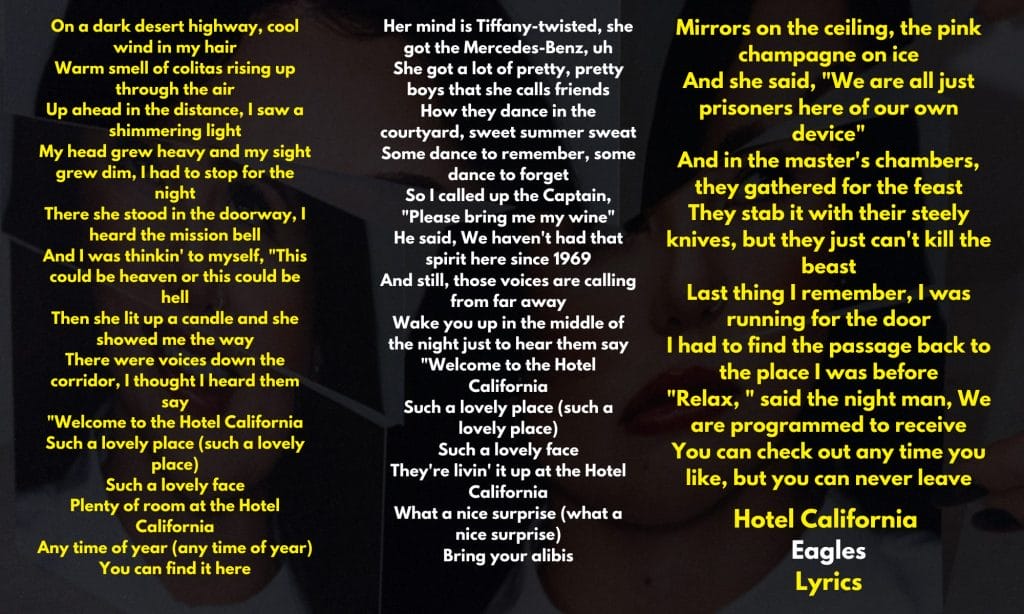
The lyrics of “Hotel California” are replete with vivid imagery and symbolic language, leading to a myriad of interpretations. From “warm smell of colitas” to “pink champagne on ice” and the chilling line “We haven’t had that spirit here since 1969,” each phrase contributes to an atmosphere of decaying glamour and inescapable allure. These details can be viewed through the lens of luxury travel experiences, where surface-level opulence can sometimes mask deeper issues or a sense of artificiality. The detailed descriptions of the hotel’s amenities and the guests’ behaviors create a world that is both inviting and unsettling, much like certain exclusive resorts that promise an escape but deliver a subtle sense of entrapment, where the freedom of choice is an illusion and departure feels increasingly difficult.
The Dark Side of the American Dream and Hollywood
One of the most prevalent interpretations positions the song as a critique of the American Dream, particularly as manifested in 1970s California. The state, and Los Angeles in particular, was seen as the promised land for those seeking fame, fortune, and a glamorous lifestyle. The “Hotel California” represents the seductive but ultimately corrupting nature of this pursuit. It’s a place where aspirations turn into obsessions, and the pursuit of success leads to spiritual desolation. The line “Mirrors on the ceiling, the pink champagne on ice” evokes an image of lavish excess and self-indulgence, typical of the Hollywood elite. For those involved in the travel industry, this interpretation serves as a potent reminder that beneath the glossy brochures and enticing advertisements of a dream destination, there can often be a darker reality. Just as travelers seek perfect vacations in idyllic settings, many flocked to California seeking an idealized life, only to find themselves disillusioned by its superficiality and moral decay. The song becomes a landmark in itself, marking a cultural shift and a warning about unchecked ambition.
A Metaphor for Addiction and Excess
Another widely accepted interpretation views the hotel as a metaphor for addiction, particularly to drugs like cocaine, which were prevalent in the Los Angeles music scene during that era. The “warm smell of colitas” (a slang term for marijuana or a reference to a type of flower) and the “spirit” that hasn’t been had “since 1969” (a nod to the end of the free-love hippie era and the rise of harder drugs) point towards a loss of innocence and a descent into chemical dependence. The hotel becomes a place where one is consumed by their vices, constantly chasing a high they can never truly achieve. The inability to leave (“You can check-out any time you like, but you can never leave”) perfectly encapsulates the struggle of addiction. From a lifestyle perspective, this speaks to the dangers of excess and the fine line between indulgence and destructive habits, a cautionary tale for anyone seduced by the allure of a no-consequences “party” atmosphere often associated with certain resort towns or tourist hot spots like Las Vegas or Ibiza. It explores how certain types of accommodation can facilitate or even encourage lifestyles that eventually prove entrapping.
The Music Industry’s Golden Cage
Given the Eagles’ own experiences, “Hotel California” is also frequently interpreted as a commentary on the cutthroat and often soul-crushing nature of the music industry in Los Angeles. The industry, with its promise of fame and fortune, often lures talented individuals into a gilded cage from which escape is difficult. The “beast” in the master’s chamber, the voices calling from “far away,” and the inability to kill it, all symbolize the overwhelming pressures, temptations, and demands placed upon artists. They check into the lifestyle, but find themselves trapped by contracts, expectations, and the relentless machinery of fame. This interpretation highlights the dark side of what appears to be a glamorous “lifestyle” choice, drawing parallels to how various destinations and career paths can initially seem appealing but eventually lead to disillusionment and a feeling of being stuck. Much like a business traveler might find themselves constantly checking into luxurious hotels but never truly experiencing the freedom of travel, musicians in the Hollywood machine often found themselves living lavishly yet feeling profoundly unfree.
The “Hotel” as a Symbol in Travel and Lifestyle
The literal image of a “hotel” is central to the song, and it’s a concept deeply ingrained in our understanding of travel and accommodation. Hotels are typically places of temporary stay, offering comfort, luxury, or convenience before moving on. However, the “Hotel California” subverts this expectation, transforming a transient space into a permanent prison. This transformation holds significant metaphorical weight for anyone interested in the philosophy of travel and the choices we make when seeking lodging. It forces us to consider how easily a seemingly ideal setting can become a source of constraint, whether physical, emotional, or spiritual. The idea of a hotel that won’t let you leave is a chilling counterpoint to the freedom and exploration typically associated with travel, emphasizing the idea that sometimes, the most beautiful destinations can harbor the darkest secrets or present unforeseen challenges that turn a dream vacation into a gilded cage.
From Grand Resorts to Entrapping Sanctuaries
In the world of travel, hotels and resorts are designed to be sanctuaries, offering an escape from the mundane. From the historic elegance of the Waldorf Astoria in New York City to the opulent modernism of the Burj Al Arab in Dubai, these establishments promise unparalleled comfort and service. Yet, the “Hotel California” cleverly twists this notion. Its grandeur (“such a lovely place,” “plenty of room”) is undeniable, but it’s a grandeur that leads to entrapment rather than liberation. This reflects a philosophical question for those who engage in luxury travel: can excessive comfort and indulgence become a form of confinement? Do the amenities and lavishness of an all-inclusive experience sometimes detract from genuine exploration and connection with local culture, transforming a traveler into a pampered prisoner? The song suggests that the very things designed to enhance our lifestyle and travel experiences can, if pursued without awareness, become the chains that bind us, making it difficult to ever truly check out of a certain way of life.
The Allure and Pitfalls of Destination Living
The song can also be seen as a broader metaphor for “destination living” – the dream of moving to an idyllic place like California or Hawaii to start a new, perfect life. Such places often draw people with their promise of sunshine, opportunity, and a relaxed lifestyle. However, as the song implies, these dreams can sour, and the new life can become just as, if not more, confining than the one left behind. The sunny façade of California hid a demanding music industry, social pressures, and temptations that could lead to ruin. This concept is highly relevant to modern tourism and long-term stays, where individuals move to new cities or countries expecting a utopian existence, only to find themselves facing new forms of isolation, cultural clashes, or economic hardship. The “Hotel California” embodies the profound psychological impact that a chosen location can have, transforming from a dream to a reality that is far more complex and challenging than initially perceived.
A Timeless Warning for Travelers and Dreamers
Ultimately, “Hotel California” transcends its 1970s Los Angeles context to deliver a timeless message relevant to anyone pursuing a dream, embarking on a journey, or simply seeking a new way of life. It’s a powerful allegory about the consequences of unchecked ambition, the seductive nature of material excess, and the potential for disillusionment when idealism clashes with harsh reality. The song serves as a profound landmark in cultural commentary, urging listeners to be mindful of the paths they choose and the “hotels” they check into, whether those are literal accommodations, professional endeavors, or personal philosophies. Its intricate narrative and evocative imagery invite continuous reflection, making it much more than just a song – it’s a philosophical statement disguised as a rock anthem.
Lessons for the Modern Explorer
For the modern traveler, whether they’re planning a budget trip or a lavish getaway, the song offers a poignant lesson: be aware of the true cost of paradise. The allure of glamorous destinations, exclusive resorts, and a seemingly perfect lifestyle can be strong, but it’s crucial to maintain a sense of self and an awareness of potential pitfalls. The “Hotel California” reminds us that true freedom comes not from an external location or luxurious surroundings, but from within. It encourages travelers to engage with the world authentically, to seek genuine experiences rather than superficial pleasures, and to always remember that while we can explore new places, our core values and ability to discern remain our most important compass. The song suggests that a discerning traveler, one who understands that every journey and every chosen “hotel” has its own set of responsibilities and potential challenges, is better equipped to navigate the beautiful complexities of the world.

The Enduring Legacy
The enduring appeal of “Hotel California” lies in its universal themes. It speaks to the human desire for paradise and the often-painful reality that true paradise is rarely found in external forms, especially if those forms come with hidden costs. As a piece of art that blends the allure of travel with the introspection of a cautionary tale, it remains a powerful reminder for anyone navigating the promises and perils of modern life and the glamorous world of tourism. The song continues to provoke thought and discussion, ensuring its place not just as a classic rock anthem, but as a cultural touchstone that encourages us to look beyond the glittering facades and understand the deeper meanings behind the places we visit, the lifestyles we adopt, and the dreams we pursue. It’s a testament to the power of music to encapsulate complex ideas, making it a permanent “hotel” in the collective consciousness, one that we can revisit any time we like, to reflect, but never truly leave its profound influence.
LifeOutOfTheBox is a participant in the Amazon Services LLC Associates Program, an affiliate advertising program designed to provide a means for sites to earn advertising fees by advertising and linking to Amazon.com. Amazon, the Amazon logo, AmazonSupply, and the AmazonSupply logo are trademarks of Amazon.com, Inc. or its affiliates. As an Amazon Associate we earn affiliate commissions from qualifying purchases.